Computer History Museum interviews Bertrand Serlet
by Horace Dediu
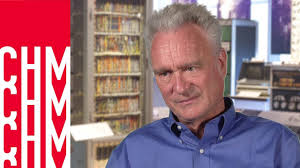
Pay attention to the quiet ones
Interviewed by Hansen Hsu on 2023-09-20 in Mountain View, CA
Serlet joined Xerox PARC’s Computer Science Laboratory in 1984, working in the Cedar/Mesa programming language and development environment, still creating design tools for VLSI, developing the multiprocessor Dragon machine. In 1989, Serlet followed Hullot to Steve Jobs’ NeXT Computer. At NeXT, Serlet worked with Hullot on the AppKit team, releasing OpenStep, the update to the NeXTSTEP operating system. With Hullot and Lee Boynton, Serlet wrote a new version of the Workspace Manager, the equivalent to the Macintosh’s Finder desktop environment. After spending a year working remotely in France, Serlet moved back to California and became a manager at NeXT, leading the effort to create the Foundation framework, factoring out fundamental data structures from the user interface-focused AppKit framework for the next release of OpenStep. Serlet’s group would go on to work on Enterprise Objects Framework (EOF) and WebObjects until NeXT’s acquisition by Apple in 1997.
At Apple, Serlet led the development of Rhapsody, which became Mac OS X. During the following years, Serlet would lead the development of OS X, ultimately becoming Executive Vice President of Software after Avie Tevanian, all the way through the beginnings of 10.7 Lion. Serlet also worked closely with Scott Forstall, who was instrumental in the development of the Carbon framework and the Aqua interface for OS X, and ultimately led the iPhone/iOS software development team, which was derived from OS X. Serlet would leave Apple in 2011 after recruiting Craig Federighi to replace him, and would go on to found startups involved with the cloud and silicon.
Source: YouTube, CHM
NB: This is one in a series on Apple's quieter heroes.…
…I think Bertrand Serlet is one of the key builders of the operating system at the heart of the 2.5 billion devices that make Apple what it is. I have a few of these quiet hero interviews which I will link to.
The interviews may be long but I found them fascination. It helps perhaps that I overlapped with the careers of these individuals and can relate to the technologies and challenges they faced.
That this interview only has 6000 views after three years shows how much untold history exists.
Comments