Asymco Bulletin 015 - May 31, 2026
by Horace Dediu

Asymco Bulletin is a digest of all the work we have published for the week ending May 31, 2026.
Office Hours
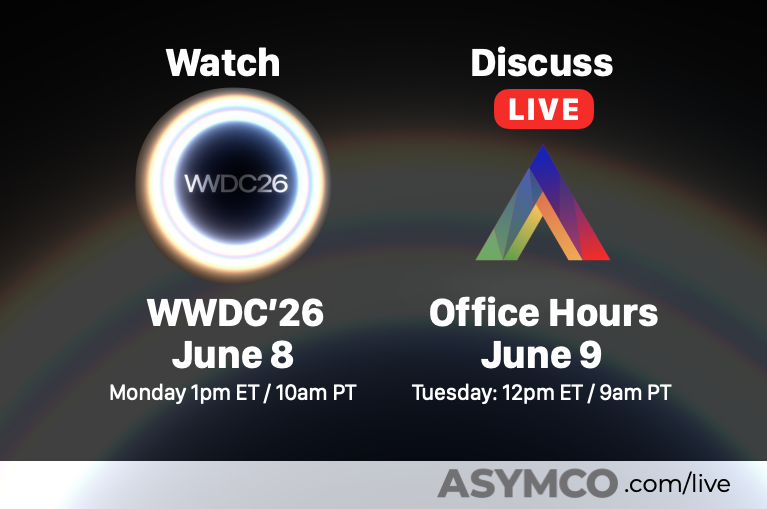
Office Hours Live Q&A, Tuesday June 9, 2026
Day after Apple WWDC'26 Keynote
Join us for our June 2026 Office Hours the day after WWDC'26 for a look into Apple's announcements, implications, and insights, and our live Q&A.
To sign up, and for the latest live event information, visit: asymco.com/live. →
Research
The Story of Japanese Innovation
Japanese industry led the world from the 70s through the 90s because constraints forced lean, efficient manufacturing. Apple was in awe of this. What Japan missed starting in the late 90s was software, a cultural problem more than a technical one, because managing software engineers is more like herding cats. The deeper miss was customer discovery: Japan assumed quality alone would convert buyers. Many of the best product ideas start as taboos, and you never get them from surveys; you get them by observing what people actually do. →
The problem with the P/E ratio
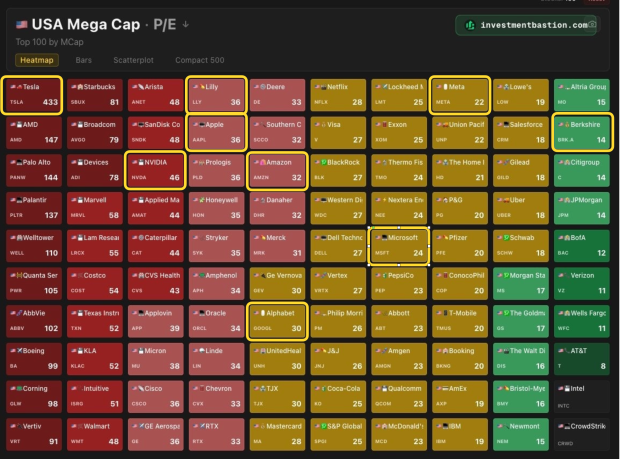
Why the most common measure for valuation is inadequate in an age of AI Software and services. Companies like Google, Microsoft, Amazon, Meta are spending on Capital Expenditures at the rate of heavy industry manufacturing. This defies their description as "asset light" business models which depend on services, distribution or platform economics. The problem isn't just semantic. It is that for their entire existence, these companies were valued for their profitability and measured in terms of a P/E ratio and earnings growth. The situation has changed dramatically. Their revenues are up, the earnings are up and growth is up and shares are up but not their P/E. Why is that? First of a series on Valuations in the age of AI→
Omdia: Apple grows 9% as European Smartphone Market Grows 2%
Market contraction expected for second half of year. Omdia reports that Europe smartphone market grew 2% to 33 million units in 1Q26. Samsung was Europe's largest vendor as it grew 3% to 12.6 million units. Effective discounting of the Galaxy A16 4G helped Samsung boost volume, offsetting declines related to the delayed launch of the Galaxy S26, A57 and A37. In contrast, Apple grew 9% to 8.8 million iPhones, driven by robust iPhone 17 series demand in addition to benefiting from a wider mid-range coverage from the iPhone 15 and iPhone 16e. Apple currently captures 26% of unit volume, 43% of revenues and about 75% of the gross margin. →
Low-end, Game consoles, Secondary Markets, Displays and AI
Console makers overshot by listening to their heaviest spenders, who only ever asked for more performance, while mobile gaming won on user count because it served the billions who were never asked. The AI risk to Apple is the emergence of screen-less devices, where Apple typically does not compete. Given the increase in information density and the fact that our optic nerve carries far more bandwidth than other senses, the screen will likely stay dominant, and so will whoever owns it. →
Nota Bene
Bank of America increases AAPL price target considering agentic and on-device AI → Bank of America raised its Apple target to $380 on the agentic AI thesis, and at $310 the share price is approaching the median of current targets, so more upgrades are likely. The basis is a recognition that distribution still matters in an age of AI and that any agentic functionality has to integrate into the OS for cross-platform leverage, privacy, and safety. I am most impressed by how sustaining AI has been to Google, a company that looked vulnerable because of its dependence on link-based search. If Google can prosper with AI, certainly Apple can as well. →
Melius' Ben Reitzes raises price target on Apple to $385 → Melius raised Apple to $385, joining Bank of America's $380, on the thesis that an agentic Siri could replace ChatGPT-style usage for 2.5 billion devices and ignite a new App Store-scale developer cycle. I struggle to understand why none of this was evident three years ago to anyone actually following Apple and the business of technology. The allure of a new technology somehow changing everything, including human nature, economics, and centuries of business theory, is a recurring pattern. See also Tesla and SpaceX for more magical thinking. →
IDC Forecast: The smartphone market is on track for its worst year ever → IDC now sees the global smartphone market shrinking 13.9% in 2026, the steepest drop ever, with Android down 20% and the iPhone holding to a 5% decline against a $550 record ASP. The analyst story is that Apple secured memory early and positioned itself for the cycle, but the truth is simpler: scale alone ensured the supply, and Apple did not act any differently than it does every other year. Apple is forecasting 20% iPhone growth for the half while every regional analyst is reporting single digits, which means either the methodologies are failing on Apple or the company is selling into channels nobody is tracking. As with Covid, a crisis favors the strong, and in times of uncertainty a flight to value makes a lot of sense. →
Asymco One gives you full access to our research, analysis, and commentary. Subscribe with code BULLETIN for a discount.
Feedback: Have questions or comments? Reach out to us at contact@asymco.com. We'd love to hear from you.
Comments