Memory is a Commodity
by Horace Dediu
"I’ve never seen a shortage without a subsequent glut, but I’ve seen gluts never followed by a shortage." -Nassim Taleb
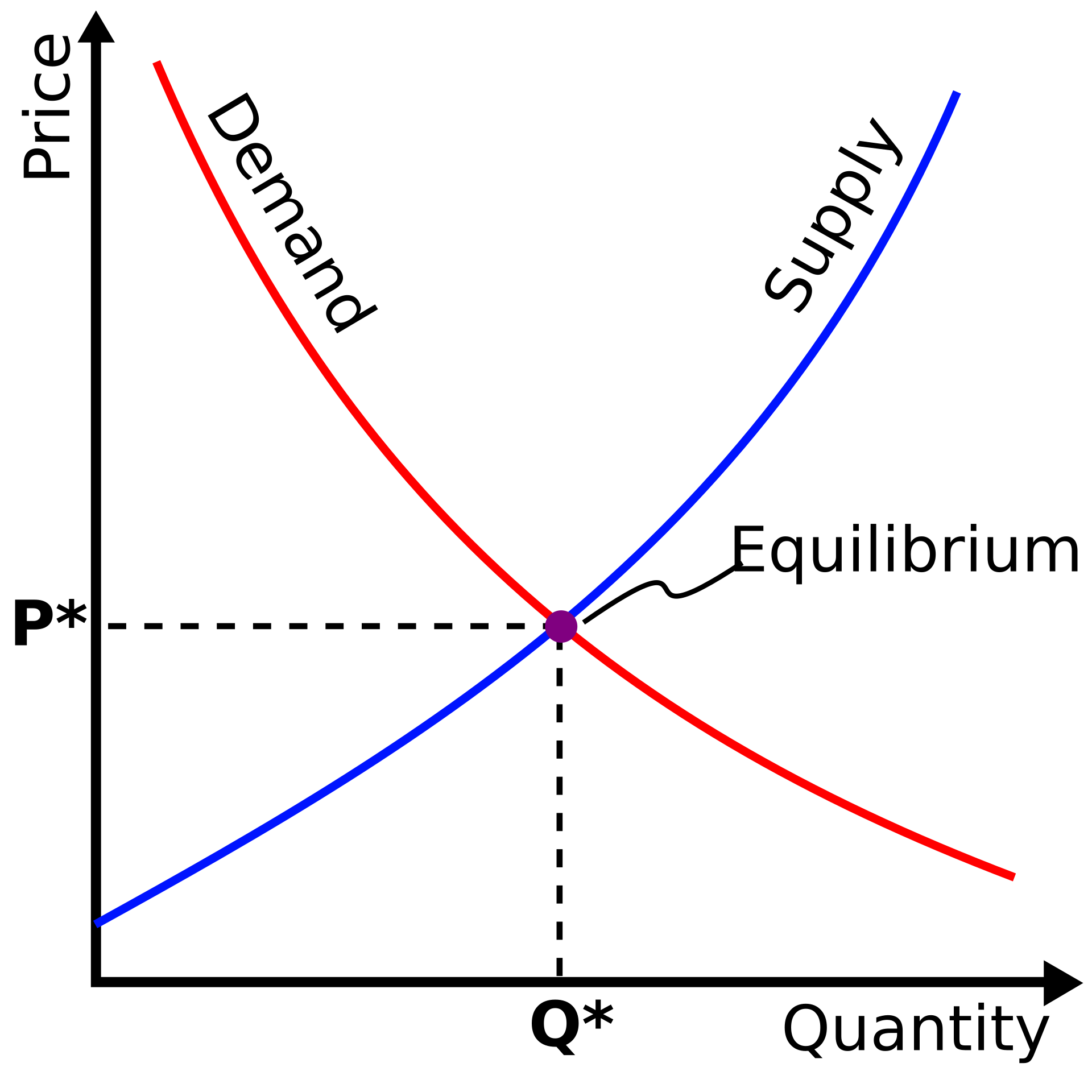
A commodity is a product or service which does not increase in price if its performance increases.
In a typical commodity exchange (coffee, pork bellies, iron ore, oil, etc) an offer of a "better" batch would not result in a higher price. The market treats all instances as equivalent with no regard to who produced them or how they were produced.
That does not mean that commodities prices cannot rise. Although not determined by quality or performance or sourcing, commodities respond to supply/demand imbalances. These are unpredictable and are affected by externalities and multitudes of factors.
Because performance is not differentiable, businesses trading in commodities are not responsive to innovation in the product. They may benefit from production and distribution innovation however. This is why scale, consolidation, regulation and legislative action are primary drivers of value.
That is also why Apple doesn’t design or build memory. Pricing will oscillate but, as a producer, Apple would be locked into their own cost structure and wouldn’t be able to negotiate with multiple vendors, nor have flexible responses to surges or drops in demand.
As a commodity, memory chips from any manufacturer are effectively interchangeable and pricing is not determined by producer. Therefore, the only way memory makers can make money is by lowering their own cost, which they do by increasing density (bits per wafer.)
The design isn’t the hard part or the limiting function for density and thus cost for DRAM or NAND chips. As Joe Lion pointed out in a Mastodon thread:
By far, the single most important thing for increasing bits per wafer is shrinking the process nodes which decreases cell size, where a DRAM cell is "1 transistor, 1 capacitor."
The design of the DRAM cell is the same as laid out in Robert Dennard's original DRAM patent from 1968. The design of the interface and periphery circuits, while important for performance, are nearly insignificant for decreasing overall die-size, which is, again, the critical factor in $ per bit.
Lion continues,
This is different than CPU/GPU/logic chips, which are not a commodity, and therefore pricing can be set by the manufacturer based on whatever the manufacturing cost happens to be, plus their desired gross margin.
To put another way, TSMC and Intel have never sold a CPU chip for a loss because they set the pricing themselves, and they will never price their own product below their own manufacturing cost, whereas memory makers frequently go through years-long cycles of selling chips for a loss because memory prices are set by global supply and demand.
Into this emerged a political dimension. The Chinese government declared memory as a strategic commodity and spent hundreds of billions of dollars developing its own memory suppliers over more than a decade. These investments take many years to bear fruit. A new fab would take five years before the first wafer, 10 years before high volume yield, and 15 years or more before cost competitiveness with incumbent DRAM vendors. It may not ever become profitable. China is 12 years in and its state-sponsored memory industry may only be reaching profitability due to the market imbalance just experienced.
The current situation is a demand shock. There isn't a shortage due to a loss of capacity but a surge in demand fed by a rush to spend on AI infrastructure. The buyers of memory are in a race to secure capacity in the belief that it's either first to reach some critical mass or they assume a logic of winner take all. [The fact that there are open source alternatives that are nearly the same performance does not seem to deter investors.]
Price insensitive demand is causing a windfall for producers who are effectively feeling as if they are in control and will remain so forever. But at the Taleb quote in the heading suggests, all this will pass. There has never been a situation where a commodity shortage has resulted in a perpetual undersupply (unless a cartel forms--and even that is hard to keep going indefinitely.]
The reason commodities balance in price is by their definition. Unless memories can be differentiated on performance, their price will float. If their price will float, high prices will attract investment and thus production and thus a glut and prices will fall.
Will Apple and indeed the entire set of industries using memories endure this shock? You would have to believe that unlike every other time, this time it's different.
8 comments
Sacto Joe ·
Hi, Horace. As I said just now on Apple 3.0:
It’s the ‘unless a cartel forms’ exception you bracketed that worries me.
The price isn’t going up because it’s more expensive to make RAM: The massive profit increases prove that it’s just greed. And we’ve seen what the Hydrocarbon Cartel can do over decades.
Apple of all companies can afford some longer term insurance. And even a small move in that direction could break this proto-cartel up before it does any more damage.
Besdes, what’s the worst that can happen? Apple has a segment thst doesn’t make a direct profit? Is that so horrible if they also make themselves less vulnerable to being made a hostage?
Sacto Joe ·
BTW, thanks for raising the visibility of this issue! That’s what has to happen in order for it to be taken seriously.
wayne.renken ·
The memory market has bifurcated to DRAM which is a commodity and High Bandwidth RAM which is a much more expensive die and customized to work with only a single logic processor. This High Bandwidth memory requires up to 3 times more processing steps to add through silicon vias and thinned to make it stackable on top of the processor. It's vastly more expensive to produce and requires multi year hard purchase commitments from their customers. This new market has taken capacity from the commodity products and stressed availability for the foreseeable future. The market dynamics are truly different this "cycle"
FredHS ·
Fun:
Imagine if Apple was a trucking company that had the most beautiful, reliable trucks, drivers, service technicians, plus their customers were the most price insensitive; And they had access to the best depots. Their trucks stayed in service twice as long as the industry average.
Would it matter that the cost of the commodity in their trucks doubled in price?
Maybe some demand would slow down. But they would also get more new customers to offset.
rbgayle ·
And as this headline suggests (Samsung, SK Hynix, Micron Sued for Alleged Memory Price-Fixing) collusion between them could well be involved at some level.
rbgayle ·
And, just as Apple controls a lot of chip production by its strategic investments, it also supports the basic unit of every chip: silicon wafers. Global Wafers in Texas is ahead of its production schedule and is on the way to producing over 1 million wafers a month. And due to its investment from the $600 billion commitment to America, Apple is directing those wafers to TSMC, TI and others to make chips in the US. For Apple. Having control of this commodity is something others cannot match. Apple does not need to build its own facility if it controls the disposition of the commodity.
This is why Apple should be allowed its large margins and profit. Much of it is being reinvested into the overall industry, not just for Apple. A real win-win. It is essentially a private version of the CHIPS act.
FredHS ·
Great insights. Thanks. Wouldn't ya love to know the ROI on those investments?
FredHS ·
Well AI says:
Apple’s Return on Invested Capital (ROIC) stands at approximately 51.5%, with trailing twelve-month (TTM) figures ranging from 51.7% to 68.7% depending on the exact calculation method used (such as factoring out cash or goodwill). This exceptionally high percentage outperforms more than 95% of companies.