The portability superpower
Office Hours #Q&A #WWDC · 2 comments
by Horace Dediu
An Office Hours question asked by Fred S, June 9, 2026.
Q: With MLX, you can write for Apple Silicon and then migrate to Nvidia’s chips — a kind of reverse Trojan horse, since people usually build tools to migrate the other way. What’s going on there?
I’m not an expert on MLX specifically, but it fits a very old pattern. When you look at Apple’s history with portability, they are extraordinarily good at it. Months ago, around the Apple-50 commemoration, I was watching the Computer History Museum interviews with the old hands — Avie Tevanian, Mike Markkula, Bertrand Serlet. Bertrand described the transition from PowerPC to Intel, way before the M series. When it shipped, people were shocked. Nobody could imagine that an OS could be migrated so quickly and so seamlessly
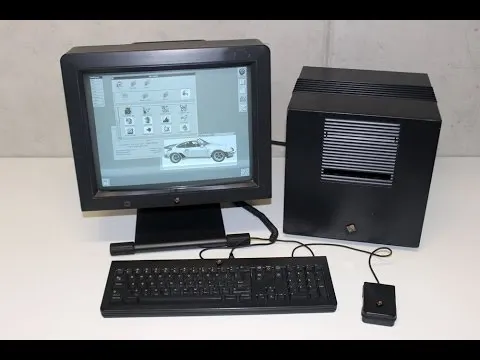
I met Bertrand at WWDC after he gave that talk. He called the old system a skyscraper, and described how they had to move the skyscraper. I told him it was impressive, and he was almost dismissive: this is nothing, we’ve been sweating portability for decades. That came from his background before NeXT, working on the Mach kernel and the portability of Unix, which became the heart of OS X.
So you’d have to go back decades to see how entrenched this is in Apple’s DNA: the instinct to avoid becoming dependent on an architecture they don’t control, and to be clever about the migration path. When Apple bought into Unix, what they got was portability, the ability to scale up and down from server to device, and security, because it was a protected kernel with protected processes. Microsoft never prioritized any of that, so their OS became a kludge that got patched ad infinitum.
That’s why this looks easy for them now. Doing it at the level of AI chipsets is not surprising in the least. By the way, the same engineering shows up in running macOS on an iPad as a touch display — they’ve quietly made the entire Mac interface touch-ready. The day a Mac with a touch UI arrives, it’ll be anticlimactic. They probably built it years ago and are just waiting to turn it on.
Editor’s Note: This was one of the questions asked by participants in Asymco’s June 2026 Office Hours live Q&A session, open to Asymco One subscribers.
Subscribe to Asymco One for more in-depth analysis and commentary like this.
2 comments
FredHS ·
Thanks. Nvidia has 6 M developers in the ecosystem. Most must also be in Apple's 60M developer ecosystem. With AI coding, the task for developers gets easier. Apple's deal with Broadcom for ASICs for scale up adds more incentive for developers to offer their customers choice of cloud-based on on-premise AI Apps.
Classic disrupt from below.
deemery ·
A lot of this comes from using high level languages, and then finding the few places where machine-specific optimization pays for the loss of portability. Another part of that is the discipline to 'color inside the lines', to establish and enforce tight boundaries at APIs. Windows and Windows applications are -full of rule-breaking- where to gain some potential advantage, the app bypasses the API, or the OS uses some CPU-dependent feature.
To quote my good friend Karl Nyberg: "It's easier to make a working program fast, than to make a fast program work."