This is a transcript of a voice interview conducted April 19th 2012.
The interview is available as an audio file here.
--
Jim Zellmer: I thought we'd start by describing your education from the beginning, Horace.
Horace Dediu: OK, that's good, yeah. I like to say I'm the product of the public school systems. I went to public schools in three different countries, and probably maybe a dozen different schools altogether because we moved a lot, moved over 30 times.
My family emigrated, and we were what you might call political refugees for a while. We were stateless. We didn't have passports. We were officially not citizens of any country. So, for a period of about four or five years, that was the case. I started having regular schooling in Romania, and then moved to Italy and was enrolled in a school, actually, in the city of Verona, which is where "Romeo and Juliet" was originally set.
I was saying...my background. I spent a year in school in Italy, and I went to school in the north of Italy, in Torino. The thing was that I didn't know Italian, so I actually had to learn. But that's a lot easier for children. I was about nine, I think. And so, I learned Italian, was able to have a good school year. But then we moved.
In the summer, we moved again, and we emigrated to the United States. It took about a year to get the paperwork for that--because that was our ultimate goal was to be in the US. I was enrolled in the public schools. First, in Cleveland, where we found someone to help us. I actually went to, I guess, elementary school in the city of Cleveland, where we lived.
And then, later on, for middle school... What happened in Cleveland around that time was that busing started, desegregation. It would have meant, for me, more than one-hour journey across the whole city, from the west end to the east end of Cleveland, and my parents would have none of that. So, we moved to a suburb, immediately adjacent, which is called Lakewood. I went to middle school and high school in Lakewood, Ohio, for three years in high school.
And then, we actually moved yet again, to Boston. My father got a job in the booming tech sector at the time, which was in the early '80s. I ended up in a suburb of Boston called Medford. We didn't know much. Again, we were flying pretty blind here. We weren't familiar with neighborhoods or what were good schools or anything like that--"good schools." Mostly it was a question of, "Can we find affordable housing?"
Medford turned out to be a pretty lucky choice. In one hand, at the time, it was a blue-collar town. It was one of the near suburbs. So the closer to the city, it tends to be the older the immigrant generations are. It was settled mostly by Italian Americans. And so, a lot of the children I met in school were of some ethnic background.
Again, in the Midwest, that was a bit more rare. So East Coast, for me, was a little bit more vibrant in the sense that there were more interesting ethnic backgrounds and people from different histories and so on.
I enjoyed it, but I only had one year at Medford High School. It was actually more enjoyable, that year, I would say, than my years in Ohio. I have friends that I retained from that one year, and I don't have friends I stay in touch with from Ohio.
But it has changed. The city since has become much more, I would say, a lot of those families moved yet again, probably to a further suburb, and has changed character. I think it's more Hispanic now, the city overall. Nothing wrong with that, it just probably would feel different to anyone there now.
I was, again, in Medford. My choice, my next question, was where to go to college. I had been doing OK in school. And that was an interesting puzzle to solve as a kid, because you don't quite know how to fit in, the usual problems. Fortunately, having moved around so much, I had a pretty thick skin, and having had an accent or a strange background just made you a little bit tougher. And so, I was pretty immune to some of the high-school politics.
I focused on studies, and my parents are both educators. My father has a PhD in mathematics, and my mother had a Master's in mathematics and she taught. Actually, her job was as a teacher. They both got certified as teachers in the United States. My father had taught, also, university in Romania, but he ended up teaching high school and other two-year colleges in the US. It's very hard to go into academia from another country.
In any case, the fact that I had such devoted, academically inclined parents helped in focusing me on academics. That also, I think, was my nature. As far as college, my concern, we always had financial concerns, right?
Jim Zellmer: Right.
Horace: So, for me, I wasn't interested in the social aspect of college. For us, really, the decision was, "Can we keep expenses down?" I was accepted at Tufts University and also at Brandeis, which were local. That was important to me, that it would be near to my home and I could actually commute to these places.
Tufts was slightly better. It was a little bit closer. It was actually in Medford. So, I almost went to the college that was nearest to me. It had a very good program, also, in both engineering and computer science.
The odd thing is now, in college for me, was that - it's almost accidental - but, they had an option for you to take two degrees. The dual degree program was meant for people to study liberal arts and engineering. The idea would be you'd be a well-rounded individual.
The weird thing is that when I went there, which is 1985 to 1989, the School of Liberal Arts included the mathematics department and included the computer science department, which is a spinoff of the math department. So, computer science was a Liberal Arts degree; whereas, engineering was like electrical, mechanical, and so on, the traditional subjects.
I enrolled in the dual degree program with the intention of obtaining a computer science degree from the Liberal Arts School and a computer engineering degree from the School of Engineering. That meant that I would essentially take about 30 percent more courses. I think it was 50 credits versus the standard 30, or so. So, I was going for incrementally more material, but I would end up with two bachelor's degrees.
That's what I did. I actually also did it in an accelerated fashion. I ended up doing that in three and a half years, rather than what they expected it to take, five years.
Jim Zellmer: Wow.
Horace: That involved a lot of summer school. I was actually going through taking some of the requirement courses in the summer. So, I was basically a student 365 days a year and I managed to get the two degrees.
In the third year, there was one of these internship opportunities for research in a lab, GTE Laboratories.
Jim Zellmer: I'm sure.
Horace: GTE Labs was, again, local, which was important to me. They actually put us up in the dorms. So, the only time I spent living in a dorm was during the summer of my internship because it was paid for by the employer.
That was a great time. I loved it. I absolutely adored it. Those years right at... In my third year, which actually was my, I guess, my second year as I was a junior a bit early, I was going through this internship and I was studying, I was going working in the research lab. Then I ended up doing my senior year, my last year, I kept going back there. Somehow they kept me around as a part time employee because the project I had been on turned out to be useful.
It was in the library. I was actually working on indexing, which turned into search, which turned into Google later on, but we didn't know what it was then. We called it information retrieval. The algorithms, so we now do search intuitively when it actually became a commercial product, but it was something we did as research back then.
It was great because I was getting the experience I wanted desperately, loved it, and then I was still in school and I managed to get my degree. I was even earning money while I was doing this. It worked out very well, but it was a very tough period.
I graduated with not the highest scores, but I think I was magna cum laude, or something like that, which is not summa cum laude, but it's pretty good. It's like 3.8 GPA, or something like that. That's it. I don't know if that's what you wanted to hear. Then, of course, I did grad school.
Two years, while I was still employed. I took a full time job at the labs, then essentially I did two years. In '92, I got my Master's in computer engineering. Then I spent about a year or two figuring out what to do next. I went to New York to have a bit of experience. Oh yeah, I remember. I applied to Harvard because I wanted to go to business school. The reason I wanted to go to business school was I didn't understand business.
Jim Zellmer: [laughs] How did that play out? MBA's are often criticized.
Horace: Yeah, I'll tell you how it played out. Well, first thing is this. I'm sitting with my friends. We're all engineers, hackers, if you will. We're like, "We don't understand. We don't understand how we get funded."
Here we are sitting in these nice offices, but how does this company, who's basically a boring utility, how are they going to fund us to do cool stuff? We just compared notes and nobody knew. I realized none of us knew how business worked.
I said, "Well, I better learn about this." To me, I had been so focused in engineering that all this business stuff, the only thing I knew was because I would read the "Wall Street Journal." I didn't have either friends, acquaintances, families. All my friends were nerds. All my family were educators. I knew nobody, literally not one person, who could tell me how the stock market worked.
I would pick up the Wall Street Journal, read it cover to cover, and I wouldn't understand what the heck they were talking about. It sounded very abstract to me. It sounded like I need to learn something that there was something missing in my education.
I felt that the only way to get that training was to go to business school. And so, I applied. I was rejected, and the assumption was, in my mind, that I was too technical, too focused in a very, very narrow niche. Back then, there were headhunters that were trying to headhunt people. So, one headhunter got a hold of me and they said they had an opportunity in New York. I said, "Oh, New York. I know they do business in New York. So I better learn more from going to New York."
And so, I took a job with Chase Manhattan, at the time. It's called something else now, but it was Chase Manhattan. The job was also in IT, but at least it was IT, more pragmatic--corporate technology they call it. But I was there trying to understand more about business. I would still read the "Wall Street Journal" every day, still wouldn't understand it.
I reapplied to business school. I told them what I did. I said, "Look, I took this job because I wanted to learn business." I think I somehow convinced them the second time because I was so mad to do these things.
Jim Zellmer: Persistent.
Horace: Persistent. Somehow, I got accepted. I'll never know how they made that mistake.
Jim Zellmer: [laughs] Yes, of course.
Horace: But, anyway, once I went there, I was like, "OK, teach me." Now, the problem was that you start to learn with the case method, and you realize pretty quickly that there is no real curriculum. This is actually a lot of examples you're being given. It's not even empirical. It's like, "Let's throw a lot of examples and see if something makes sense in a pattern somewhere."
Jim Zellmer: This was Harvard?
Horace: Yeah. So, Harvard Business School. It was the only school I applied to, because I felt I didn't know how to qualify quality in terms of business. It was just a brand name. If you know nothing about phones, you just buy the iPhone because you know it's the best, right? So that was me, very naive. And throughout the school, it wasn't as rigorous.
In many ways, it was easy, because in engineering, engineering is very hard. You have to take test and you have to get answers right. And then in business school, it seemed like you just had to talk and you had to be articulate and you had to somehow be sufficiently smart-sounding to succeed.
Jim Zellmer: The theater, aesthetics.
Horace: Yeah. They drilled that into you. They said, "This is what we're teaching you is how to basically be a leader," and that leadership meant being proactive, not being passive. It meant getting in, if you will, on the discussion. I got that. I got it. It made sense to me because, yeah, in the meeting, if you sit there and say nothing, probably no one pays attention to you. You won't go anywhere in life.
So that was one of lessons. The other ones were about vocabulary. What we're not learning here, however, is that there's axioms. There's no specific rules of business. In fact, if you were to put rules down, there'd be many which would contradict each other. One of the classics is that money now is better than money later. But you need spend money now in order to have money later.
Jim Zellmer: [laughs]
Horace: So these two things are contradictory. There were no rules in business that made any sense as if you were proving a theorem or something like that. I decided all right, let's just go with the flow. I met nice people. I learned more from a lot of people.
The best thing that happened to me is that I had Clay Christensen as a professor. He was the nicest guy. The way he taught, it just resonated with me. He hadn't yet published "The Innovator's Dilemma." He was only teaching us operations, which is a first year course.
It's the only technical course in the sense that you do some process diagrams and you do some analysis. Finance is another analytical course, but the math is pretty straightforward. It's not very conceptual, in a way. Accounting is not either. It's interpretation.
But the professor, Christensen, he had a way of speaking to me that made sense as an engineer. It wasn't just me, there were a lot of people in the class who just felt that this guy was getting to the heart of a lot of the questions that we had. I took him as much as I could. I also had the option to take him in the second year. But, unfortunately, there was change in the dean and I think he had to change courses that he was teaching in the second year.
In any case, we had a good two years there. My question was, what do I do after I graduate? This was 1996. The Internet, at the time, was just emerging. Netscape existed as of 1994 or 1995. There were no Internet business models per se. Certainly, there was a technology industry. But it was pretty much boring and either IBM or commodity PCs and you had a bunch of software companies like Microsoft and Adobe.
It was already getting a little bit tired as an industry. As an MBA, it wasn't really that exciting. Everybody was doing either consulting or investment banking. Those were the typical ways of getting out of school. I had, of course, done something different. I did a startup. And nobody...
In fact when I told people I wanted to do a startup everybody said "You came to the wrong school. No one goes to Harvard to learn how to do a startup. There are specific schools that train you for entrepreneurship." Like for example, Simmons or something. I forgot the names now. Maybe that's a women's college. I don't remember the names.
But the point is guys were saying "No, when you come out of here, you are either going to become a CEO of a Fortune 500 company or you're going to be a consultant for life or you're going to be in finance, managing other people's money or in private equity." I was like "Oh man. All right, well, whatever."
Jim Zellmer: [laughs]
Horace: I went and did this startup. I did a startup with no VC money. It was done with a partner in California who had raised money from the government using SBIR grants.
We're talking the Department of Defense, and we were doing algorithms research. I went back to my university and recruited an engineer who I worked with in a basement office right off of Massachusetts Avenue. That was in '96. We built a system. We ended up licensing it to Adobe. It was a plugin to Acrobat. We didn't benefit much from it financially. Other people made a lot of money but not us.
But we did learn a lot. So I'm thinking: In business school, I didn't really learn how business works, but I have this degree which gives me credibility. Now, I'm going to do my own business...
Jim Zellmer: It's a ticket horse, yes.
Horace: Yeah, but I did my own business. I threw away the ticket. It didn't help me at all. What I was realizing, for example ... I didn't know how to do sales. I thought when you're doing your own business, you actually need to know how to do sales, and they don't teach you that at business school. I actually went and took a sales course, like they do in a daylong seminar.
I'm saying there are so many pieces that are missing. I didn't know how VCs, how to handle VCs and how to do pitches and do all these things. And none of that was taught, so I thought, OK, what I'm going to do? I'm going to do on-the-job training. I'm going to figure this out. And [learn from] networking with people in technology.
Eventually, I decided from the learning we had in the first startup to do another one, to do e-books! That was 1999. I'm trying to do an e-book startup in 1999. [So] I get on a standards body. I'm doing something with folks and I'm actually in a standards group that includes people from Microsoft, from Adobe, from a bunch of other startups, and from Nokia.
Actually that's where I met someone from Nokia, who...
At the time--it was 1999--I realized at that moment, with or without Nokia, I said, all computers are going to be handheld devices. This is so obvious. I can't express how obvious it is. I was interested, because Nokia had pretty much at the time the best mobile devices.
Jim Zellmer: Yeah, they were the player, no doubt.
Horace: I was asking myself, look, everybody in the U.S. doesn't get mobile. It's obvious that either it's Japan or Europe. And so, the question in my mind was, do I stay with the technology industry and try to figure out how this mobile computing will play out, or do I go to somebody who really knows mobile and expect that they will actually figure out how to become a computing company?
I chose the latter, partly because they also offered me a job and the dot-com bubble burst, and I wasn't ever going to get funding for my e-book business, which was called Handheld Media by the way. It was a great idea, great business idea, that we would actually help publishers convert books. Because at the time, the publishing workflow didn't include exporting tools. You either went to print or PDF, and we had this tool that would reformat a PDF book into a publishable format, like what e-pub is now.
Jim Zellmer: E-pub, right.
Horace: At the time, it was called OEBF, Open E-Book Format. It was using HTML, a variant. I actually had a workflow I could execute on my own and I could basically produce e-books. I did a couple of dozen, mostly as trials. I remember them even now, actually going through and manually extracting hundreds of pages, fairly quickly though.
But, anyway, that all came crashing down because although e-books were still interesting, there was no more funding in the docket. I had the opportunity to work with Nokia because they were actually very interested in launching something, not necessarily in e-books, but in media distribution. They wanted to sell music. They wanted to sell video. They wanted all those things in 2000. I came to them. Now, I'm playing my ticket, my bus ticket.
[The job] was something about how to do business strategy. They hired me. I had this technical background as well. One year I spent based in Boston. But then I was fairly quickly moved to Finland because that's really where you need to be to have any career opportunities. I was young. I was not married. Finland has its charms.
[I met] another American ex-pat who had moved there before I did and he extolled its virtues. I was pretty sold on that. Even though you pay more taxes, you get less wages, everything I did was economically the wrong thing to do.
Jim Zellmer: [laughs] That's a learning, though, too. You've learned a lot. Looking back on all that, Horace, what might have been better or more effective? When you think about your kids today...?
Horace: I don't know. I'm probably having too long of a chat on this, I mean fooling around this. But yeah, I'm very conscious of education, as I said. I realized pretty much after a year after leaving ... When I started Asymco, it's very weird. Again, you never know when you start down a journey where you're going to end up.
It was purely going to be app development because apps were just starting out. Apps were really almost invisible or there was no development going on in Europe. So my idea was why don't I bring iPhone apps into the land of Nokia, because here it's a green field site.
Jim Zellmer: Yes.
Horace: But it was a tough sell. I got one customer, but it was very, very tough. I wanted to bring apps to small and medium companies. I was going to essentially do apps as marketing material, like apps that are essentially a branding thing.
I was naïve also about the Finnish business culture because I think Finnish businesses are extremely conservative and that wasn't playing out. But the fortunate thing was that I began to blog because I had blogged while I was inside Nokia. I told that story about how I started doing it because I realized I wanted a bigger audience.
Then when I left, people kept saying "Why don't you do that while you're on the outside, just for fun?" I took that year to figure things out. I went back to writing my blog. Then, literally, everything was happening in 20 minutes. It was like a fire hose. I had to learn everything. I kept asking: OK, how do I do this?
So, I am learning every single thing, because I had done it inside Nokia where it was movable type. It was a completely different system. I didn't have to set up anything. It was very simple. It was done for me.
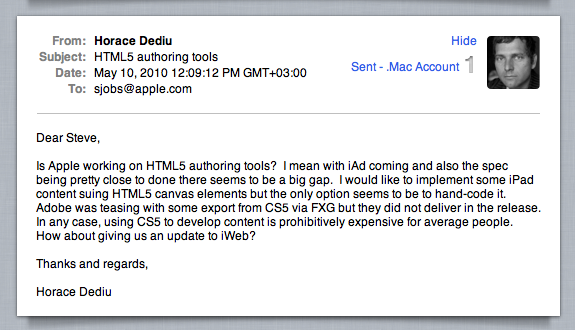
But on the outside, I am having to do it all myself. I started using actually iWeb, which at that time had a blogging tool. So, I opened an account on MobileMe. I was just putting everything through the desktop tools. They were right under my nose. Then I realized the limitations of that, and I moved to the next thing. I was like, "Oh! Seems like WordPress is something people use. Let's go to that." So, I went to WordPress.
Then I realized, "Oh! Hang on! If they are hosting me, they are going to put ads in my stuff, and I don't know what they put there. So, I better host myself...how do you do that? " I need to find a hosting provider. How do you do that?"
So, every technology, every bit of knowledge I had to have, I obtained strictly on my own. I say that every single character written in Asymco and every single mouse click that made it possible was performed by me.
I had no technical support at all. It helps maybe to have a computer science background, but years had passed. So, I was able to... Here the key to the whole thing is that, every step, I am learning, and it keeps me motivated. I am like, "Oh! I understand how this works."
I had some friends, who were more technical, and I would ask them, and they would say, "Oh! You are wasting your time. You can't get any traffic. This won't work." I would ask: "Tell me about Twitter", and they would say, "Oh! You're better off on Facebook." I was like, "Oh! Man!" Every single thing that I was given as advice turned out to be...
Jim Zellmer: Wrong?
Horace: Yes, doing the opposite would actually be the right thing. And so, I started learn about stats, the numbers game of blogging. So, how does that work? What does it mean to have good traffic?
I didn't expect to get advertising revenue, but I was thinking: what does it mean to be successful? So, I would go to John Gruber's site. John puts up his own rates, and I am like, "Oh wow! Look at the numbers." He actually tells you how much he charges per week, and then he says he is fully booked. So, you know what his income is. And so, from that, I was like wow! That's my goal I said to myself.
If I can get the traffic that Gruber gets, then I can charge these rates. I was trying to figure out how much traffic he was getting. He was getting like four million page views a month. I said, "I don't know if that's a lot or not." It certainly is a lot to get money, but you know, how do I get from zero to four million? So, what happened is that also when I was starting out, I reached out to John by email, directly by email.
Some time before I mailed him and said, "I used to work at Nokia and there's a couple of things you're writing about that I wanted to amplify or I wanted to give you some background." He has great stuff, and he actually used my material in one or two blog posts. I wasn't blogging at that moment.
But once I started blogging I mentioned to him, I said "Remember me? I sent you that info, and now I have my own blog." He didn't say anything. But then I wrote, I think the first piece that I wrote that was provocative. It was why someone at Microsoft had been fired or something like that. He linked to me. Then I saw. Then my eyes were open, because then my traffic... from zero to 12,000 a day.
Jim Zellmer: Yeah.
Horace: 12,000 views, for me, was like infinity. My server crashed and all that. I went back [to him] and I said "Thanks for the traffic. Now what do I do because I need money to be able to get this traffic managed." He said "No, you don't need money." You need to turn on caching." I was like "Oh."
Jim Zellmer: [laughs]
Horace: That solved the problem. But then I was asking him "So where do I go from here? Should I think about putting ads on my site? Is that the right thing," because I was so naïve. And he said "No, no, no."
He gave me one piece of advice. This is the only piece of advice I ever got from and from anybody that was useful. He said "Don't put ads. Just do what you do. Your value is in the future. Just keep doing what you're doing." That's all he said, one line.
I said "OK. If he says that, I believe it. That makes sense. Let's do it." I kept getting better at what I was doing, basically writing as well as I could, getting the feedback from comments and learning every step of the way.
This is still going on. One year on, I learned what Twitter really meant. I didn't know Twitter. The first thing I learned at Asymconf was what a hash tag is good for. [I mean] I knew what they were. But I did not use them. I never used a hash tag before Asymconf because I don't use Twitter that way. I don't use it to look up stuff. I mostly use it as a way to get my word out and get feedback, just like a mini micro blog.
But then I didn't understand the potential of a hash tag. It dawned on me when people were writing about Asymco and using a hash tag and if I searched on that I could find out everything that everybody said about it, a great idea.
But that I learned again just a few days ago. So many things I learned, thousands and thousands of details. So many things that the tables are now turned. Now people expect me to teach them about blogging.
Jim Zellmer: Yeah. [laughs]
Horace: For example, how to get traffic. A lot of people are sending me emails with paragraphs and paragraphs of effusive, "Oh you are so great. Thank you so much. Can you help me with this?" I'm like "Well, you don't need to say any of those thank you things, just tell me what you need."
A 15 year old sent me a request for an online interview. He made it easy. Five questions. So sure, I'll answer five questions. I treat everybody equally. Whether it's the Wall Street Journal or a 15 year old. I give them equal attention. I learn as much from both. The kids will teach you more, actually.
Jim Zellmer: Given all of that, if you were entering college today, what would you study?
Horace: I would still study engineering, absolutely. I am at heart an engineer. My son, I hope he does the same things I do. When I was a kid I loved building things.
I loved building Lego, although I didn't have money for a lot of them. I loved building model kits, the little plastic model kits, planes, and so on. That's not fashionable anymore, and mostly, it's old men who do it nowadays.
Jim Zellmer: [laughs]
Horace: [But] I'm trying to teach my kid. I actually bought a whole bunch of kits and began to model again so he could see me do it so he would get a passion for it.
I think building things with your hands, learning how things work, being passionate about numbers and about technology and things that are tangible is the only way to really create if your mind works that way. I'm not saying it's for everyone. To me, that's the heart and soul of progress.
By the way, I didn't mention this, but my parents also infused in me a love for the arts, and not "modern music". Being Romanians and of a certain age, they weren't ever part of the Rock and Roll, if you will, generation, although they knew of the Beatles.
So, they listened to classical music. Throughout my life I was exposed. I was taken to the theatre, opera, ballet. I used to sit in these performances since I was five years old. I maybe didn't get it. I wasn't talented. I tried to play the violin. I wasn't good at it, but I understood, after repetition, I understood the value of that.
When I went to that liberal arts college and got my degree, even though it was in computer science, I had a lot of requirements. I had to take English poetry. I had to take Japanese art. I had to take a lot of courses that were basic requirements. At the time, they were a burden, but in retrospect, they actually taught me a great deal. I'm very proud of having that background.
I'm not saying to not have an arts education, but absolutely, if you have the skills and can execute or can perform as an engineering student, do that and do the other things. Do the other things which develop the other half of your brain.
Jim Zellmer: Where did you learn to write, Horace? You write very well. Especially given that English is not your first language, you're able to be succinct and you have a wide ranging command of the language. So, where did you learn that?
Horace: Reading, partly. OK, so I have to give a lot of credit, and I did once on Twitter, give a credit to my English high school teacher. I said if you like the writing I have on Asymco, you should thank her.
Actually I wrote to her. She had seen my work in "The Boston Globe." It had been syndicated from that or something.
Jim Zellmer: [laughs] Wow.
Horace: She wrote me an email saying me an email saying, "I'm so proud to see your work and I sent it to your calculus teacher, as well."
They were both retired. The calculus teacher had seen my work in the financial section, actually. He sent her a note saying, "Check out the. . ." They read the paper. These are from that generation, right?
Jim Zellmer: Yes.
Horace: I've never seen my work in print. I've seen it online, but there it was. I thanked her. What I said is this: What she taught me was to write plainly and write clearly. This was Medford High School, a working class neighborhood, nothing special about it.
The teachers I had in English in Ohio didn't instill in me the same passion. The same books were read. Right? The same classics.
Jim Zellmer: Classics, yeah.
Horace: Twain and Conrad and all those classics, but the teacher in Medford, when I would write an essay, and also, I think, there was positive feedback because I was perhaps a little bit better than average in her class. Better than I was in Ohio. There I was about average, maybe.
I had good grades, but I didn't feel like I was great at it. I was nervous because a lot of the tests were vocabulary, or a lot of the tests were not essays.
This teacher instilled in me the passion for writing good essays. She kept telling me how great my essays were. I was writing somehow, and I loved reading the books. That's the other thing, the other kids would cheat. They would read the Cliff Notes.
Jim Zellmer: Yes.
Horace: They would copy from each other or do all these things. I was like, "No, no. I want to go home and I really want to read this book. These are really nice books." So, a lot of reading, a lot of passion for reading and I think practicing with essays. Practicing, also, in the writing of work online.
Now, again, when I look back at my early stuff, I cringe. It took me a while to find my voice. I didn't know what a voice was. I figured that out quickly. Then I had this challenge of working in the rigor of data. I realized the way to make my stuff stand out is to avoid opinion, to avoid hyperbole, to avoid all these things which bloggers seem to do.
So, anyway, it took some time. I think there's both a lot of ability, like, Einstein said, "It's 20 percent ability, 80 percent perseverance or perspiration." It's just practice. The other thing is it's like an athlete, right? An athlete gets good because they practice every day.
When I set out I said, "This is so much fun. I want to keep to it. I want to write a story every day. I want to write a blog post every day. I pretty much stuck to that. I was even writing on weekends, but I stopped because time, family. But, I write every day. I think of it as mental athleticism. You've got to go running every day if you want to be an athlete. You've got to write every day if you want to be a writer.
I heard, later on, that Jerry Seinfeld said he wrote every day. That was his key to success. He always tried to write jokes every day. That, to me, is what I learned. You bite your tongue sometimes, you learn how to deal with comments. Through comments, you see exactly how people make mistakes. They make mistakes by getting ahead of their thoughts, or they are too impulsive.
You get this great sense of what makes it good and I thought myself being able to write things. I write email in a good way, crisp in the email. You get a sense for it. For example, if somebody sends me ad copy, like a sponsor, and they send me a copy, I sometimes cringe when I look at it.
Jim Zellmer: I noticed that!
Horace: I can't help myself, I edit their copy, and even though they probably don't want me to, there is no time to go back and do feedback. But it's something you learn as a skill.
Some other people have asked me, "How can I teach my son to write well?" To me, it's not about being able to do more, it's actually being able to cut stuff out, and just go straight to thought. Maybe it takes practice.
Jim Zellmer: Now that you are a parent in Finland, your children are in Finland, so what choices do you have for your kids'?
Horace: We are very conscious of that. So, I like [Finland]. Well, I came for one reason, because, it was a wonderful place to play. But I stayed because it's a wonderful place for families.
What Finland's known for, among other things, is that it has the best scoring students on tests ...So, their educational system is considered absolutely in the top, literally top of the world.
There's a lot of mystery about why that is, and you can't really put your finger on it. A lot of educators from Finland have been on world tours trying to explain what they do, and everybody comes away scratching their heads.
I think this actually goes back to Christiansen theory, because when you study it people want to see a formula or an algorithm, but in fact, what is happening is, is something about whether the system is integrated or modular.
Whether the system is centralized or decentralized. So, it's not a question of process. It's like when he approaches health care, he comes at it from these two different angles. He says, "It's not about being public or private. It's being modular or integrated."
The assumption in other countries is always that everything is modular, and it cannot be anything else. So, in a sense, you need to question down at the deeper roots of causality.
So, my son, just to give you some perspective. He is now in pre-school.
He is six now or he is in grade zero, as they call it here, and he is going to a French school, meaning that they speak French in class.
Jim Zellmer: An immersion school. Yes.
Horace: There are several language schools like this. We're going to the French one partly because his mother went to a French school, his uncle went to a French school and they have loyalty to it, but also because I'd personally like for him to learn a romance language because I knew one. I still know Romanian. I had learned Italian, and I took French in school myself.
The thing is that it doesn't cost any more to go to that school than any other school. All education is free. Not everybody can get into any school, but it isn't about money. The other thing is that it's a small nation.
There's only about five million people, so all the decision-making can be centralized. There is no local school boards. There's no organization down to the smaller units that you might imagine. It's very simple and it's top down.
If you were to try to do a top down approach for a country as big as the United States it wouldn't work. You can't really transplant this system. People are very wary of centralization and control and the decision-making at the top that is incompetent. I completely understand that.
However, this being a small nation, it works and it's central. There's a question of optimum size. I mean, in some sense five million might be the right, maybe 8, even 10 million maybe works. I don't know beyond that.
There's also the question of how different the people are in terms of homogeneity. Although Finns are fairly homogeneous, there are minority groups as well and there's been plenty of immigrants. I'm not an expert on any of this, but I'm just pointing out some minor details.
I really like the school system. We actually had a parent teacher meeting this morning. They're very relaxed. Children seem to be much more relaxed. This is one thing that came across from the educators meeting and discussing around the world.
There's no pressure. Even though they're performing exceptionally well, there doesn't seem to be that pressure on testing, on measurement, on all these things that supposedly correlate with performance. In many ways, it's asymmetric, or doesn't make sense to people who are steeped in education theory.
I don't know if that's advisable, though. The problem, again, is that it may only work in this context. It may only work in the Nordic country, but we're very happy with the way it works. It's the same thing, by the way, with healthcare. Healthcare here is also centralized. It is a public resource.
Jim Zellmer: Yeah. What's your sense of the teachers you've encountered? One of the things "The Economist" reported a couple years ago was that Finland requires master's degrees from teachers. Contrasting that with what you experienced in America and Verona and Romania, do you have a sense of differences in the teacher capabilities, or no?
Horace: Because here mostly all degrees are considered Master's, it's essentially, I think, five years of school, of education. There's so many differences I can't even begin.
My wife, for example, she has a master's degree. A bachelor's degree would be more equivalent to like a two year college in perception.
Jim Zellmer: OK.
Horace: So, if you have a technical degree...a lot of people drop out. They get out because it is somewhat long and tedious and it is also not conducted in the American's style of valuing... It's so hard to explain. I actually would like him to go to university in the U.S., but I'd like him to go to every other school in Europe, or in Finland, more specifically.
I think the U.S. higher education system is better. It's better because it actually doesn't teach you according to a cookbook. It's actually much more open. In a way, that's the opposite in the lower grades.
Jim Zellmer: Yes.
Horace: The lower grades are open and the students are given a lot more freedom, and the teachers are given a lot more freedom. So, it's the opposite.
You'll see this, also, in Japan. Japan's educational system is a bit of a joke because they drill so hard in order to get good scores and get into a good university, but once they get into the university, they do nothing.
The entry is your ticket. After that there's hardly any effort. I've heard from others that the way university programs here are, many students will stay in for 6, even 10 years. It takes a long time because they'll drop in and out. They'll take a couple of courses. They'll do something else.
It isn't rigorous in the sense of, "Hey, the clock is running. This burns a lot of money. You've got to get a job to pay off loans." Because you've got that pressure on you in American universities, I think people actually are faster. It's more efficient. It tends to also draw more talent into it. The professors are more ambitious.
So, there's something I like about the U.S. higher education system, although if you listen to Clay, he'll say that it's also being disrupted, and he's probably right, especially the bigger names are going to be pressured from online education.
Jim Zellmer: Given your steep experience in technology and engineering, what is the role or is there a role for technology in education? Certainly in America and other countries we have all these people who say "Gee, our kids don't have iPads, they're just falling behind," among other things. So what is your perspective on that, Horace?
Horace: Well, technology is useless without the software. Hardware is useless without software. Computers are useless without a job to be done.
Jim Zellmer: Yes.
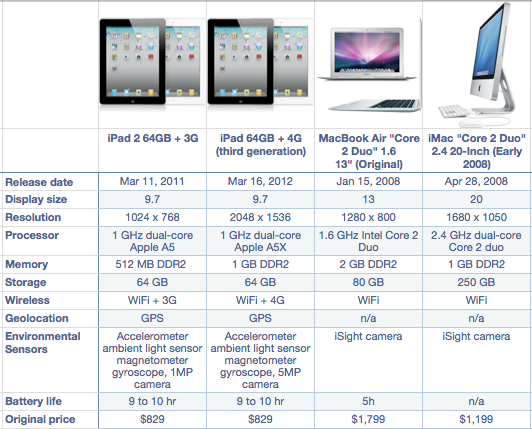
Horace: I believe technology will help, but we have to make sure that we solve the job problem with technology, rather than saying that technology itself is this answer. I think the iPad has potential because it enables the content to come through again. What you might learn by using it is focused on the content itself.
In other words, a computer was always hard to use. Most of the time you spent using it was actually learning how to use it. So you have to fight through it to get to the actual content and material was supposed to teach you something. Even the way that it used to be, that there was a computer room or a computer lab and you would go and sit in front of these computers and there were all these things considered.
In other words, it got in the way. I think that what the content needs to do is be more pervasive. You need to give the platform to someone who can build something on top of it, someone who can actually create new content, new material, new ways of teaching.
The real innovations that I've seen have been the Khan Academy or even Ted Talks or something along the lines of video content that is packaged in small pieces that people can take and learn at the rate that they're comfortable with. That makes a lot of sense to me. I don't know how that can be worked to the K-12 system because that is so regimented. But I think kids having iPads seems to be potentially a breakthrough opportunity there for how to really teach.
It's all going to come down to the materials. Is this a platform that teachers can build stuff on? The only thing I have to criticize the system for is that it's still not possible for laymen to create material for it. We need more and better tools that sit on top of the tools we have. So abstract from the hardware so you can create great e-books, you can create... experiments and so on.
Jim Zellmer: Right. Well, that's great. I appreciate your time today, Horace. Perhaps we can continue this again one day on education, which certainly continues to change. Again, good luck with the French school, with your son.