Asymco Bulletin 021 - July 12, 2025
by asymco-admin
Asymco Bulletin is a digest of all the work we have published for the week ending Jul 12, 2026.
Research
More than meets the eye

To see the future of wearables, I said look to where jewelry has been worn. The places where people trust metal against skin is where compute inevitably will reside. The categories are easily found. Head/Hair -> AirPods/Beats Arms -> Watch Hands -> Rings Ear -> AirPods Neck -> Beats My prediction has been more or less fulfilled. Today we wear Beats, AirPods, Apple Watch and (though not Apple) rings containing microprocessors. However, what is missing from this categorization is eyewear. In How We Got to Now, Steven Johnson describes the reading lenses of medieval Europe as the first piece of technology “since the invention of clothing in Neolithic times, that ordinary people would regularly wear on their bodies.” →
Stay tuned for more on this topic in the coming weeks.
Nota Bene
Apple and Broadcom extend deal through 2031 → Broadcom and Apple extended their custom-chip agreement through 2031, and Broadcom jumped nearly 4 percent on the news. Apple is around a fifth of Broadcom’s revenue, so this is a lock-in that cuts both ways. Even as Apple designs more of its own silicon, including the C1 modem, it still leans on Broadcom for wireless and RF. The pattern is familiar: secure the supply years ahead, then decide later what to bring in-house. →
Apple destroyed the mid-tier watch market. Now it’s coming for the $200 billion eyewear industry → When Apple entered watches, the mid-tier collapsed. Swatch is down 28 percent and Fossil roughly 70 percent, and Apple now outsells Rolex by revenue. The smart glasses category already surged 167 percent, and Apple is reportedly aiming at late 2027. Eyewear is a $200 billion industry that has never faced a competitor who ships hundreds of millions of wrist computers a year. →
Office Hours
Did a lottery winner become “the company of the future”? → The Wall Street Journal put Nvidia first among companies of the future and Apple twelfth. But Nvidia’s history is a flat line and then a near-vertical one, because the matrix-multiplication chip they already made turned out to be perfect for AI. That is winning the lottery, not building a moat. They have maybe five customers, every one desperate to replace them, while Apple ships hundreds of millions of chips a year; ask where Nvidia is in a decade. →
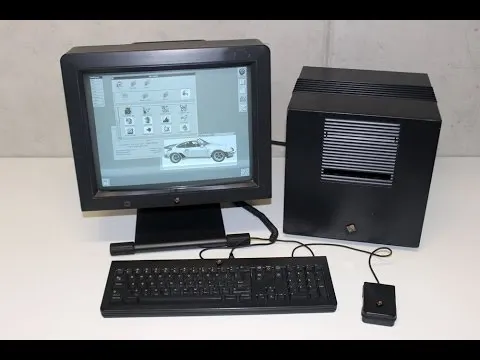
The portability superpower → Someone asked why MLX lets you write for Apple Silicon and then move to Nvidia, a reverse Trojan horse. It fits a very old pattern. Apple has sweated portability since the Mach kernel and the PowerPC-to-Intel jump, when moving the entire OS looked impossible to everyone but them. Doing it at the level of AI chipsets is nothing new; the same instinct is why a touch-ready Mac, when it finally ships, will feel anticlimactic. →
Comments