Is the Market Overvalued? Four Perspectives
by asymco-admin
Data, data everywhere but not a conclusion in sight.
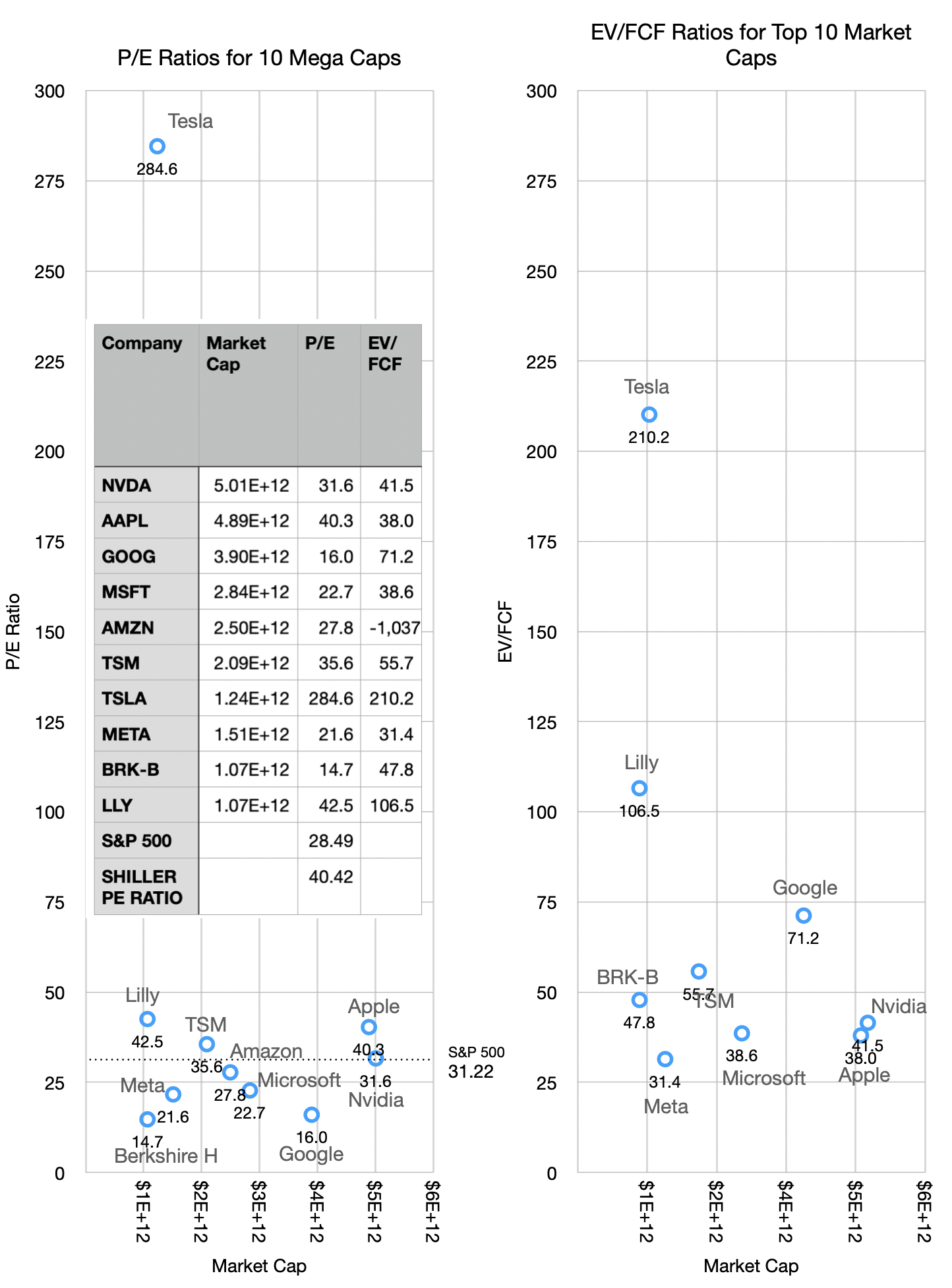
Is the market overvalued? Two measures to consider are P/E and EV/FCF. Here are those measures for 10 of the largest companies in terms of market capitalization and the overall S&P 500. Note: Amazon EV/FCF is less than negative 1,000 and is therefore excluded from the second graph. As we move forward the FCF for more of these companies will turn negative. Alphabet just recorded its first negative cash flow since going public in 2004.
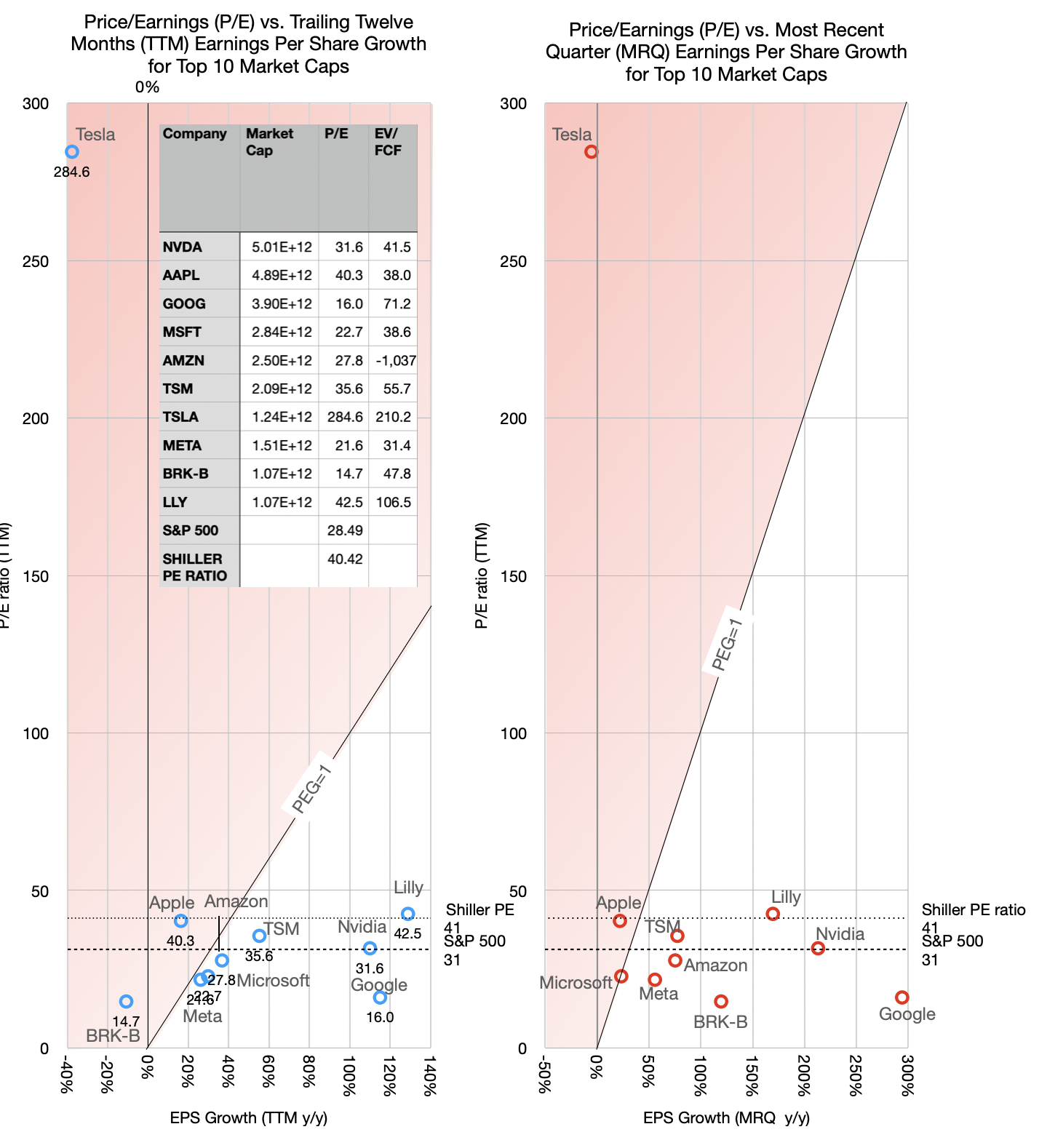
P/E should be compared to growth rates. Both growth in the most recent quarter and in the last 12 months. Here are those P/E vs. Growth measures for 10 of the largest companies in terms of market capitalization and the overall S&P 500. Rule of thumb: if PE=Growth*10 (PEG=1) then the company is "fairly valued". But, given crazy capex, we should also look at EV/FCF…
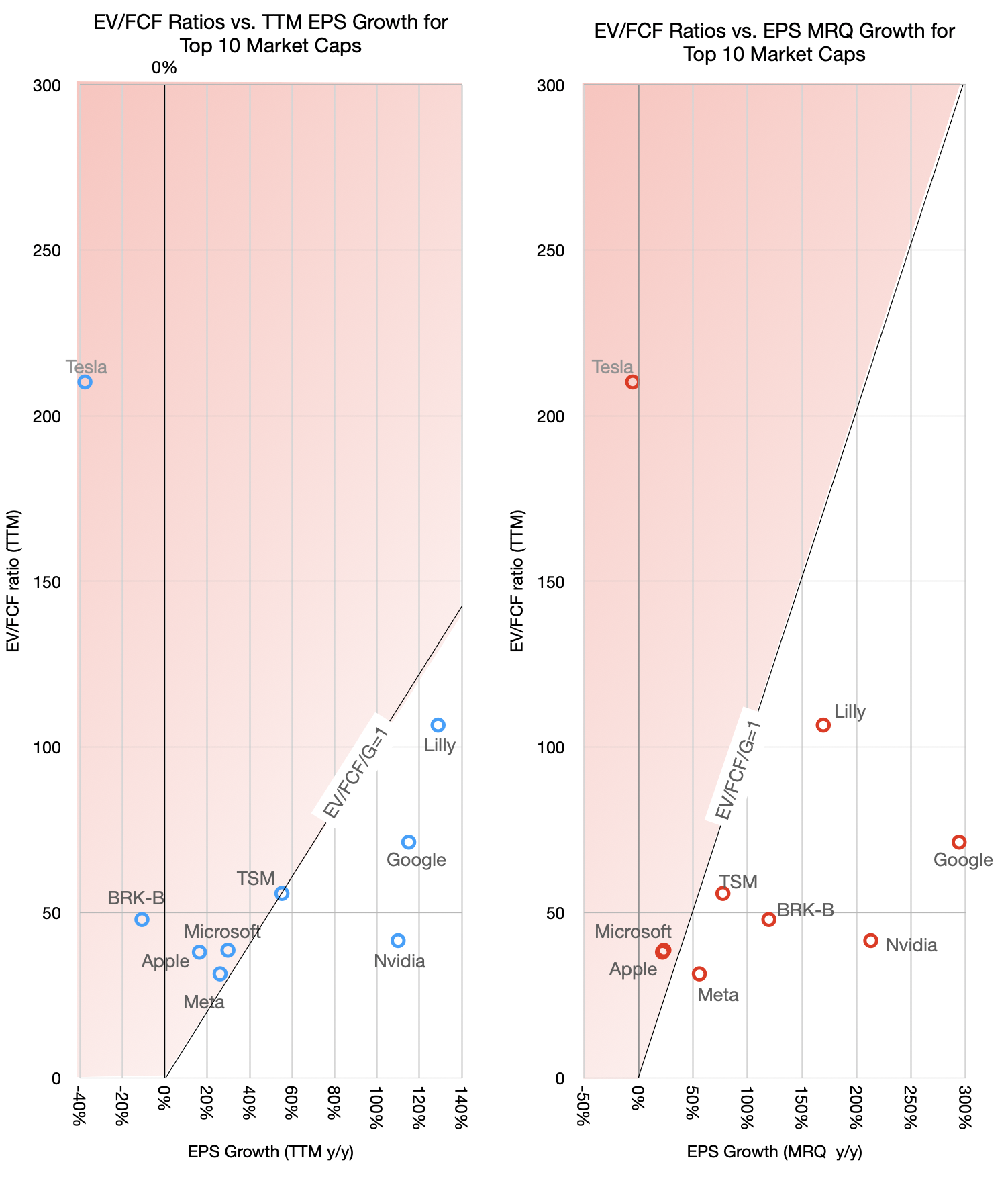
In addition to P/E, Enterprise Value/Free Cash Flow should be compared to growth rates. Both growth in the most recent quarter and in the last 12 months. Here are those EV/FCF vs. Growth measures for 10 of the largest companies in terms of market capitalization and the overall S&P 500. Rule of thumb: if EV/FCF=Growth*10 then the company is "fairly valued". Note outlier Amazon is excluded due to negative FCF. Soon, it won't be the only one. What other anomalies exist?
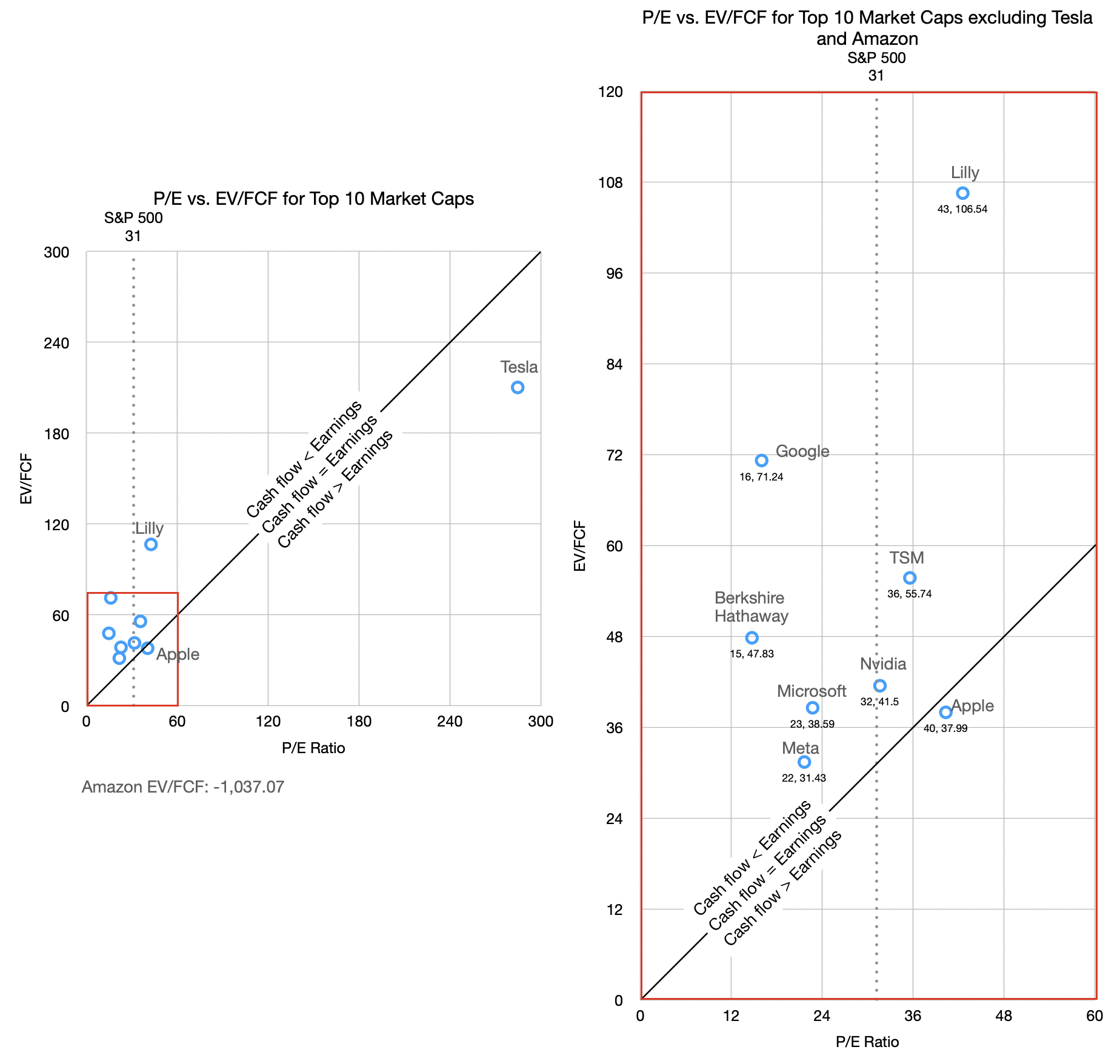
If the Price/Earnings (P/E) is similar to the Enterprise Value/Free Cash Flow (EV/FCF) then the company is "in balance" where neither cash is being used for investment nor earnings are overstated. Here are the two ratios relative to each other for 10 of the largest companies in terms of market capitalization and the S&P 500. We can see that the balance is uncommon. Apple is rather alone in that regard (apart from Tesla which is in its own bizarro world.) Amazon also is off the scale. Soon, it won't be the only one.
So, is the market overvalued?
Not all these companies have reported so we should update the data in the next week or so, but I've been tracking this type of data for 18 months. It continues to exhibit a reasonable P/E ratio (apart from Tesla, as always). The FCF however will turn negative and will make reasonable assessments impossible. As the cash flow turns negative, firms will raise debt to finance their desperate flight from commoditization. That's when the situation will turn challenging for not just the market but the global economy.
Recessions are built on bad debt. It's not yet at the point where there is much debt and it's not yet bad debt. But if the financing of data centers becomes debt-driven and if the cash flow does not support this financing then contagion may occur macroeconomic consequences will follow.
The market itself may not be a leading indicator if it measures only earnings. Remember: earnings are an opinion, cash flow is a fact.
1 comment
FredHS ·
A second order question remains regarding depreciation. Right now, demand is so high that older chips hold their value and installed memory chips have actually increased in value. Memory chips, a commodity, could accelerate depreciation, which then becomes an expense, impacting EPS.
Contrasting note: Apple's balance sheet is absurdly conservative, with nearly no data center, and absolutely zero for capitalized R&D, brand equity, and IP counted. Their real estate is artificially low, being marked down for depreciation, and never marked to market despite being in prime locations.