Asymco

Asymmetric Intelligence

Apps

  1. Flight Sight: Pilot Training

    Nota Bene

    Flight simulation has come a long way.

    Flight Sight by Rogue Aviation uses spatial computing and immersion with 3D helicopter models to create piloting experiences.

    https://apps.apple.com/us/app/flight-sight-pilot-training/id6741590229

    NB: Helicopter flying is one of the most difficult piloting skills to master. The implications for training and education can hardly be overstated. The Vision Pro remains, two years later, the most impressive computer I've ever used.

  2. Apps attract more viewer attention than most TV shows

    Research · 15 comments

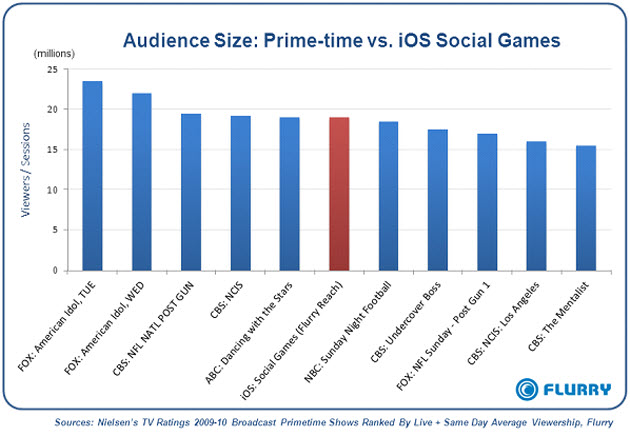
    Social games on iPhone, iPad and iPod touch devices are competing for television viewers.  In fact, these apps, tracked on the Flurry network alone, comprise of a daily audience of more than 19 million who spend over 22 minutes per day using these apps.  Treated as a consumer audience, its size and reach rank somewhere between NBC’s Sunday Night Football and ABC’s Dancing with the Stars, and only 4 million viewers shy from beating the number one prime-time show on television, FOX’s American Idol.

    via Flurry.

    I cannot tell from the original article if the iOS audience is US only and therefore not clear whether the TV shows compete for the same eyeballs, but the data shows just how far apps have come to capturing attention.

  3. People are using apps way more than they are using search

    Research

    Steve Jobs On iAds:

    [It's to] make developers more money.... People are using apps way more than they are using search. So if you want to make developers more money, you’ve got to get the ads into apps. But the mobile ads we’ve got today rip you out of the app..." Apple has figured out a better way.

    This is pretty much the same as his statement on the iPhone 4.0 launch: asymco | On a mobile device Search hasn't happened.

  4. On a mobile device Search hasn't happened

    Research · 7 comments

    This is one of the most thought provoking things I've ever heard.  Some of the implications are unfathomable.  Before we dive into the implications of iAd, here is the exact quote from the Apple Special Event, April 2010 (iPhone 4.0 launch) around 45 minutes in.

    When you look at a mobile phone, it's not like the desktop.

    On the desktop, Search is where it's at.  That's where the money is.

    But on a mobile device Search hasn't happened. Search is not where it's at. People aren't searching on a mobile device like they are on a desktop.

    What's happening is that they're spending all their time in apps.

    When people are looking for a place they want to go out to dinner they're not searching. They're going into Yelp. They're using apps to get the data on the internet rather than a generalized search.

    And this is where the opportunity to deliver advertising is.

    Not as part of search but as part of apps.

    Jobs is making a set of huge claims:

    1. There is no search on devices.
    2. There is no money in search on devices.
    3. Apps create an inventory of billions of ad impressions every day
    4. Apps are better at delivering the data from the internet than a browser
    5. Apps are therefore the new browsers and eyeball aggregators

    This is heavy stuff.  I believe what gives Apple the confidence to make these claims is the vast amount of data on user behavior that the app store collects. It's possible they're wrong, but it's more likely they're right.

    If they're right, what are the implications?  First, obviously, iAd adds up to a lot of cash « Asymco.  Second, this has dire consequences for Google.  Jobs could not be more blunt: search is not where the money is at.

    I can chip in some personal experiences that confirm this preference for apps over browser interfaces, but I leave it as an exercise to the reader.
  5. Analyst: App Market to Reach $15.xx Billion by 2013

    Research

    An upswing in the market share of “smart” devices, along with an increase in application focus from OEMs, OS developers and mobile network operators will drive yearly app revenues from US$1.94 billion (2009) to US$15.65 billion in only four years, according to our most recent research findings. The application market’s growth is driven by the widespread push of advanced handset capabilities by the mobile industry and the increasingly-connected global consumer base. This trend will continue, seeing global smartphone users numbering 970 million by the end of 2013.

    link: SMARTPHONE APPLICATION MARKET TO REACH US$15.65 BILLION IN 2013 | research2guidance

    Nice numbers. Too bad they blew their credibility by showing too many significant digits in their estimate. How can they state with a straight face that the market could reach $15.65 billion without some hint of a potential margin of error?

  6. Fortune 500 iPhone Use

    Research

    Curious possibility:

    More companies have promotional apps on the iPhone than permit their employees to use one. About 30% of the Fortune 200 already have iPhone apps.