Recording and transcript of the September 11, 2026 of the Office Hours Duo, recorded in Sunnyvale two days after Apple's September event, the first keynote under John Ternus.
Horace shares his impressions from the event and the briefings that followed and takes questions from Asymco One subscribers.
See inside:
- Duo: a pricing decision made seven years ago
- Theatrical, not cinematic: on the attraction of moving objects
- Duo cents an unlock
- The 1.2 billion-dollar puzzle of the iPhone ASP
- Why launch iPhone 18 in spring?
- The anti-social: Siri, designed not to be a companion
- Apple's unpretentious moonshot
- Memory: one-hundred year flood led to famine. What's next?
Subscribe to Asymco One to see the full recording and transcripts.
If you missed the first part of Office Hours Duo, you can still join us this coming Friday in person or remotely.
Video Recording
Subscribe to Asymco One to watch the recording and read the transcript.
https://asymco.com/wp-content/uploads/2026/09/Asymco-Office-Hours-2026-09-11.mp4
Transcript
Horace Dediu: Thanks for joining us. We're having our first in-person Office Hours. We've had Office Hours before, but nothing quite like this, and we're having another one next Friday on the East Coast. Today we're in Sunnyvale, near Cupertino, where I was part of the Apple events. They even had us do a walk-run kind of physical thing with Apple Watches. That's where I got this hat: a little souvenir with the rings, and it says Apple Watch on the back. I took part in a run around the Apple Park building, the spaceship. Some people walked, some people ran, and I chose to run. It was ninety degrees Fahrenheit and it was quite a struggle, but I managed to complete all three laps, about three-plus miles, with a bit of jet lag in the process.
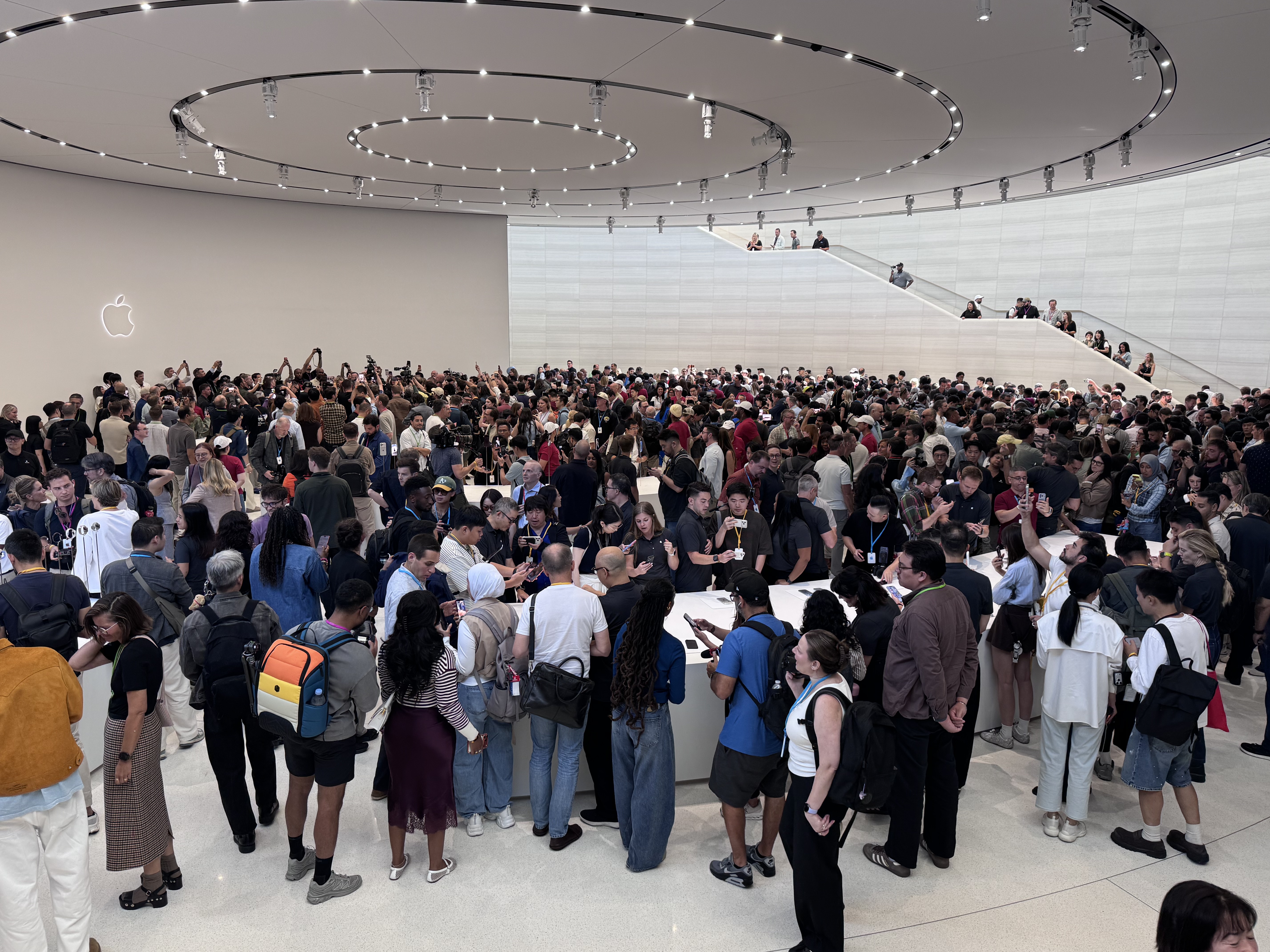
I've been to a lot of these events, and one thing that struck me was how many more people seemed to be there. The audience is typically media. They're there because they're going to promote the product. The purpose of the event is to make sure the word gets out, and none of those people are paid by Apple to be there. This is what's called earned media. Maybe there's some compensation for travel for some, but generally people volunteer, or are asking to be there. I've never seen so many people at this event. It was completely packed. They bussed in a lot of people from all over the world. I somehow ended up with the Europe crowd, so we had a Europe bus, a Japan bus, a China bus, and they clustered us by colored lanyards into different parts of the Steve Jobs Theater.
Watching all of that operationally was fascinating: the degree of scale and professionalism in event production and event marketing. I've seen dozens of these, but this seemed to be the biggest in terms of production quality. Afterwards we got several briefings. There were people allocated to manage us as groups. I got to see the Mac mini and the Studio being used as localized AI servers, and we met with the product management teams for Apple Intelligence, the iPhone and the Apple Watch, one-on-ones with the product owners, product marketing people, and got to ask questions.
I got to see John Gruber, the usual suspects, Ben Bajarin. I happened to also see Phil Schiller, who was in the audience, and Avie Tevanian, an eminent ex-Apple engineer famous for his contributions to NeXTSTEP. I didn't meet John Ternus. I escaped from the huge crowd because it was so hectic and so busy, like a circus.
Given this behind-the-scenes look, my impression of the products is this. Firstly, and I wrote it up today, the pricing was a shock. I think the pricing was very low, and the shock to me was that they are holding the line. Bank of America issued a note suggesting they're going to take a hit on margins, and as a result lowered their target price a few dollars. It's symbolic. I think Apple is very careful about what they're doing here. Pricing at Apple is an art. I've said this many times. It's one of the most carefully thought-out decisions they make, and it is not tied to competitive issues. To some degree, with memory, it's tied to supply questions and to being cost conscious, but it is much more about signaling to customers what the value of the product is. Is it a thousand dollars of value, or multiples of that thousand? That price becomes something that competitors need to deal with. Apple doesn't deal with competitors. Competitors deal with Apple.
There have been leaks, credible ones in my opinion, that the Duo began seven years ago. This is not unusual. The iPhone took seven years. The Vision Pro took seven years. The Apple car, before it was canceled, took seven years. These things take a long time. And I think the decision to start seven years ago was predicated on the premise that this would be a $2,000 product. That price was set that long ago, irrespective of what happened since. So pricing is one of those things that suggests a very strategic intent. Now, they've tweaked the prices of some of the older products, and the piece I wrote today measures exactly what the percentage changes are depending on the amount of memory involved. That's a reaction to commodity pricing. But overall it's very disciplined pricing, and I think they're going to manage the volumes in a way that is optimal.
I'm not the only one to say this: I think the Duo will be supply constrained for at least four to six months, which in my mind means about a month's waiting for some configurations. The 18 Pro and Pro Max will probably be less constrained. But demand for the Duo is going to be off the scale. Already people who were skeptics, myself included, are thinking about how to justify buying one. The only one I spoke to who was still on the fence was Ben Bajarin. He really likes the single monoblock configuration. I think he'll cave. He'll realize he needs something like this, if not as a daily device, then for some tasks.
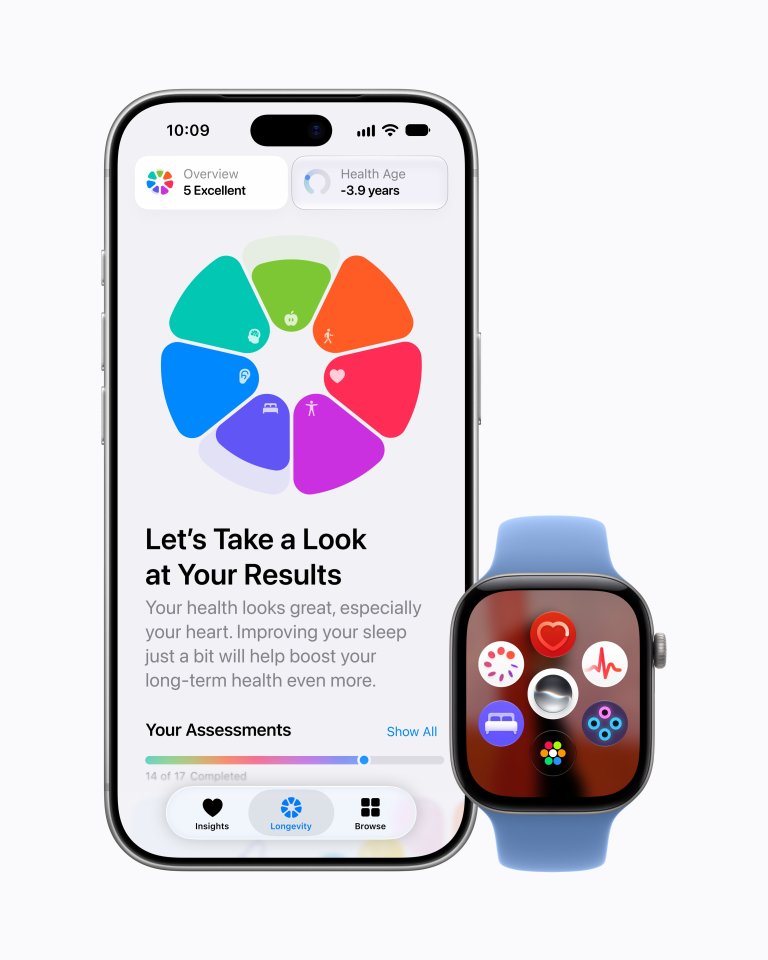
The products are phenomenal. The Watch: I'm going to write another piece on the new health initiatives. I don't know what to call them; the focus, the dedication. This is a recurring theme, but health is now up yet another notch. It's becoming a coach, an advisor, a longevity guide. That's all very exciting. We're about fifteen minutes in, so let's make sure we give people time for questions. First, anyone with us here. Fred, do you have anything?
Fred Stein: It's a theme that I think is underreported about the iPhone Duo: pleasure, and prestige, the pride of ownership. It's always been there with Apple products. But being the first to get a foldable, right after everyone's been talking about it for so long, and Apple having its demographic, this might be a big driver, rather than everyone thinking about the practical aspects of it.
Horace Dediu: Absolutely. The skeptics are the ones who haven't been able to be there, and seeing is believing. Let me use some framing. I called it having a sense of theater about it. It took what was a two-dimensional experience into three dimensions. As the demos show, it's always in motion. It's not just opening it as a book, though even the book nature of it matters. It can be held at a slightly open angle to resemble a book. It will be an alarm clock, a television, a keyboard and screen, and with the Apple Pencil it will be a notebook. The configurations they've demonstrated suggest that it has a sense of theater, a presence, a satisfaction you get from using it in a tactile way. It is not a simple sheet of glass. That has its own attraction; we've always been sold on the thing as a piece of glass. But now it's suddenly an origami, a moving object.
I'll give my own story. When I was at Nokia we believed in the so-called monoblock, a single phone that didn't have any moving parts, for many practical reasons. It was more durable. It had a longer battery, because you could put a big battery in it. It was cheaper to manufacture. There were all kinds of benefits to having no moving parts. And yet, at the same time, in the US and in Japan the flip phone was catching on big. Everyone in Finland was scratching their heads and asking why anybody would do this, as a user or as a builder of phones. We were resistant and reluctant to convert to the flip format, though eventually I think they did launch a flip phone. One of the things people argued with us about was that there's a sense of action when you open and answer, and a sense of closure when you end the call by closing the phone. In Japan, even more so, they had antennas that pulled out, so you opened it and had all these activities you would do to initiate a call. It's not just for the person doing it, but for the person watching. There are all kinds of secondary and tertiary effects to this form and the way it feels.
On top of that, I think there's an element of attraction that, without saying it's only women, I think women are going to feel more: that this is more stylish. My wife, for example, has a case that opens this way, because she likes to put cards in it, and she likes the physical cover because the phone sits in a purse. There are all these reasons why you want a folding form factor. It's something perhaps a bit more feminine, and that alone might attract people. We don't think logically about this. We think this is a waste of energy, a waste of time, but it's extremely important to understand. I'm unable to articulate it fully because I haven't seen the research or the data. Perhaps no one has; perhaps it's all secret. But I think Apple has seen what people do with things that move.
Remember, even Jony Ive said people like to fidget. If you have a pen, you're always clicking it. If you have a pen with more than one function, where you can select different colors of ink, you're always messing with it. There's this notion that physically moving objects have a natural attraction. If I ever have a pen, I take it apart to see what's in it. The psychology of behaviors related to physical objects we hold that have moving parts: I think there's something there. The folding competitors may have known this already, but Apple just didn't think the technology or the quality was there until now. They've made that clear. Apple doesn't do it just because you can. It only does it when it can meet their criteria to be sufficiently good.
So the product is going to be a big hit, even though it's a niche, and many people, maybe most, would argue they don't need it. It'll be a bigger hit than we anticipate. Initially the market reaction was very muted. The stock closed flat, down half a percent or something. But since then it's risen quite a bit, and on the second and third day we've seen the realization, also by the media who were out there, that this has resonance with audiences. There's a lot of buzz around it. It's on another level. It's not about specs. It never is, with Apple, but in this case in particular I think there's a mystery to it, a mystery as to why it's going to be successful, and a charm. I always said Apple really sells hormones. Here we have people who are going to have the flushed cheeks and the dilated pupils, an emotional, hormonal response. And another thing: if you see another person with it, it's going to be contagious. People will get it from others. And if you go to the store, this is why stores exist. The Apple Store exists precisely for this product. Steve even said the Apple Store exists for the Watch, because once you see it and touch it, you'll be persuaded. In this case, once people see it in the stores, it'll be a huge driver.
Farshad Nayeri: You mentioned it was theatrical, and I didn't realize at first that you meant it in contrast to cinematic, which is the two-dimensional experience of the iPhone. Theater is three-dimensional, and it is a moving object. Of all the things Apple has made, most are not like this, with screens that move.
Horace Dediu: They have dynamism within the screen, and the Vision Pro is three-dimensional virtually. What you see on screen comes alive; it's illuminated, and there's beauty in it. But when you go to the theater, the idea is that you have much more intimacy. I wouldn't say this is the first and only one. The Watch has a similar feel because of the band and multiple controls. Watches have always had that kind of mechanical nature. But this is on another level. The object itself transforms.
Farshad Nayeri: Our experience with the iPhone has been that you touch something and it reacts to you. The screen reacts to your touch. This has it when you open it. That physiological loop between you doing something and it responding: the things that do this are animate objects, live objects. It makes it more alive than a screen. And it's hard to convey any of this.
Horace Dediu: We're having a struggle here trying to put it in words. Once you see the thirty-second video, then you see it in real life in front of you, then you see other people using it. All of this is the usual effect. Honestly, to see it is to love it.
Fred Stein: I was riffing off one of your prior articles: reasons to buy it, reasons to have someone else give it to you. Especially in emerging markets. I'm hoping you can go a little further into emerging markets.
Horace Dediu: As a gift, from men to women perhaps. As I said, it has a nature about it that's attractive. It's an attractive gift, perhaps more feminine than masculine. I'll be honest: I'm thinking of giving it to my wife. I hope she's not watching. I know she likes this form factor. That's how I think about it. I perhaps wouldn't even have one for myself, although maybe I will eventually.
I'll tell you a big secret. My favorite iPhone is actually the Air. I don't have one now; I'm waiting for the next version. The Air, as John Gruber says, is the nicest iPhone. It has a niceness about it. It is maybe the most beautiful iPhone ever. Here's how I think of it: I'm not sure I can pull it off. I wish I could own one, but to do so would require some compromises. It's like saying I wish I could pull off this outfit, or these shoes. If it's a lady: I wish I could do high heels, because they're wonderful, but they're bad for my back, so maybe I shouldn't wear them. The Air is a similar type of thing. Having it, socially speaking, signals that you are sacrificing for the sake of art, for the sake of beauty. I carry a phone that is less than perfect, but it's beautiful; it's sublime. I'm told many top Apple execs carry that phone, because there's an understanding that it is high art. To me, that's the more desirable one. But the Duo is yet another level.
Farshad Nayeri: In jobs-to-be-done theory there are three types of hotspots. What you have been describing is the emotional: you open it, you close it, the feeling of that. And the social: other people see it and ask, can I play with it? But there is another one called functional or practical. I think anyone who actually uses an iPad on a regular basis and has an iPhone is going to want one of these, because it's one device. It replaces the iPad mini, and it gives the pocket exception to the iPad. You always want to find what kind of pocket fits an iPad mini, and now you can put it in any pocket.
Horace Dediu: A lot of people are going to discuss the utility. The whole point I'm making now is to work at another level, away from utility, which gets less coverage because it is so much harder to talk about.
Farshad Nayeri: Dave Sundahl and I were studying this. If you get all three hotspots locked in, it's very hard, once you have that, to displace that product. It's very stable.
Horace Dediu: I've been reading many, many comments since the event, and a lot of people are discussing exactly this: pencil use, could I replace my iPad, what size is it, all the possible measurements. I'm trying to highlight the fact that it's sublime beyond these things. The decisions to buy it are much more emotional than rational, because frankly that's how it came across to me. It's a product of dazzling dimensions of attraction, not just utility. It is above that. People argue, and I bring up metaphors and examples: high heels, fashion, jewelry. Why do people buy jewelry at all? It's extremely non-functional, but it signals between people. Especially as a gift, it signals love, it signals desire, and people like to receive those symbols. I don't have to beat this horse. My observation is: why do we not think this should apply to devices that happen to do other things as well, especially highly utilitarian things?
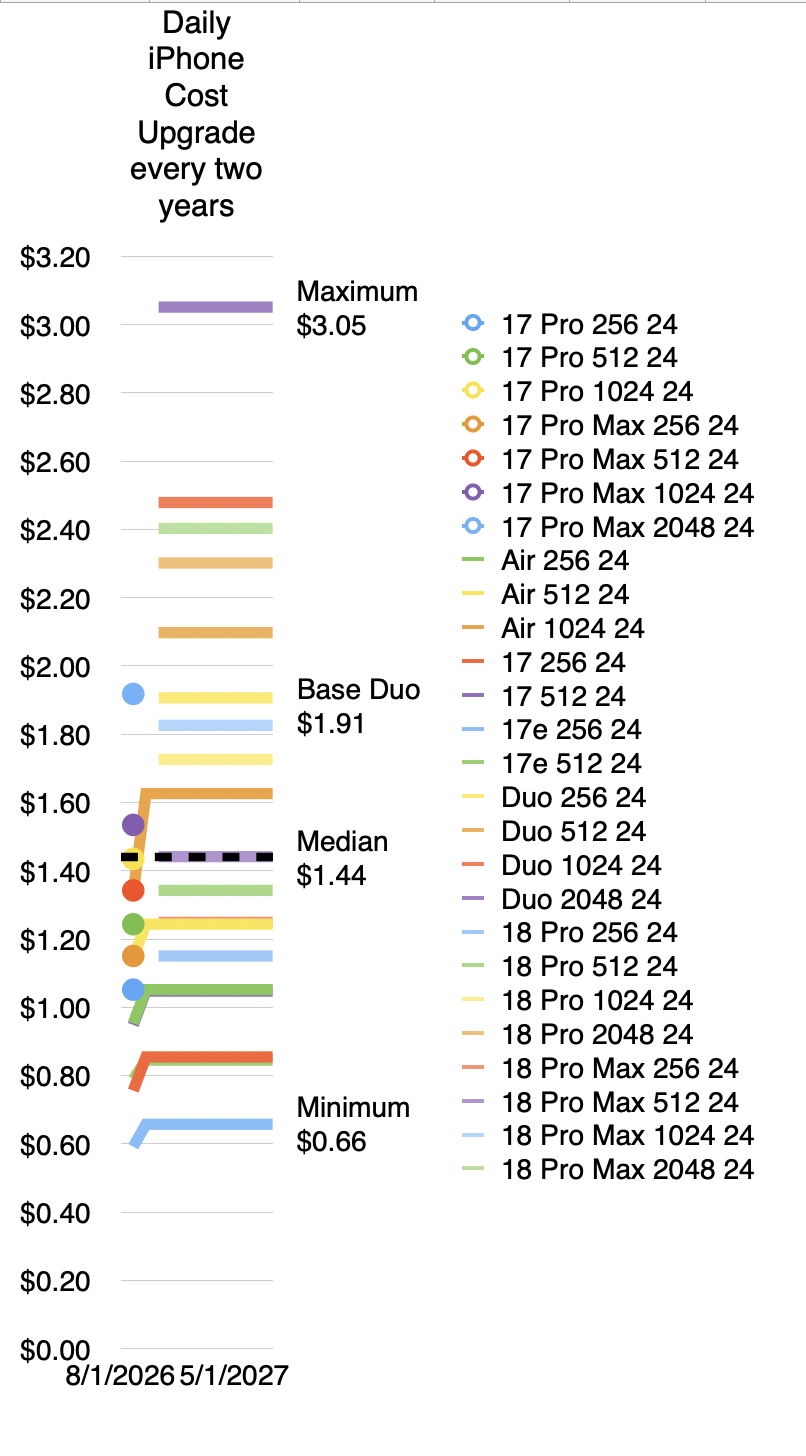
Let me step back a moment to talk about price again, because I also published this idea that the pricing of the product is about a dollar ninety a day at the starting point of the Duo. Let's round up to two, once you factor in taxes and whatnot. So you end up at two dollars a day, and that's about twice the historical average for the iPhone, or even the average Apple product. The median Apple product is a dollar a day. You can go and check this out: go to store.apple.com, price the product, and see what the lease price is. It'll be approximately $58 per month. Divide that by 365 over twelve and that gets you the daily price. I've done this for all the iPhone configurations, and for other products when they announced Apple Upgrade. Whenever someone says this is going to cost me my mortgage payment, some ridiculous number, that they can't afford it: you have the option to pay on a monthly basis, and it comes to two dollars a day.
And here's the killer: it's in use four hours a day. Maybe, because of the fold, it's going to be in use more, because people will find jobs to do with it. Entertainment is a huge time sink. People will sit and watch more video, not just short form but long form. Short is easy, that's swiping. Long form: open it up, start watching a movie. Much more comfortable on this device. Then you start to add up the hours and the number of interactions. The average number of unlocks of an iPhone was 80 many years ago. It's possible we're now at a hundred unlocks a day. So two dollars divided by a hundred unlocks is two cents every time you use the phone. If it gets more use, it becomes even cheaper.
I think people intuitively know this is the most useful product they own. It's the one they can't leave the house without. It's the one they panic over if they can't find it, and they have to have a way of finding it. I use my Watch to find my phone every other day, because it might be in the couch or in the other room. It's so important that you can't be without it for more than a few minutes. It's the thing you check that you have with you whenever you leave the house, and you think about safety all the time: if I don't have my phone, I'm unsafe. What if something goes wrong? If it's that important, two dollars a day. And by the way, the median across all the variants is a dollar forty right now. You can buy a used one for much less: a used iPhone for $400 or $350, no problem, an iPhone 15 or thereabouts. Even if it only lasts two years, that's less than 50 cents a day. The value is unbelievable. I'm preaching to the choir, but I wanted to throw in the $1.90.
Farshad Nayeri: A little while ago I did a calculation of how much things cost versus how much you use them per day. The cheapest, the one with the most spend and the most utilization, turns out to be your bed. Of course those aren't awake hours, but they're hours. The smartphone was number two.
Horace Dediu: But the bed goes with the house. That's the difference. The phone is always with you, even when you're not at home. I did this for cars, and cars are the worst. If it's a luxury car that depreciates quickly, it could be over fifty dollars a day. The cost per mile is fifty to sixty cents nowadays, maybe even seventy-five with inflation.
Farshad Nayeri: I was looking at it per person. Two people share a bed, and a home is shared across two-three-four people.
Horace Dediu: I don't question the bed. The bed is up there because you're in it for so long, and you should invest in a good mattress, no question. I'm pointing out that the bigger objects in your life, washing machines or refrigerators, are super important and very low per unit. What I'm trying to convey is that there are things in life that are underpriced, in a way, because we use them much more than we think. And other times we're spending way too much. I think cars are much too expensive for what they deliver. You spend one hour a day in a car and yet you spend tens of thousands for one. It's unbelievable. Anyway, moving on.
Farshad Nayeri: We have some questions. Bob V. asked about AI interactions, now that the new iOS has AI built in. When hallucinations or wrong answers came from ChatGPT, or the original integration we had, Apple could say this is ChatGPT's problem. But now it's integrated into the OS. How does that work, and does that make any difference?
Horace Dediu: In other words, is there a risk for Apple? I suppose. But then again, people have gotten used to AIs being wrong. There have been improvements in performance and quality, but there's an acceptance that the nature of AI is that it's not deterministic, and usually you get a disclaimer saying answers may be wrong. I don't think there's that much brand risk, as long as the experience is as expected. Of course, Siri also had its problems, but it wasn't usually being wrong. It was not understanding, or not getting the question right.
Where it gets dangerous is if you're using these technologies to make decisions that are life-threatening, or if it gives you bad advice, as we see with chat AIs, where people become psychotic as a result of using them. I got a briefing on this from the product manager of Apple Intelligence, and she said: we're building Siri not to be a companion. It was a very big deal. It's an advisor, but not a companion. Siri is there as a concierge, a professional persona. It is not an amiable person, because they want to maintain an emotional distance. That was by design. It's interesting they made that decision, because it would have been very attractive to create a companion Siri. Years ago, when Siri first came out, Big Bang Theory put Siri as a character in one of the shows: the nerdy characters became emotionally involved with Siri, and it was a cause for comedy. That was more than ten years ago, and I think since then Apple has become very aware of the pitfalls. They're probably conscious of the hallucinations and being careful with that. But the main focus is not on error prevention. It's on preventing violations of privacy or security. It's far more scandalous if they're accused of some sort of leak of information. They'd get sued right away.
Farshad Nayeri: Or capturing information: not leaking it, but internally using something.
Horace Dediu: There was a recent lawsuit where they were claiming there was a privacy fault, and they would get sued because of their claim. This gets very tricky: regulatory concern, legal liabilities, class actions of all kinds. It's part of the cost of doing business, managing all that risk.
Farshad Nayeri: I've been using the Siri AI in the beta, and I think there are ways Apple could reduce this. They have situations where they know about, say, my contacts. If I'm asking a question about a contact and it hallucinates, they can check whether it's one of my contacts. There are ways to limit the search space, because they have access to a lot more data than your average cloud model.
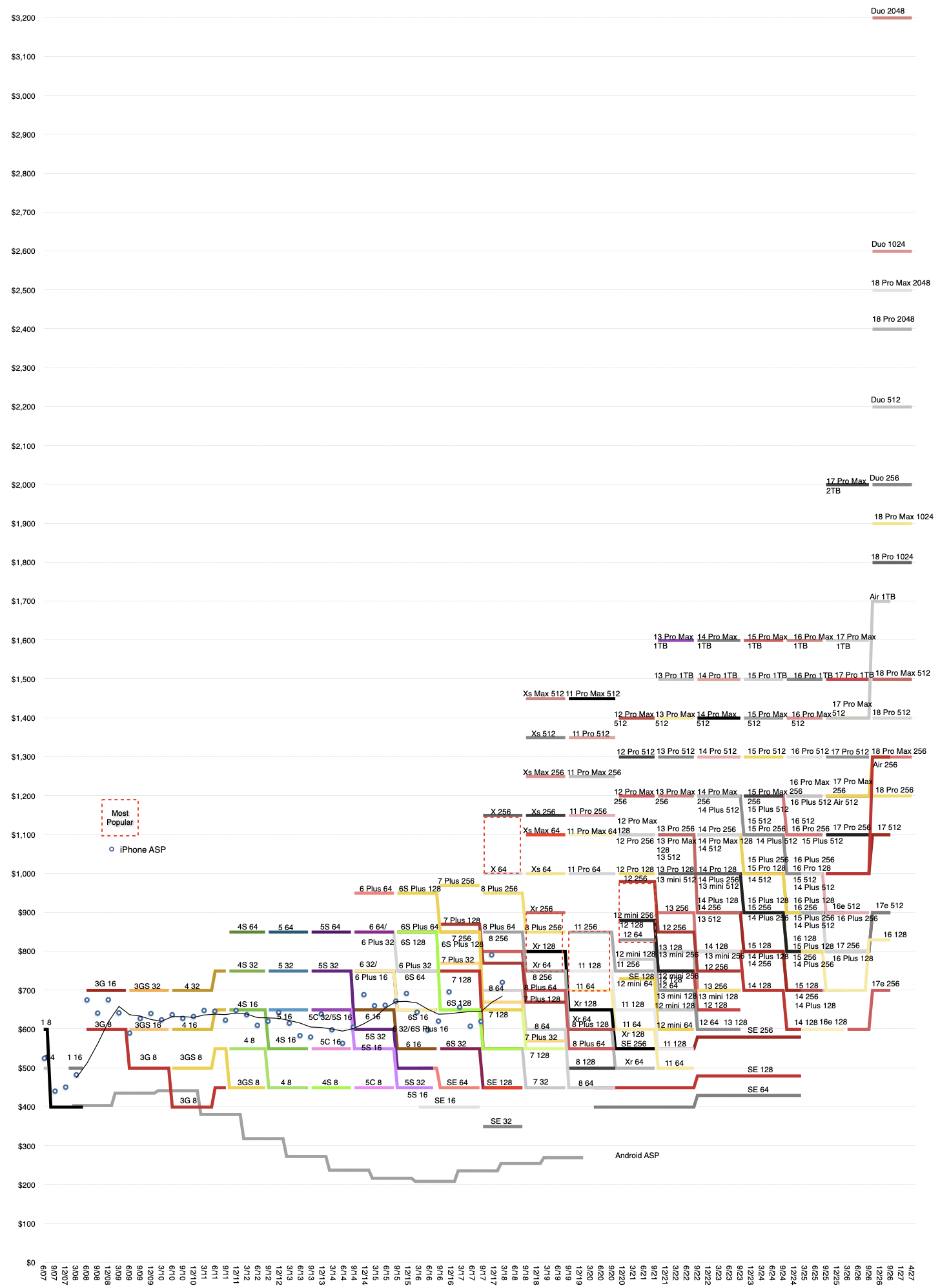
Next question. You did the Stairway to Heaven. The top price now is $3,200, is that right? We've got the really high price, but probably not high volume. Does that affect your thinking about the average selling price?
Horace Dediu: The way I wrote it up today: if you look at the price increases as a percentage from the previous generation, or even the current generation at a higher price, like the 17 non-Pro, there's a range of percentage increases. They're not the same. Obviously, if you're going from 256 gigabytes to 512, that's double, 1024 is quadruple, and then eight times. So you should see bigger jumps, and indeed, if you divide by the capacity, there's some consistency, between 20 and 30 cents per gigabyte of additional cost. This is in my blog post. But what I observed is that some configurations are getting a kind of bonus, in the sense that their increases are lower, as low as 8%. That configuration is the 512 gigabyte. The reason I think that got a break is probably because it's the most common one. That's the logical conclusion. So there's a higher increase at 256, it dips at 512, and then it comes back and is highest at 2048.
My expectation is that the sweet spot is the 512, and therefore if I were to weight the pricing, I would concentrate on that price point as the most likely one. The mode, that's the word I'm looking for: the most common configuration. Now, it's multiplying way too many assumptions to come up with an exact ASP, but I did pencil something in. I said the average price increase is probably around 12%, which is way lower than most people thought. My estimate was 10 to 15, and we came in close to the 10. That's a surprise.
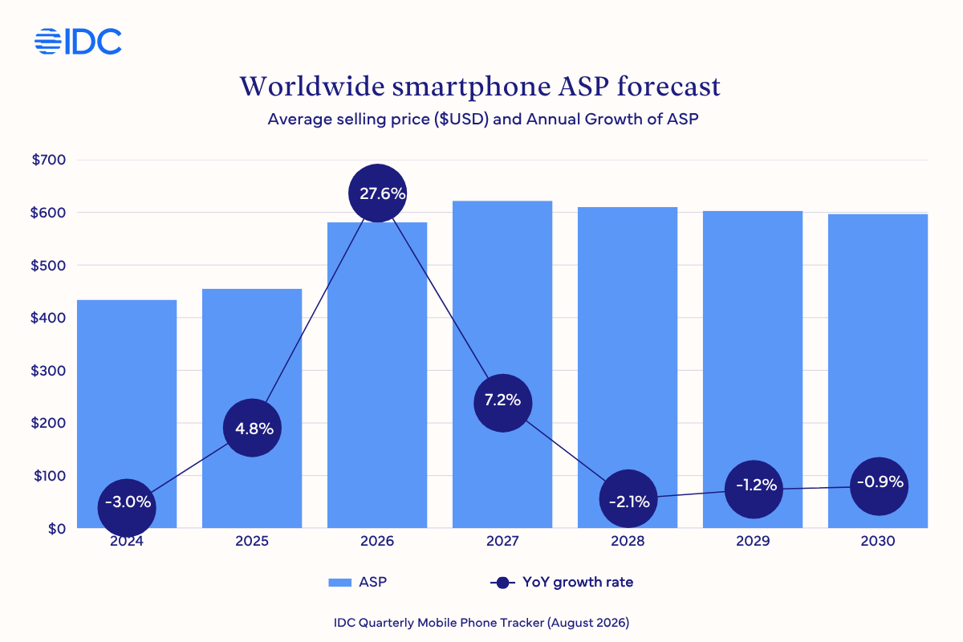
What this does to the ASP depends on what the previous ASP was, and that is never given by Apple. There are a lot of estimates out there. People are saying it's already at 1,200, or already at 1,100. I've been much more conservative. I thought it was about 900, and therefore now we're at a thousand, perhaps. If you'll indulge me, the reason I believe it's lower than what the mainstream is saying is that I can't reconcile the fact that there are 1.2 billion iPhones in use and only 200 million are sold a year. If only 200 million are sold a year, and some are to new customers, how do you account for, let's say, 150 million phones replacing the worn out, broken and obsolete portion of the 1.2 billion? It suggests the lifespan of the product is eight to ten years.
Farshad Nayeri: That doesn't make sense either.
Horace Dediu: And no one is talking about this.
Fred Stein: I totally agree.
Horace Dediu: The ASP immediately affects this, because we don't know it, but if you assume a huge ASP, you're shrinking the volume, which means you're not servicing the installed base.
Farshad Nayeri: Is that including the used ones?
Horace Dediu: It's only new, of course. That's all that matters for Apple's revenue. There are several reasons the ASP is lower, by the way. When Apple publishes a price, there are retail margins. If they sell direct they get the full price, but they're going through carriers, and you see the discounts popping up. Some of that is eaten by the distributor, but Apple's not getting full MSRP on every deal. There's margin evaporation there. And they can account for the revenue differently. There's always this accounting issue where they say: because of software updates, we're deferring some of that revenue. They started doing this years ago, and we forgot about it, but for compliance with GAAP accounting they cannot book the hardware revenue if software is yet to be delivered. If there are future versions of the product, they haven't delivered the product in its complete form, so they defer it.
Farshad Nayeri: So they're trickling the booked revenue.
Horace Dediu: Over time that evens out, because now you're booking some tiny amount of a sale from two or three years ago while deferring this year's. It was more important when things were going up quickly. There's a lot in accounting that distorts the picture. I still remember that episode, because all the analysts didn't know what to do with the new data. So now you see the struggle: what is the correct ASP? I'm a little more conservative. I think they're selling a lot more phones. Why are analysts fixated? Because if you read my Stairway to Heaven, you fixate on the top. Oh, the phones are so expensive. But do you know how few two-terabyte units are sold? Those are for people capturing video for hours and hours. You need to be a YouTuber to need a two-terabyte phone. Or they're so wealthy that they don't even question it.
Fred Stein: Give me the best, and here's my card.
Horace Dediu: There are people who are completely insensitive to price and will just say, I want the best. But that's a vanishingly small number. What people tend to forget is that there's a lot of this middle to low end. I was a bit surprised, as I was doing my inventory for the Stairway data, that the 16 is still available for sale. The 16 is even lower than the 17e right now, which is considered the low end. There are a lot of good-enough phones down there. I had to do this inventory because I had to see how much the prices increased on the 17, the 17e, the Air and the 16. All of these are now a little higher, depending on the memory configuration.
So what is the ASP? That is the question. Excluding the Duo, I think it's gone up to probably 1,100 right now. With the Duo, I think we're at 1,200. It all depends on how many Duos they sell. Another small footnote: the start of sales will be in October, so it's not going to make this quarter at all.
Farshad Nayeri: What's the lowest-priced iPhone?
Horace Dediu: It's in the 800s. But it used to be 400. That's now taken by the used market, the second-hand market. And by the way, when you think more about Apple Upgrade, you realize that those leased products that return to Apple are going to be under their control and visibility, and they'll know much more about that market. That information is super important. Once a phone goes into the secondary market, they don't know much about it. They don't know what pricing people are getting. They have to sample it. If you want to Google it, you can find refurbished phones on Amazon, on eBay, on dedicated sites. There are also physical retail locations. I was in Paris a few weeks ago and walked by a shop where you could see the used phones for sale.
Fred Stein: A follow-up to that: will Apple follow what carmakers have been doing, where they take those phones from the upgrade program, put them in a nice package and sell them?
Horace Dediu: They do. On the Apple Store there are refurbs, but that's a scale game. What you're referring to is lease returns. Currently, when people go to the Apple Store and return one a month later that they didn't use that much, because of the refund policy, Apple takes those almost completely new and resells them at a slight discount. But now we're talking about one- to two-year-old phones. I don't think there's a three-year-old option, but they have the two-year-old phone that they will probably take in huge numbers, refurbish in a very high-volume facility, and pump back out at minimal profit. I don't think it's about profit. I think it's about knowledge of the market and understanding how to deal with it.
The auto market is the key question, because in the auto market there are four used cars sold for every new car. The used market is now becoming the primary market, because cars are so expensive. Only twelve percent of Americans today can afford a new car. It used to be like sixty or seventy percent who were in the market for a new car. Prices have exploded, and so one in six Americans are buying new cars, and now they determine why the cars we find available are all enormous SUVs: that 12% is the wealthiest 12%, and they're buying those cars and saying no to economy cars.
This is a very important observation, because a lot of classical disruption theory depends on the low end and the mass market being interested in good enough. The problem is that the industry has completely dehydrated itself of visibility into that market. The challenge for Apple is not to fall into the trap of making things for the rich few, and yet not compromise on quality. If there's one thing I would advise Apple on, it's not to fall into the innovator's dilemma. It's a trap to think that more profitability is always the right answer. Apple being a premium brand, people already assume it's an exclusive, frivolous type of product, but they're not thinking fully about what's going on there.
Farshad Nayeri: Speaking of that: a couple of Office Hours ago, when John Ternus's position was announced and the Neo was announced around the same time, you said you would like to see more disruptive products like the Neo. Now we see the Duo, which seems like the other side.
Horace Dediu: But there's a dual launch cycle. This is unprecedented. We're going to have a second iPhone launch event. It started with the iPhone 5c, the plastic iPhone, which I think was a spring launch, and then they had the SE, and they've been dribbling out E's over time. Now the core product, the iPhone 18, is not launching in the fall. It's launching in the spring. You could read that as saying they're downplaying the core, the mid, the low, and hyping only the premium, the Pro. But I think of it as moving the core to having its own event. You'll have the Pro and the core at two separate events.
Why not the holidays? Apple is very seasonal. It's got this huge leap because gift-giving is so important. It's consumer behavior; it's psychological. But the reason you do a spring launch is that there's gift-giving in other countries that doesn't follow the Christian calendar. You're still pushing gifting and seasonality, but spreading it across two different gift seasons. They might even do another one. I don't know if India is out of cycle with China; they might do an Indian orientation as well. Also, competitors took advantage of the fact that Apple was so focused on the fall by launching exactly out of phase, six months later. All the Samsung launches were happening in the spring. So Apple is going to suck some oxygen out of that by moving its own schedule there. It's cultural, regional, and it's also the idea that the markets that buy in the fall are grabbing the latest and greatest. The most popular phones and the highest ASP were during the December quarter. So we'll see that play out. If anything, they're giving more credence and more power to the spring schedule. They might put the Mac, the iPad, education, out into the spring as well. There are a couple of surprising things, like launching the new Mac mini a couple of weeks before this event, probably because they can't do more than four things in one. So there are two launch events in the fall.
Farshad Nayeri: Maybe there's going to be an October surprise.
Horace Dediu: I can tell you that what I saw in terms of logistics, a real gold iPhone is a tough thing to do.
Farshad Nayeri: As you were talking about the Duo, I remembered that iOS is completely reshaped to support it. As a developer, I'm thinking about their platform strategy, where they went to SwiftUI and everybody said the apps on the Mac look ugly, not native, ported from the iPad. Given that the fold form factor has been around for such a long time, I'm wondering how long Apple has been thinking about supporting that kind of UI, with moving all the controls to the right.
Horace Dediu: They've been thinking about it for seven years. They don't think about the fold in terms of bending screens. Screens that bend are nice, and their laboratories would have been thinking about it a long time ago. The whole picture was: what about the software? How would it feel? What might you do differently? Durability, the engineering side of things. Everything gets looked at.
Farshad Nayeri: Bob has another question. Klarna runs the iPhone leasing program for Apple. Is Apple selling these leased iPhones to Klarna? Does that allow Apple to book the revenue immediately while Klarna takes it over time?
Horace Dediu: It's a good question, but I think the Klarna business is more underwriting. It's a risk management business. They deal with the issues related to people not paying, dealing with bad loans. It was something I thought about when I first heard about it, whether they book it differently, but I don't think it's core to the concept. One valid question would be: why didn't they do it themselves? They surely have the banking chops to pull it off.
Farshad Nayeri: They did the card with Goldman Sachs.
Horace Dediu: Goldman, again, is where you see the separation between what Apple does and what their partner does. They like to outsource credit risk, and in this case they like to outsource the risk involved with bad loans. If Apple became a financial organization, that's a line they draw: this is a risk we don't want to take. It's like the hybrid nature of the way they handle manufacturing. The line is drawn not on owning the factory, or the equipment in the factory, or even the processes. They actually engineer those themselves and get deeply involved in engineering the factory. Where they draw the line is labor, because they don't want to be involved with labor disputes, recruiting, all the aspects of managing a workforce that is not their workforce. Their workforce is very carefully chosen to be R&D, SG&A, core employees, and then retail. They didn't want to get into managing manufacturing employees. It's a whole different game. So they're very carefully choosing where they want to draw the line of demarcation. They have done banking, in a sense. They have Apple Cash accounts and so on.
Farshad Nayeri: They don't do full banking. I wonder who has custody of that cash with Apple Cash.
Horace Dediu: Insured, as far as I know, but through a partner, because you have to comply with all kinds of things.
Farshad Nayeri: We can't end this call without talking about AI a little. There's been this discussion online that this is all well and good, but AI is going to get rid of all screens and we'll just talk to the thing. So what's the big deal with Apple's results?
Horace Dediu: We've had a lot of betas since WWDC that people have been testing with. There are a few hints now. First, the OS upgrade ships Monday. As we speak it's Friday, so it's around the corner. That'll be big. I think people overall have been giving good reviews. It is much better than many people expected.
But the big news of the event, to me, was the Watch, and health in general, and how it's going to end up leveraging AI. That is one of those things that keeps compounding. The story of health and Apple continues to be a drumroll that gets bigger and louder, and it's still getting ignored. It's getting ignored the way services were ignored ten years ago, when for years Wall Street didn't think it was worth paying attention to. It was a hobby. Even the most famous followers of Apple would have said Apple's no good at the services business, that it was Google's game to be a good services company, that Apple was too slow, that they were bad at building data centers. No one's saying that now.
Tim has a lot of quotes, but the one I like most is where he said that in the future Apple may be known most for its contribution to health. That's a bold claim. Again, it flew over people's heads. But think about it: would I rather have a device that keeps me healthy? Not just fixes me, but keeps me healthy. That's health maintenance. As a coach, it does all the things that lead to a good lifestyle, and maybe not just health but happiness; it keeps me mentally healthy. What would be the value of that machine versus one that was an AI? We focus entirely on AI being some kind of magic, whereas health is another kind of magic that doesn't seem to be considered very valuable. If I were to do the math, the health industry, including wellness, exercise, apparel, the diet industry, is far bigger than knowledge-based assistance.
I'm not discounting AI at all. But people's values are more likely to say: we want to preserve and be healthy. There are big problems with that, obviously, in motivation and so on. But if Apple can crack that nut. We like GLP-1s because we like pills. Simple answers, simple solutions, quick, but expensive. Doctors like them because they're easy to prescribe. You don't have to rely on the habits or the mind of the patient. You don't have to change people's behaviors. But what if you could change people's behaviors? What if you had a machine that was effective in this way of guidance, without the side effects? The problem with pills is that they have side effects. They are also expensive, and they end up creating artificial monopolies. The case in point would be exercise. If exercise were a pill, it would be a miracle pill.
Farshad Nayeri: Every doctor would prescribe it. They just don't think people will do it.
Horace Dediu: The point is that what you should be thinking is: how do I make exercise into a pill? Making it into something so reliably delivered and so easily administered: whoever does this will reap enormous rewards. That's where I think Apple is thinking they'll be in twenty years. I'm not saying five years from now. We're just seeing continuous progress, always flying under the radar, everyone glazing over. Oh, more sensors under the Watch, what's the big deal, another way to look at your health data. But that Watch is collecting so much data. I'm shocked, when I scroll through my Health app, at how many different things it's able to infer. And now people are looking closely and seeing that it's tracking your heart rate at five-second increments. Five-second increments means as close to real time as possible. What about blood pressure? What about glucose? Your hearing, your eyesight? We're seeing all of this. And then ultimately the biggest things of all: exercise and diet. Apple will eventually, I think, conquer these domains, and then it'll be a thing you have that's as important as an AI assistant. How about my health coach?
Farshad Nayeri: When they showed the VO2 max video, they were saying, put your iPhone over there, and they were trying to read your whole body, how you move. Because an iPhone is multimodal: the screen is for me to see what I should be doing, the camera is to see what I am doing, and then the Watch. Going back to AI: where are AI's eyes? Where is it going to interact with me? Is it going to tell me how to move my arms? People underestimate how hard it is to get accuracy and precision in an interaction with words alone.
Horace Dediu: And they just did an acquisition. I put out a Nota Bene about this. They acquired a company that is using electromagnetic fields to infer, not necessarily intent, although that was my initial read, but having looked into it further, I think it's going to be more biosensing: possibly using electromagnetics to determine blood sugar or other metrics of your health. Lots going on there. It's not going to be neural implants, but they're going to get all this data. This is a moonshot. This is the human moonshot. It's solving something bigger than AI, in my opinion.
Farshad Nayeri: One last question, from Roger S. Given the minimal price increase on the 18 Pros, and the minimal price increases on the older models, do you believe Apple will be using Chinese memory in the phones sold in China?
Horace Dediu: This is a very specific question, Roger, and such a political problem. I don't know. As I always say, I'm not a political analyst. I don't even know if anybody could be one. But I think the puzzle will be solved somehow. The memory thing is a multi-year problem. It is a hundred-year flood. Apple is going to have to work it out, but I don't have any doubt that they will. For two or three years they're going to face issues with supply and margin. Those are the two main issues. But coming out of this, either there's a reconfiguration of the whole industry, because we got here through concentration into two or three suppliers, so either the supplier base explodes with new entrants, or the incumbents choose to do it themselves. That is unclear. Do you want to get into this game or not? But capital needs to flow into this, and capital flows into a vacuum like this. Why? Because if you have companies with sixty percent gross margins, among the most valuable companies on the planet, making one commodity, obviously it's going to attract anybody. There's a lead time involved. But I don't have any doubt: every shortage is followed by a glut. I don't believe we're going to rewrite the economics of supply and demand on the basis of one component.
Farshad Nayeri: On that note, it was submitted to me that it is possible you could wear a chain.
Horace Dediu: You think I'm pulling it off?
The second session of the Office Hours Duo takes place in Boston on Friday, September 18. Get tickets. visit asymco.com/live for the latest.
Subscribe to Asymco One for full access to this and other content.