Asymco

Asymmetric Intelligence

hardware

  1. Is a Facebook phone destined to be a Vanity smartphone?

    Research · 4 comments

    What do Palm, Kin, Nexus One, and the Simon have in common?

    Beside being market failures, it's the fact that they were efforts by large companies that had no business in smartphones. What's more important is that the motivation for participation was not well thought out.

    HP, Microsoft, Google and IBM tried (or are still trying) to capture a piece of the hardware revenues from smartphones, but their results were dismally poor. It turns out that with the exception of RIM, HTC and Apple, there have been no smartphone entrants which have succeeded against the incumbent voice phone makers.[1] Furthermore, Apple is the only large technology company to succeed. Studying the efforts that the successful entrants undertook shows that (1) it takes a very dedicated effort, led from the top, and (2) it takes a lot of capital or a lot of time. Those who tried and failed were not dedicated to the concept at a high enough level and were not patient enough for growth.

    I think the real motivation to enter the market is rooted in vanity: appealing to the need management to feel a part of something new and important. If you are an ambitious internal champion skilled in political maneuvering, it's fairly easy to appeal to this vanity in order to secure funding for these efforts.

    This string of vanity-induced failures is not likely to end anytime soon. No doubt Dell will keep trying with the Aero, and we might see the PC companies rush in again as they did with PDAs.

    We also hear today of the evolution of INQ's product (INQ Social Mobile) into some sort of Facebook phone. However, is the Facebook phone project a vanity phone? Maybe, but the counterpoint is that this is not likely to be a smartphone. It's more likely to be a feature phone and, as such, it's not attempting to be something so grand or vain.

    The real comparison might be to the Kindle. A specific, purpose-product built by the most motivated and best-positioned service provider. The Kindle has had some (unspecified) amount of success because it was developed to light specs and with a well-established distribution channel (amazon.com).

    So although the motivation might be more sound, the challenge for Facebook will be the same as for Google: distribution. At the end of the day, without operator support the product will still remain a niche.

    [1] I note here that Android and Windows Mobile are not phones but platforms and this article deals specifically with hardware.

  2. When will the smartphone become a commodity?

    Research · 21 comments

    I am taking a comment thread and promoting it to an article so as to expose it to a larger audience. There are two points of view:

    Ariel writes:

    I believe that next year and perhaps the year after that will see intense competition on the OS platform front, but eventually one will dominate the other(s) by a significant margin (and this also depends on the cloud and how it will be adopted across platforms). This happens as a result of a unified platform in which many can compete on lower margins instead of the development of the entire package and platform, which all goes hand in hand with commoditization.

    However, to predict that smartphones will not be commoditized within the next three years is bold to say the least. The desktop was settled very quickly, and in this industry of exponential growth, it can be assumed it will not take longer for a similar scenario to settle.

    I reply:

    I’ve been observing (professionally) the smartphone market from its inception and was holding my breath for the commoditization of handsets that Microsoft promised all the way from 2004 through 2009. Several generations of Windows Mobile were predicated on the imminent stabilization of hardware and user experiences years before the iPhone came along. Not only Microsoft but Palm via PalmSource, Symbian as a consortium of all incumbents, Sun & IBM via Java, DoCoMo with iMode and not least of all, Qualcomm with BREW all made the same bets and ran with horizontal strategies toward a smartphone future built on the lessons of the PC industry. The only holdout for the integrated approach was the one company that everybody marked for dead: RIM. It’s also the only one who raked in all the profits.

    All this happened before 2007.

    To suggest that this time, in 2010, it’s different: that the definition of the smartphone as it exists today is the product at its zenith; that user experiences and expectations and hardware specifications and platform dynamics will be henceforth frozen with minor sustaining tweaks to look forward to is, in my opinion, a far riskier bet.

    I don’t try to be a futurist or predictor of how the product will evolve, but I can see a dozen ways of how the very definition of a smartphone will change and how in 4 years we’ll have products that won’t be recognizable as such today.

    So much depends on when the smartphone (or more broadly mobile computing) reaches this point of good enough. It's at the root of all hypotheses of how the market will evolve.

  3. Can Google buy consumer competitiveness? Can Apple be an ad giant?

    Research

    Daniel Eran Dilger in fine form after Apple became the world's largest technology company by market capitalization.

    These days, Apple’s primary competitors have all fallen down on their knees while clutching their gutted bellies...

    Who is left? Google, the paid search giant that backers hope will beat Apple in hardware and software platforms… despite Google being neither a hardware vendor (nor marketer nor retailer nor support provider) nor having any real experience in managing a software platform for consumers. Fans of Google suggest that the company will take on Apple by acquiring a competing version of everything Apple has built over the last decade: iTunes, a mobile platform, hardware expertise, user interface design savvy, development tools, and a user base.

    The problem is, they don’t also foresee that Apple could compete against Google in its own home territory of ads.

    via How Apple could slay Google at WWDC 2010 — RoughlyDrafted Magazine.

    The key assumption in the "Google can buy anything Apple already has" is that of the three things that make up a company (resources, processes and priorities) the only thing cash can buy is resources, and, in the tech world, even those are fragile things with legs that can walk out the front door.

    Google's "copy-paste" competitive approach vis-a-vis Apple falls down when you realize that Apple has been successful mostly because of its processes and priorities. It's well known that all of its vanquished competitors could (and did) recruit legions of Apple employees, elevating them to positions of responsibility, with naught to show for it. Grafting engineers and IP onto Google (or Nokia or Microsoft) cannot make it into an Apple.

    Conversely, through a risky, long and arduous path, Apple could become a Google. Success with ad-based search requires resources (mostly CapEx), algorithms and distribution. With the $42 billion (soon to be $100 billion) in the bank and eye-watering free cash flow, there are few no resources that Apple cannot buy.

    With iAd the world will witness an Apple that can make loads of money in Google's home turf, while Google burns cash and bridges with Android trying to defend its soft platform underbelly.  The irony is that Apple can knee-cap Google without even trying to do search. After all, Jobs said plainly enough: On a mobile device Search hasn't happened.

    Judging by the stock prices of the two companies, I suspect investors know this already.

  4. Will Apple rule the iPad market? (part II)

    Research · 12 comments

    Continuing from Will Apple rule the iPad market? | Asymco.

    The first claim is that

    it is unclear if [Apple] will end up dominating the market the way it has come to rule the digital music player market with the iPod.

    After hearing a thousand voices cry out that the iPad is nothing more than a bigger iPod touch (which, plainly, it is) it's amusing to read that its similarity with a sibling ends when it comes to market performance.

    Let me make one claim up-front: the iPad is more of an iPod than the iPod.

    The original iPod was successful because it had a significant integrated value chain bolted on. Apple disrupted music with a value chain, not a product. It changed the way music is bought, consumed and even how it is produced. It changed the economics from retail down to songwriting.

    This is why it came to dominate its market. Every competitor that took a run at it did so with a partial solution to the value chain. Often it was nothing more than a music player, and in some cases (e.g. Zune) it was bundled with some other pieces of technology, but poorly executed and too late.

    The iPad comes with an even bigger value chain bolted on: the App Store. Apple is flogging not just an "app player" but also a new way to develop and distribute software. If you cut "music" and paste "apps" you see the immediate parallel between iPod and iPad. The app ecosystem will quickly grow to be larger than the music ecosystem with the mobile software business already eclipsing the music business.

    A competitor launching a tablet device will have to somehow overcome the momentum of billions of downloads fed by hundreds of thousands of apps built by tens of thousands of developers for hundreds of millions of users.

    The iPod juggernaut pales in comparison to the iPad supernova. The iPod had no apps or dedicated developers. Its ecosystem consisted of a handful of music companies. The only thing that made it "sticky" was the tie-in with one type of content.

    The iPad on the other hand has a thousand other jobs to do for its users. It has a rich tapestry of functionality and a multi-dimensional (literally) user experience.  It's a platform. It's even powerful enough to impose new standards on the web itself and to suggest that search is a bygone activity.

    So to suggest that Asus or Dell will somehow build "iPad killers" sounds asinine. These competitors don't even grasp what the product is and what it's for.  Sony said they don't see a market for it. Microsoft, trapped in the innovator's dilemma and overshooting the market by miles, said they don't understand what the point is because users want full PCs.  Google asked what's the value of a big iPod. I could go on, but there was not a single company in the industry who recognized what they were looking at in January. Apple keeps a tight lid on new products so that competitors don't get a head-start on copying, but in the case of the iPad, advance knowledge would not have had any impact. Competitors look at the iPad and see nothing.  They'll only react once the market explodes and they start to feel belated pain.

    If, and it's a big if, they do recognize what an iPad is, their response cycle is going to be measured in years. On hardware, they were blown away with a product that had twice the power, half the bulk, twice the battery life with half the price of what they had on the shelf. They may catch up on hardware in a year or two and launch some sort of iPad-like assembly of components, but that is like making the first iPod killer in 2002.

    Then there is software. Their software supplier (Microsoft of Google) will have to build a platform that works. That will take years. Years during which the iPad will penetrate every geography, demographic and vertical market.

    Google might move more rapidly than Microsoft, but they will produce an open source poster child of a platform. Fragmented and rough around the edges to the point of looking like a hobby project. Their flea market store will also have the smell of fresh glue about it. Microsoft is so far behind the curve that I don't even think they will try to move the tiller.  Their view of the market was betrayed by the recently knifed Courier demoware. To suggest a challenge to the PC/Windows model inside Microsoft is a career-limiting move so don't expect their brightest to be lining up to propose new platforms to management.

    What about HP? Assuming they overcome the pitfall of NIH that kills 80% of integration efforts, they will still need to perform an enormous amount of heavy lifting to get WebOS to be a competitive experience on a tablet. Most opinions were that Palm came pretty close with a smartphone, but that was nowhere near enough to stay alive, never mind challenge iPhone.

    Then there is the ecosystem. Building it is just not something I can even begin to roadmap. What about developer tools, SDKs, frameworks and evangelism? With a Palm division, HP is the best positioned of the PC vendors but it has a chance at being a player as much as Creative did vs. the iPod, or needless to say, Palm vs. the iPhone.

    So the iPad challengers face five daunting obstacles:

    1. Recognition of a threat from a seemingly benign product
    2. Execution on hardware against the best integrator on the planet
    3. Execution on software against a new UI metaphor fortress surrounded by a patent moat
    4. Integration of hardware and software to a sublime whole
    5. Re-building a value chain for which they have no handle vs. a broad and deep existing universe of app/content creation distribution and consumption enjoying logarithmic network effect value.

    That does not even touch the logistics, sourcing, margin and pricing challenges of world-wide distribution of the whole value chain. Nor does it cover the lock-in of advertisers to new tools for creatives or the billions of daily views from a platform that is blindingly dazzling.

    To put it in the language of disruption, by the time the competitors launch symmetric attacks on the iPad, Apple will be the incumbent. And we all know that symmetric attacks never work against entrenched incumbents who have all the levers of power at hand to deploy in a withering counter-attack.

  5. HP WebOS tablets, netbooks

    Research

    "During a conference call about HP's acquisition of Palm Wednesday, Todd Bradley, executive VP of HP's Personal Systems Group, said that there are "a lot of opportunities" with the purchase. Namely, he said, HP could use the WebOS mobile operating system as a touchscreen interface for new hardware such as a tablet or netbook.

    Palm CEO Jon Rubinstein and Brian Humphries, HP's senior VP of Strategy and Corporate Development revealed that HP plans to "double down on WebOS," which is considered the "prized asset" of the acquisition. The two reportedly mentioned the scalability of WebOS, implying that HP plans to bring the platform to multiple hardware form factors. HP even said it has already tested WebOS for its scalability."

    http://www.appleinsider.com/articles/10/04/28/hps_purchase_of_palm_could_lead_to_webos_tablets_netbooks.html

    Oh, and someone from HP also said they will still do business with Microsoft.

    Let's see...HP is adding its own mobile OS, HTC was hunting for its own mobile OS but is living on skinning, Palm made its own mobile OS and managed to escape oblivion, Samsung launched its own mobile OS, Apple has its own mobile OS, RIM has its own mobile OS and bought the kernel of another, Microsoft has its own mobile OS--really more than one, Nokia has its own mobile OS(s), and Google has its own mobile OS (plus Chrome). Chances are that Amazon is building its own OS as well.

    Only Microsoft and Google are still betting that licensing is going to be the way forward but each is hedging its bets: Microsoft with Kin and Google with Nexus One.

    Can anyone seriously suggest that the mobile computing industry is rapidly moving toward horizontal modularity or even consolidating like the Operators are hoping?

    Before you answer, consider also other horizontal players that are no longer with us: PalmSource, Symbian (and, give it a year, Windows Mobile).

  6. Nokia Tablet?

    Research

    "Getting a strong Intel backing here could be an important advantage," says MKM Partners analyst Tero Kuittinen, who sees the Nokia tablet as part of an array of mobile computers.

    via Nokia Aims a Tablet at Apple: Exclusive | Technology | Financial Articles & Investing News | TheStreet.com.

    No doubt Nokia's tablet plans preceded the launch of the iPad--product cycles being what they are.  And the relationship with Intel is certainly a big part of this push (vs. on the handset side where Intel has no cards to play).

    However, the elephant in the room is what software will run on this Tablet.  Any discussion on competitive potential of iPad competitors must include a view on the software/platform and ecosystem that tablet will rest on.

    This is not a hardware business.  In fact, the hardware is designed to get out of the way.

    The hardware is so understated — it’s just a screen, really — and because you manipulate objects and interface elements so smoothly and directly on the screen, the fact that you’re using an iPad falls away. You’re using the app, whatever it may be, and while you’re doing so, the iPad is that app. Switch to another app and the iPad becomes that app. If that’s not magic, I don’t know what is.

    source: http://db.tidbits.com/article/11152

  7. Comes With Trouble

    Research

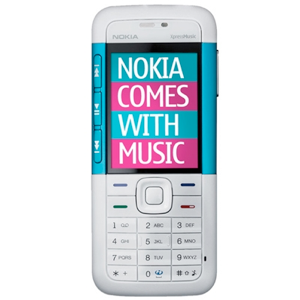
    I can't believe this. http://musically.com/blog/2009/10/15/comes-with-music-107k-users-worldwide/

    For kicks, I looked up what I wrote about Comes With Music (CWM) a year ago:

    Trouble Comes With Music By Horace Dediu on October 3, 2008 12:18 PM The troubles that CWM will face: The model is complex and the value prop is convoluted with users discouraged from making informed purchase decisions. CWM is firmly embedded in a value network that is in the final stages of disruption. Profits have evaporated and participants are in a state of defensive rigidity that prevents investment in innovative business models. To some buyers (esp. parents who will pay), the concept may sound more like "music sold as hardware" than "hardware loaded with music". Music sold as hardware is what the CD is/was but this new hardware is bound to wither away and become disposable in a year, PC copies notwithstanding (as transfers between PCs are limited). Therefore, the limitations of perishable music persist and comparisons to durable media are unfavorable. Competitiveness with pirated music is often cited as the goal. The means to that goal is the advantage of having "unlimited" content available vs. "60,000 songs on your hard drive". The unstated assumption is that new music is always more desirable over a rich, but dated back catalog. Long tail theory says that's not true for an increasingly larger group of consumers. Finally, the bet is that users will upgrade devices as if they were a subscription. This becomes "music sold as hardware subscriptions". As "music as a subscription" has not taken off, it does not bode well. One reason is that subscribed music is hired for a different job than owned music--one of discovery and casual listening--a job we used to hire Radio for. A job that is now obsolete in the era of social networking.

    Nokia's official comments one year hence:

    the official blog on which Nokia is celebrating CWM’s first birthday acknowledges: “Sure, it didn’t start out that rosy, with lots of folk not really certain about what Comes With Music offered ... we never shied away from the important education process that is needed in order to fathom that you can download and forever-keep as many tracks as you like – but the past 365 days have seen a much greater understanding and appreciation for the service emerge.”

    Subs numbers:

    • UK – 32,728 (launch date: Oct 08)
    • Singapore – 19,318 (Feb 09)
    • Australia – 23,003 (Mar 09)
    • Brazil – 10,809 (Apr 09)
    • Sweden – 1,101 (Apr 09)
    • Italy – 691 (Apr 09)
    • Mexico – 16,344 (May 09)
    • Germany – 2,673 (May 09)
    • Switzerland – 560 (Jun 09)

    For comparison: Spotify has 6 million users and iTunes has 120 million registrations.

  8. Blurry Moto

    Research

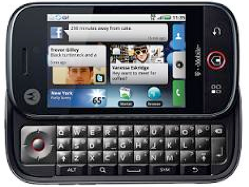
    Earlier today, Motorola unveiled MOTOBLUR, a mobile social media OS of sorts that runs on top of Google Android. The company plans to introduce its first MOTOBLUR handset – CLIQ (and an international version called DEXT) – before the holidays

    The assumption underlying this product is that "social networking" as it exists today is a job that people are specifically hiring devices to help them do. There are several problems with this assumption:

    • SN is rapidly evolving. As any new medium, it takes several iterations before it's "good enough" to solve the underlying problems. Whatever emerges (twittering, fb, or as yet unknown) will be a moving target. Users are moving quickly between these services. Assumptions about value of "stickiness" based on the social graph are proving to be flawed.
    • SN is not a "job" per se. SN is a means by which people communicate and try to get something done in their lives (i.e. getting a job, getting laid, suppressing loneliness, etc.) SN will compete with various other emergent technologies that solve these underlying jobs. These disruptors could be gaming metaphors, media-centric packages, virtual spaces, etc.

    Therefore building a hardware product that is positioned and intertwined with SN is highly risky.

    By the way, about 1.5 years ago Nokia considered doing the same thing. SN was on everyone's mind as the next big thing, just like email was 2 years before that. These service fads come and go. It's no surprise that one product development cycle later the devices are emerging even though the value of the service has rapidly evolved in new directions. This points out the fact that you can't make hardware dev cycles match service/software dev cycles. The only way to play this from a hardware perspective is with a platform approach e.g. iPhone. Let the ecosystem solve the job to be done and collect rents. I'm always surprised that this lesson from the 90s is still being forgotten by the device guys. BTW, I understand the NOK Solutions logic a bit better. It is not a major departure from the track NOK is on now. The power base remains with devices, as it has for 15 years or more.

    On another level, MOT is a going concern issue right now. The approach with CLIQ is, by definition, niche. I don't see the product as broadly attractive solving MOT cash flow issues. If they sell more than 2 million units, I'd be surprised. (note: N97 got to 2 million on the back of massive distribution power but SE Xperia did not cross 1 million and Pre will struggle to get to 2 million.) The "bet" on Android is weak and not a bet really on anything correlated to earnings growth.

  9. Putting Nokia Back Together

    Research

    So Dell is making Android mobile phones while Nokia is making Windows PCs. A curious confluence of poor management decisions.

    Why is all this dilution of core competence happening? Average punditry would suggest it's all about "convergence" and the overlapping of mobile and until-recently-fixed computing.

    Er, not quite.

    The economics of plastic bits shipped in cardboard boxes has not changed. It's as lousy a business as it has always been, whether the plastic bits are small or large. Some would argue that the gross margins of mobile devices are higher than those of computers, but that's not true on average. The gross margin on average mobile phones is just as low (<10%) as it is on PCs. There are about the same number of competitors and rivalry and global marketplace.

    If indeed, margins were the only story, why would Nokia choose to chase the low margin PC business while holding (albeit very tentatively) 50% global share in "smartphones"? Similarly, why would RIMM choose to chase the low end consumer business (link: Blackberry Pearl et. al.) while having the fat margins of thinly penetrated business devices to wallow in? Finally, why would there be hundreds (literally link: www.pdadb.net) Windows Mobile smartphone licensees, the vast majority of which don't manage to sell more than the 50k minimum volume licenses they are obliged to order?

    The fact of the matter is that the money being chased by device vendors is not being paid for devices, but for the service plans those devices enable. More precisely, these businesses are concerned with capturing a share of ARPU uplift from mobile data services. As such, they are mostly offering hardware as enticements for the *change* in ARPU that mobile broadband creates. Success depends on the power of that hardware to compel users to switch to higher data service fees.

    The first proponent in his "hardware as ARPU booster" was actually Microsoft back in 2003 when they entered the mobile OS market. One of their value propositions was that Windows Mobile would boost data ARPU. The reality was not so compelling however as WinMo turned out to be too awkward to use for most users and the power of the platform lay fallow. In reality, the first successful hardware ARPU booster was RIM. In the middle of this decade, RIM showed that a Blackberry user could be worth between $5000 and $8000 in NPV ARPU to an operator. For that juicy pie, RIM was handsomely rewarded with a small "cut" that boosted their margins to above 50% making them the most profitable device vendor on the planet.

    The realization only began to set in about 2007 as every other vendor began applying resources to deliver ARPU boosters. Apple took note early and executed beautifully with the iPhone, mastering the "get paid for ARPU" game, and in the process capturing 50%+ gross margins and (depending on the quarter) up to 30% of all profits in the device industry.

    To forecast how this game will be played and how sustainable this boosterism is, we need to segment or categorize the market according to ARPU. The way to visualize this is what I call the "wedding cake" model. Each cake layer represents the population of users in that ARPU segment and the thickness of that layer represents the delta of ARPU to the layer below.

    • The base layer is huge (billions of customers) and represents the prepaid voice market. The average "thickness" of this layer is about $10/mo.
    • The next layer is smaller and represents the postpaid voice market. The thickness is about $30, representing the "boost" over prepaid.
    • The next layer is smaller still and represents the postpaid voice+data market where the data is a-la-carte. This is typical of plans where the buyer pays separately for certain data services (e.g. email, navigation, etc.) and pays on a per-megabyte basis for browsing. The ARPU differential is about $20.
    • Finally the top layer is the unlimited data plan packaged with bucket voice and SMS. Here the ARPU differential is another $30.

    At its highest, the cake is about $100/mo., though the width of the top layer and hence the population of paying customers at that price point is quite small relative to the other layers.

    Now each layer is covered with a "frosting" which is the device hardware revenue. Obviously the frosting gets a bit thicker the higher the layer, but it's a relatively thin layer compared to the "cake" thickness. In the higher layers the trend is in fact to make the frosting as thin as possible (<$99 NPV or <$4/mo. for a 24 mo. contract.) The devices which enable the top layers are clearly more complex and expensive to make, but the end-user pricing is trending down. The trick is therefore to convince the operators to pay a piece of the "cake" to the device vendor in exchange for migrating users to these higher layers.

  10. Assessing Nokia’s Competitive Response

    Research · 11 comments

    When the iPhone was announced in January 2007 I tried to envision the competitive response from Nokia. The method involved some knowledge of the product development cycle that I was faintly aware of.

    Here is what I predicted:

    • 2007.There would be no response within the first year, meaning there would be no perceived threat of any kind. No process change, No roadmap changes and no business review. Apple is not considered a competitor.
    • 2008.There would be plans made to respond with press releases, dismissing the challenge as a non-threatening "positive" for the industry. No process changes, no product plan changes, no business model changes. Apple would not be considered a competitor except in "high end multimedia" (invisible in any of the segments Nokia uses to define markets).
    • 2009.In the third year, product development teams would be asked to begin roadmapping some of the hardware features that would keep Nokia ostensibly competitive (unfortunately for Nokia, hardware is not what sells iPhones). Results from these efforts would emerge in 18 to 24 months. Apple not considered a competitor except in "high end converged devices" (i.e. a few consumer segments/categories are considered vulnerable).
    • 2010.Realization that iPhone is a threat from new dimensions (user experience). Planning begins on reshaping the software base as a market-driven (not technology-driven) asset (5 year cycle). Apple begins to be evaluated as a competitor in devices and services, although still not compliant with current market definitions.
    • 2011.The realization that the iPhone competes as a platform. Planning begins on repositioning Symbian/Ovi. Products planned in 2009 begin shipping--this means first capacitive touch screens but crude, almost unusable software.
    • 2012.The realization that the iPhone is an integrated product and that integration is a key to competitiveness enters management consciousness. Planning begins on organizational change and a realignment of incentives to account for this new threat. Crude shuffling of internal assets and management musical chairs begins. Organizational change amounts to mostly new names for old departments. Touch screen phones with slightly better software begin shipping (similar in feel to Blackberry Storm from 2008). Incentives are added for employees (in across-the-board performance objectives) to hit user experience targets.
    • 2013.Management begins planning a new organization structure that takes into consideration the fundamental causes of iPhone's success: integration, software, user experience over the objections of sales and markets org that depends on shipping plastic to distributor. Another reorganization that is slightly more rational and aligned with the market is initiated. The plan is to have the assets in place by 2019 to compete effectively as a platform.
    • 2014.First products that are roughly comparable with iPhone version 1 begin shipping. The required software redesign started in 2010 is coupled with the integration efforts. Nokia's response to the iPhone has begun.

    I tried to revisit the prediction to update it with anecdotal evidence but so far there has been little activity that has affected the trajectory.

    1. Note 1: Whether an iPhone v1.0 shipping in 2014 would be competitive is left as an exercise to the reader.
    2. Note 2: The N97 shipping in 2009 is the result of work begun in 2007, it has had no influence at all from the iPhone.
    3. Note 3: The Microsoft response cycle is slightly shorter (perhaps 5 years vs. 7) but they lose a year in efforts to integrate with licensees. As neither MSFT nor GOOG are able to integrate products, they will never be able to actually deliver a competitive product. In this regard, Nokia has an advantage.
    4. Note 4: The key takeaway from this analysis is that the industry standard product cycle for an integrated, platform based product is 5 to 8 years and if one competitor can achieve a 2 to 3 year cycle, then the more nimble competitor can "turn inside" the industry and, within two cycles, dominate it. Although smaller competitors are able to turn product faster, they are usually unable to sustain the platform heavy lifting (which takes an order of magnitude more effort/assets).