Asymco

Asymmetric Intelligence

Lisa Jackson

  1. Asymco Bulletin 005 - Mar 22, 2026
    Bulletin

    Asymco Bulletin is a digest of all the work we have published for the week ending Mar 22, 2026.

    Research

    How to calibrate executive departures

    Executive exodus explicated.

    In December, the company lost AI chief John Giannandrea, its top lawyer and a key design executive in a single week. Other recent headlines: “Apple faces unprecedented executive exodus”, “Apple rocked by executive departures, with chip chief at risk of leaving next.” “Apple home devices executive leaves for Finland’s Oura” “Lisa Jackson is set to retire late January 2026, while Kate Adams will retire in late 2026”. That’s just the names we hear about. They represent senior executives. But the harsh truth is that Apple lost tens of thousands of talented developers, marketers and mangers last year.

    What's wrong with this analysis? →

    The biggest surprise of the MacBook Neo
    The biggest surprise of the MacBook Neo

    Remembering the PC market.

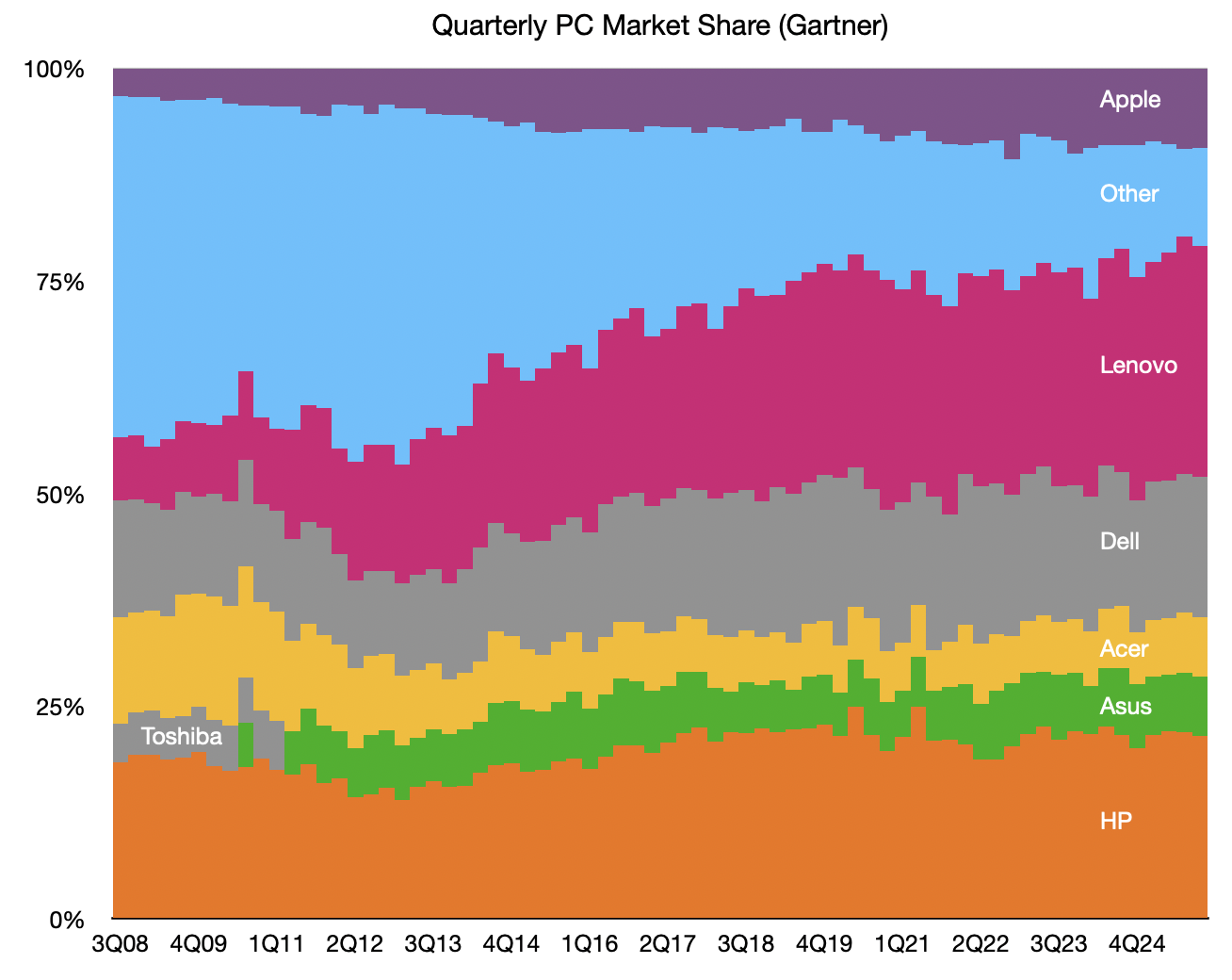
    Almost 10 years ago I said “Managing the Mac product line must be one of the most challenging problems at Apple. That may not be obvious given the product’s success.” I pointed out that although the company grew the Mac into a redeemed and prosperous platform, “The big change in computing has not been a growing Mac vs. declining PC. It has been a huge surge in mobile device use vs. a decline in PC use overall.” It’s time to revisit this observation. First, a status update: The Mac is in its 42nd year...

    How to read the history of the Mac and how to look at market share gains potential. Also: why the Mac has always been a cheaper alternative for buyers. →


    Nota Bene

    Apple’s China smartphone sales jump 23% as overall market fell 4% to start 2026 → Apple defied market trends with a striking 23% iPhone sales surge in China, outpacing competitors despite broader smartphone shipment declines. →
    Running a data-center AI model on a MacBook

    Running a data-center AI model on a MacBook → The article discusses how Apple's MacBook Pro, with its unique Apple silicon architecture, could revolutionize personal AI by enabling powerful AI models to run locally without relying on cloud data centers, potentially shifting the competitive landscape in Apple's favor despite current perceptions of lagging behind in AI advancements. →
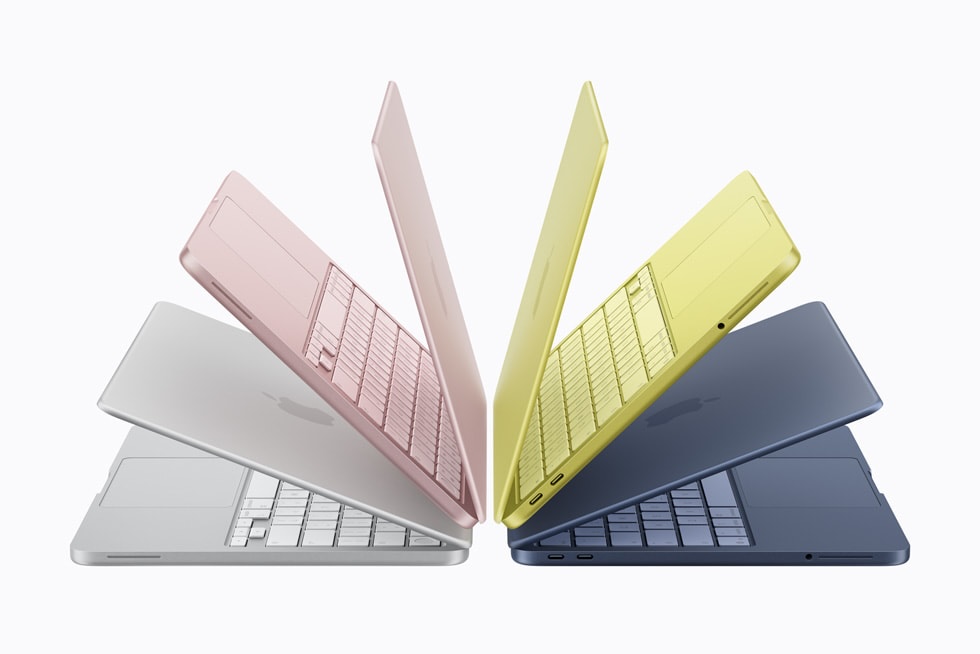
    Tim Cook: Apple just had best launch week ever for first-time Mac customers

    Tim Cook: Apple just had best launch week ever for first-time Mac customers → Apple's MacBook Neo reportedly had its strongest launch week for attracting first-time Mac buyers, hinting at successful customer transitions from Windows. →

    Apple, Samsung Dominate 2025 List of Highest-shipping Models Across Regions → In 2025, Apple dominated premium smartphone markets across North America, Europe, and Asia-Pacific, while Samsung excelled in entry- to mid-tier segments in Latin America and the Middle East and Africa. →

    Apple Is Way Behind in AI—and Still Making a Fortune From It: WSJ → "Apple's billion-dollar AI distribution play highlights its retail prowess but pales against its trillion-dollar ambitions." →

    Lobster Boil

    Lobster Boil → "OpenClaw, a revolutionary open-source AI agent by Peter Steinberger, transforms personal computing by autonomously managing tasks across platforms, sparking a Mac Mini craze and hinting at a future where AI agents are integral to daily life." →
    ‘No Near-Term Catalyst,’ KeyBanc on Apple Stock

    ‘No Near-Term Catalyst,’ KeyBanc on Apple Stock → Near-term catalysts may not sway long-term investors, but if Apple's valuation seems steep, critique the pricing, not its promising 14% revenue growth forecast. →

    Tim Cook squashes retirement rumors, says he ‘can’t imagine life without Apple’ → Tim Cook dismisses rumors of stepping down, emphasizing his enduring passion for Apple and suggesting stability through potential political changes. →

    NVIDIA’s Language Processing Units Shipments Swell 10x+ vs Previous Yr (but how do they compare to Apple Silicon volumes?) → NVIDIA's Groq investment boosts LPU forecasts to 4-5 million, yet Apple's 500 million AI chips dwarf this, hinting at centralized intelligence reminiscent of '1984.' →

    Harmful chemicals found in popular headphones → Apple's AirPods Pro 2 and JBL's Tune 720BT topped the safety charts, while budget brands like Temu raised red flags for hazardous chemical exposure. →

    When does Apple split its stock? → Apple's stock split history shows a pattern of adjusting high share prices to maintain accessibility, with splits occurring around $100-$650 thresholds, potentially hinting at a $300 minimum for future splits. →


    Asymco One gives you full access to our research, analysis, and commentary. Subscribe with code BULLETIN for a discount.

    Feedback: Have questions or comments? Reach out to us at contact@asymco.com. We’d love to hear from you.
  2. Apple lost more than 20,000 talented staff in 2025

    Research · 2 comments

    Executive exodus explicated

    In December, the company lost AI chief John Giannandrea, its top lawyer and a key design executive in a single week. Other recent headlines: "Apple faces unprecedented executive exodus", "Apple rocked by executive departures, with chip chief at risk of leaving next." "Apple home devices executive leaves for Finland's Oura" "Lisa Jackson is set to retire late January 2026, while Kate Adams will retire in late 2026".

    That's just the names we hear about. They represent senior executives. But the harsh truth is that Apple lost tens of thousands of talented developers, marketers and mangers last year and this year the numbers will be even higher. Is this indicative of an existential crisis in Cupertino which Tim Cook can't contain? Tim's head alone should be the first to roll to reverse this crisis in headcount.

    Alas, math rears its ugly head.

    Apple has over 166,000 employees including retail staff. According to one measure, Apple sees 58% of its staff turn over each year, having an average tenure of only 1.7 years, the worst in the tech world. That would imply 96,000 employees leave each year.

    That seemed excessive to me and I assumed retail skews the total significantly. Retail, according to comments on Reddit, sees a few months of work per employee. So what is the turnover for its more "permanent" talent?

    Let's assume that Apple can hold on to people as well as Alphabet/Google. We don't hear about the crisis of retention at Google. Their average tenure is 3.7 years, implying 27% would quit each year and indicate 49,000 Googlers leaving each year.

    That rate applying to Apple would imply 45,000 Apple employees leaving each year. Having twice the tenure of Google would still mean 20,000 Apple employees quit each year.

    A headline that screamed that between 20,000 and 30,000 Apple employees [quit, flee, abandon, escape] Apple each year would be perfectly reasonable and suggest a strong degree of loyalty. Moreover, next year the number will be higher because next year there will be more employees.

    Of those tens of thousands, surely a few are senior managers. In fact, surveys show that 60% of executives plan to change roles in 3 years. The fact that we only hear of a handful of departures each year implies that Apple is far better at retention than average.

    Nevertheless, the exodus continues.

    Read more:

  3. Lasts Longer

    Research · 80 comments

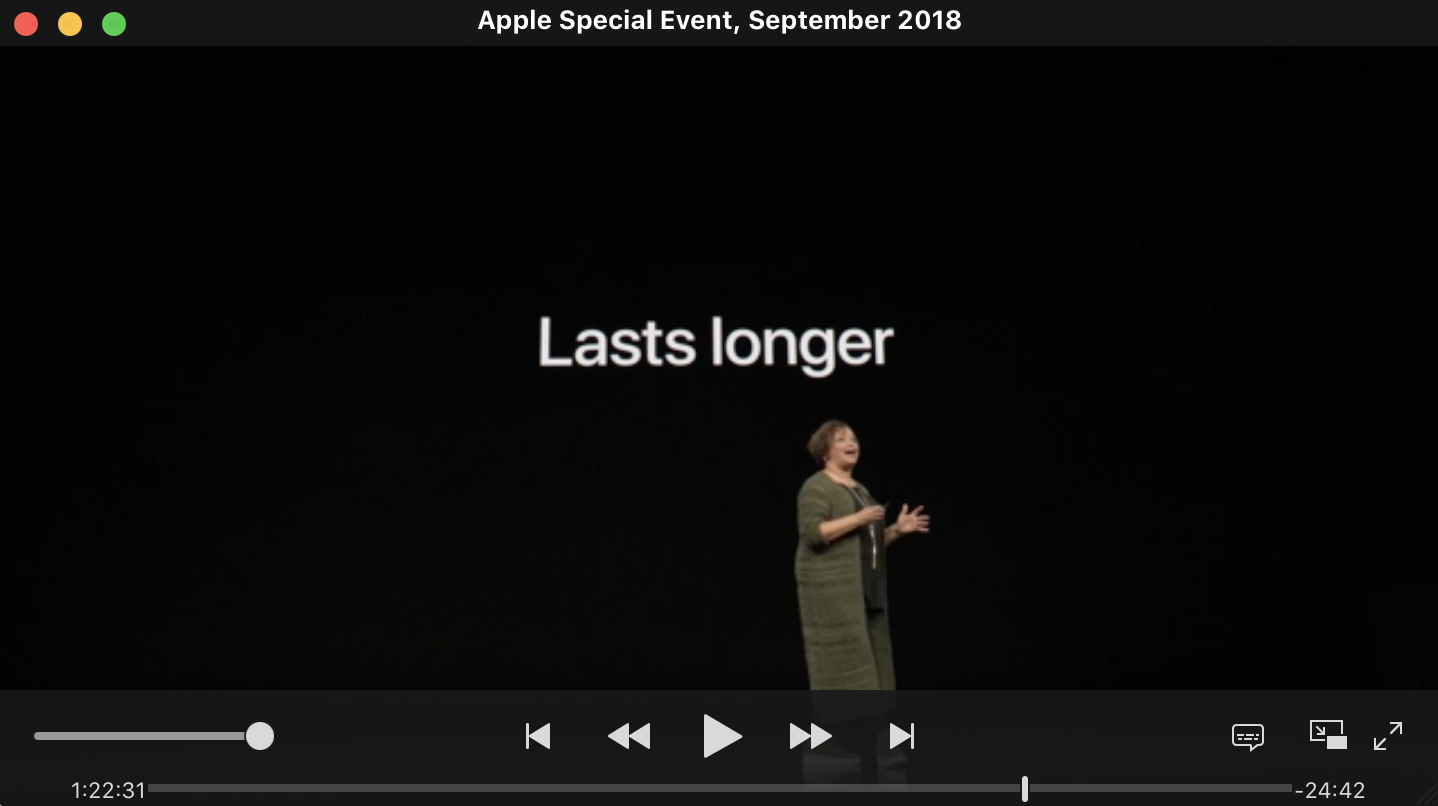
    I think Lisa Jackson's presentation at the September 2018 iPhone launch event was perhaps the most interesting and most profound.

    Lisa Jackson is Apple’s vice president of Environment, Policy and Social Initiatives. Previously, Ms. Jackson served as Administrator of the U.S. Environmental Protection Agency (EPA). In her role at Apple she has been responsible for the transition to 100% renewable energy use by Apple across all its facilities.

    This goal has been achieved and it's a remarkable achievement deserving congratulations. But her presentation was noteworthy for setting a new goal.

    She laid out a goal for Apple to eliminate the need to mine new materials from the Earth.

    She said that to reach that goal Apple will have to do three things:

    1. Sourcing recycled or renewable materials for all products.
    2. Ensure that Apple products last as long as possible.
    3. After a long life of use, ensure that they are recycled properly.

    It's this second point that I thought would bring the house down.

    To emphasize the second point she said Apple now strives to design and build durable products that last as long as possible. That means long-lasting hardware coupled with long-lasting software. She pointed out that iOS 12 runs even on iPhone 5S, now five years old. Because iPhones last longer, you can keep using them or pass them on to someone who will continue to use them after you upgrade.

    She said that "keeping iPhones in use" is the best thing for the planet.

    At this point in the presentation I wondered if everyone would rush out of the room and call their broker to sell Apple shares. One premise of investing in durable goods hardware companies is that value depends on frequency of upgrades. If products are not replaced frequently they do not generate revenues and the company selling them ends up growing very slowly if at all after markets saturate. The smartphone business is certainly approaching saturation and the implication of making Apple products more durable would imply lower revenues from replacements. This anxiety around replacement rates and extended lives is used by analysts to discount future cash flows and if those lifespans are extended price targets come down.

    So why would Apple want to do this?  What is the logic of this durability focus as a business model? It may be good for the environment but is it good for the bottom line?

    Of course, there would be not much business without an environment and we should all strive for sustainability.  But this is an existential observation, and it's defensive. The important call to make is that Apple is making a bet that sustainability is a growth business.

    Fundamentally, Apple is betting on having customers not selling them products.

    The purpose of Apple as a firm is to create and preserve customers and to create and preserve products. This is fundamental and not fully recognized.

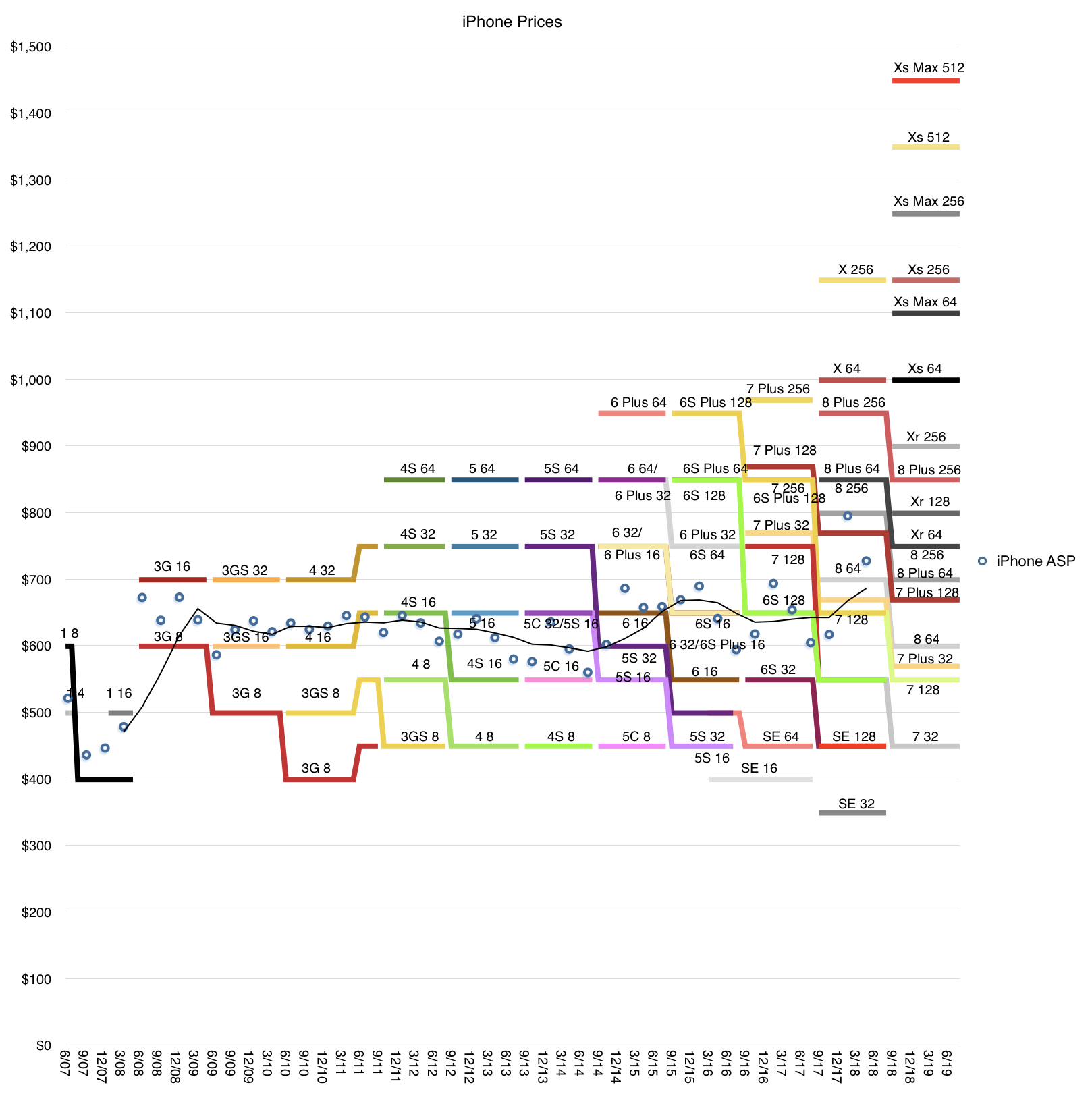
    To understand how this works, if you look at the pricing graph below, you can read it as a story of increasing prices for a decreasing market share. But if you understand that each advance in products increases absorbable ((Insoluble  utility is very dangerous and it's important to qualify e.g. higher storage capacity that people hunger for or better cameras that increase picture taking from features that are neat but don't get utilized)) utility then the cost per use remains steady or declines.

    An iPhone at $1200 may be less expensive than an iPhone at $600 if the $1200 version lasts twice as long as is used twice as much each day. The $1200 phone delivers 4x the utility at twice the price, making it half the price. By making more durable products, both in terms of hardware and software, the customer base is satisfied and preserved.

    Practically, the initial buyer may resell the iPhone and that 2nd hand devices may be sold yet again. This means an iPhone could have three users over its life and thus it could end up expanding the audience for Apple by a factor of 2 or even 3.

    The expanded audience is offered accessories, additional products such as wearables and, of course, services. These residual business models are certainly profitable, perhaps even more so than the iPhone.

    Overall Apple has 1.3 billion devices in use and perhaps as many as 1 billion users. This base is certain to expand and it will expand more rapidly with durable devices and software.

    This is a hardware-as-platform and hardware-as-subscription model that no other hardware company can match. It is not only highly responsible but it's highly defensible and therefore a great business. Planned obsolescence is a bad business and is not defensible.

    Therefore the statement that Apple now prioritizes device and software longevity is very important and I consider it one of the most important statements made during the 2018 iPhone launch event.