The mobile operating system formerly known as “Pocket PC 2000/2002, Pocket PC 2000/2002 Phone Edition, Smartphone 2002, Windows Mobile (2003/5.0) for Pocket PC, Windows Mobile (2003/SE/5.0) for Pocket PC Phone Edition, Windows Mobile (2003/SE/5.0) for Smartphone, Windows Mobile 6[.1/.5] Professional/Classic/Standard” will now be known as Windows Phone Classic.
The last “Classic” nomenclature lasted from Windows Mobile 6 Classic to Windows Mobile 6.1 Classic and denoted the OS for Microsoft’s PDAs. It disappeared after version 6.5.
Windows Phone Classic will co-exist with Windows Phone 7 Series.
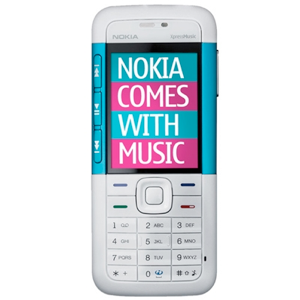
For kicks, I looked up what I wrote about Comes With Music (CWM) a year ago:
Trouble Comes With Music By Horace Dediu on October 3, 2008 12:18 PM The troubles that CWM will face: The model is complex and the value prop is convoluted with users discouraged from making informed purchase decisions. CWM is firmly embedded in a value network that is in the final stages of disruption. Profits have evaporated and participants are in a state of defensive rigidity that prevents investment in innovative business models. To some buyers (esp. parents who will pay), the concept may sound more like "music sold as hardware" than "hardware loaded with music". Music sold as hardware is what the CD is/was but this new hardware is bound to wither away and become disposable in a year, PC copies notwithstanding (as transfers between PCs are limited). Therefore, the limitations of perishable music persist and comparisons to durable media are unfavorable. Competitiveness with pirated music is often cited as the goal. The means to that goal is the advantage of having "unlimited" content available vs. "60,000 songs on your hard drive". The unstated assumption is that new music is always more desirable over a rich, but dated back catalog. Long tail theory says that's not true for an increasingly larger group of consumers. Finally, the bet is that users will upgrade devices as if they were a subscription. This becomes "music sold as hardware subscriptions". As "music as a subscription" has not taken off, it does not bode well. One reason is that subscribed music is hired for a different job than owned music--one of discovery and casual listening--a job we used to hire Radio for. A job that is now obsolete in the era of social networking.
Nokia's official comments one year hence:
the official blog on which Nokia is celebrating CWM’s first birthday acknowledges: “Sure, it didn’t start out that rosy, with lots of folk not really certain about what Comes With Music offered ... we never shied away from the important education process that is needed in order to fathom that you can download and forever-keep as many tracks as you like – but the past 365 days have seen a much greater understanding and appreciation for the service emerge.”
Subs numbers:
UK – 32,728 (launch date: Oct 08)
Singapore – 19,318 (Feb 09)
Australia – 23,003 (Mar 09)
Brazil – 10,809 (Apr 09)
Sweden – 1,101 (Apr 09)
Italy – 691 (Apr 09)
Mexico – 16,344 (May 09)
Germany – 2,673 (May 09)
Switzerland – 560 (Jun 09)
For comparison: Spotify has 6 million users and iTunes has 120 million registrations.
So Dell is making Android mobile phones while Nokia is making Windows PCs. A curious confluence of poor management decisions.
Why is all this dilution of core competence happening? Average punditry would suggest it's all about "convergence" and the overlapping of mobile and until-recently-fixed computing.
Er, not quite.
The economics of plastic bits shipped in cardboard boxes has not changed. It's as lousy a business as it has always been, whether the plastic bits are small or large. Some would argue that the gross margins of mobile devices are higher than those of computers, but that's not true on average. The gross margin on average mobile phones is just as low (<10%) as it is on PCs. There are about the same number of competitors and rivalry and global marketplace.
If indeed, margins were the only story, why would Nokia choose to chase the low margin PC business while holding (albeit very tentatively) 50% global share in "smartphones"? Similarly, why would RIMM choose to chase the low end consumer business (link: Blackberry Pearl et. al.) while having the fat margins of thinly penetrated business devices to wallow in? Finally, why would there be hundreds (literally link: www.pdadb.net) Windows Mobile smartphone licensees, the vast majority of which don't manage to sell more than the 50k minimum volume licenses they are obliged to order?
The fact of the matter is that the money being chased by device vendors is not being paid for devices, but for the service plans those devices enable. More precisely, these businesses are concerned with capturing a share of ARPU uplift from mobile data services. As such, they are mostly offering hardware as enticements for the *change* in ARPU that mobile broadband creates. Success depends on the power of that hardware to compel users to switch to higher data service fees.
The first proponent in his "hardware as ARPU booster" was actually Microsoft back in 2003 when they entered the mobile OS market. One of their value propositions was that Windows Mobile would boost data ARPU. The reality was not so compelling however as WinMo turned out to be too awkward to use for most users and the power of the platform lay fallow. In reality, the first successful hardware ARPU booster was RIM. In the middle of this decade, RIM showed that a Blackberry user could be worth between $5000 and $8000 in NPV ARPU to an operator. For that juicy pie, RIM was handsomely rewarded with a small "cut" that boosted their margins to above 50% making them the most profitable device vendor on the planet.
The realization only began to set in about 2007 as every other vendor began applying resources to deliver ARPU boosters. Apple took note early and executed beautifully with the iPhone, mastering the "get paid for ARPU" game, and in the process capturing 50%+ gross margins and (depending on the quarter) up to 30% of all profits in the device industry.
To forecast how this game will be played and how sustainable this boosterism is, we need to segment or categorize the market according to ARPU. The way to visualize this is what I call the "wedding cake" model. Each cake layer represents the population of users in that ARPU segment and the thickness of that layer represents the delta of ARPU to the layer below.
The base layer is huge (billions of customers) and represents the prepaid voice market. The average "thickness" of this layer is about $10/mo.
The next layer is smaller and represents the postpaid voice market. The thickness is about $30, representing the "boost" over prepaid.
The next layer is smaller still and represents the postpaid voice+data market where the data is a-la-carte. This is typical of plans where the buyer pays separately for certain data services (e.g. email, navigation, etc.) and pays on a per-megabyte basis for browsing. The ARPU differential is about $20.
Finally the top layer is the unlimited data plan packaged with bucket voice and SMS. Here the ARPU differential is another $30.
At its highest, the cake is about $100/mo., though the width of the top layer and hence the population of paying customers at that price point is quite small relative to the other layers.
Now each layer is covered with a "frosting" which is the device hardware revenue. Obviously the frosting gets a bit thicker the higher the layer, but it's a relatively thin layer compared to the "cake" thickness. In the higher layers the trend is in fact to make the frosting as thin as possible (<$99 NPV or <$4/mo. for a 24 mo. contract.) The devices which enable the top layers are clearly more complex and expensive to make, but the end-user pricing is trending down. The trick is therefore to convince the operators to pay a piece of the "cake" to the device vendor in exchange for migrating users to these higher layers.