Asymco

Asymmetric Intelligence

spatial computing

  1. WWDC Special: Asymco Office Hours - June 2026 - Live Q&A with Horace Dediu: Recording & Transcript

    Office Hours

    Recording and transcript of the June 9, 2026 Asymco One Office Hours, recorded the day after Apple's WWDC 2026 keynote. Horace Dediu shares his impressions of the event and takes questions from Asymco One subscribers.

    Recording

    Subscribe to Asymco One to listen to the recording and read the transcript.

    Transcript

    Sign up and latest updates at asymco.com/live.

  2. Intent Computing vs. Spatial Computing

    Research · 1 comment

    You don't have to choose.

    In the grand debate on the future of computing, we've been led to believe that there was a choice coming, a new interface to replace the touch UI interface that emerged in 2007.

    One camp believed that the future was ambient or intent computing where conversations and minimal interactions would replace taps and swipes and staring at screens. Apps would disappear as well as almost all visual interfaces. Devices would be not much more than microphones and perhaps earbuds. The initial instance was Amazon Alexa but more recently the quixotic Humane and rumors of a OpenAI pendant or tchotchke that linked us to the great mind in the cloud without messy screens.

    The other camp dove into virtual reality so that everything we see is generated by computing. The world itself would be re-painted by the machine and every photon hitting our retinas would be computed and every move we make, every breath we take would be tracked as forms of input.

    These are opposite ends of a spectrum: from minimal or almost no interaction to full immersion at the exclusion of passivity. From seeing nothing to seeing everything and from barely hinting intent to monitoring every muscle moved.

    The passive computing seemed to be winning. The VR or Visual Computing was not catching on. Device sales are not great and prices too high. Worst of all, devices are too onerous for mass consumption. In terms of wearables, eyes were losing while ears were winning.

    However lost in the WWDC news tornado was the updates of VisionOS 27. The list of updates is long and quite esoteric but it's clear that there was a lot of work involved in expanding the power of Visual Computing especially in the creation of new apps and content. Also all AI advances are being applied to VisionOS and even adapted in clever ways: Siri AI can be activated by just looking at the glowing orb that embodies it in the spatial world.

    Clearly Apple is not deprecating Spatial Computing. It's a remarkable creation and those of us who use it find it irresistible and irreplaceable.

    What the update clarifies most of all is that there isn't an evolutionary branching in the future of computing. The touch UI did not immediately obviate the need for traditional personal computing interfaces. The smartphone brought computing to more people and more contexts but keyboard and pointer computing cannot be fully replaced by touch. We have a situation where there is co-existence between touch and non-touch computing. Indeed we also have sensor computing in the form of Apple Watch and AirPods. Perhaps there were will also be Apple spectacles to expand the compute real estate on the body.

    Intent computing will probably reside primarily with our phones and wearables but Spatial Computing will strengthen their position alongside keyboard computing. Spatial was always a "high commitment" interface. To use it you strapped in, settled down and became acclimated. Then you became productive. A session was going to last at least 20 minutes, perhaps even a few hours.

    Intent computing is a few seconds of use. Perhaps a few seconds strung out in multiple sessions but it was far more "glance" computing than "sit down" computing.

    So why not have all forms of computing?

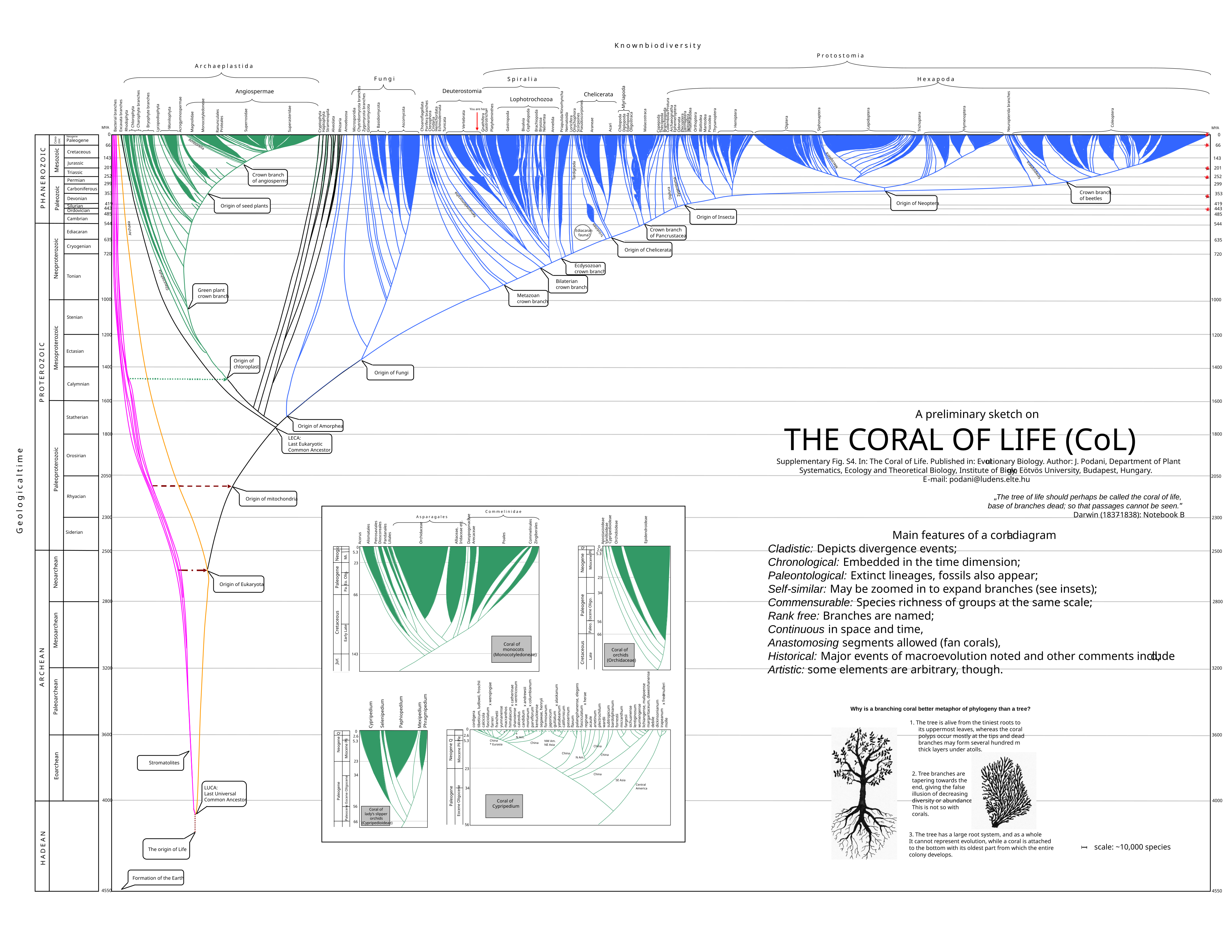
    As the diagram on the coral of life shows, evolution results in a multitude of "form factors". Some do become extinct (see the scroll wheel iPod or the stylus PDA.) But most survive and coexist.

    Spatial Computing is extraordinarily powerful. It will evolve and it will probably become the highest utility for those who create.

  3. What Are the Mobility Design Surfaces?

    Research · 1 comment

    An Office Hours question asked by Darcy B., May 1, 2026

    Q: Will Apple do more in transportation than CarPlay Ultra? Not just cars — transportation in general.

    Well, there's a lot of modes out there, and I apologize I didn't get into all of them. I had assumed falsely — I think way outside of cars myself, obviously, but it's very rare that others do. My bad that I kind of assumed that. But the answer doesn't change. I don't think Apple will do much in mobility. The reason being — first of all, cars are a lousy business. They are, were, and will be a lousy business forever. Maybe to won't even exist very long. I just find it shocking, that it continues to exist today.

    But the problem is that the other modes are less of a surface for Apple to add value to. In other words, there isn't a lot of design surface on which you can put your design and your ideas. And the reason for the surface problem is that, first, there's modes that are public and shared — buses and public transport, even airplanes. You could imagine, for example, having the back of the seat in front of you be an iPad. Why is it this screen on the plane one you can never comprehend? But you try to figure that [business] out, and you realize it's a dead end. You just can't serve that market as Apple. So there's that design surface in airplanes — you've got the seat back.

    Then you look at other modes, and you look at micromobility. The problem with micromobility is the surface is below your sight line when you're using it. You're looking above typically where the vehicle is. I consider it a heads-up experience, not a heads-down experience. Cars are heads down and becoming more so. They're cocooning the user in a bubble for an hour a day. That's what can be tolerated, typically. Not a great idea. Why? Because an hour is not a significant amount of time that will separate that experience outside of the phone.

    Now, if you're looking at micro, the problem there is that it's a heads-up experience. And unless it's going to be through a wearable — that was my dream for the Vision Pro two, three years ago, was that it would be usable as — even integrated into a helmet. And then you have a visor coming, and then you have a beautiful design surface. In fact, the design surface is the entire world. Because as you see it, whatever you're looking at can be considered a surface upon which you can add a new reality [and new services].

    And that is a dream and vision, that if it were to happen, not only would Apple be a very, very interesting player to create a virtual world on top of existing worlds — outdoor experiences. That's a great, great opportunity. Spatial computing outside of the home. Just put that down as the summary — spatial experiences outside the interior spaces. When that happens, it'll be very exciting. It'll be very much Apple's contribution to repaint the world.

    But it takes time, and this is where we're stuck. We're stuck in this, like, not good enough, not small enough, not light enough, not powerful enough — all those things. And if they get solved, we'll move into that world.

    And that goes back to a lot of debates about whether the Vision Pro is or just not going to continue. I definitely think it's going to continue. Even the latest comments from John and Joz, together, saying — the phrase they used was, "we pulled this from the future into the present." So they are effectively stating that it's too early. It's a future that hasn't come yet. But they're proud of what they achieved, and it is amazing what they've demonstrated is possible.

    It's not the old Apple, though. Old Steve Apple was: you don't release until it's not just market ready, but mass market ready. And that was a risk. Maybe this was another thing that Tim did that was not what John would do. But to work on this problem is exactly what John would do, because solving spatial computing is, like, more important in my mind, because it is the human-computer interface. Which is essentially the physical layer of the entire world. That reconstruction of the physical world and broadcasting it into your retina is the future. It's not audio. It's not some background thing. It has to go through the eyes. And if it goes through the eyes, it's where Apple wants to be.

    So I do believe there's going to be a lot of research to be done there. And maybe it'll still take a couple years once the AI thing runs its course.

    This was one of the questions asked by the participants in Asymco's May 2026 Office Hours live Q&A sessions, open to Asymco One subscribers.

  4. The Inevitability of Combining the Digital and Physical Worlds

    Research · 1 comment

    Seeing is believing

    AI is attracting all the attention but one should be careful because if there is one thing about technology is that timing is everything and when attention is concentrated it signals that time is distorted.

    In a recent interview Apple management was asked about AI, which is perceived as an area where Apple has been struggling. Greg Joswiak replied:

    We've been doing things with intelligence for many years, right? And gen AI allows us an opportunity to do that even more. So I'm excited about that, but boy, this is not a sprint. This is a marathon, right? We're going to be doing stuff with intelligence for decades, not months or years.

    He also declined to comment on smart glasses, but said we're in the "early innings of spatial computing," while Ternus said that combining the digital and physical world is an "inevitability." The two were tight-lipped about any upcoming Apple products, but Joswiak said Apple is "working on some pretty cool stuff."

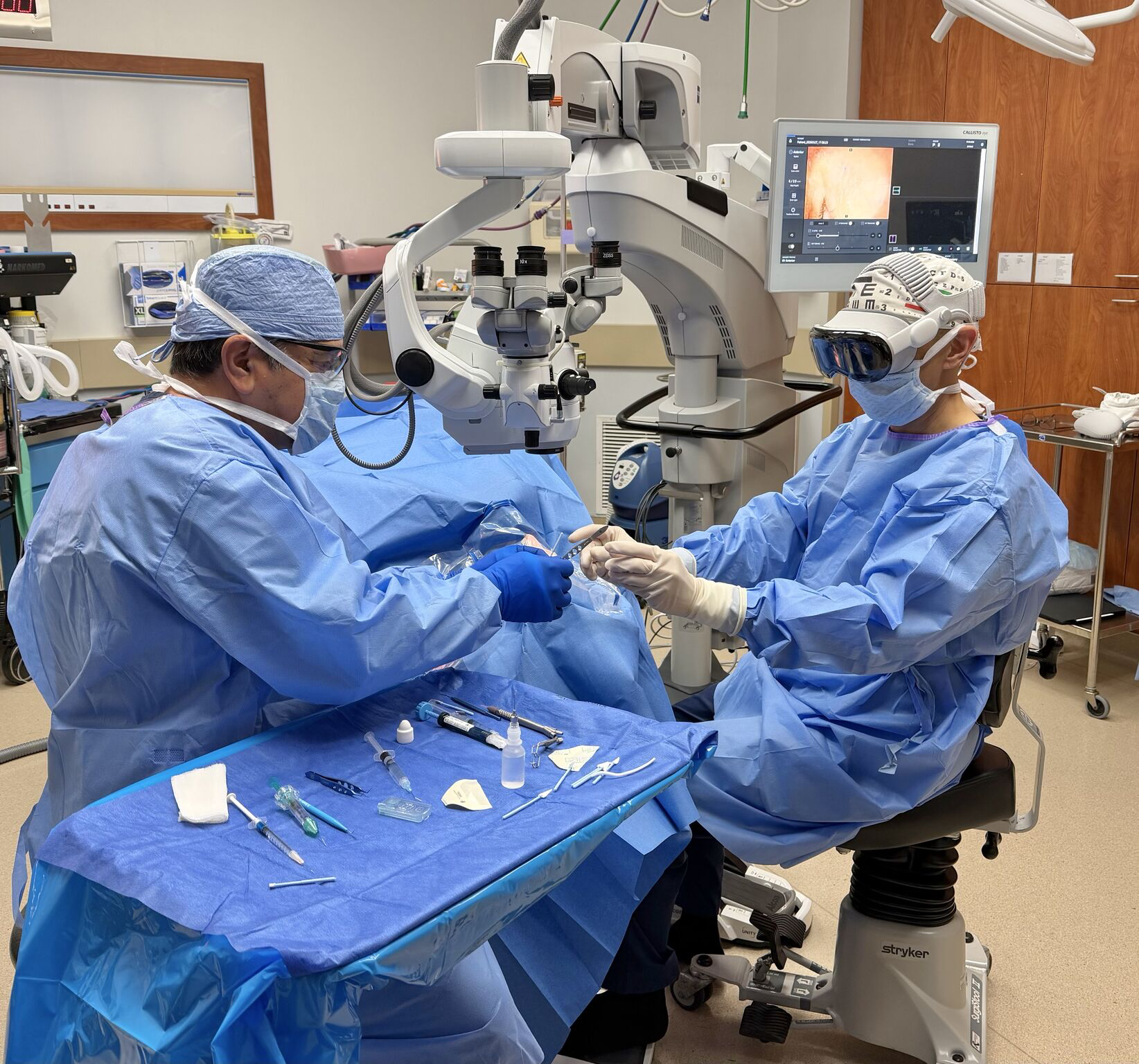
    In San Diego, Dr. Tommy Korn has been performing surgery with the Apple Vision Pro.

    We’re studying how spatial visualization may redefine microsurgery.
    • IRB-approved[1]
    • One of the first of its kind in microscopic eye surgery
    • Safety & feasibility study

    Technology used:
    • Apple Vision Pro - 2nd generation M5
    • ZEISS Medical Technology Artevo 850 3D Digital Microscope
    • ClearSphere spatial app from ClearSurgery

    Source: LinkedIn

    The idea of adding a layer of information or enhancing vision through a wearable computer being used to repair the vision of damaged eyes, I'd say that's pretty cool stuff.

    To oversimplify, the Apple Vision Pro is being used to substitute looking directly through microscope eyepieces, freeing the surgeon from neck and eye strain and allowing additional information to be shown without averting their gaze from the procedure. This improves outcomes and reduces fatigue allowing more procedures to be performed by the same surgeon or allowing more surgeries to be performed by more individuals with fewer obstacles to training.

    Spatial computing (SC) is also not a sprint. Joz said it's a product that has been brought from the future into the present and, as I use it, I feel that is indeed the case. And like AI, there are benefits being measured today. But what strikes me is the contrast in attention.

    Far more attention and capital is being applied to AI vs. SC but both are inevitable. The contrast might have something to do with psychology or attention markets but it shows that opportunities are not secrets. They are just unnoticed.

    1. An Institutional Review Board (IRB) in surgery is an independent ethics committee that reviews, approves, and monitors research involving human surgical patients to ensure their safety, rights, and welfare. It acts as a mandatory watchdog, evaluating surgical trials, new devices, and techniques to maintain high ethical standards.
  5. People don’t like wearing things on their faces and don’t trust those who do

    Research · 1 comment

    Says Neal Stephenson who first coined the term “metaverse”

    This revelation came soon after Meta canceled the Metaverse.

    My thought was immediately, will Meta rename itself back to Facebook? We'll get to that soon, but first let's look into Neal Stephenson's mea culpa:

    When I was working at Magic Leap, and people asked me why I thought that [Metaverse] was a good idea, I would ask the rhetorical question: “do you really think that twenty years from now everyone is still going to be going around all day staring at little rectangles in their hands?” At the time it seemed obvious to me that the answer was no.

    Reader, I have changed my mind. Twenty years from now, everyone is still going to be staring at handheld rectangles. Or at least that is the case if the only alternative is wearing things on their faces. Maybe this should have been obvious to me given the amount of time, effort, and money people put into making their faces look as good as possible.

    A possible workaround is to keep refining and miniaturizing the devices to the point where they just look like eyeglasses. This, however, turns out to have the unintended side effect of making these things seem sinister. It happened with Google Glass, which instantaneously spawned the term “glasshole,” and it has happened again with Meta’s product that looks like normal, albeit heavy-framed glasses.

    When someone around you is staring at a rectangle in their hand, it might be incredibly annoying, but at least you can tell they’re doing it. When someone’s wearing a head-mounted display, on the other hand, you don’t know whether they are looking at you or not.

    Likewise, when someone holds up their phone and aims it at you, it’s obvious that you are on camera. That’s not true in the case of glasses or goggles. So it’s creepy.

    Timing is everything and 20 years is always kicked around as some "infinite time horizon". It's notoriously difficult to predict when a transition happens and too many times we give up because we were certain how long it would take. That's rather the story of my life.

    To remedy this, first, I never thought Magic Leap was interesting. Nor did I bother even skimming stories about Google Glass. I went nowhere near anything made by Facebook/Meta. Did not even try to use any one product, did not read specs, reviews or any other commentary.

    I knew the products would not be very good being not much more than demos or experiments. To understand the market, you first need to make a marketable product and these were not good enough.

    The goodness here was defined in the absence of creepiness. I've always argued that wearables are easily categorized: just look for places on the body where jewelry is placed and you'll know where wearables will be worn.

    Jewelry has been developer for thousands, perhaps hundreds of thousands of years and it is inextricably connected to our psyche. Glasses do pass for jewelry but only if they conform to high standards of style. Functional objects rarely are granted status as ornament. Finding that balance is the key. It happened with watches and maybe ladies' hats.

    Stephenson is right in saying that face ornaments are difficult "given the amount of time, effort, and money people put into making their faces look as good as possible."

    That does not disqualify face wearables entirely. It simply needs design thinking and that's what was always what I expected from Apple. The Apple Vision Pro was not meant to be used socially. It does not even work outdoors.

    It's a productivity product and one aimed at professionals. Apple will release a face wearable only when it conforms to its principles of user-centric design.

    That was not the case for Meta because it is not a company concerned with customer satisfaction. Its business model is to sell users to advertisers and was motivated to enter device development only so as to disintermediate the smartphone. Doing so would remove any impediments to harvesting users data. The priority of user affinity and affection was nice to have but it requires a maniacal attention to even have a chance of success at being loved.

    Rebranding around a hypothesis like the metaverse was impulsive but Facebook was a dying brand anyway and having diversified well beyond it, deprecating it was no great loss. Slapping on the Meta moniker was a bark up the wrong tree but not much was lost. I doubt there will be another change unless Zuckerberg falls in love with another way to get rid of its distributors.

    NB: Apple never chose to use Metaverse branding. What it developed was spatial computing. It approached the problem not as a content but as a platform and user interface. Will we move to spatial computing en masse to the detriment of "rectangles in our pockets". I don't think that the right question. In reflecting on the past of computing, a new platform did not just replace the previous but created new markets altogether.

    Each new interface was an order of magnitude more popular than its predecessor. Keyboard, mouse, touch, each added a few zeroes to the number of users. We are now at nearly 1:1 machine to human. I don't think that this is the limit.

    We are entering the n:1 machines to human and wearables are the only way we get there. And as I said, where there is jewelry there will be a machine. Spatial interfaces are more natural as far as our perceived reality is concerned. The rest is engineering.

  6. Asymco Bulletin 003 - Mar 8, 2026

    Bulletin

    Asymco Bulletin is a digest of all the work we have published for the week ending Mar 8, 2026.

    Editor's Note

    It's been about a month since we launched Asymco One, and we are elated with the response from the community. Most recently, we held our first Office Hour, where we discussed the impact of Apple's latest products and answered questions in front of a live, Asymco One subscribers. We'd like to thank you for your support.

    We continue to make improvements in how we create and deliver our content. Please bear with us while we renovate our infrastructure. Should you have any issues or have questions, please reach us at contact@asymco.com.

    Finally, if you are on the fence about committing to Asymco One for a whole year, we've introduced the Asymco One monthly subscription. Try it today!


    Research

    Apple Services in Europe: Scale and Growth

    Since October 2023, Apple has been transparently reporting App Store user metrics across 27 EU nations, updating these figures biannually. This initiative spans a population over 450 million, offering a granular yet rounded down to the nearest million, potentially skewing figures slightly downward. To mitigate this undercounting bias, adjustments are factored into trend analyses.

    Through three sampling intervals from 2023 through July 2024, a market landscape emerges. The aggregated data hints at subtle shifts and growth patterns. →

    Stairway Update

    The iPhone 17e emerges as an incremental refinement—"the new low end, same as the old low end, but better." Apple has streamlined its lineup by axing the mid-memory "e" model, leaving us with two price points. This simplification might appear reductive, yet it strategically consolidates offerings while enhancing value. Notably, the base model's memory has doubled, a move that defies the prevailing DRAM scarcity narrative, suggesting Apple's adept supply chain management and perhaps a bit of market leverage.

    By trimming excess and boosting core features, the 17e exemplifies a nuanced approach to product evolution. →


    Nota Bene

    Apple introduces iPhone 17e → Apple's iPhone 17e offers double storage at the same $599 price, boosting profit margins. →

    Apple introduces the new iPad Air, powered by M4 → Apple's new iPad Air with M4 chip and increased memory boosts performance, enhancing versatility. →

    Apple announces new MacBook Air with M5 and MacBook Pro with M5 Pro and M5 Max → Apple's latest MacBook lineup offers the affordable, efficient M5-powered Air, the mid-range balanced performer, and the high-end, powerhouse M5 Pro and Max models for demanding professionals. →

    Apple unveils new Studio Display and all-new Studio Display XDR → Apple's Studio Display XDR boasts a 27-inch 5K Retina screen with mini-LED, 2000 nits brightness, and 120Hz refresh, ideal for professionals. →

    Say hello to MacBook Neo → Apple launched the MacBook Neo, a budget-friendly laptop with premium features, priced at $599, amid concerns over shrinking margins in the Windows laptop market. →

    Apple’s strategy is actually genius if you think about it → "Apple's strategic pivot to on-device AI could dismantle the AI boom by making models redundant and controlling the distribution gateway." →


    Office Hours

    Apple Q&A: Horace Dediu & Ben Bajarin discuss implications of Apple’s March 4, 2026 rollout →

    We convened our first Office Hours on March 4 to review Apple's latest releases, where we answered questions from a live audience of subscribers, and dissected Apple's latest and strategies. Topics covered:

    • MacBook Neo's Market
    • iPhone Pricing tiers
    • Apple's Margin Strategy
    • Siri and Apple's AI Strategy
    • Spatial Computing: Ergonomics, AI
    • Apple's AI and Spatial Computing
    • Cellular Modems and Laptops
    • Premium vs. "cheap"
    • Changes to Smartphone Market Dynamics
    • Product Cannibalization

    Full recording and transcript is available to Asymco One subscribers.


    Asymco One gives you full access to our research, analysis, and commentary. Subscribe with code BULLETIN for a discount.

    Feedback: Have questions or comments? Reach out to us at contact@asymco.com. We’d love to hear from you.

  7. It's Spacetime

    Research

    The Apple Vision Pro has had a very long gestation period. The first evidence for it emerged in 2015 when Apple acquired Metaio and Mike Rockwell was hired. That's almost 9 years ago. Even at this time, the product is in many ways incomplete and will take some years to develop into its potential.

    So why is this taking so long? How does it differ, it at all, from other product developments at Apple? And what was the decision process for the product? Was it different than other Apple products? Now that we have the product to use, it's possible to hypothesize answers to these questions and examine how Apple is evolving in its own long-term trajectory.

    After using the product for a few weeks my observation is that the development of the Vision Pro appears to have been an engineering-led heavy lift rather than a design-led puzzle solving. To suggest such a distinction between engineering and design is perhaps obvious but it's not so obvious for Apple. Historically the two disciplines were blended imperceptibly or forged into a whole by management. Not without difficulty but forged nonetheless. I therefore think that this effort is a departure.

    For the Vision Pro there were significant measurable performance requirements such as resolution, frame rates, tracking (eye and hand) accuracy, response times, weight/size, and power consumption which all needed huge leaps forward. Orders of magnitude. None of these were good enough for those nine years and some are still not good enough, especially for mass adoption. This is before considering the software and ecosystem which need to be built for an entirely new experience. All of these breakthroughs are against hard physical (biological) constraints. Engineering is all about balancing physical constraints, making tradeoff decisions in pursuit of some optimum. The Vision Pro was hard to develop because it requires all these inter-related constraints to be balanced.

    In contrast, design decision making has to consider purpose. It leads to more of the human and environmental (economic) factors: what is the user trying to do? What are the limitations of the person using it and what are the circumstances of the usage? What should be the goal? It's more a question of why than how. Design is answering the Job-to-be-done question whereas engineering is answering the how-to-get-it-done question. Apple's leadership in product over the years was due to their insight into both of these questions. As Jony Ive would say: saying no to a thousand good ideas and focusing only on what mattered, based on keen insight into the human condition. Another way of saying that a product needs to justify its existence.

    Design is not just how a product looks or feels. It's how the user discovers it and thus why it exists.

    The purpose of the Vision Pro is however all too brief: to enable a new human/computer interface. The very premise that created Apple: make computers easier to use and thus make them more useful and more used. The developments of silicon and optics and batteries and communications of the last few decades have suggested that there was a leap possible beyond the prevailing touch interface. Multitouch itself was a leap from the trackpad/mouse which was a leap from the keyboard input method. All these leaps cause Apple to surge forward, delivering a sequence of futures in a way that made them absorbable by many if not most.

    In addition, the Vision Pro is not a product that the user needs to look at while using it. It's completely invisible, having no physical presence to the user. You look through it rather than at it.

    Therefore there is no question of "Why" or "How to use it". These are self-evident. Consider the user's input. The interface of looking at something and touching fingers together is so direct that there is no need to learn it. You rather need to unlearn the "computer" interface to use it.

    Now consider the output: The canvas to paint on is not a rectangular screen with rounded corners and perhaps a pill-shaped cutout. It's the entire world. It's all that you can see. It's not in front of you. It's all around you. The place you use it is not in your hand, on a desk or a slice of time. It's anywhere and anytime. In other words, we don't need to have--as there was with the phone--"a conversation" with the user to discover what is missing and what can be fixed. If anything, the design surface is everything and everywhere.

    The premise of spatial computing is that computing is consciousness itself. All that you see, everywhere you are, with no friction of "interaction" or "input/output". There is no "user interface". There is only space, natural and synthetic.

    So it follows that this product is different. The Vision Pro is a project to develop not just a new computer but a new way that computers are used.

    Before going into how exactly, let's recall that when the phone was made mobile it made calling a person possible. Before the mobile phone, calling meant calling a place. To call a person meant guessing where they would be. Going to calling a person, and not just a place, meant all people were callable and also all people could be callers. Once data was provisioned to the phone then all people could not only consume but they could also publish. Anything and always. Which they did, for good and bad.

    The Apple Vision Pro is aiming to do even more. It's saying that computing is not something you initiate and terminate. Or that you do in a place. With a phone you stop, look, act and then go back to what you were doing before. Spatial Computing is ambient. It's wearable. The Apple Watch is also an ambient computer but it has limited output. It's so limited that it's essentially consumed with a single glance. The Vision Pro is the opposite. Every photon you see, it generates. To avoid it, you close your eyes.

    For this reason, the classical questions of design are moot, or at least they are moot on the device. They become relevant at the app layer. The device is bionic. It's defined by biology not consciousness. The questions of what to paint on the canvas the user sees, i.e. the world, is left as an exercise to the developer.

    The product strategy, go-to-market and all the details we are witnessing related to launch and packaging are a byproduct of this essential distinction. The development process, the ecosystem questions, the price points. They are all what they are because this is such a giant leap forward. It must be understood for its profundity and that will not be quick or easy. It's unintuitive really. Rather like Special Relativity was when Einstein proposed it. It is still unintuitive today because it makes sense only on cosmic scales (and the speed of light.)

    So I propose that those who might want to consider this new spatial computing era should call it something else: spacetime. The time spent in spatial computing but also this new era we are entering.

    Welcome to spacetime.