
Asymco

Asymmetric Intelligence

tablet

  1. Will Apple rule the iPad market?

    Research · 1 comment

    This question sounds like a tautology. It's like asking "Will Apple rule the iPod market?" But redundancy has not stopped WSJ journalist Benjamin Pimentel from asking. His answer to the question is below:

    But while Apple apparently has the edge in the emerging tablet war, it is unclear if the company will end up dominating the market the way it has come to rule the digital music player market with the iPod.

    Gartner's Fiering said the iPad has "raised the bar and suppliers are now scrambling to make sure they get it right."

    IDC now projects 6 million tablet devices to ship this year, including 4 million iPads, Shim said. But while Apple has taken the lead, he added, the company faces the "burden of lifting or defining this entire new market," because there are no other competitive devices available.

    "In the iPhone market, they learned from everybody else," he added in a video interview. "In this new space, there's nobody else to kind of bounce ideas of so to speak."

    But Apple may not have to feel so alone for long.

    Fiering specifically pointed to H-P's as the best positioned challenger, given its scale, reach and its upcoming merger with Palm.

    "There are not too many suppliers that can pull all those pieces together," she said. "H-P could if they integrate the Palm acquisition properly."

    Another IDC analyst, Crawford Del Prete, agreed saying, while the "buzz" from H-P had generally been defensive in relation to the iPad, "the longer term story is far more interesting."

    "Given H-P's massive scale, I think they have the ability to drive new price points for this kind of product," he said. "With a lower price point, the category becomes far more interesting."

    via PC Makers Look To Challenge Apple's IPad - WSJ.com.

    Before diving into the statements above it's worth noting where the journalist went to get opinions to fill his column. He called Gartner and IDC. Quoting industry analysts is a standard operating procedure to fill column-inches with material that does not offend. But how good are they?

    In my years of watching those who watch markets I formed a ranking of analyst types and their likely accuracy with respect to prognosticating a market shift. In order from most accurate to least accurate:

    1. The most accurate are rank amateurs (deagol, Muller, et. al).  Independent bloggers who do some fact checking tend to make the boldest but most accurate forecasts.
    2. The next most accurate are sell-side analysts (purveyors of analyst reports from established brokerages).  They follow financials for individual companies.  You might think their record is quite poor, but in fact they are much better than..
    3. Industry analysts (like Gartner, IDC).  Their forecasts and sensitivity to disruption are often off by an order of magnitude.  This is partly because they forecast a bit further out than Wall St. but also because they are closer to their industry clients-- the source of their ideas.  They spend a lot of time talking to the least accurate forecasters...
    4. The corporate analysts.  They are typically hired to advise management in the incumbent companies. These are people who have the most information about the way the industry is performing on a daily basis.

    You might notice a pattern here: the closer you are to the market, the less likely you are to observe how that market is crumbling around you. You cannot see the forest for the trees.

    How could this be? How can having more access give you a poorer picture? The answer lies in the asymmetry of a disruptive attack. The more you know about how things are the less you know about how things could be.

    In practice, the analyst information value chain works like this:

    Corporate analysts feed information to management that management is comfortable digesting. Those managers then hire industry analysts to validate their opinions. Industry analysts are keen to maintain a relationship with those firms and so they listen carefully to the prejudices of their clients. They then hold up a mirror to those myths and consolidate those opinions for wider distribution and quotation by journalists at respectable publications.

    Stock analysts listen with one ear to the chatter but with the other to the way the wind blows with the stock market. Sometimes they actually sample the data in the value chain directly by calling acquaintances in the market and hire interns to watch what's happening in the shops. They then build an opinion that has some level of surprise but that they hope will not stray too far into controversy so that they can keep their jobs in case they are wrong. The safe bet is always to say that things will stay mostly the way they are, but to say it in clever ways.

    So that just leaves only one group of analysts with independence from a paycheck who can make an opinion on the basis of facts alone.

    This post has become longer than I planned, so I'll dive into the exact answer to the article claims in part II.
  2. Sony would say No to Walkman today

    Research · 1 comment

    Sony is “not convinced there is a large enough market to justify bringing out a tablet,”

    via Sony Considering Developing Tablet Computer to Compete With Apple's IPad - Bloomberg.

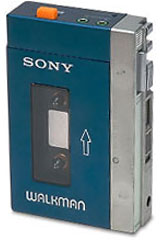
    I wonder what current Sony management would have said when the Walkman would have been presented to them in 1978 by audio-division engineer Nobutoshi Kihara.

    The Walkman TPS-L2 from 1979:

    The original Sony Walkman

    The Walkman introduced a change in music listening habits by allowing people to carry music with them.

    There was a tiny market for such implements in 1978, promoted to professional journalists.  Sony even had a product called the Pressman and marketed it exclusively to reporters. These recorders lacked stereo sound and were very expensive. They also used (typically) microcassettes, which had no support from record companies.

    With the limited choices presented to consumers, the most popular cassette tape players were either home stereos or car players.

    I'm sure Sony's current management  would also have been unconvinced that there was a large enough market to justify bringing out a consumer-grade portable cassette player.

  3. HP WebOS tablets, netbooks

    Research

    "During a conference call about HP's acquisition of Palm Wednesday, Todd Bradley, executive VP of HP's Personal Systems Group, said that there are "a lot of opportunities" with the purchase. Namely, he said, HP could use the WebOS mobile operating system as a touchscreen interface for new hardware such as a tablet or netbook.

    Palm CEO Jon Rubinstein and Brian Humphries, HP's senior VP of Strategy and Corporate Development revealed that HP plans to "double down on WebOS," which is considered the "prized asset" of the acquisition. The two reportedly mentioned the scalability of WebOS, implying that HP plans to bring the platform to multiple hardware form factors. HP even said it has already tested WebOS for its scalability."

    http://www.appleinsider.com/articles/10/04/28/hps_purchase_of_palm_could_lead_to_webos_tablets_netbooks.html

    Oh, and someone from HP also said they will still do business with Microsoft.

    Let's see...HP is adding its own mobile OS, HTC was hunting for its own mobile OS but is living on skinning, Palm made its own mobile OS and managed to escape oblivion, Samsung launched its own mobile OS, Apple has its own mobile OS, RIM has its own mobile OS and bought the kernel of another, Microsoft has its own mobile OS--really more than one, Nokia has its own mobile OS(s), and Google has its own mobile OS (plus Chrome). Chances are that Amazon is building its own OS as well.

    Only Microsoft and Google are still betting that licensing is going to be the way forward but each is hedging its bets: Microsoft with Kin and Google with Nexus One.

    Can anyone seriously suggest that the mobile computing industry is rapidly moving toward horizontal modularity or even consolidating like the Operators are hoping?

    Before you answer, consider also other horizontal players that are no longer with us: PalmSource, Symbian (and, give it a year, Windows Mobile).

  4. RIM chief competing for "Most out of touch CEO" award

    Research

    RIM's co-chief Mike Lazaridis downplayed many of Apple's efforts today in a keynote at the TD Newcrest technology conference in Toronto. The executive was concerned that there wasn't necessarily a market for tablets like the iPad and that any devices would have to be put in the context of computers and smartphones. Many companies ask new hires to choose either a new smartphone or a new notebook, and if the tablet is simply a substitute for a notebook it may not have an easy answer, Lazaridis said.

    He added that smartphones are getting more powerful and more computer like, and by extension would reduce the need for a tablet.

    The company leader also dismissed the importance of touchscreen phones. While it's important to give customers what they want, touch-only phones like the iPhone aren't that popular, Lazaridis argued. He claimed that most of the people buying touchscreen phones are going back to phones with hardware QWERTY keyboards, like those that made RIM "famous."

    He pointed out that it was the experience and not the features that determined a phone's success, and that the most popular BlackBerry was actually the starter Curve 8520. It not only lacks touch but 3G and a high-resolution screen.

    via RIM chief: no market for tablets, touch-only phones | Electronista.

    Jobs must be thinking: with enemies like these, who needs friends.

  5. Nokia Tablet?

    Research

    "Getting a strong Intel backing here could be an important advantage," says MKM Partners analyst Tero Kuittinen, who sees the Nokia tablet as part of an array of mobile computers.

    via Nokia Aims a Tablet at Apple: Exclusive | Technology | Financial Articles & Investing News | TheStreet.com.

    No doubt Nokia's tablet plans preceded the launch of the iPad--product cycles being what they are.  And the relationship with Intel is certainly a big part of this push (vs. on the handset side where Intel has no cards to play).

    However, the elephant in the room is what software will run on this Tablet.  Any discussion on competitive potential of iPad competitors must include a view on the software/platform and ecosystem that tablet will rest on.

    This is not a hardware business.  In fact, the hardware is designed to get out of the way.

    The hardware is so understated — it’s just a screen, really — and because you manipulate objects and interface elements so smoothly and directly on the screen, the fact that you’re using an iPad falls away. You’re using the app, whatever it may be, and while you’re doing so, the iPad is that app. Switch to another app and the iPad becomes that app. If that’s not magic, I don’t know what is.

    source: http://db.tidbits.com/article/11152

  6. Music. Sweet music

    Podcast · 37 comments

    iPad Death Watch : AAPLinvestors

    You can't go wrong betting against this bunch.

    (link above reproduced below due to bandwidth issues with their servers.)

    “Any tablet computer, including Apple’s eagerly anticipated iPad, will face serious problems in generating big sales. Tablets look cool, but the reality is they don’t do anything new.” Michael Comeau, Minyanville, 5 March 2010

    Dvorak:”I’m telling you, look at this product coming out of India called the Adam.” Curry: “A-D-A-M?” Dvorak: “Yeah.” Curry: “And it’s a what it’s a pad?” Dvorak: “It’s an iPad Killer. And I hate to use that term since the iPad is probably dead anyway.” No Agenda Podcast, Adam Curry & John C. Dvorak, 25 February 2010

    “Fewer capabilities (than a netbook) but a similar size? Not a good start.”Lee Gomes, Forbes Asia Magazine, 5 March 2010

    “We of course build plastic mock-ups that we show (to customers)…we had a slate form factor. The feedback was that for (our) customers it will not work because of the need to have (a physical) keyboard. These were 14-year-old kids, who, I thought, would be most willing to try a virtual keyboard but they said no, we want the physical keyboard.” Mika Majapuro, Worldwide Sr. Product Marketing Manager, Lenovo, 22 February 2010

    “The Apple iPad is not going to be the company’s next runaway best seller.” John Dvorak, MarketWatch, 12 February 2010

    “It’s a nice reader, but there’s nothing on the iPad I look at and say, ‘Oh, I wish Microsoft had done it.’” Bill Gates, Microsoft, 10 February 2010

    “The rally has been especially kind to seemingly racy stocks such as Apple and Google. Both have pole-vaulted to market-surpassing gains over the past 12 months, despite the fact that the former’s hamster-wheel of innovation (to borrow an apt phrase from my Fool colleague Joe Magyer) may have hit a snag with the iPad. ” Shannon Zimmerman, The Motley Fool, 10 February 2010

    “It’s not a tablet, it’s an extension of the iPod Touch. It has some new kinks, but generally speaking it’s using the iPhone OS. It’s more like a smart phone than a personal computer. It’s the Newton reborn. What’s missing most is the communications aspect.” Andreas Haas (former Apple executive), CEO, Axiotron (Modbook), 7 February 2010

    Before Jan 20th, 49 percent of people said they didn’t think they needed an Apple Tablet. That number jumped to 61 percent after the announcement. Fifty-nine percent of buyers wouldn’t pay extra for 3G coverage. Whether this device becomes a big hit is anyone’s guess but based on this study it sure looks doubtful.” Retrevo, 5 February 2010

    “Yet it’s hard to see how the iPad, in the form unveiled last month, will come close to transforming daily life as much as the iPod or iPhone. The challenge with the iPad will be less about improving an established market than building a new one.” Arik Hesseldahl, BusinessWeek, 5 February 2010

    “I added it up and … like 800 people are going to buy the iPad. . . . It’s not that the iPad is a failure. It’s just a product ahead of its time. No one should actually buy this iPad — between its inevitable first-generation bugs, fulfillment problems, and buyer’s remorse over added features and price drops, it’s heartbreak waiting to happen.” Molly Wood, CNet, 31 January 2010

    “It was a bigger iPod Touch. I question whether those features would be enough to get people to buy new machines.” Satoru Iwata, President, Nintendo, 29 January 2010

    “The company once notorious for its ability to upend convention and revolutionize markets may no longer have what it takes, worry some technology journalists. Call it the iPad or the iPlod, but the message seems clear: Apple may have lost its mojo.” Jeremy A. Kaplan, FOXNews.com, 28 January 2010

    “What’s the single most worrisome thing about the iPad? It’s Apple’s monopoly on distribution of applications. ” Harry McCracken, Tecnologizer.com, 29 January 2010

    “The tablet market has only succeeded as a niche market over the years and it was hoped Apple would dream up some new paradigm to change all that. From what I’ve seen and heard, this won’t be it.” John Dvorak, MarketWatch, 29 January 2010

    “It is a humorous world in how Microsoft is much more open than Apple,” Frank Shaw, Microsoft, Corporate VP, Corporate Communications, 29 January 2010

    “When Steve Jobs first demonstrated the Apple Mac, he used the words “insanely great” to demonstrate the full graphical display of the computer. It’s a tag that has stuck around to this day among Apple fans. But, today’s comments from Jobs that the iPad is a “magical, revolutionary” device ring hollow.”Dan Wayne, apc mag, 28 January 2010

    “All the people (including me) who felt underwhelmed by the iPad initially might have missed its true potential. Put another way: the iPad is all about software. Forget the sleek form factor – that’s just a prerequisite. Ironically, it’s the software and services that Microsoft never ‘got’, that Apple totally does get.” Dan Wayne, apc mag, 12 February 2010

    “Nothing from the iPad specs that I’ve seen really shows any great cause for celebration. Unless Apple has also developed some new type of power source, such as nuclear cells or magical hamsters on tiny spinning wheels for the iPad, don’t expect the claims about battery life to hold true. ” John Breeden II, Government Computer News, 28 January 2010

    “Ultimately, the iPad is a large iPod touch: a great device to draw your inspiration from, but perhaps not the seismic shift in technology that we were expecting.” Claudine Beaumont, The Telegraph, 28 January 2010

    “Behold: The Apple iFlop Neither “truly magical” nor “revolutionary,” the cluelessly named Apple iPad tablet device has dropped like a shiny wedge into the gadget game, dividing tech watchers in to opposing views — the critical and the adoring.” Scott Moritz, TheStreet.com, 28 January 2010

    “9 Worst Things About The Apple Tablet: 1. No Flash 2. Its screen 3. Its price 4. Closed App Store 5. Its name 6. No multitasking 7. No camera 8. No USB 9. AT&T deal Bianca Bosker, Huffington Post, 29 January 2010

    “What do the new Apple iPad and Google’s Nexus One have in common? Both were DOA: Disappointing On Arrival. Why is the iPad a disappointment? Because it doesn’t allow us to do anything we couldn’t do before. Sure, it is a neat form factor, but it comes with significant trade-offs, too. No 16:9 widescreen, for example.” David Coursey, PC World, 28 January 2010

    “E-readers will outsell iPads because of the simple economics of the consumer device market. It’s triple the weight and 30% thicker than an e-reader. You need two hands to hold it. It’s got a backlit screen, and it’s too expensive to give one to everyone in your house.” Russ Wilcox, CEO E-Ink (makers of Amazon’s Kindle), 28 January 2010

    “It seems like a high priced, unnecessary trinket to me.” Paul Thurrott, SuperSite for Windows, 27 January 2010

    “Apple iPad - failure, joke or fiasco? Pick one” Linen DeFiller, MillionFace.com, 27 January 2010

    “The press weren’t cheering and whooping. I didn’t see anybody pee their pants … Not one! The only people I saw cheering were the people who work at Apple down in the front two rows … Al Gore was going crazy. I wanted to see more. It’s a big iPod. What is there to do there? Play a video game on a bigger screen? I thought it [iPad] was ‘paving the cow path’ (enshrining a makeshift solution).” Dan Lyons aka Fake Steve Jobs, 27 January 2010

    “Let’s face it, the Internet was designed for the PC. The Internet is not designed for the iPhone. That’s why they’ve got 75,000 applications — they’re all trying to make the Internet look decent on the iPhone.” Steve Ballmer, Microsoft, 21 October 2009

  7. Dick Brass Vents

    Research

    I knew of Dick Brass at the time when he was promoting ClearType inside Microsoft. We met his team to consider licensing our table recognition algorithms for the production of ebooks for Microsoft Reader, an early ebook reading solution for the PocketPC. It was then I learned about plans for “reading solutions” from Microsoft, almost 10 years ago.

    Now he writes about the tragedy of Microsoft’s complete absence from the future of mobile computing.

    "...why Microsoft, America’s most famous and prosperous technology company, no longer brings us the future, whether it’s tablet computers like the iPad, e-books like Amazon’s Kindle, smartphones like the BlackBerry and iPhone, search engines like Google, digital music systems like iPod and iTunes or popular Web services like Facebook and Twitter."

    Part of the answer, Brass writes, is that Microsoft put too much faith in aggressive managers (like himself) who nurtured a culture of conflict. But mostly, he says, it's because of inter-departmental bullying by Microsoft's established divisions and a "dysfunctional" corporate culture that thwarts innovation.

    To support his contention, he offers a couple of telling anecdotes in which he does everything but name names:

    Microsoft's ClearType display technology languished in the lab for years, he says, because engineers in the Windows group "falsely claimed" it made the display go haywire, the head of Office products said it was fuzzy and gave him headaches, and the vice president for pocket devices was said he’d support ClearType only if Brass transferred the programmers to his control.

    In 2001, the vice president in charge of Microsoft Office refused to modify Word, Excel and Outlook to work properly with Brass' tablet. Result: "if you wanted to enter a number into a spreadsheet or correct a word in an e-mail message, you had to write it in a special pop-up box, which then transferred the information to Office. Annoying, clumsy and slow... To this day, you still can’t use Office directly on a Tablet PC. And despite the certainty that an Apple tablet was coming this year, the tablet group at Microsoft was eliminated."

    Brass believes that the intense, sometimes cut-throat, internal competition that Bill Gates fostered among his managers has devolved into something uncontrolled and destructive: "The big established groups are allowed to prey upon emerging teams, belittle their efforts, compete unfairly against them for resources, and over time hector them out of existence."

    He also gives a nod to the modular/integrated dichotomy to which we are always pointing accusing fingers:

    “Part of the problem is a historic preference to develop (highly profitable) software without undertaking (highly risky) hardware. This made economic sense when the company was founded in 1975, but now makes it far more difficult to create tightly integrated, beautifully designed products like an iPhone or TiVo. “

    "It’s not an accident," he writes, "that almost all the executives in charge of Microsoft’s music, e-books, phone, online, search and tablet efforts over the past decade have left."

    Read More (New York Times)...