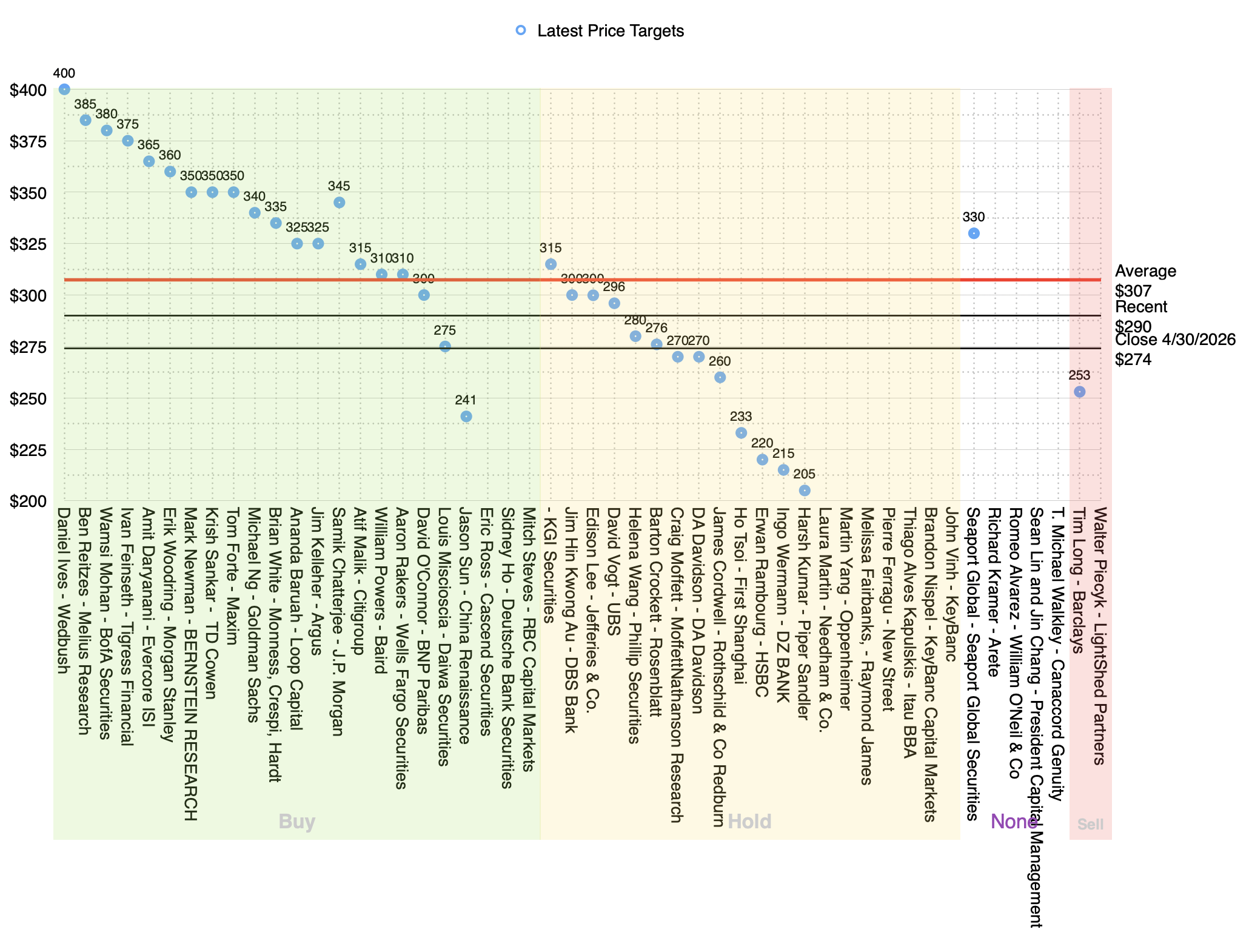
In a note to investors seen by AppleInsider on Tuesday, JP Morgan has increased its price target for Apple to $345. This is an increase of $20 from January, when it last raised the stock target price to $325.
The firm acknowledges the hefty price increases are going to be a short-term issue, with investors trying to judge how badly consumers will take the news. But even so, the news isn't enough to dampen JP Morgan's spirits.
In its reasoning, JP Morgan first says that the historical data for sales volumes covering iPhone, Mac, and iPad show a "limited relationship" to pricing across multiple years. Essentially, consumers are going to buy Apple products anyway, and pricing doesn't seem to matter too much.
Mac sales are probably the most insulated in JP Morgan's view, with more price point options and AI-led demand working in its favor.
The iPhone also benefits from limited elasticity on the premium end. Those with larger budgets are less affected by price changes, it seems.
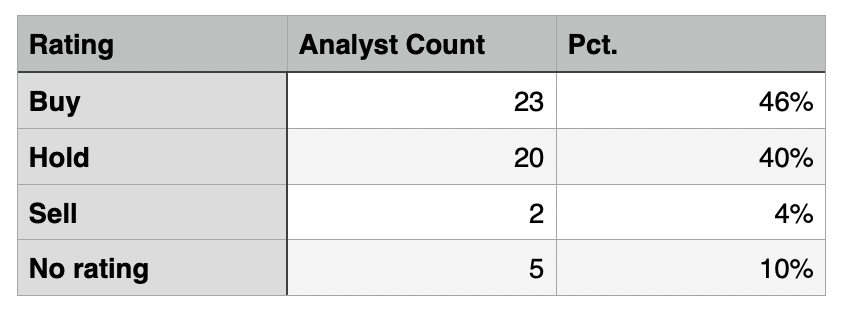
NB: Average target is $307.4, below current price of $312. A majority of analysts maintain a negative or neutral outlook on the company.
Among "Buy" ratings, the average price target is $336.8. Among "Hold" ratings, the average target is $264.6. Over the last year, the share price has risen 49%.
Apple accuses OpenAI, and former design star Jony Ive’s io Products firm, of stealing hardware trade secrets in blockbuster lawsuit
Apple sued OpenAI on Friday for allegedly stealing its trade secrets, an extraordinary move that pits the $4.6 trillion iPhone maker against the fast-growing AI startup as it prepares to release a new class of hardware products that have been shaped in large part by Apple’s former design boss.
In the lawsuit, filed in the Northern District of California court, Apple accused two former employees now working at OpenAI of systematically stealing confidential data, including information about unreleased hardware products, technical specifications, and details about vendors and contractors in Apple’s supply chain. The complaint also listed OpenAI as a defendant, as well as io Products, a hardware design firm acquired by OpenAI last year that was co-founded by Apple’s former design boss, Jony Ive.
NB: Jobs said that if you took anybody out of Apple they would be useless. He was right. In my 2013 post "Why Doesn't Anybody Copy Apple" I agued that even though everyone tries to copy Apple's products nobody tries to re-create Apple's operating model. OpenAI seems to be the first to try, though I'd argue they don't have a clue what they are doing.
What Ive and Altman tried to do was brute force replicate Apple by taking as many people and processes from Apple to replicate the operating model. What they could not replicate was the priorities. Resources are easy to steal or replicate. Processes are much more difficult but with a lot of persistence it may be possible. But Priorities cannot be replicated because they include every aspect of the business logic. OpenAI has a miserable business. They cannot graft a device business any better than Google did and arguably have a much shorter runway to even try. It does appear to be a grab the money and run type venture.
Ive's greed has destroyed his legacy. He will try to distance himself but he is forever tainted.
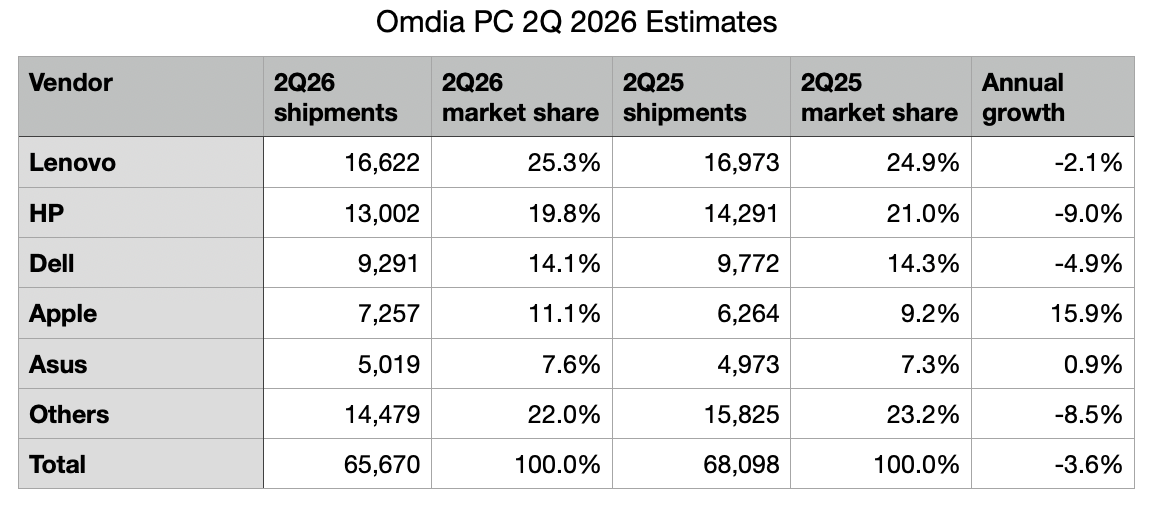
Global shipments of desktops, notebooks, and workstations in 2Q26 declined 3.6% year-over-year to 65.7 million units according to the latest research from Omdia. Shipments of desktops (including desktop workstations) hit 13.9 million, falling 1.3% annually, while notebook (including mobile workstations) shipments landed at 51.7 million units, representing a 4.2% decline.
"The sharp increase in memory and storage prices during the first quarter of the year had a significant impact on product pricing in the second quarter," said Ben Yeh, Principal Analyst at Omdia. "It also prompted consumers and IT decision makers to bring forward their PC purchases to mitigate the risk of further price increases. Although sales volumes were maintained at a stable level, the risk of a subsequent downturn remains."
Apple's recent decision to raise prices across MacBooks has become one of the key focal points in the market. However, other PC vendors began increasing prices as early as the end of 4Q25 and have continued to adjust them quarter over quarter. Across comparable product lines, prices have risen by about 20% to 40% compared with the same period last year.
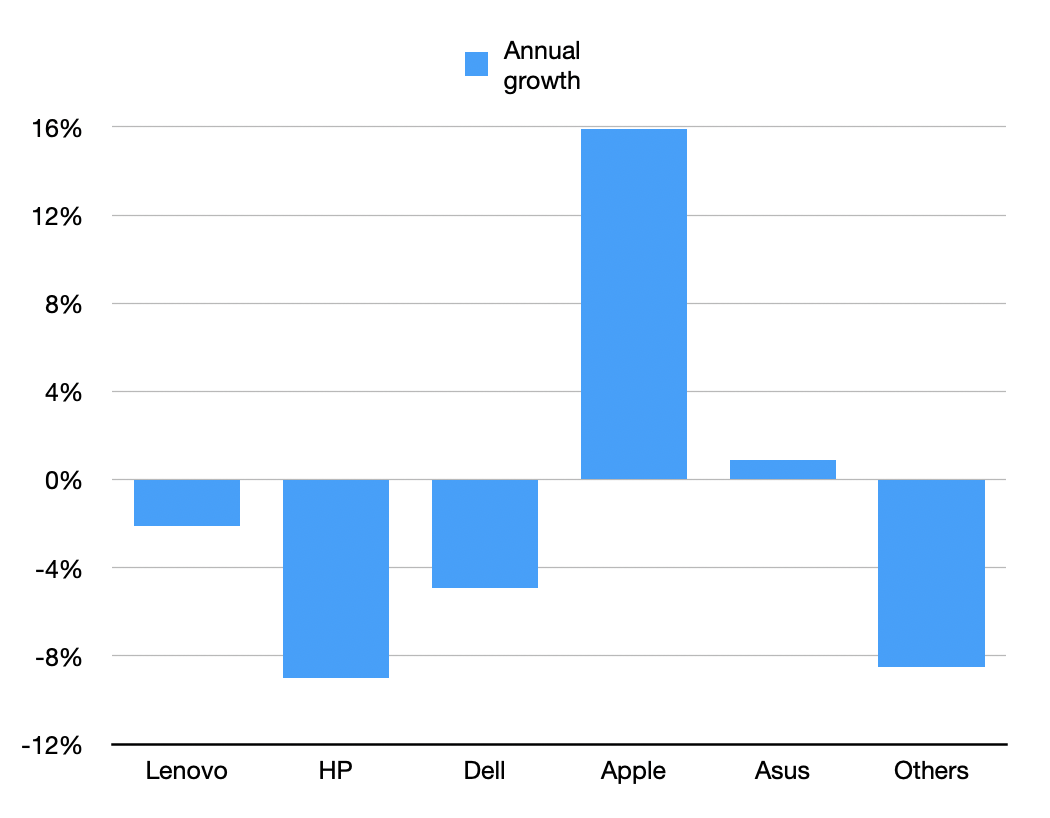
Lenovo retained the top position, shipping 16.6 million units and maintaining a 25% market share despite a modest 2% decline in shipments. HP ranked second with 13.0 million units shipped, as volumes declined 9% year over year. Dell held third place, demonstrating resilience in a supply-constrained environment by shipping 9.3 million units and capturing a 14% market share. Apple recorded the strongest growth among the top vendors, shipping 7.3 million units, driven by the launch of the MacBook Neo and healthy underlying demand. The company gained 2 percentage points of market share compared with 2Q25. Asus rounded out the top five with 5.0 million units shipped, delivering a broadly flat performance year over year.
IDC
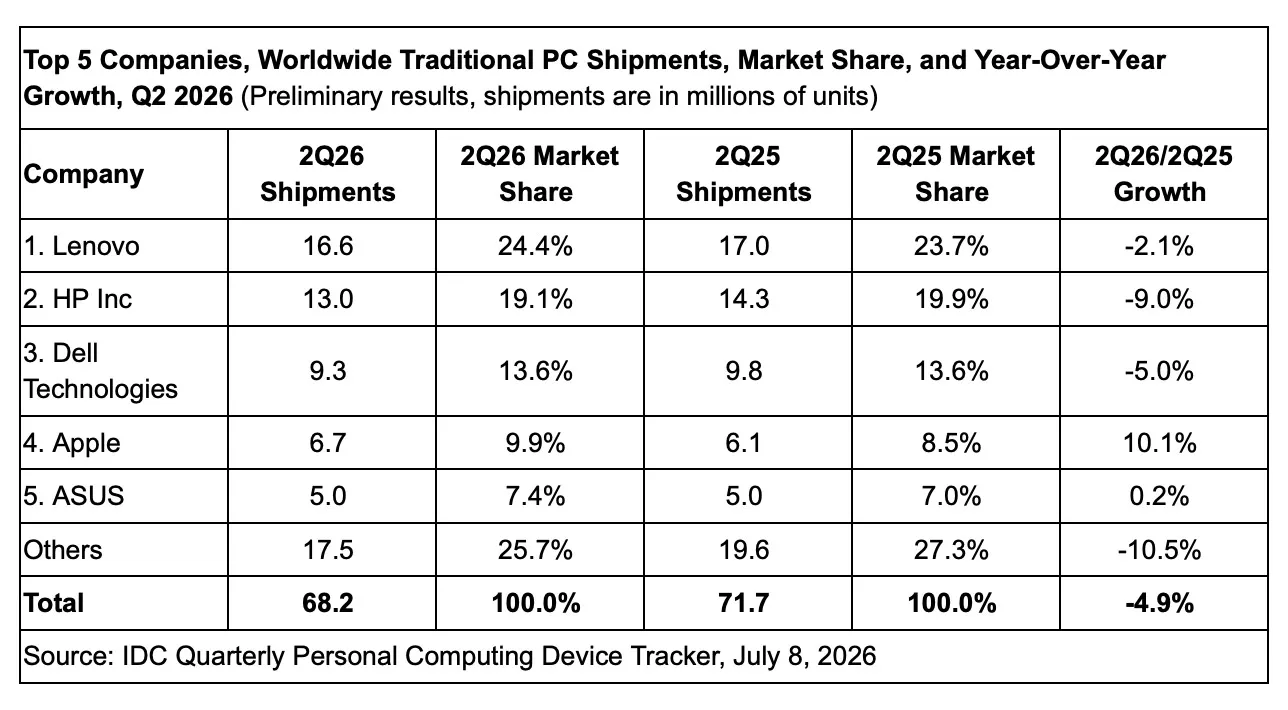
New data from IDC shows that Apple was the only major PC vendor to post significant shipment growth in Q2 2026, with the broader market declining for the first time in more than two years.
Mac shipments rise as PC demand cools In a report published today, IDC says global PC shipments fell 4.9% year over year in Q2 2026, dropping to 68.2 million units from 71.7 million units in Q2 2025. The data showed that the top-five vendor ranking was unchanged from Q2 2025, even as most major PC makers posted year-over-year declines.
In practice, Lenovo held on to the top spot with 24.4% market share, despite a 2.1% year-over-year decline in shipments. HP followed with a 19.1% share and a 9% drop, while Dell remained in third place with a 13.6% share and a 5% decline. Apple, meanwhile, saw Mac shipments jump 10.1% year over year, giving the company 9.9% share, and ASUS rounded out the top five with 7.4% share and a slight 0.2% increase. From the report:
“Apple’s share gain coincided with its latest product launch, the MacBook Neo, and while the company did raise prices in line with the broader market, it still remains well positioned against rivals facing the same cost pressures.”
Here’s Jitesh Ubrani, research director for consumer devices at IDC: “The real story here is the disconnect between units and dollars: shipments are falling, but revenue is climbing because vendors are pushing through price increases faster than demand is dropping. […] Given worsening macro conditions and a memory shortage that isn’t expected to ease until early 2028, we don’t expect another round of inventory pull-forward, which points to a sharp slowdown in growth rates in the second half of 2026. Vendors are bracing for further price hikes into 2027, and channels are already flagging concern about elevated inventory at these higher price points.”
IDC also warned that sustained price pressure could start weighing on PC upgrade cycles, “even as interest in on-device AI processing continues to grow.” The firm also pointed to another risk: the biggest PC makers gaining even more share as smaller rivals struggle with the memory crunch.
NB: The two estimates are almost exactly the same for the top vendors, differing only on Apple's shipment and "Others". Overall…
…Apple is growing the Mac line between 10% and 15% in units. My own estimate is of a 15% increase in revenues (to $9.25 billion) with a volume increase of 20% due to the MacBook Neo. The Neo launch was extremely successful and it hit the market at the launch price of $599, holding the level through the end of the June quarter.
As a result, Apple's growth is very much an outlier.
According to the Omdia data, Apple is still a few percentage points (2 million units) below Dell and a third place in the volume ranking. Overtaking Dell in units would be quite an achievement given the admonishment Michael Dell had when asked what he would do if he were CEO of Apple. “What would I do? I’d shut it down and give the money back to the shareholders.”
How Apple Became the Most Defensive Stock in the Market
The stock hit an all-time high Thursday as investors look for hedges against massive artificial-intelligence investments elsewhere in the market.
Shoring up a portfolio with defensive stocks typically means buying stable names from seemingly boring categories: Consumer staples, utilities, medical devices. These days, you can just buy Apple stock instead.
Whether by design or by luck, Apple’s relative inaction on artificial intelligence has made it the ultimate hedge in a market driven by AI investments. And as investors grow wary of ballooning capital outlays elsewhere in Big Tech, the iPhone maker’s stock has proven its worth.
Apple hit an all-time high of $316.22 on Thursday after a quiet and steady long-term climb. Shares are up 15% this year and 48% in the last 12 months—first and second in the Magnificent Seven, respectively—outpacing both the Nasdaq Composite and the S&P 500. “No one admits they like or want to buy more AAPL,” Mizuho Securities analyst Jordan Klein wrote Friday. “But I get why more folks [are] looking at AAPL as a hedge or long idea.”
The story of the tech market over the last two years goes something like this: AI labs like Anthropic and OpenAI need data centers; hyperscalers like Oracle and Amazon.com are investing historic sums to provide them; and that money is going to chip and server makers, memory and storage suppliers, and a host of other companies.
Apple doesn’t fit neatly into any of those categories. It doesn’t have a frontier AI model, a sprawling cloud business, or much in-demand hardware. Instead, it is carving out a lower-cost niche as a leader in “edge AI,” which involves embedding AI applications directly on its devices, with the help of Broadcom chips.
Analysts estimate Meta Platforms, Oracle, and Amazon will have negative free cash flow in 2026 because of their AI investments. Meanwhile, Apple is expected to produce $143 billion in free cash flow, up from $109 billion last year, per FactSet. Its capital expenditures will likely decline in 2026.
“[Apple] has definitely been out of favor, but carries a lot less direct near-term execution risk,” Klein wrote.
An Office Hours question asked by Fred S, June 9, 2026.
Q: With MLX, you can write for Apple Silicon and then migrate to Nvidia’s chips — a kind of reverse Trojan horse, since people usually build tools to migrate the other way. What’s going on there?
I’m not an expert on MLX specifically, but it fits a very old pattern. When you look at Apple’s history with portability, they are extraordinarily good at it. Months ago, around the Apple-50 commemoration, I was watching the Computer History Museum interviews with the old hands — Avie Tevanian, Mike Markkula, Bertrand Serlet. Bertrand described the transition from PowerPC to Intel, way before the M series. When it shipped, people were shocked. Nobody could imagine that an OS could be migrated so quickly and so seamlessly
I met Bertrand at WWDC after he gave that talk. He called the old system a skyscraper, and described how they had to move the skyscraper. I told him it was impressive, and he was almost dismissive: this is nothing, we’ve been sweating portability for decades. That came from his background before NeXT, working on the Mach kernel and the portability of Unix, which became the heart of OS X.
So you’d have to go back decades to see how entrenched this is in Apple’s DNA: the instinct to avoid becoming dependent on an architecture they don’t control, and to be clever about the migration path. When Apple bought into Unix, what they got was portability, the ability to scale up and down from server to device, and security, because it was a protected kernel with protected processes. Microsoft never prioritized any of that, so their OS became a kludge that got patched ad infinitum.
That’s why this looks easy for them now. Doing it at the level of AI chipsets is not surprising in the least. By the way, the same engineering shows up in running macOS on an iPad as a touch display — they’ve quietly made the entire Mac interface touch-ready. The day a Mac with a touch UI arrives, it’ll be anticlimactic. They probably built it years ago and are just waiting to turn it on.
Apple plans to disrupt the $200B eyewear market the way it disrupted watches. Swatch fell 28%, Fossil 70%. Smart glasses are targeting late 2027.
When Apple launched the Apple Watch in 2015, the mid-tier wristwatch market had a handful of dominant companies. Swatch Group sold watches under Tissot, Hamilton, and Longines. Fossil Group sold under Michael Kors, Armani, and Kate Spade. Movado sold under Coach, Hugo Boss, and Tommy Hilfiger.
Ten years later, the damage is quantifiable. Swatch’s revenue is 28% lower in 2025 than it was in 2014. Fossil’s sales dropped roughly 70%. Apple became the world’s largest watchmaker by unit volume within a few years and last year overtook Rolex as the number one watch brand by revenue. The Apple Watch now generates an estimated $17 billion annually.1
NB: The global smart glasses category surged 167% from…
…a year earlier in the first quarter, shipping 2.25 million units worldwide, according to consultancy firm IDC. Meta led the pack with nearly 70% market share, followed by augmented reality-equipped glasses maker Shenzhen RayNeo Technology and Chinese consumer electronics maker Xiaomi, according to IDC.
The smart glasses category is tiny compared with the eyewear market ($0.5 billion vs. $200+ billion). Apple's entry will change that.
It's likely that the Apple product line will be called the Apple Vision line, with the Vision Pro holding the high end.
"By the end of the 16th cent. eyeglasses were as common in western and central Europe as desktop computers are in western developed countries today." Eyeglasses served an important technological function at both the intellectual and practical level, not only easing the textual studies of scholars but also easing the work of craftsmen/small bus. During the 15th cent. two crucial developments occurred: the ability to grind convex lenses for various levels of presbyopia and the ability to grind concave lenses for the correction of myopia. As a result, eyeglasses could be made almost to prescription by the early 17th cent. -Renaissance Vision from Spectacles to Telescopes, Vincent Ilardi, American Philosophical Society, 2007.
To see the future of wearables, I said look to where jewelry has been worn. The places where people trust metal against skin is where compute inevitably will reside.
My prediction has been more or less fulfilled. Today we wear Beats, AirPods, Apple Watch and (though not Apple) rings containing microprocessors. However, what is missing from this categorization is eyewear.
In How We Got to Now, Steven Johnson describes the reading lenses of medieval Europe as the first piece of technology “since the invention of clothing in Neolithic times, that ordinary people would regularly wear on their bodies.”
Though worn and labeled as apparel, glasses are treated as jewelry. Made from semi-precious, fine materials, premium branding and sold through bespoke retail, eyewear is granted a special status in our panoply of products.
Before we get into how Apple will fill this space, we should learn a bit about how the eyewear industry emerged and evolved.
Eyeglass frames often have luxury branding: Tiffany & Co., Armani, Brooks Brothers, Ferrari, Burberry, Tory Burch, Chanel, Jimmy Choo, Coach, Swarovski, Dolce & Gabbana, Michael Kors, Versace, Miu Miu, Prada, Ralph Lauren and Burberry are all eyewear brands. There are also eyewear-only brands which define their own luxury, such as Ray-Ban, Oakley, Persol, Vogue, and Oliver Peoples.
They are sold through a carefully segmented set of retailers such as Sunglass Hut, Óticas Carol, LensCrafters, Vision Express, Apollo, Pearle, Générale d’Optique, Target Optical, Pearle Vision, MasVisión, Mujosh, OPSM, Bolon, Oakley, GrandVision.
Though eyewear includes non-prescription glasses, prescription lenses are also branded. Lens brands include Crizal, Essilor, Eyezen, Kodak, Optifog, Transitions, Varilux, Xperio and Shamir.
It may seem like a diverse and broad value chain but all these brands, retailers and lenses are property of one company, EssilorLuxottica.
It is the result of the 2018 merger two major conglomerates: Essilor (French) focused on lenses and acquirer of 250 companies and Luxottica (Italian) owning a combination of frame factories, designer labels and thousands of retail outlets.
At time of merger, Essilor had around 45% of the prescription lenses market, and Luxottica 25% of the frames. Combined they sell close to a billion pairs of lenses and frames every year, through 17,740 stores with a workforce of more than 140,000. They have around 1.5 billion customers, mostly in the premium or high-end of the market.
Since the merger, EssilorLuxottica continued its acquisitions with a set of prescription laboratories in South America and Europe, optician groups in Europe and US and Heidelberg Engineering, a German maker of optical coherence tomography (OCT) diagnostic instruments, confocal microscopy, and scanning lasers.
In July 2024, EssilorLuxottica bought US streetwear brand Supreme, expanding its brand portfolio beyond eyewear and lenses for the first time.
It also acquired Israeli startup Nuance Hearing indicating that it may introduce hearing aid technology into its lenses.
It also owns EyeMed, one of the largest vision insurance plans in the US.
There is something here more than meets the eye.
A lenticular species
Almost everyone wears glasses at some point in their lives. In developed countries, the rule of thumb is that around 70% of adults need corrective lenses. In Japan it's 75%. Including sunglasses, the penetration of eyewear is probably close to 90%.
We are at an unprecedented moment in the story of human vision – namely, the accelerating degradation of our eyes. For several thousand years, human beings have been operating mostly with unaided vision. But that is coming to an end. No one is sure why but across the world, we are becoming a species that wears lenses.
There are two things happening. First, there’s a largely unreported global epidemic of myopia, or shortsightedness, which has doubled among young people in a single generation. Scientists once thought myopia was mainly genetic, but about 10 years ago, it became clear that children’s upbringing was also harming their eyesight. The effect is most severe in east Asia, where myopia has always been more common, but the rate of increase has been worldwide. In the 1950s, between 10% and 20% of Chinese people were shortsighted, but now, among teenagers and young adults, the proportion is more like 90%. In Seoul, 95% of 19-year-old men are myopic, many of them severely, and at risk of blindness later in life.
Across the developing world, a slower process is underway as populations age, urbanize, and move indoors for work.
In 2013 a paper forecast that half the world’s population will be myopic by 2050 – almost 5 billion people. In the course of a single generation, worldwide, researchers have recorded a rough doubling in the number of people who become short-sighted as children.
The main reason, as far as anyone can agree, is a reduction in the time that they spend outdoors. Sunlight helps to moderate levels of dopamine, which in turn influence the development of the eye. Too much dopamine means eyeballs grow too long, and become oblong in shape, focusing light in front of the retina, rather than on it.
Eyewear history shows people don’t start wearing glasses when everything seems out of focus. Instead, they wear them to participate in new forms of entertainment and labor. The mass market for spectacles didn’t emerge when they were invented in 13th-century Italy, but 200 years later in Germany, alongside the exploding availability of printed works, because people wanted to read. The printing press created a new job-to-be-done, reading, for which glasses were ready to be hired.
Scale and Style
In 2012, Essilor first publicized the 2.5 billion statistic, highlighting the shift from outdoor living to indoor usage and the resulting demand for eyewear.
EssilorLuxottica, with its own designers, engineers, factories, supply depots, and retail outlets, currently has almost 18,000 stores and contracts with 100,000 opticians worldwide. This allows it to bring products to market faster and in greater quantities than its rivals, while also retaining a larger proportion of its profits.
Considering various colors and face shapes, EssilorLuxottica produces about 27,000 models. Its plants produce 400,000 frames daily.
During the 20th century, the eyewear business transformed a physical impairment into an opportunity to display style. In doing so, optical retailers learned that for something that costs only about $15 to make, customers are happy to pay 10 or 20 times that amount. The gross margins are 60% to 67% for high-volume, online, or budget retail, 67% to 75% for mid-range/acetate) and 75% to 85%+ for branded and premium materials.
History
The conditions that have allowed for the rise of Essilor and Luxottica are rooted in the way spectacles were sold. Until the end of the 19th century, you could buy a cheap pair of glasses – for reading or for distance – off the rack in any department store, or from a jewelry shop, or a guy in the street. Eyewear was a craft and unregulated. It was buyer beware. Eyeglass sellers in the 18th and 19th centuries were notorious for scams and faulty lenses.
The birth of the optometry profession around 1900 changed this. A new profession of respectable spectacle-sellers, similar to pharmacists, sought to standardize eye tests and restrict the sale of glasses to licensed professionals only. Their goal was to raise standards. However, making cheap, widely available product accessible only to a few authorized sellers increased prices, and the potential for new form of corruption.
The first opticians were disdained by ophthalmologists – proper doctors of the eye, who trained in hospitals and considered selling glasses as an unskilled trade. The first optometry course in the US was taught at Columbia University’s physics department because it was not allowed inside the medical school.
But the new professionals persevered and found new ways to protect their jobs. Across Europe and in the US, optometry laws and regulations were passed to control the prescription and selling of eyewear. Many of these had a quality of health assurance aspect, but they also had the effect of creating a highly protected marketplace. For instance, opticians fought against advertising which might reveal prices and allow comparison shopping.
The scams and bribes became legend. Lens and frame makers bribed practitioners to prescribe their products and investigations and convictions forced divestitures and value chain break-ups.
Into this space the components of EssilorLuxottica stepped in and began to consolidate the market. Luxottica has spent the last 30 years acquiring prominent elements of the optical business, including frames, brands, and retail chains. Essilor, has focused on acquiring lens manufacturers, instrument makers, prescription labs, and the science of sight.
The strategy for EssilorLuxottica is to obtain the power to decide how billions of people will see and what they pay for it. The company can screen populations and provide eyewear across the globe all the while controlling supply, prices, and margin.
New technologies such as automated optometry kiosks and online retailing that threaten independent opticians are sustaining to EssilorLuxottica and thus they are investing and acquiring.
Today humanity is watching the world through screens, in front of them, but not on their eyes. It seems only a matter of time before those screens become lenses. The same lenses that are now an essential product for almost everyone.
One more thing: Exactly one year ago, in July 2025, Meta acquired a minority stake in EssilorLuxottica with about 3% of the equity as part of its partnership with Ray-Ban. Bloomberg said that Meta had bought a stake worth around 3 billion euros ($3.5 billion) in EssilorLuxottica and is considering further investments that could build its holding to around 5% over time.
Meta CEO Mark Zuckerberg called it a "symbolic" gesture to cement their long-term partnership.
Broadcom, Apple extend chip supply deal through 2031
July 6, 2026 8:07 AM
July 6 (Reuters) - Broadcom said on Monday it has agreed to expand its partnership with Apple through 2031 to develop and supply a range of custom chips, sending the shares of the chipmaker up nearly 4% in premarket trading.
Broadcom has been a supplying key components to Apple for a very long time, including custom radio frequency chips used in iPhones, Wi-Fi and Bluetooth connectivity chips and other networking semiconductors.
Apple is one of Broadcom's largest customers. The iPhone maker accounts for about 20% of its annual revenue, according to analysts, making it a critical contributor to the chipmaker's business.
The extended partnership reinforces Apple's strategy of locking in long-term supply agreements with key chipmakers to bolster the resilience of its supply chain.
In 2023, the companies announced a multibillion-dollar agreement for Broadcom to develop and manufacture 5G radio frequency components.
The boom in inference - the process by which models respond to user queries - has made custom chips crucial, increasing the orders for advanced processors and intensifying competition.
While Apple has increasingly designed its own processors and, more recently, its C1 cellular modem, it continues to rely on Broadcom for key wireless connectivity and radio frequency components.
Q: The Wall Street Journal just ranked Nvidia the top “company of the future,” with Apple down at number 12. What’s going on with Apple’s brand image — and is that ranking right?
Look at Nvidia’s history. For most of it, revenue was flat. Then, in the last few years, it wasn’t. We usually picture growth as a hockey stick — really a smooth, almost exponential curve. Nvidia isn’t that. It’s a flat line, and then another line at a very steep angle. Zero to one. It isn’t even a curve; it’s two lines.
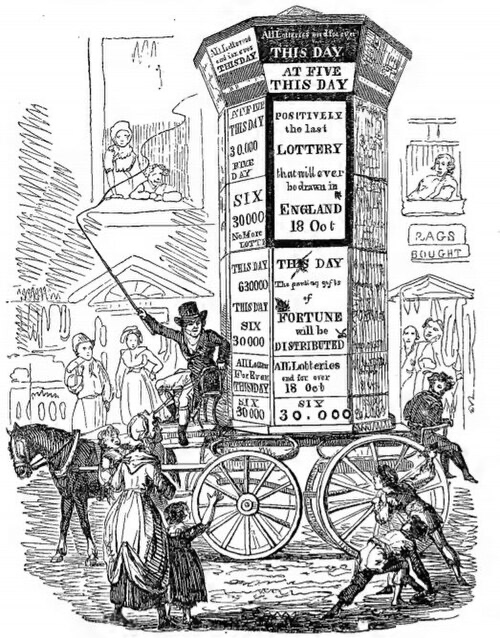
Compare it to everyone else. Meta has a nice curve. Microsoft and Google look brilliant. Apple, apart for seasonal spikes, is similar, and so is Amazon. But Nvidia is a step function. That's because they got lucky. The chip they’d been making for years — a graphics accelerator, a matrix-multiplication machine that does one thing, scaled up — turned out to be useful first for crypto, and then, just as suddenly, perfect for AI, which is nothing more than linear algebra. They won the lottery.
Now, they’re smart, and they didn’t squander it. They’re building ecosystems and platforms on top. I’m not against Nvidia. But to call a lottery winner the “best company of the future” says nothing about sustainability, processes, priorities, or scale. How many customers does Nvidia have? Five, maybe — the big hyperscalers, every one of which is desperate to fire them. How many chips does it ship? Tens of millions, each costing tens of thousands. Very profitable. But Apple ships hundreds of millions of A-series chips a year, and more. The silicon Apple puts into people’s hands is orders of magnitude more prolific.
If Apple’s roadmap bakes-in exactly what AI needs then where is Nvidia in a decade? Maybe in the PC business. Maybe the next Intel. The premise that they have an unassailable advantage, what Buffett calls a moat and the strategy people call sustainable competitive advantage, is exactly what I’m not convinced of. IBM in its heyday had far more diversity. Nvidia, to me, is a very good company, but a very lucky one, comparable to Qualcomm. And building chips was never a foundation for becoming the greatest company in the world forever.
An Office Hours question asked by Dave Emery, June 9, 2026.
Q: Will agentic AI replace the vibrant app economy, consolidating revenue to Apple and the agent providers? Or will it enable a new set of apps?
The premise of intent as an operating system is that you assemble the solution to a complex problem out of many modules: models, private data, awareness of the user’s context, and many kinds of input. The orchestrator assembles that solution and decides whether to hire a module provided by an app. Most people who assume intent computing also assume a post-app future. Apple doesn’t. On the outer ring of their "orchestrator" model of computing, they put either Siri or apps to deliver the experience.
Here’s the key. Within apps lie the permissions we entrust. Your banking credentials live in your banking app, because you trust the institution and it has earned that trust. The "Claw" theory says: just harvest all of it. Find the bank code, the social-security number, the mother’s maiden name, hand it to an orchestrator, and let it act as your agent. Apple says no. They don’t want the things that have earned your trust to be disintermediated, especially when something goes wrong. If you get hacked, it wasn’t Apple’s OS that lost your keys.
So what apps used to provide was an interface, plus data, plus a trusted relationship with the provider. What intent computing may take away is the interface — which was the costliest part of building an app anyway, with millions of developers recreating the same drop-downs and authentication steps. The app becomes a callable API. That looks like a demotion, but Apple will still invoke the app, hand off the credentials, and often let the app deliver the final experience.
This is disruption theory: as a value chain modularizes, profit capture migrates — what Clay called evaporation and condensation at different points in the chain. But branching isn’t extinction. Just because something evolves and forks doesn’t mean the old form dies; that’s why there are still apes and humans even though one evolved from the other. We’re going to have intent, and touch, and vision, all in parallel. The old way of invoking an app directly can live on for fifty years. Yes, there’s still money in the app economy. There’s much more than that, too.
While most of the other OEMs are struggling, Apple, with its stable pricing, high margins and strong supply chain control, is in the best position to weather the memory crisis and win market share…
While most of the other OEMs are struggling, Apple, with its stable pricing, high margins and strong supply chain control, is in the best position to weather the memory crisis and win market share across key segments.
Apple’s share increases in multiple categories also reflect the increasing strength of its ecosystem, with more premium users skewing towards Apple.
“This year defines Apple’s unique resilience within the industry. The multi-segment market share gains also mean a compounding impact on the company’s ecosystem strength. Apple is still gaining new users across categories, and it will become increasingly difficult for competitors to make an Apple user switch to their operating system.”
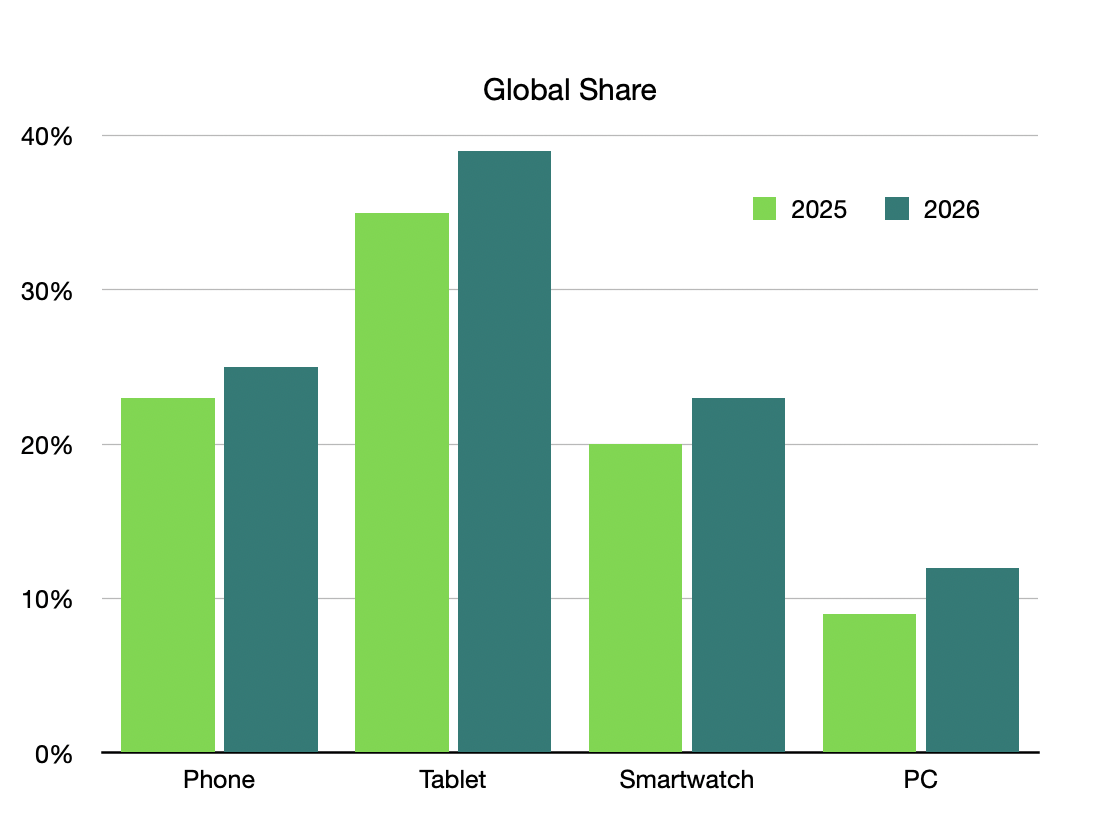
Apple’s iPhone shipments are likely to remain flat in 2026, while most of the other key OEMs will see double-digit declines. OEMs have to resort to price increases to sustain margins, but Apple has not raised iPhone prices yet. Premium segments have higher margins and can absorb more price shocks. At the same time, affluent consumers are less affected by price increases. Moreover, the iPhone 18 Pro series is expected to perform better than the iPhone 17 Pro series, and the iPhone 17 model is likely to continue its strong run in the absence of the iPhone 18 in 2026. As a result, Apple will reach its highest-ever share in the smartphone market in 2026 at around 25%.
The overall tablet market will also decline in 2026 due to inventory correction and memory shortages, but Apple is expected to grow, driven by an ongoing refresh cycle across its iPad portfolio and continued demand from emerging markets. Following the launch of the M5-powered iPad Pro in late 2025 and the iPad Air refresh earlier this year, Apple is expected to further strengthen its lineup with new base iPad and iPad mini models during the remainder of 2026. This broad refresh cycle should help Apple maintain consumer interest across multiple price tiers and better withstand the demand pressures affecting the wider tablet market, supporting further market-share gains.
Within the laptop segment, the MacBook Neo’s release will drive growth momentum in favor of Apple in 2026. Apple’s Mac shipments in 2026 will grow 23% YoY, while the overall laptop market will decline 11%. Compared to other OEMs, Apple will gain the highest percentage points of market share in the laptop segment in 2026. Within iPad and Mac as well, Apple’s share will reach its highest ever in 2026.
Smartwatches are less impacted by the memory crisis. The segment is expected to show 1% growth in 2026, with Apple growing faster than the overall segment, driven by full-year availability of the SE 3 and Watch Ultra 3 models. 2025 saw Apple’s first comprehensive portfolio refresh after 2022.
Another factor is the lowering of entry points in Apple’s ecosystem. Apple has already introduced affordable iPhone (e), watch (SE 3) and now Mac with the MacBook Neo. The company clearly wants to make its products accessible to the larger consumer base, and this is working more in its favor now as other OEMs increase prices in some segments driven by the surge in memory prices.
Apple’s share increases in multiple categories also reflect the increasing strength of its ecosystem, with more premium users skewing towards Apple. This will also mean a strong upgrade cycle for all these product categories in the future. Added to this is Apple Intelligence. At WWDC 2026, Apple showcased some strong use cases, especially for Apple Intelligence-backed Siri AI. If Apple delivers and evolves its AI landscape, it will act as a strong stickiness factor for the entire ecosystem.
Commenting on the role of Apple Intelligence, Principal Analyst Varun Mishra noted, “Apple holds the most important key, the user touchpoint across the most used devices on the planet. If delivered, a personalized Apple Intelligence will act as a strong ecosystem differentiator and unlock a new multi-device upgrade cycle for Apple.”
NB: This article was written before the price increase announced on the 25th of June. So pricing is not as "stable" as the article implies. Nevertheless, the conclusions are likely correct.
Share will grow as the effect of memory constraints will be far greater on competitors. To wit:
GoPro warned this month that it might go out of business after memory costs shot up between 80% and 115% at the end of the first quarter. And shares of speaker maker Sonos are down 23% this year as memory prices pressure margins."
Footnote: I remember when GoPro and Sonos were paraded as fantastic innovations that Apple could not hope to achieve.
More notable is that even with these high unit market shares, the share of users is significantly higher. Increasing the unit share will gradually translate in a more resilient user share in the long term. Users lead to increasing ecosystem, services and loyalty.