Asymco

Asymmetric Intelligence

Industry

  1. Serving the Needs of IT

    Research

    An interesting note in the latest Canalys Smartphone quarterly summary (http://www.canalys.com/pr/2009/r2009112.htm):

    "...in our October study of 600 European decision makers in medium and large enterprises, more than 20% said they expect the iPhone to be the dominant smart phone platform for running business applications in their organisation within the next 3 to 5 years. In France, the iPhone was ahead of Windows Mobile and RIM in this regard – a remarkable result.”

    This short quote brought back to mind the recently formed partnership between Nokia and Microsoft to deal with RIM. One fruit of this relationship is a recent job posting atcareers.microsoft.com which seeks Symbian developers to work for Microsoft:

    Job Category: Software Engineering: Development Location: India, Hyderabad Job ID: 702365 Division: Microsoft Business Division

    The Office team is looking for a self-motivated and highly passionate Developers to contribute in building a new team and drive discipline excellence in the delivery of Office Mobile and Communication experiences for Nokia’s Symbian smartphones.

    Microsoft and Nokia have formed a global alliance to design, develop and market mobile productivity, communications and collaboration solutions.

    Under the terms of the agreement, the two companies will begin collaborating immediately on the design, development and marketing of productivity solutions for the mobile professional, bringing Microsoft Office Mobile and Microsoft business communications, collaboration and device management software to Nokia’s Symbian devices. These solutions will be available for a broad range of Nokia smartphones starting with the company’s business optimized range, Nokia Eseries. The two companies will also market these solutions to businesses, carriers and individuals.

    This project builds on the existing relationship with Nokia who is optimizing access to email and other personal information with Exchange Activesync. Next year, Nokia intends to start shipping Microsoft Office Communicator Mobile on their smartphones, followed by other Office applications and related software and services in the future.

    (related job description)

    While the iPhone wins hearts and minds in IT through sheer brilliance Nokia tries to become a supplier to IT departments through a strategy deeply rooted in the 1980s: the manipulation and exertion of control over file formats. As IT has diminished in importance (to the point of ceasing to matter to some) it's hard to understand this misplaced alliance with Microsoft over something so inconsequential.
  2. Is Mobile Computing Good Enough?

    Research · 1 comment

    This new "mobile computing" use case that smartphones try to serve is not going to be satisfied with solutions that are built from modular components.

    The reason is simple: as the solutions are not good enough (because it's early days), they need to be improved. If they are to be improved, competitive pressure will compel those who try to do so as rapidly as possible. The fastest climb up the trajectory of performance will get the bulk of the benefits. Modular implementations are simply not fast enough in cycle time of iteration in comparison to the integrated approaches.

    This is why Apple will grow faster than Google, Nokia and Windows Mobile.

    How does this relate to the ecosystem?

    Many have been commenting that Google's (or Nokia's or Microsoft's) ecosystems are more "open" or "flexible" with respect to Apple's. And that in the long run that is the right architecture. That may be, however implementing loose ecosystems coupled loosely to modular devices and operating systems and services as a whole will not be competitive. They will be too late, too slow and too hard to use. They will be awkward to position and the benefits will be impossible to explain to end users. They will be sold through a distribution channel that is too long and with poor information feedback. Too many "vested" interests will dilute the product's reason for being. The pricing of the integrated player will cause poor economies for the modular cohort. I could go on but it suffices to say that the modular approach will fail to be competitive.

    Footnote: the arguments for the imminent explosion of Android are all based on a forecast from Ken Dulaney at Gartner. It was also Ken who in 2004 forecast that Windows Mobile will dominate business devices and that RIM would never gain share leadership. Here is why he is wrong now as he was wrong then:

    Ken and his peer group are implicitly and explicitly owned by the customers he tries to serve. What I mean is that Ken is hired by those who have the money but not the competence to think by themselves. His clients are the incumbent device vendors who are signaling to him that they will increasingly license Android (as they signaled that they will license WinMo before). He adds up all the signals he gets and multiples by random numbers to get a forecast. It's a supply-side forecast assuming "Porter's five forces" is still at work. In that sense, he is selling back to his clients what they've already told him. He is hired to validate their assumptions and that's what he delivers. Rinse, repeat.

  3. Motomojo

    Research

    Motorola shipped 13.6 million handsets in the quarter, compared with 25.4 million in the same quarter the year before.

    Android will not save them. Not least of all because HTC makes better Android devices.

  4. Peugeot Renault and Citroen

    Research

    I'm trying explain the complete lack of interest in Nokia among the US blogging/early adopter audience. If you are an enthusiast, why do you not care about the market leader. The automotive analogy is not quite perfect, but there are brands that are just invisible to the community even though they are quite popular and significant.

    The French have a pretty crap reputation and it's not entirely undeserved, however what's worse than being talked about badly is not being talked about.

  5. On Units and Platforms

    Research

    When thinking about the number of devices shipping out of Apple, and the relative value of those units compared to the competition you have to always think of the platform.

    The market leader Nokia claimed to have sold 16+ million smartphones in the quarter. When comparing platforms, to whatever Apple ships in iPhones you have to add the iPod touch units. I see that number being about half of the iPhone numbers or about 4 million. Let's say 10 to 12 million as a range for the platform. Already this is within striking range of Nokia.

    It may sound that Apple has some catching up to do, however the important thing is that most of the Nokia devices are not uniformly addressable by developers because they are different platforms and the Symbian platform itself will be broken next year as it has been broken many times before. This is also true for Blackberry and Windows Mobile and will become true for Android as vendors fork and splinter the code to differentiate.

    This already puts Apple in the pole position today in terms of contiguous addressable units volumes.

    I cannot over-emphasize the importance of this platform effect. It's what made Windows dominant and it should be the most important issue in the planning of new mobile products, but it clearly isn't for Apple's competitors. Either product planners are ignorant of history or completely hamstrung by other constraints on their businesses (I expect the latter).

    As a result it's inevitable that Apple will have a dominant platform. The numbers in apps and consumption of apps already are telling this story, and devs are voting with their code in a landslide. But going into 2010, this will become evident in the units and Apple share numbers will accelerate toward lead position.

    The bogie therefore is to look for contiguously addressable installed base. On this basis of competition, I expect at least 100 million for Apple at the end of next year and less than 10 million for any competitor. At that point the game will be officially over.

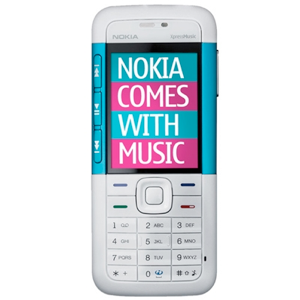
  6. Comes With Trouble

    Research

    I can't believe this. http://musically.com/blog/2009/10/15/comes-with-music-107k-users-worldwide/

    For kicks, I looked up what I wrote about Comes With Music (CWM) a year ago:

    Trouble Comes With Music By Horace Dediu on October 3, 2008 12:18 PM The troubles that CWM will face: The model is complex and the value prop is convoluted with users discouraged from making informed purchase decisions. CWM is firmly embedded in a value network that is in the final stages of disruption. Profits have evaporated and participants are in a state of defensive rigidity that prevents investment in innovative business models. To some buyers (esp. parents who will pay), the concept may sound more like "music sold as hardware" than "hardware loaded with music". Music sold as hardware is what the CD is/was but this new hardware is bound to wither away and become disposable in a year, PC copies notwithstanding (as transfers between PCs are limited). Therefore, the limitations of perishable music persist and comparisons to durable media are unfavorable. Competitiveness with pirated music is often cited as the goal. The means to that goal is the advantage of having "unlimited" content available vs. "60,000 songs on your hard drive". The unstated assumption is that new music is always more desirable over a rich, but dated back catalog. Long tail theory says that's not true for an increasingly larger group of consumers. Finally, the bet is that users will upgrade devices as if they were a subscription. This becomes "music sold as hardware subscriptions". As "music as a subscription" has not taken off, it does not bode well. One reason is that subscribed music is hired for a different job than owned music--one of discovery and casual listening--a job we used to hire Radio for. A job that is now obsolete in the era of social networking.

    Nokia's official comments one year hence:

    the official blog on which Nokia is celebrating CWM’s first birthday acknowledges: “Sure, it didn’t start out that rosy, with lots of folk not really certain about what Comes With Music offered ... we never shied away from the important education process that is needed in order to fathom that you can download and forever-keep as many tracks as you like – but the past 365 days have seen a much greater understanding and appreciation for the service emerge.”

    Subs numbers:

    • UK – 32,728 (launch date: Oct 08)
    • Singapore – 19,318 (Feb 09)
    • Australia – 23,003 (Mar 09)
    • Brazil – 10,809 (Apr 09)
    • Sweden – 1,101 (Apr 09)
    • Italy – 691 (Apr 09)
    • Mexico – 16,344 (May 09)
    • Germany – 2,673 (May 09)
    • Switzerland – 560 (Jun 09)

    For comparison: Spotify has 6 million users and iTunes has 120 million registrations.

  7. Pink Cheeks

    Research

    The decision process regarding mobility at Microsoft from 2005 has been a classic example of paralysis by analysis. Trapped by their processes and resources into doing horizontal solutions for a world that buys vertical integration, Microsoft was bound to fall into a trap. Like a wounded beast, it is not dying predictably but with spasms. Rather than concluding that Pink and Zune are part of a fucked up process or evolution, they should be seen as terminal convulsions of WinMo.

    Credit to Dilger for going further than anyone in tying Pink, WinMo and Zune.

    If I may summarize, the problems Microsoft faces are:

    • A reliance on a horizontal business model at a time when modular product "turns" are not fast enough vs. integrated/vertical models. Just look at Dilger's mobile OS history graph and measure the "cycle time" of each product rev for the competitors.
    • An economic model that implies there is value in a mobile OS (something PalmSource and Symbian figured out to be dead ends long ago, not to mention OpenWave, SavaJe and a few others long forgotten.) Microsoft, a company that grew by disruption at the low end (vis. Lotus, Novell, IBM, etc.,) is unable or uncaring enough to sense when it's being disrupted the same way.
    • Competitors that combine into a pincer movement from above (Apple) and below (Google) with a fortified alternative incumbent (Nokia, Microsoft's original target) still standing. Unlike previous single competitors in each category Microsoft conquered, the mobile world presented a more diverse (and perhaps wiser) front.

    I won't get into Microsoft's dysfunctional culture as that's been covered brilliantly by others.

  8. Windows Immobile

    Research

    John Herrman reviews the new Windows Mobile 6.5 for Gizmodo:

    To put it another way, handset manufacturers have done more in the last two years to improve Windows Mobile than Microsoft has, which borders on pathetic. In the time since Windows Mobile 6.0 came out in February of 2007, Apple has released the iPhone — three times. Palm has created the Pre, with its totally new webOS. Android has come into being, and grown into something wonderful. RIM has created a touch phone and a revamped BlackBerry OS. For these companies, the world has changed.

    And Microsoft? They eked out some performance enhancements and a new homescreen in 6.1, and executed a gaudy facelift for 6.5. This is what they’ve done to Windows Mobile.

    The review from Gizmodo concludes:

    I'd like to think that 6.5's stunning failure to innovate is a symptom of a neglected project—maybe Microsoft just needed something, anything to hold people over until the mythical Windows Mobile 7 comes out, whatever it is. But as Steve Ballmer himself has plainly admitted, it's worse: Microsoft has simply lumbered in the wrong direction for two years, letting everyone, save maybe Nokia, fly right past them.

    John Gruber adds:

    Microsoft’s irrelevance in today’s mobile space is nothing short of a spectacular failure. Worse than the mere fact that Windows Mobile 6.5 is a total turd is that no one is surprised, and no one cares.

    I've said it before and I'll say it again: Microsoft will take 4 to 6 years to respond to the iPhone. Nearly 3 years have already passed and indications are that Windows 7 will ship in devices by end of 2010. I expect another 2 years hence will be needed to polish it.

    Nokia will take at least as long, though probably longer.

    Neither response will be sufficient or effective. Curiously perhaps, throughout this time both Nokia and Microsoft will use each other as benchmarks of competitiveness.

  9. Android Fantasies

    Research

    http://adage.com/digitalnext/article?article_id=139414

    “Three Reasons Android Could Terminate Apple Despite the Hype, iPhone Isn't the Only Mobile Platform in Town”

    All three reasons he cites apply to the incumbents Windows Mobile, Symbian and Palm OS of old PalmSource. Android therefore is a symmetric response to the incumbents whereas iPhone is an asymmetric response. To suggest that Android has a chance to defeat iPhone implies that the incumbents do as well. If the incumbents do have a chance, why would they not destroy Android as they have vastly greater resources in a symmetric match-up? (Incumbents always win sustaining battles).

    His argument depends on Google “being better”. History suggests that resource-based matches always benefit the incumbent.

  10. Blurry Moto

    Research

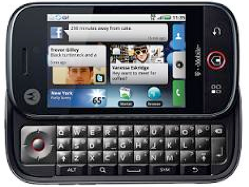
    Earlier today, Motorola unveiled MOTOBLUR, a mobile social media OS of sorts that runs on top of Google Android. The company plans to introduce its first MOTOBLUR handset – CLIQ (and an international version called DEXT) – before the holidays

    The assumption underlying this product is that "social networking" as it exists today is a job that people are specifically hiring devices to help them do. There are several problems with this assumption:

    • SN is rapidly evolving. As any new medium, it takes several iterations before it's "good enough" to solve the underlying problems. Whatever emerges (twittering, fb, or as yet unknown) will be a moving target. Users are moving quickly between these services. Assumptions about value of "stickiness" based on the social graph are proving to be flawed.
    • SN is not a "job" per se. SN is a means by which people communicate and try to get something done in their lives (i.e. getting a job, getting laid, suppressing loneliness, etc.) SN will compete with various other emergent technologies that solve these underlying jobs. These disruptors could be gaming metaphors, media-centric packages, virtual spaces, etc.

    Therefore building a hardware product that is positioned and intertwined with SN is highly risky.

    By the way, about 1.5 years ago Nokia considered doing the same thing. SN was on everyone's mind as the next big thing, just like email was 2 years before that. These service fads come and go. It's no surprise that one product development cycle later the devices are emerging even though the value of the service has rapidly evolved in new directions. This points out the fact that you can't make hardware dev cycles match service/software dev cycles. The only way to play this from a hardware perspective is with a platform approach e.g. iPhone. Let the ecosystem solve the job to be done and collect rents. I'm always surprised that this lesson from the 90s is still being forgotten by the device guys. BTW, I understand the NOK Solutions logic a bit better. It is not a major departure from the track NOK is on now. The power base remains with devices, as it has for 15 years or more.

    On another level, MOT is a going concern issue right now. The approach with CLIQ is, by definition, niche. I don't see the product as broadly attractive solving MOT cash flow issues. If they sell more than 2 million units, I'd be surprised. (note: N97 got to 2 million on the back of massive distribution power but SE Xperia did not cross 1 million and Pre will struggle to get to 2 million.) The "bet" on Android is weak and not a bet really on anything correlated to earnings growth.

  11. Putting Nokia Back Together

    Research

    So Dell is making Android mobile phones while Nokia is making Windows PCs. A curious confluence of poor management decisions.

    Why is all this dilution of core competence happening? Average punditry would suggest it's all about "convergence" and the overlapping of mobile and until-recently-fixed computing.

    Er, not quite.

    The economics of plastic bits shipped in cardboard boxes has not changed. It's as lousy a business as it has always been, whether the plastic bits are small or large. Some would argue that the gross margins of mobile devices are higher than those of computers, but that's not true on average. The gross margin on average mobile phones is just as low (<10%) as it is on PCs. There are about the same number of competitors and rivalry and global marketplace.

    If indeed, margins were the only story, why would Nokia choose to chase the low margin PC business while holding (albeit very tentatively) 50% global share in "smartphones"? Similarly, why would RIMM choose to chase the low end consumer business (link: Blackberry Pearl et. al.) while having the fat margins of thinly penetrated business devices to wallow in? Finally, why would there be hundreds (literally link: www.pdadb.net) Windows Mobile smartphone licensees, the vast majority of which don't manage to sell more than the 50k minimum volume licenses they are obliged to order?

    The fact of the matter is that the money being chased by device vendors is not being paid for devices, but for the service plans those devices enable. More precisely, these businesses are concerned with capturing a share of ARPU uplift from mobile data services. As such, they are mostly offering hardware as enticements for the *change* in ARPU that mobile broadband creates. Success depends on the power of that hardware to compel users to switch to higher data service fees.

    The first proponent in his "hardware as ARPU booster" was actually Microsoft back in 2003 when they entered the mobile OS market. One of their value propositions was that Windows Mobile would boost data ARPU. The reality was not so compelling however as WinMo turned out to be too awkward to use for most users and the power of the platform lay fallow. In reality, the first successful hardware ARPU booster was RIM. In the middle of this decade, RIM showed that a Blackberry user could be worth between $5000 and $8000 in NPV ARPU to an operator. For that juicy pie, RIM was handsomely rewarded with a small "cut" that boosted their margins to above 50% making them the most profitable device vendor on the planet.

    The realization only began to set in about 2007 as every other vendor began applying resources to deliver ARPU boosters. Apple took note early and executed beautifully with the iPhone, mastering the "get paid for ARPU" game, and in the process capturing 50%+ gross margins and (depending on the quarter) up to 30% of all profits in the device industry.

    To forecast how this game will be played and how sustainable this boosterism is, we need to segment or categorize the market according to ARPU. The way to visualize this is what I call the "wedding cake" model. Each cake layer represents the population of users in that ARPU segment and the thickness of that layer represents the delta of ARPU to the layer below.

    • The base layer is huge (billions of customers) and represents the prepaid voice market. The average "thickness" of this layer is about $10/mo.
    • The next layer is smaller and represents the postpaid voice market. The thickness is about $30, representing the "boost" over prepaid.
    • The next layer is smaller still and represents the postpaid voice+data market where the data is a-la-carte. This is typical of plans where the buyer pays separately for certain data services (e.g. email, navigation, etc.) and pays on a per-megabyte basis for browsing. The ARPU differential is about $20.
    • Finally the top layer is the unlimited data plan packaged with bucket voice and SMS. Here the ARPU differential is another $30.

    At its highest, the cake is about $100/mo., though the width of the top layer and hence the population of paying customers at that price point is quite small relative to the other layers.

    Now each layer is covered with a "frosting" which is the device hardware revenue. Obviously the frosting gets a bit thicker the higher the layer, but it's a relatively thin layer compared to the "cake" thickness. In the higher layers the trend is in fact to make the frosting as thin as possible (<$99 NPV or <$4/mo. for a 24 mo. contract.) The devices which enable the top layers are clearly more complex and expensive to make, but the end-user pricing is trending down. The trick is therefore to convince the operators to pay a piece of the "cake" to the device vendor in exchange for migrating users to these higher layers.