Asymco

Asymmetric Intelligence

iPad

  1. New Survey Data on iPad Demand Suggests Significant Upside From Current Estimates

    Research · 1 comment

    Admob did an interest survey. Although limited by its methodology (see below) the data is incrementally interesting as it also relates to the ChangeWave survey.
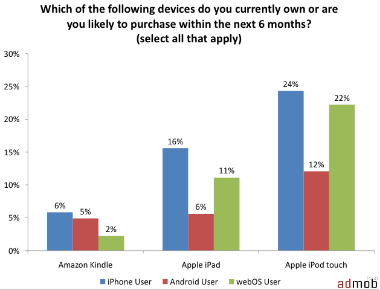
    ChangeWave suggested that 13% of early adopters claim they are likely to buy an iPad. Admob suggests that 16% of existing iPhone users would be likely to purchase an iPad in the next 6 months.

    This is interesting because we know roughly how many iPhones there are.

    If we assume 45 million iPhone users by time of launch (42 million units have been sold as of end of December) and 15% would buy iPads it would therefore not be unreasonable to assume about 7 million iPads will go to iPhone users alone.

    Being conservative, let's round that down to 5 million. This does seem quite a bit more than the 2 million most analysts are forecasting. I'm partial to 5 million but I might now be inclined to increase that to maybe 7 to account for a portion of 33 million iPod touch users.

    The aggressive scenario would see 16% of the 75 million iPhone + iPod touch installed base buying an iPad--resulting in 12 million units.

    Admob survey and report: http://metrics.admob.com/wp-content/uploads/2010/02/AdMob-Mobile-Metrics-Jan-10.pdf

    Methodology

    All data in the feature section is based on an opt-in survey taken by users on their mobile device.

    Respondents were sourced by responding to mobile ads throughout AdMob's iPhone OS, Android and webOS networks. There was no incentive offered to participate in the survey.

    There were 963 total respondents: 318 Android, 244 iPhone, 356 iPod touch and 45 webOS. The survey was run from February 5th - February 16th.

    The geographic representation of the respondents was designed to approximate the distribution of users in the AdMob network. The respondents were sourced from English-speaking countries in the AdMob network.

  2. They want the thing in the movies

    Research · 1 comment

    Mike Monteiro writes:

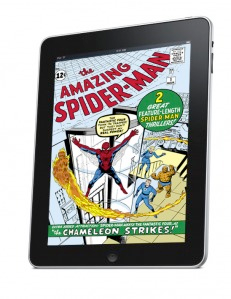
    I went back for a second helping of Avatar this Sunday. There’s a scene early on in the movie where one of the scientists walks across the lab carrying the “mobile computer slab of the future.” We’ve seen one of these in almost every sci-fi movie of the last 50 years. It comes free with a jetpack, I suppose. Except this time, one month later, my 12 year old son turns to me and whispers “Look Dad, it’s an iPad.”

    The iPad isn’t the future of computing; it’s a replacement for computing.

    Right on!

    I like root access as much as the next guy, but at least I can understand that you don’t sell a car by convincing the buyer that the car manufacturer’s engine was developed from freely modifiable blueprints that were available to other car manufacturers without a license fee.

  3. Seeing What’s Next

    Research

    Steven Frank:

    A lot of thoughtful people, many of whom are bloggers, look at this history and say, “Look at this march of progress! Surely the desktop + windows + mouse interface can’t be the end of the road? What’s next?”

    Then “next” arrived and it was so unrecognizable to most of them (myself included) that we looked at it said, “What in the shit is this?”

    Highly recommended reading:

    http://stevenf.tumblr.com/post/359224392/i-need-to-talk-to-you-about-computers-ive-been

  4. First Thoughts on the iPad

    Research · 7 comments

    I think it's a logical evolution of mobile computing. A hop along the trajectory. When the iPhone first rolled out as an embodiment of the new touch-based UI--a disruptive technology, I said it was far too good as a phone. It could not be a better phone because phones were as good as they could be. It was a pretty lousy computer so I reasoned all it could become was a better computer. The iPad is a better computer.

    Will it be a big hit? I think it will grow nicely and be profitable. It will take several iterations but eventually it will absorb usage from low-end laptops and move computing to new contexts. It will have amazing applications in certain verticals like education, health care, travel and automotive use.

    All these steps are like checkboxes in the disruptor's playbook. In 5 years, this will be as big a business as the Mac and then Apple will have to think how they break out of the 5% share ghetto.

    Will there be a response? Yes, but, like with the iPhone, not for a long time, and not symmetrically. The PC guys will dismiss this and the phone guys will see it as outside scope. Once they begin the effort in earnest, it will fall well short of the entrenched, incumbent, integrated(*), rapidly evolving juggernaut that will be Apple Mobile Computing.

    (*) Note the emphasis from Apple on its own CPU in the device. Apple does not talk about chipsets in their devices, but they did this time. Not only are they signaling control, but it also shows that value-chain integration down to silicon is what is needed to go up the performance trajectory for good-enough mobile computing.

  5. The Dynabook

    Research

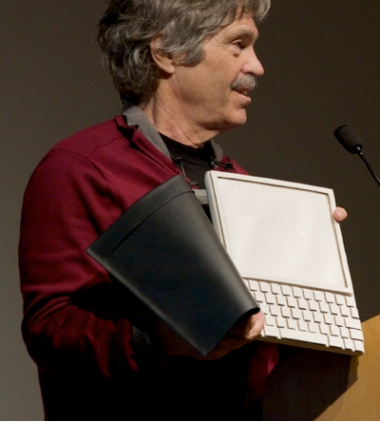
    Alan Kay, regarding his reaction to the iPhone in January 2007:

    When the Mac first came out, Newsweek asked me what I [thought] of it. I said: Well, it’s the first personal computer worth criticizing. So at the end of the presentation, Steve came up to me and said: Is the iPhone worth criticizing? And I said: Make the screen five inches by eight inches, and you’ll rule the world.

    http://gigaom.com/2010/01/26/alan-kay-with-the-tablet-apple-will-rule-the-world/

    See also: Dynabook