Asymco

Asymmetric Intelligence

analyst

  1. Asymco Bulletin 006 - Mar 28, 2026

    Bulletin

    Asymco Bulletin is a digest of all the work we have published for the week ending Mar 28, 2026.

    Research

    The Next 50

    In Apple’s first 50 years it shipped 5.13 billion computers. This shipment total is higher than any other computer company in its first 50 years. There actually are no other PC makers that are 50 years old. But all these things were true also 40 years ago. So what are we celebrating now that we did not celebrate at Apple 40? The answer is Services, the consistency in growth in user base and the potential trajectory of growth to never-before imagine audiences. The biggest change is a change of horizons. →

    People don’t like wearing things on their faces and don’t trust those who do

    Says Neal Stephenson who first coined the term “metaverse” This revelation came soon after Meta canceled the Metaverse. Let’s look into Neal Stephenson’s mea culpa:

    When I was working at Magic Leap, and people asked me why I thought that [Metaverse] was a good idea, I would ask the rhetorical question: “do you really think that twenty years from now everyone is still going to be going around all day staring at little rectangles in their hands?” →

    The Biggest Bundle?

    The Biggest Bundle?

    How everyone is wrong about AI. The newspaper was an unexpected development It was not a product that anyone asked for. Like many innovations, it wasn’t an invention. It was not patented or discovered in a laboratory. It emerged as a result of the convergence of three disparate technologies: continuous roll printing presses, the telegraph, and the railroad. This convergence occurred by the 1830s, facilitated by a business model aptly named “the penny press”. Stepping back, the printing press was initially developed in the 1450s, 40 years before Columbus’ voyage. It went through numerous evolutions. The big change was moving →


    Nota Bene

    Apple, Samsung Dominate 2025 List of Highest-shipping Models Across Regions → In 2025, Apple dominated premium smartphone markets across North America, Europe, and Asia-Pacific, while Samsung excelled in entry- to mid-tier segments in Latin America and the Middle East and Africa. →

    Tim Cook: Apple just had best launch week ever for first-time Mac customers → Neo brought Apple its strongest launch week performance, presumably by attracting first-time Mac buyers, and helping customers transition out of netbooks and Windows laptops. →

    Running a data-center AI model on a MacBook

    Running a data-center AI model on a MacBook → Apple's MacBook Pro, with its unique Apple silicon architecture, could revolutionize personal AI by enabling powerful AI models to run locally without relying on cloud data centers, potentially shifting the competitive landscape in Apple's favor despite current perceptions of lagging behind in AI advancements. →

    Apple’s China smartphone sales jump 23% as overall market fell 4% to start 2026 → Apple defied market trends with a striking 23% iPhone sales surge in China, outpacing competitors despite broader smartphone shipment declines. →

    “There’s So Much Left” in iPhone: Tim Cook

    “There’s So Much Left” in iPhone: Tim Cook → Apple's relentless focus on user-centric innovation, epitomized by the ever-ascendant iPhone, underscores its enduring dominance and untapped market potential. →

    Amazon developing a new phone more than a decade after its first → Amazon's renewed attempt at a smartphone, "Transformer," aims to integrate AI and deepen Prime ecosystem ties, learning from past Fire failures by addressing trust, scale, and developer engagement challenges. →

    Mac fastest growing PC brand in India in Q4 2025 → In 2025, India's PC market soared to a record 15.9 million units, with Mac sales impressively up 24% year over year, hinting at a bright future despite looming 2026 challenges. →

    Forget Streetview, Immersion hints at what’s to come

    Forget Streetview, Immersion hints at what’s to come → "Waddle transforms visionOS into a portal of immersive exploration, where experiencing surpasses explaining." →

    How to read the MacBook Neo as bad news for the stock → "Apple's Neo success is misleadingly painted as a margin threat, ignoring cost efficiencies and manufacturing leverage." →
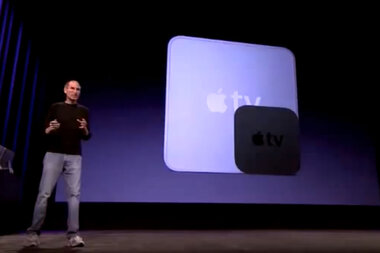
    Apple TV is a categorization failure

    Apple TV is a categorization failure → Apple TV, launched in 2007, struggled for 19 years as a misunderstood, underappreciated gateway to content, overshadowed by Apple's product-centric reputation. →

    Apple’s Custom Silicon Opens up Potential for a Cellular MacBook → "Apple's C1X modem not only matches Qualcomm's performance but also reshapes the economic landscape for always-connected MacBooks, hinting at a future where seamless cellular integration redefines portable computing." →

    Apple turns component crisis into competitive advantage → Apple leverages the memory crisis to aggressively capture market share from struggling Android, PC, and Chromebook competitors. →

    Survey shows record upgrade interest for iPhones → Morgan Stanley forecasts Apple as the sole major smartphone vendor to gain market share in 2026, driven by strong upgrade intent and advanced features, while Android struggles with rising costs and declining loyalty. →
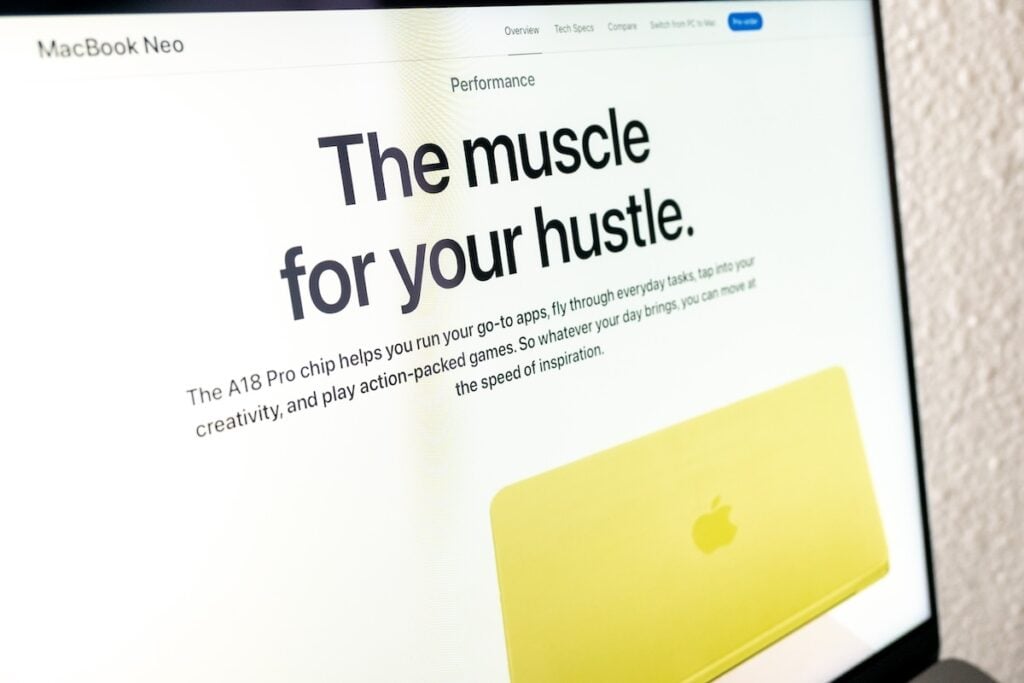
    MacBook Neo Market Impact: Analysts weigh in

    MacBook Neo Market Impact: Analysts weigh in → Market analysts predict the MacBook Neo will disrupt the low-end PC market, especially in education, by leveraging Apple's higher margins and user-centric design, despite challenges from price-sensitive K-12 sectors dominated by Chromebooks. →


    World’s most respected Apple Analyst. —Macfilos

    Like what you read? Get more from Asymco One:
    full access to Asymco's research, analysis, and commentary.

    Subscribe with code BULLETIN for a discount.

    Feedback: Have questions or comments? Reach out to us at contact@asymco.com. We’d love to hear from you.

  2. MacBook Neo Market Impact: Analysts weigh in

    Nota Bene · 2 comments

    Market analysts analyze market

    Francisco Jeronimo, Vice President of Client Devices at IDC, told Benzinga, "The MacBook Neo will have a significant impact on the low-end PC segment, particularly in education, which accounts for 6.7% of global PC shipments, or 13.4 million units in 2025."

    He said that the market is currently dominated by Windows notebooks, with an average selling price of $682 and Chromebooks, which average at $362.

    "Apple's ASP in Education was $1,425 in 2025 and accounted for only 5% of the segment," he said.

    He echoed the statements by the above analysts while adding that MacBook Neo will allow Apple to acquire users early in their digital lives.

    "Omdia’s February 2026 forecast shows Windows OEMs facing component cost increases of $90 to $165 per unit, pushing average notebook selling prices from approximately $850 toward $915," the research firm stated.

    It went on to say that to maintain margins after these cost increases, many Windows laptops would need to be priced above $1,000 to "stay profitable."

    On the other hand, Apple benefits from higher margins, making it easier for the iPhone-maker to sell the product at low-cost while still maintaining profitability.

    In the education segment, the $499 price for students removes the cost barrier. However, the firm noted that the price isn't the only hurdle.

    "Displacing Chrome in K-12 would require Apple to match Google’s admin tooling and institutional relationships, not just its price point," Canalys stated.

    David Naranjo, associate director at Counterpoint, told Benzinga that Apple's real opportunity lies in higher education.

    It is because the launch comes when Google continues to dominate the K-12 sector through Chromebooks, Google Workspace and school-managed devices.

    "The MacBook Neo is unlikely to displace Chromebooks at scale in the K-12 market in the near term. Schools remain highly price-sensitive and deeply integrated into the Google ecosystem," Naranjo stated.

    Source: Benzinga

    NB: Competing products are flimsy and don't hold up making cost of ownership higher.…

  3. ‘No Near-Term Catalyst,’ KeyBanc on Apple Stock

    Nota Bene · 3 comments

    Difficult to draw firm conclusions

    Apple may not have a clear trigger to push the stock higher right now, according to top KeyBanc analyst Brandon Nispel. He reiterated a Sector Weight (Neutral) rating on the stock, saying recent spending data and current valuation leave limited room for near-term upside.

    KeyBanc’s consumer spending tracker showed indexed spending down 9% month over month in February, worse than the three-year average decline of about 4%. On a yearly basis, spending rose 4%, slightly above January’s 3% growth. Nispel said the data from January and February remains mixed, making it difficult to draw firm conclusions about Apple’s demand this quarter.

    KeyBanc also updated its forecasts after Apple’s recent product launches. The firm now expects Apple’s Fiscal 2026 revenue to reach about $466.5 billion. It also raised its Fiscal 2026 earnings estimate to $8.52 per share and Fiscal 2027 earnings to $9.11 per share.
    For the second quarter of 2026, KeyBanc estimates revenue of about $108.7 billion, which would represent roughly 14% year-over-year growth.

    With Apple trading close to its historical valuation levels, Nispel said he does not see a “clear near-term catalyst” that could push the stock higher.

    Turning to Wall Street, analysts have a Moderate Buy consensus rating on AAPL stock based on 15 Buys, nine Holds, and one Sell assigned in the past three months. Furthermore, the average AAPL price target of $305.18 per share implies 17% upside potential.

    Source: TipRanks Financial

    NB: Near-term you say?…

  4. NVIDIA's Language Processing Units Shipments Swell 10x+ vs Previous Yr (but how do they compare to Apple Silicon volumes?)

    Nota Bene · 1 comment

    Are you sure that's "millions"? It's 1984 all over again.

    Ming-Chi Kuo, an analyst at TF International Securities, posted on social platform X that the latest supply chain survey pointed to a considerable upward revision in LPU (Language Processing Unit) shipment forecasts following NVIDIA's investment in Groq.

    The total shipments for this year and next are estimated to be between 4 million and 5 million units, with this year accounting for 30-40% and next year for 60-70%. Against the previous year, this implies a spike of over 10 times.

    Source: AASTOCKS.com via Analyst: Ming-Chi Kuo

    NB: Total shipments for Apple's A and M series processors were about 490 million last year…

  5. Rosenblatt Lifts Price Target on Apple by $1, Maintains Netural Rating

    Nota Bene · 3 comments

    From $267 to $268

    On March 5, TheFly reported that Barton Crockett of Rosenblatt Securities increased the price target on Apple Inc. from $267 to $268, maintaining the Neutral rating on the iPhone maker.

    Crockett remains positive on Apple following the company’s recent event, in which it launched its MacBook Neo, tapping into the lower end of the laptop market. Apart from that, a lower-end iPhone 17e also adds to the company’s lineup in the budget hardware category. The analyst also mentioned that Apple’s high-end products account for a modest percentage of build-to-order, which could lead to in-line performance with its March-quarter guidance.

    On January 30, Reuters reported that, according to the LSEG, Apple expects Q2 FY2026 revenue to increase by 13% to 16%, compared with analysts’ 10% growth rate. Despite strong performance, Crockett highlighted that Apple trades at a meaningful premium.

    A majority of 52 analysts out of 54 have rated AAPL a Buy, while only two analysts rate the stock as a Hold. The average price target of $302.5 highlights an upside of over 16%, while Rosenblatt’s price target implies a modest increase of almost 3% as of March 10.

    Source: Yahoo Finance

    NB: Apple expects revenue to increase by 13% to 16%, compared with analysts' 10%??

  6. MacBook Neo May Boost Revenue By 0.5% While Expanding Into Student Market - Gene Munster

    Nota Bene · 2 comments

    Needle mover?

    In a video segment titled Pressure Points, Munster said the device could modestly increase Apple's overall revenue while expanding its reach in the education market.

    "The new $AAPL MacBook Neo should add 0.5% to overall revenue for the next year. I believe it won't impact margins."

    Munster estimated the device could add roughly $2 billion in annual revenue to Apple's Mac segment.

    Apple's Mac business generated about $34 billion in fiscal 2025, meaning the Neo could provide roughly a 6% boost to that segment if adoption plays out as expected.

    The analyst said Apple is targeting a large pool of potential buyers in the U.S. education market, where many students currently rely on Chromebooks.

    "This market, if we just take the U.S. alone, is about 25 million students," Munster said in the video, adding that investors may think of this as "new customers for Apple."

    "My take is that they're probably doing this at a similar margin profile as their existing products," he said.

    Munster added that Apple's gross margins could remain near 48% across the coming quarters, suggesting the lower-cost Mac should not pressure profitability even as it expands Apple's customer base.

    Source: Yahoo Finance via Analyst: Gene Munster

    NB: Customer base is everything…

  7. Apple's AI Hardware Blitz Could Send The Stock 33% Higher, Says Wedbush's Dan Ives

    Nota Bene · 1 comment

    Missed the AI angle

    Wedbush analyst Dan Ives believes the launch lineup could help drive the next upgrade cycle for Apple, with the firm maintaining a $350 price target, implying roughly 33% upside from current levels.

    According to Ives, the chips deliver over four times the peak GPU compute for AI compared with M4, alongside roughly 35% stronger graphics performance.

    Apple paired the silicon with a refreshed Mac lineup, including new MacBook Air and MacBook Pro models, alongside a surprise entry: the MacBook Neo.

    Ives believes the lineup could broaden the Mac base further, noting nearly half of Mac buyers remain new to the platform, leaving room for incremental growth.

    Apple also introduced the iPhone 17e, powered by the A19 chip, designed to run generative AI models more efficiently.

    For Ives, the takeaway is simple: Apple's expanding lineup of AI-enabled devices could set the stage for the next major hardware cycle — and potentially push the stock toward its $350 target.

    Source: Sahm via Analyst: Dan Ives

    NB: AI Silicon at the core…

  8. Apple’s App Store growth is reaccelerating

    Nota Bene

    Services is much more than App Store

    Apple’s App Store revenue growth is strengthening in February, with Morgan Stanley saying the latest data points to a faster pace of expansion heading into the March quarter.

    The firm’s analyst, Erik Woodring, said in a note Monday that App Store net revenue is growing 9 percent year-over-year month-to-date, which represents “a 230bps acceleration from January off a 700bps easier Y/Y compare.”

    Woodring added that quarter-to-date revenue is now rising 7.5 percent, putting it “50bps behind our +8.0% Y/Y March quarter App Store forecast.”

    The bank kept its March-quarter App Store growth and Services growth forecasts unchanged at 8 percent and 13.5 percent, respectively.

    Morgan Stanley said the acceleration is broad-based across major markets. China’s App Store is growing 4 percent year-over-year after a decline in January, while the U.S. is rising 3 percent, a 40-basis-point improvement. Japan is down 1 percent, while the rest of the world is seeing 22 percent growth.

    The analysts also cited rising Mac lead times, noting they have “quickly inflected to multi-year highs” due to demand for the on-device AI tool OpenClaw.

    They said stronger Taiwan component supplier revenue in January is another positive indicator, pointing to “very robust strength in server demand coming from the largest global cloud service providers.”

    Source: Yahoo Finance

    NB:     With new products due in a few days...

  9. Supply Chain Checks Show Non-Doom Scenario has Legs

    Nota Bene

    GF Securities said a recent survey on the tech giant's supply chain suggests a “solid outlook.”

    “Following the earnings call on Jan. 29, 2026, we did a supply chain research which indicates strong iPhone build momentum (incl. 2H26’s models) as well as cost management aiming to keep the starting selling prices of iPhone 18 Pro/Pro Max unchanged or at [a] similar level of iPhone 17 Pro/Pro Max,” analyst Jeff Pu wrote in a note to clients.

    “Additionally, [the] Gemini partnership is to work on the Apple foundational model to power the Apple Intelligence, including the personalized Siri, which is the next key to watch in WWDC 2026.”

    Pu reiterated his Buy rating and upped his price target [] on the back of higher 2026 and 2027 estimates.

    Delving deeper, Pu said the upcoming fiscal third-quarter should see another “strong” iPhone build, with around 54M units, which would suggest a year-over-year acceleration. “For 2H26, we note that Apple is expected to launch 3 new iPhone 18 models (Pro, Pro Max, Fold), compared to 4 iPhone 17 models a year ago,” Pu added. “Yet, we expect a solid iPhone 18 build plan in 2H26 of 82m, compared to 89m of iPhone 17 in 2H25, despite [a] much higher [average] selling price. We attribute the key drivers to the new foldable model and Apple’s strategy of keeping iPhone 18 Pro/Pro Max pricing largely the same as that of iPhone 17 Pro/Pro Max by managing
    memory/display cost. That said, we expect a significant iPhone ASP
    increase in CY2H26 driven by mix.”

    On the company's recent earnings call, Apple management, led by CEO Tim Cook, said revenue is expected to grow between 13% and 16% year-over-year.

    Looking to the cost of the iPhone 18 Pro and Pro Max, Pu said the recent impact of surging memory prices should be manageable. “For DRAM, we believe Apple has been negotiating with Samsung Memory and SK Hynix to reach favorable deals, considering Apple’s support in the past memory downcycle and the likely capital investments,” the analyst explained. “For NAND, we estimate the cost to be up ~70% QoQ in F2Q and suppliers are asking for 50-60% QoQ in F3Q. Overall, we expect the BOM cost of memory to increase from 9- 10% in F1Q to 12-13% in F3Q. To partially offset the cost of memory price and 2nm A20 Pro, we expect efforts on other big items such as
    display, cameras, etc.”

    Source: MSN, SeekingAlpha.

  10. Margin Call

    Research

    While the commentariat assumes the worst, Apple delivers the best.

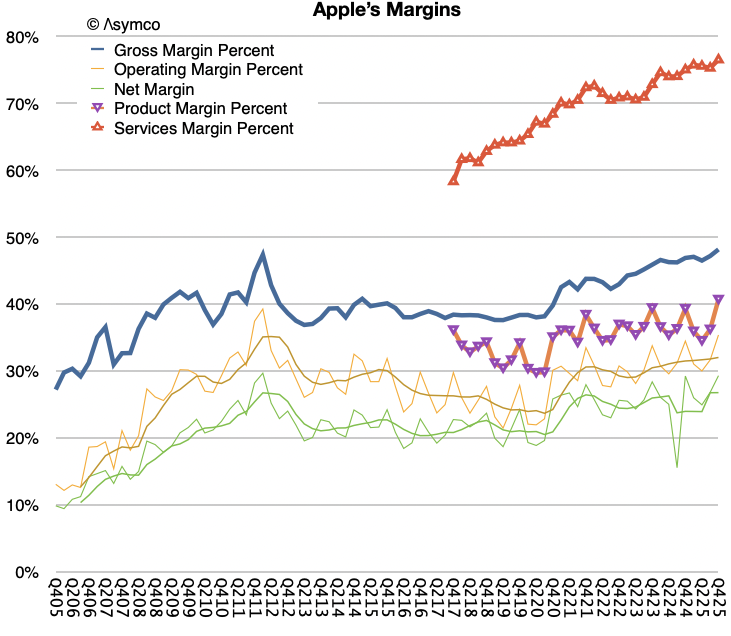
    Last quarter Apple delivered a gross margin of 48.2%. This was above the high end of their guidance range and up 100 basis points sequentially. Management commented that this was "driven by favorable mix and leverage."

    Further, products gross margin was 40.7%, up 450 basis points sequentially, driven by favorable mix and leverage. Services gross margin was 76.5%, up 120 basis points sequentially, driven by mix.

    This performance is even more astonishing considering the history shown below. Apple is quite simply, delivering at the highest gross and net margins in its history.

    Line graph depicting Apple's profit margins over time, including Gross Margin, Operating Margin, Net Margin, Product Margin, and Services Margin percentages, with data spanning from 2010 to 2023.

    Note that the graph actually projects forward one quarter because we have the following guidance: "We expect gross margin to be between 48-49%." The graph reflects the high end of this guidance range.

    So what's going on? Especially as a drumbeat of constant doom is being broadcast by pundits. The conference call itself seemed to be dedicated to margins. It became what I call the Margin Call.

    Amit Daryanani, the first questioning analyst, specifically kicked off with the following:

    "there is a lot of focus on the impact of memory to host the companies, and I would love to kind of get your perspective when you are first guiding gross margins up into March. Talk about, a, your comfort in securing the bit that you need for shipment and b, how do we think about memory inflation flowing through Apple's model over time?"

    Tim Cook answered:

    We are currently constrained, and at this point, it is difficult to predict when supply and demand will balance. The constraints that we have are driven by the availability of the advanced nodes that our SoCs are produced on. And at this time, we are seeing less flexibility in the supply chain than normal, partly because of our increased demand that I just spoke about. From a memory point of view, to answer your question, memory had a minimal impact on Q1. So the December gross margin. We do expect it to be a bit more of an impact on the Q2 gross margin, and that was comprehended in the outlook of 48 to 49% that Kevin gave earlier.

    what Apple is saying is that they are constrained by production of silicon but not of memory. They do see some impact in the future but that is included in a guidance of margin expansion.

    Analysts still could not believe this, the following exchange soon followed:

    Ben Reitzes: So the next question is on gross margin. I am pretty shocked I gotta hand it to you, Tim. I am, you know, that you are able to do 48 to 49. What is really going on there? How are you doing that with this memory, the NAND prices? Is it due to mix that there is a good less hardware and more services? Services and services margins are going up. How are you doing it to keep it at 48 to 49?

    Kevan Parekh: Yeah, Ben. This is Kevin. [] Let me start maybe by just reflecting on the Q1 gross margin. I think we talked about the fact that we landed at 48.2%, so just above the high end of the range we provided, [], on the last call. [] if you look at that performance, [], we were up 100 basis points sequentially. We talked about the fact that we had favorable mix. [], as you know, when we have a good product cycle, strong price cycle we are seeing for iPhone, that does lend itself to a bit more favorable opportunity on the [] leverage side.

    So we are having a strong iPhone cycle as Tim outlined. And so that also translates itself. So we talked about products sequentially went up by 450 basis points. So I think, in general, I think we are just seeing, [], favorable mix dynamics as well. [], service continues to contribute as well. That business is growing, [], double digits, so that also is a contributor. And I think that, [], if you looked at our guidance, [], we are providing a similar range to where we reported in December. There are going to be a few puts and takes. [], we do expect to see favorable mix in the services.

    As you know, when we move from Q1 to Q2, that tends to be the case, and that is partly offset by a seasonal loss leverage. So there will be puts and takes, but again, we feel pretty good about the guide of 48 to 49%, which is similar to the range we reported in December.

    Still not enough. Two more questions followed on margin. I will quote one here.

    Aaron Rakers: Yep. And then as a quick follow-up, you know, kind of tied to memory, maybe not so much, but part of this current generation iPhone cycle is you clearly deepened some of your own internal silicon capabilities on the device. I am curious if that if we should think about that as a lever and maybe a supportive factor to gross margin that might be underappreciated and any thoughts on where we go from here as far as continual opportunities of internalizing your own silicon? Thank you.

    Timothy D. Cook: Yeah. I will let Kevin talk about the gross margin. But in terms of the product, which is at the heart of what we think about in the user, Apple silicon has just been an incredible game changer for us. Starting with iPhone and then on iPad and, of course, the Mac as of a few years ago. And so we believe it is a game changer and a major advantage.

    Kevan Parekh: Yeah. And as far as impact on gross margin, yeah, we have been, as you know, investing in core technologies like our own silicon and our own modem. And certainly, while those do provide opportunities for cost savings and can be plugged in margins, they also importantly provide, [], the differentiation that is really important for our products as well and us more control of our roadmap. So I think there is a lot of strategic value to it, but also we are seeing, [], investments in our core technologies impacting, [], gross margin in a positive way.

    After all this, the financial commentariat continues to assume that Apple will be hit with margin pressure from memory and that has presumably been affecting the share price since the call.

    Well, we've seen all this before. Before the great memory crisis Apple was going to be constrained by tariffs, by China, by developer dissatisfaction, by AI, by regulators, etc.

    The feeling one gets is that Apple is always navigating through a minefield of pitfalls and gotchas. The opposite is true. It's highly likely that Apple has sufficient leverage which increases its access to supply and that everyone is keen to work with the company. Leverage comes from scale, from lead time, from vertical integration and from engineering. Management is saying as much. Indeed, the evidence of leverage across the supply chain and over the entire ecosystem and economy is evident in its margin expansion story told in the graph above.

  11. Apple stock price today: AAPL climbs at the open as $315 target meets earnings week - TechStock

    Nota Bene

    Apple stock price today: AAPL climbs at the open as $315 target meets earnings week  TechStock

    JPMorgan analyst Samik Chatterjee bumped his Apple price target to $315 from $305, according to MarketScreener. Keep in mind, a price target reflects where an analyst expects a stock to land within a year—it’s not a guarantee.

    Jefferies analyst Edison Lee remained cautious, maintaining a Neutral rating while cutting his price target to $276.47 from $283.36. These mixed calls highlight just how close the debate is ahead of earnings.

    Read the original article →

    NB:

    It's not that close. False precision on Jefferies' target belies a grand failure.