This prediction says that WinMo and Symbian are out at Samsung. Not a big surprise there.
The real news is some new "proprietary" OS is to take a majority share of the portfolio moving Android out of the picture gradually after 2011.
You will infer from my previous comments that the reason any deep pocketed vendor would shun Android is the same as why they would shun WinMo: no "control" over the whole product and hence no differentiation vis-a-vis an integrated competitor.
The Android devotees would then have to depend on their platform reaching critical mass without Nokia, Samsung, Apple, Palm and RIM, all of which will be shipping integrated products. LG got bought off by Microsoft and they will wallow in the mire.
Where does that leave Android? Moto and SE? They barely make up 10% of all devices and negligible smartphone share today and both are borderline going concerns.
That just leaves HTC, which shipped 80% of all WinMo. My bet is that they will ship 80% of Android, but that still tops them out at 10% share WW.
Looking at the platform game top-down and bottom-up you get the same story.
Insipid and irrational politics are symptomatic to a company trapped by rigidity of response to asymmetric attack (and you can quote me on that.)
Nokia, the world's leader in total mobile phone sales seems to be having new problems deciding on its OS strategy. There were some murmurings about embracing Android last summer, but Nokia seems to have decided against it. Stefan Constantinescu had this to say about the results of Nokia World 2009:
"The [new] software, Maemo 5, is a pain in the ass for developers since Nokia has admitted in public that Maemo 6 will come out in a year and it will break compatibility due to a switch from the GNOME environment to Qt. The browser, built on top of Mozilla technology, the same code that powers Firefox, is a step away from WebKit, the browser engine that powers Safari in the iPhone, the browser in Symbian, the browser in Nokia’s dumbphone OS known as S40, the browser in Android and soon the browser in RIM BlackBerry devices. Why is Nokia supporting something contrary to what the industry has already accepted as best in class? What’s the strategy?"
Technical mistakes and internal politics can sink a company in an intense competitive environment. Mr. Constantinescu didn't perceive a coherent strategy. There may not be one.
That may be. Open only wins when the underlying service is a commodity for which improvements (other than price) will not be valued.
In my way of speaking, openness is semantically equivalent to "modular" and that is in contrast to "integrated". Integrated is the only way to develop systems when they are not good enough. Modular is the only way to cheapen systems when they are more than good enough. Figure out where the technology is on the "good enough" trajectory and pick the winners and losers by the level of integration. It's that simple.
There were hundreds of companies backing Windows Mobile for half a decade. And it made all the promises that Android is making now (non-phone devices, millions of developers, source code, Intel backing, contractors ready to build to order.)
The Android fan counter to this is (I'm guessing) that Microsoft could not execute! Google hired swathes of WinMo people into their mobile efforts. It's the same crowd. Is execution some sort of magic pixie dust only available to Google?
The question of Android viability goes deeper than the app ecosystem. In fact the ecosystem is itself dependent on the network effect of the platform. That effect is weak because the platform is not "tight" and is prone to fragmentation and its value cannot be communicated to end users. That is due to the lack of integration and consistency of purpose.
Bottom line, the problem with Android was always that it was a reaction to Windows Mobile. It was symmetric in its approach to the market with the added value of being free. In that sense it's very successful. It might even gain all the share that WinMo used to have (about 14% of smartphones at its peak). But it will never rise above the nicheness of WinMo.
I'm always amazed at the technocrati babbling classes' inability to spot causes. They go on and on about execution and never understand that execution is a resource not a strategy. Resources are fungible.
I for one do not "hope that Android succeeds". It's a foregone conclusion that it will not. It's not a matter of hoping.
This new "mobile computing" use case that smartphones try to serve is not going to be satisfied with solutions that are built from modular components.
The reason is simple: as the solutions are not good enough (because it's early days), they need to be improved. If they are to be improved, competitive pressure will compel those who try to do so as rapidly as possible. The fastest climb up the trajectory of performance will get the bulk of the benefits. Modular implementations are simply not fast enough in cycle time of iteration in comparison to the integrated approaches.
This is why Apple will grow faster than Google, Nokia and Windows Mobile.
How does this relate to the ecosystem?
Many have been commenting that Google's (or Nokia's or Microsoft's) ecosystems are more "open" or "flexible" with respect to Apple's. And that in the long run that is the right architecture. That may be, however implementing loose ecosystems coupled loosely to modular devices and operating systems and services as a whole will not be competitive. They will be too late, too slow and too hard to use. They will be awkward to position and the benefits will be impossible to explain to end users. They will be sold through a distribution channel that is too long and with poor information feedback. Too many "vested" interests will dilute the product's reason for being. The pricing of the integrated player will cause poor economies for the modular cohort. I could go on but it suffices to say that the modular approach will fail to be competitive.
Footnote: the arguments for the imminent explosion of Android are all based on a forecast from Ken Dulaney at Gartner. It was also Ken who in 2004 forecast that Windows Mobile will dominate business devices and that RIM would never gain share leadership. Here is why he is wrong now as he was wrong then:
Ken and his peer group are implicitly and explicitly owned by the customers he tries to serve. What I mean is that Ken is hired by those who have the money but not the competence to think by themselves. His clients are the incumbent device vendors who are signaling to him that they will increasingly license Android (as they signaled that they will license WinMo before). He adds up all the signals he gets and multiples by random numbers to get a forecast. It's a supply-side forecast assuming "Porter's five forces" is still at work. In that sense, he is selling back to his clients what they've already told him. He is hired to validate their assumptions and that's what he delivers. Rinse, repeat.
“Three Reasons Android Could Terminate Apple Despite the Hype, iPhone Isn't the Only Mobile Platform in Town”
All three reasons he cites apply to the incumbents Windows Mobile, Symbian and Palm OS of old PalmSource. Android therefore is a symmetric response to the incumbents whereas iPhone is an asymmetric response. To suggest that Android has a chance to defeat iPhone implies that the incumbents do as well. If the incumbents do have a chance, why would they not destroy Android as they have vastly greater resources in a symmetric match-up? (Incumbents always win sustaining battles).
His argument depends on Google “being better”. History suggests that resource-based matches always benefit the incumbent.
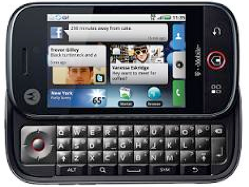
Earlier today, Motorola unveiled MOTOBLUR, a mobile social media OS of sorts that runs on top of Google Android. The company plans to introduce its first MOTOBLUR handset – CLIQ (and an international version called DEXT) – before the holidays
The assumption underlying this product is that "social networking" as it exists today is a job that people are specifically hiring devices to help them do. There are several problems with this assumption:
SN is rapidly evolving. As any new medium, it takes several iterations before it's "good enough" to solve the underlying problems. Whatever emerges (twittering, fb, or as yet unknown) will be a moving target. Users are moving quickly between these services. Assumptions about value of "stickiness" based on the social graph are proving to be flawed.
SN is not a "job" per se. SN is a means by which people communicate and try to get something done in their lives (i.e. getting a job, getting laid, suppressing loneliness, etc.) SN will compete with various other emergent technologies that solve these underlying jobs. These disruptors could be gaming metaphors, media-centric packages, virtual spaces, etc.
Therefore building a hardware product that is positioned and intertwined with SN is highly risky.
By the way, about 1.5 years ago Nokia considered doing the same thing. SN was on everyone's mind as the next big thing, just like email was 2 years before that. These service fads come and go. It's no surprise that one product development cycle later the devices are emerging even though the value of the service has rapidly evolved in new directions. This points out the fact that you can't make hardware dev cycles match service/software dev cycles. The only way to play this from a hardware perspective is with a platform approach e.g. iPhone. Let the ecosystem solve the job to be done and collect rents. I'm always surprised that this lesson from the 90s is still being forgotten by the device guys. BTW, I understand the NOK Solutions logic a bit better. It is not a major departure from the track NOK is on now. The power base remains with devices, as it has for 15 years or more.
On another level, MOT is a going concern issue right now. The approach with CLIQ is, by definition, niche. I don't see the product as broadly attractive solving MOT cash flow issues. If they sell more than 2 million units, I'd be surprised. (note: N97 got to 2 million on the back of massive distribution power but SE Xperia did not cross 1 million and Pre will struggle to get to 2 million.) The "bet" on Android is weak and not a bet really on anything correlated to earnings growth.