Recording and transcript of the June 9, 2026 Asymco One Office Hours, recorded the day after Apple's WWDC 2026 keynote. Horace Dediu shares his impressions of the event and takes questions from Asymco One subscribers.
One Foundation Model runs on Nvidia GPUs hosted in Google’s cloud and some Google proprietary model data used to refine Apple's Models.
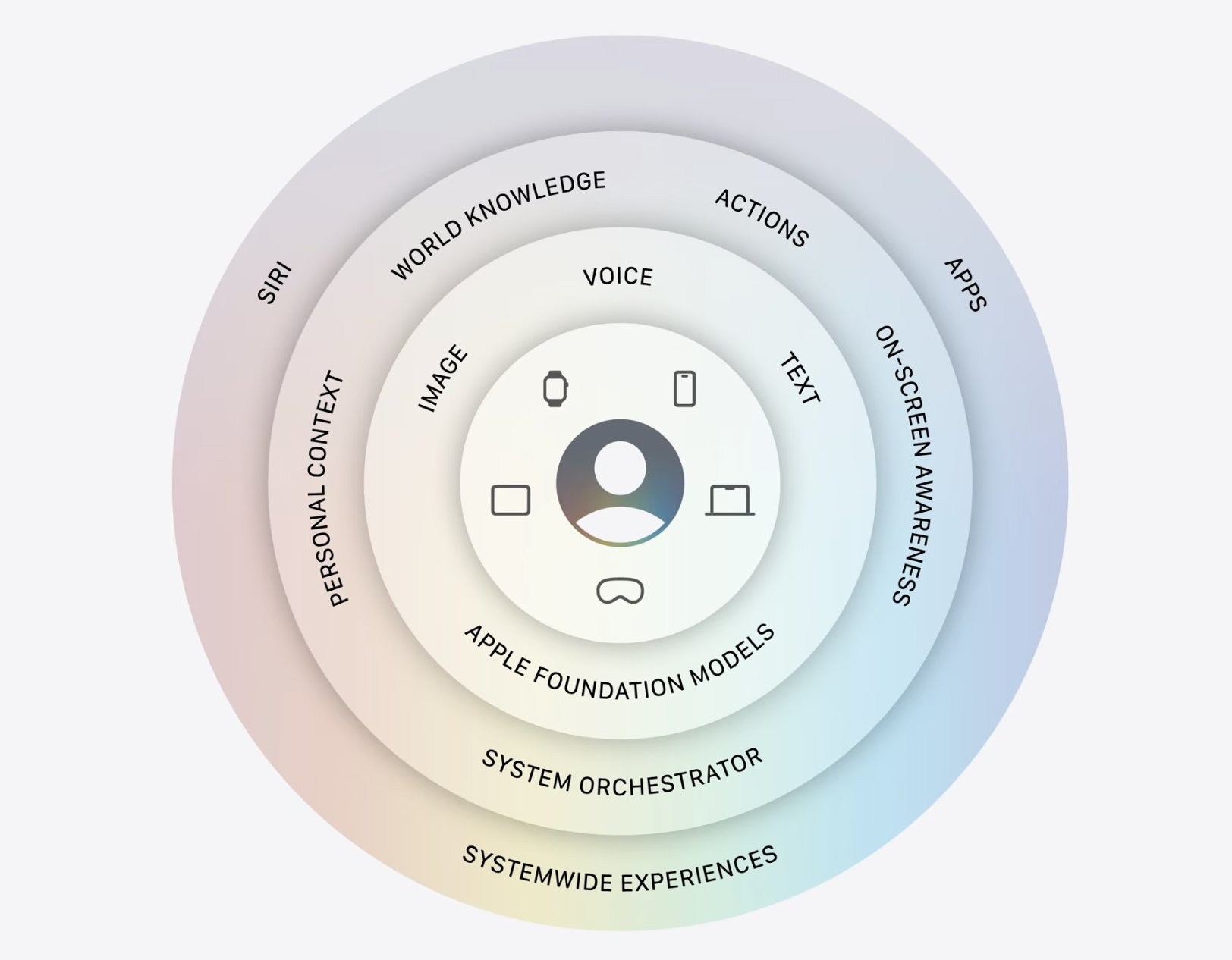
Apple has shared new details about the technology behind its latest Apple Intelligence platform, explaining how its new Apple Foundation Models (AFM) work and clarifying the company's relationship with Google. During a post-WWDC technical discussion, Apple executives said the company does not use Google’s Gemini models, Google Search, or Google Assistant infrastructure to power Siri or Apple Intelligence
Craig Federighi, Apple’s Senior Vice President of Software Engineering:
“Of course, we don’t have the Gemini app as our app. In fact, none of that client code is part of how we run on iOS. For these models, we use none of the models that Google deploy to their customers, nor do we use the infrastructure and means by which they deploy models to their customers. And then, when it comes to the knowledge base, we of course don’t use Google Search or anything like that as the foundation of our system. So I hope that’s clear. The amount of the Google Assistant we use is none.”
AFM Core (used for expressive voices and invitation capabilities on device)
AFM Core Advanced (on device)
AFM Cloud
AFM Cloud Image image generation and editing tools, including spatial reframing
AFM Cloud Pro complex reasoning and agentic actions; Nvidia GPUs hosted in Google’s cloud
These models are custom-built for Apple Silicon, trained using proprietary data, and refined using outputs from Gemini frontier models. The company emphasized that there is no direct use of Gemini itself.
The world’s most popular laptop gets even better with the incredible performance of M5, double the starting storage, and improved wireless connectivity, packed into a thin, light, and durable aluminum design
The world’s best pro laptop raises the bar again with blazing-fast CPU and GPU performance, plus up to 2x faster SSD speeds and 1TB of starting storage.
Apple announced M5 Pro and M5 Max, the world’s most advanced chips for pro laptops, powering the new MacBook Pro. Built using the new Apple-designed Fusion Architecture, M5 Pro and M5 Max feature an advanced CPU, a next‑generation GPU with Neural Accelerators, and higher unified memory bandwidth for a massive increase in AI compute.
You've probably heard of Jony at Apple but probably don't know about Johny.
Jony is a celebrity executive known as the face of Apple Design. Johny is the executive in charge of custom silicon and hardware technologies across Apple’s entire product line.
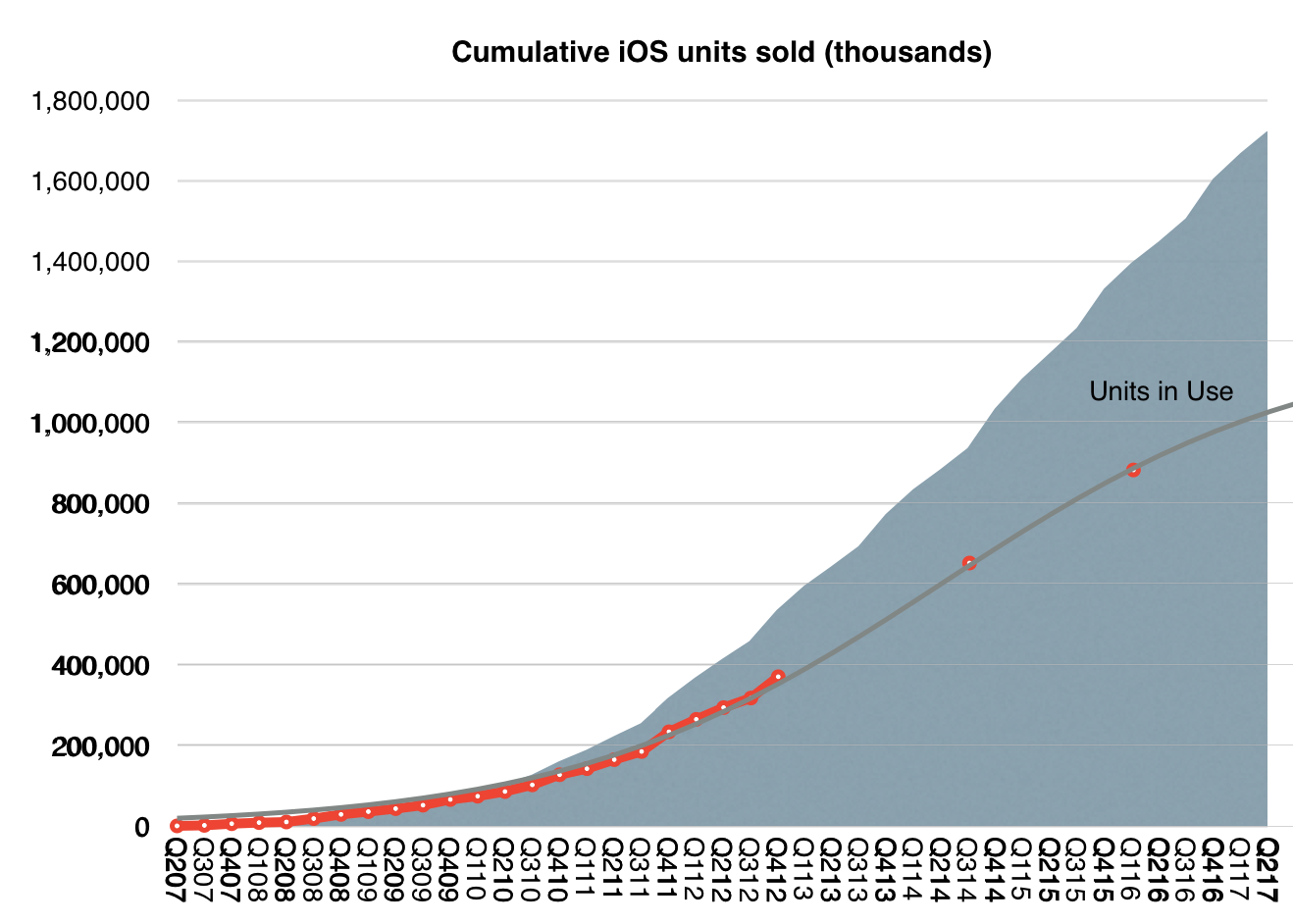
Under Johny's leadership, Apple has shipped 1.7 billion processors in more than 20 models and 11 generations. Currently Apple ships more microprocessors than Intel. ((Trailing 12 months’ PC shipments 265 million. Equivalent iOS devices 281 million. Not included are Apple processors in Apple TV.))
The Apple A11 Bionic processor has 4.3 billion transistors, six cores and an Apple custom GPU using a 10nm FinFET technology. Its performance appears to be almost double that of competitors and in some benchmarks exceeds the performance of current laptop PCs.
A decade after making the commitment to control its critical subsystems in its (mobile) products, Apple has come to the point where is dominates the processor space. But they have not stopped at processors. The effort now spans all manners of silicon including controllers for displays, storage, sensors and batteries. The S series in the Apple Watch the haptic T series in the MacBook, the wireless W series in AirPods are ongoing efforts. The GPU was conquered in the past year. Litigation with Qualcomm suggests the communications stack is next.
This across-the-board approach to silicon is not easy or fast or cheap. This multi-year, multi-billion dollar commitment is rooted in the Jobsian observation that the existing supplier network is not good enough for what you're driving at. Tiny EarPods, Smart Watches, Augmented Reality, Adaptive Acoustics require wrapping your arms around all parts of the problem. The integration and control it demands are in contrast to the modular approach of assembling off-the-shelf components into a good-enough configuration.
There are times and places where modules are adequate and times and places where they aren't. The decision depends on whether you are creating new experiences or new "measures of performance" vs. optimizing for cost within existing experiences or measures of performance.
The very notion of a microprocessor is a rejection of the discrete component designs that preceded it. Earlier computers had central processors made up of many discrete components. VLSI stands for Very Large Scale Integration with emphasis on Integration. As computing has progressed toward ambience and ubiquity the idea of using discrete components became normative again but that was not considered sufficient by Apple.
So while the "Silicon" in Silicon Valley has come to be seen as an anachronism, silicon development today means competitive advantage. The only problem is that it takes years, decades even to establish competence. The same duration that it took for the building of Apple as a design-centric business fronted by Jony Ive.
Apple also now needs to be understood along the dimension of silicon-centric engineering as led by Johny Srouji.