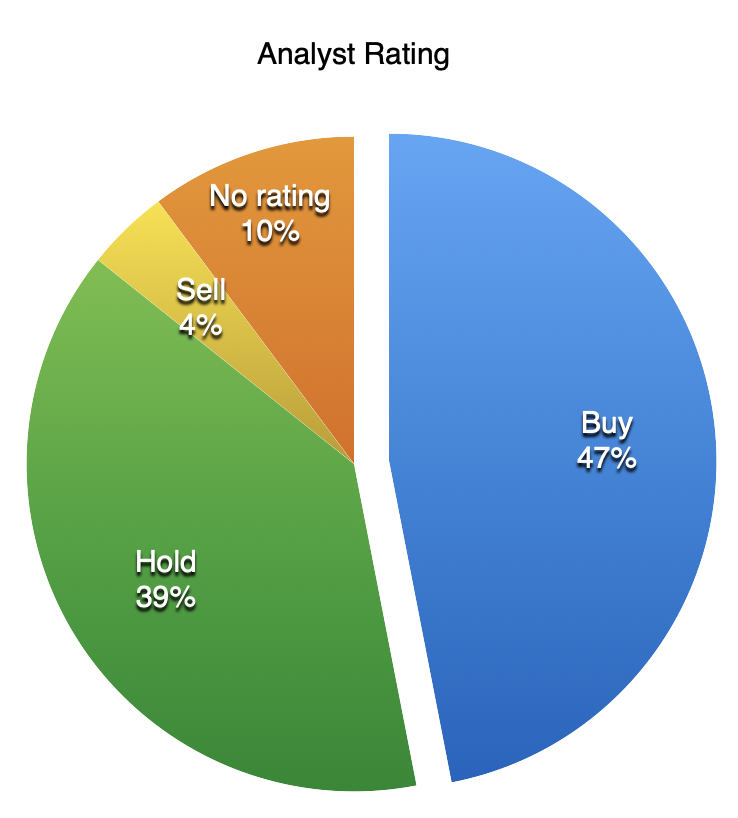
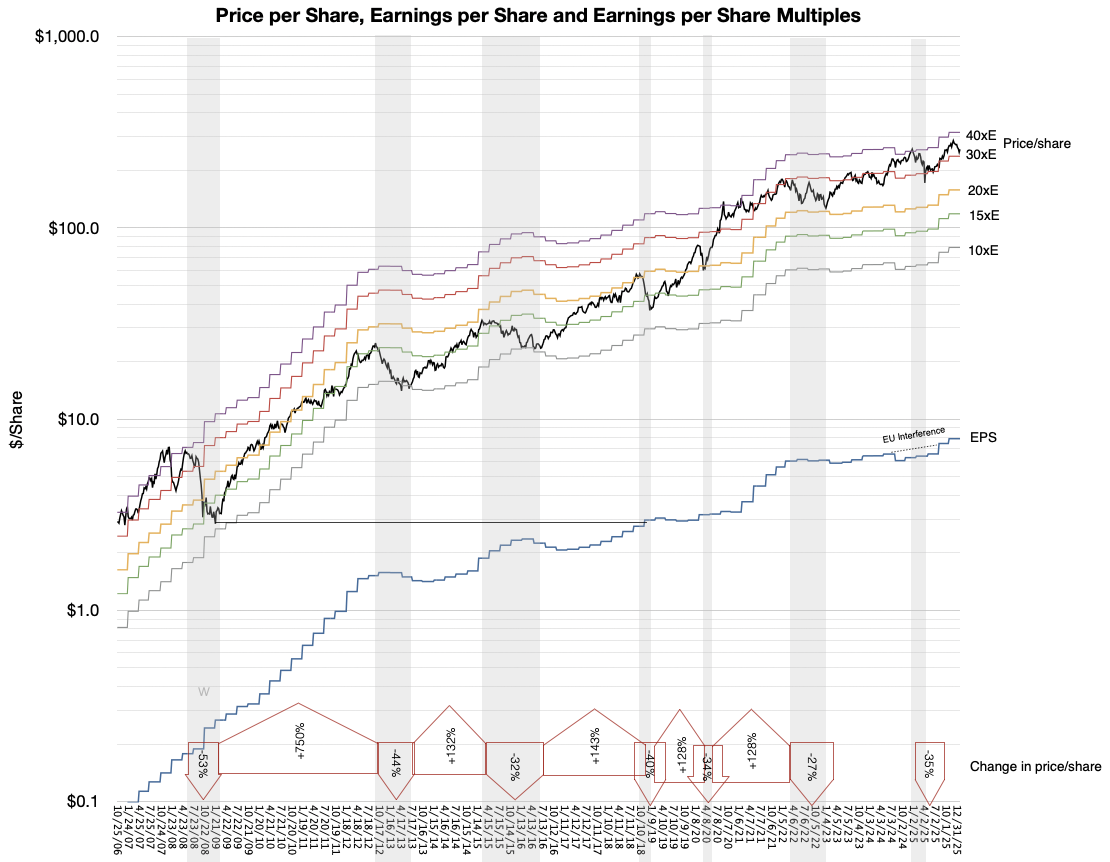
Apple has compounded net income at 26.6%, revenue at 21.5%, and share price at 27.7% for two decades, thus doubling every three years. Yet despite this, 21 of 49 analysts rate it Hold or Sell, with another 5 having no opinion. Extraordinary claims require extraordinary evidence yet assuming the Apple flywheel is about to grind to a halt is still a majority opinion. →
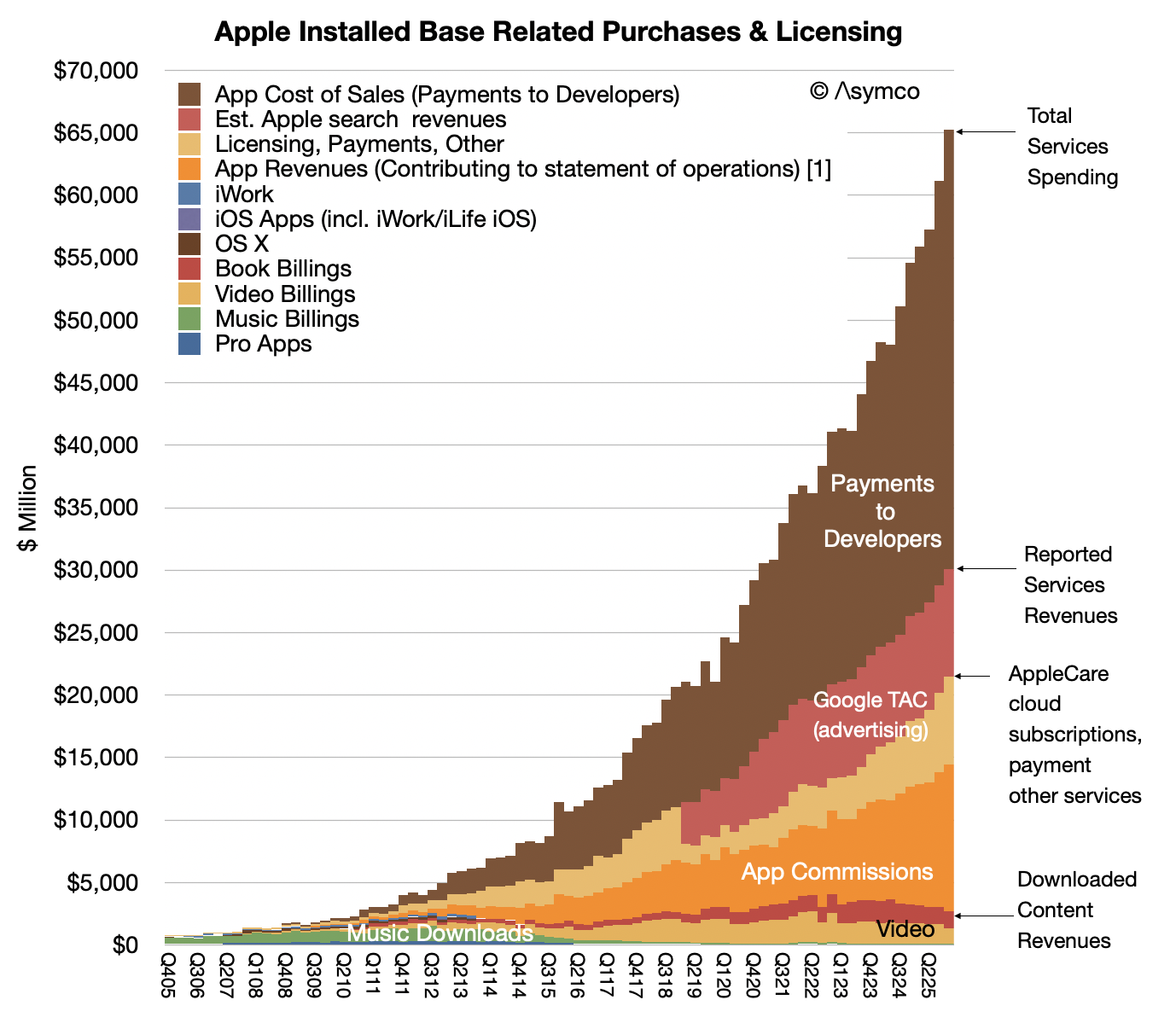
The App Store ecosystem facilitated $1.4 trillion in 2025. Add Apple's direct sales and the Apple Ecosystem comes to $1.8 trillion; add browsing, social, and messaging activity and the Apple Economy reaches roughly $3 trillion. Seen another way, at a $4.57 trillion market cap, Apple is valued at only 2.5 times its ecosystem and 1.5 times its economic footprint. These third-party dependencies are a measure of platform resilience and a carefully worded caution to regulators about the downside of interfering with it. →
Part 4 of the Asahi Shimbun interview turns to the spec trap. Apple maintains improvement but is selective: it ignores refresh rates beyond what the eye can see, and invests instead in features nobody asked for, like Face ID and AirPods. The phone became a machinery of vanity because the supply of cameras created demand for image editing, not the other way around. Christensen thought Apple would be disrupted by the low end. The honest answer for why it isn't is: culture, held together by extreme diligence. →
Nota Bene
Morgan Stanley reiterates $330 price target with bull-case $440 → Morgan Stanley reiterated $330 with a $440 bull case if WWDC unlocks an AI re-rating. Apple does not respond to market fads, and a multiple above 40 is almost never experienced. Disappointment after WWDC is nearly guaranteed because it has always been a software and tools show. →
Citi reiterated a Buy rating and a $315 price target → Citi reiterated its Buy and $315 target ahead of WWDC, expecting a revamped Siri to make Apple an edge AI winner. Edge AI is inevitable, but it was also inevitable two years ago. The target is already priced in, making the AI story a non-starter. →
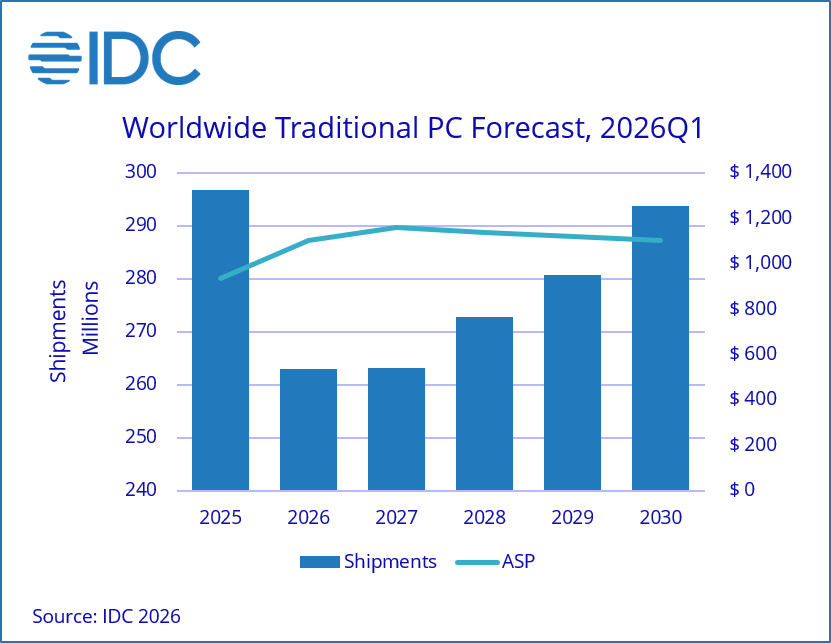
Q4 PC shipments are expected to fall 20% year-over-year, 11.3% for the full year → IDC now sees PC shipments falling 11.3% for 2026 and 20% in Q4, with no recovery in volumes until after 2030. The MacBook Neo is the only thing keeping the broader notebook forecast from being worse. This is a multi-year opportunity for Apple that may reset PC market share dynamics permanently. →
The analyst consensus price target sits at $297.46, with 31 Buy ratings against just 2 Sell ratings across 48 analysts. Both Citi and Morgan Stanley sit above consensus at $315, signaling above-average conviction. Apple stock is up 39% over the past year, so the transition arrives with the stock already reflecting significant strength.
Citi and Morgan Stanley both maintained Buy/Overweight ratings with $315 price targets on AAPL stock.
Much more was said of Jobs’ departure signaling the end of Apple than of Gates’ departure signaling the end of Microsoft. And much more was celebrated of Apple 50 than Microsoft 50. Why is that?
If you were to structure an experiment to determine the influence of processes and personalities on the outcomes of a company, you would be hard pressed to find a better pair to study. Apple and Microsoft were founded almost at the same time, due to the same enabling technologies (microprocessors) and led by two iconoclastic founders of the same age acting out of similar impulses.
The divergences were that one concentrated on software while the other on hardware. But rather than pairing up in a match made in heaven, both tried to outmaneuver the other in order to avoid dependency. →
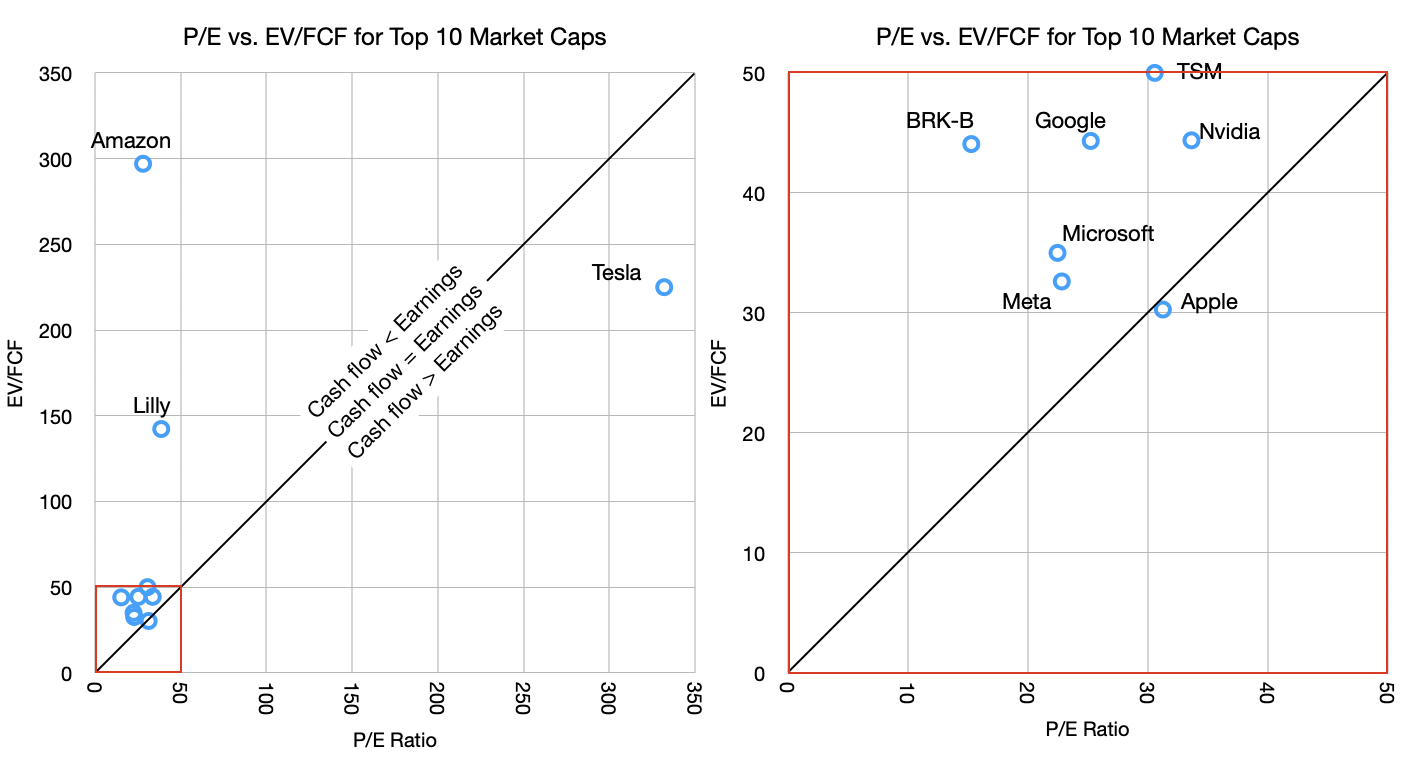
Cash flow is a fact, earnings are an opinion and share price is a dream.
A company’s total worth is the number of outstanding shares multiplied by their value. This product is called the market capitalization or Market Cap.
That’s a simplification. If you want to be more accurate, you should take the Market Cap and net out cash and debt–these are not part of the future flows of cash that can benefit shareholders.
More precisely, there is another measure called the Enterprise Value (EV) which is the total price tag of a company, representing what it would cost to buy the entire business and pay off its debts. EV = Market Cap + Total Debt + Preferred Stock + Minority Interest – Cash and Cash Equivalents.
This is the precise and complete measure of the firm’s value but we use the shortcut of Market Cap since In most cases the Preferred stock and minority interest are negligible and if cash equals debt then the result is EV =~ Market Cap. it’s easier to calculate anyways as the shares outstanding and share price are easily available. Not so for EV. →
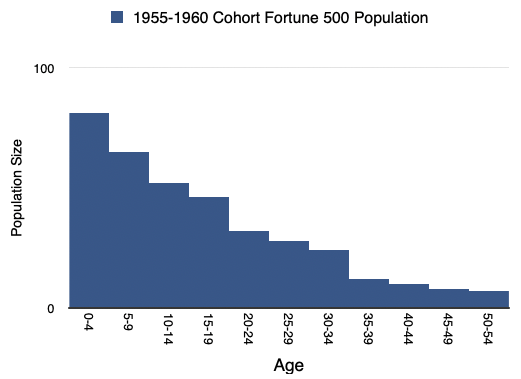
What are the odds of it surviving another year, ten years, 50 years?
Companies don’t last long. A recent study that analyzed thousands of European firms yielded a corporate life expectancy figure of 12.5 years. The Boston Consulting Group analyzed the entry, growth, and exit dates of 35,000 publicly listed companies and determined that one in ten of all public companies fail each year, a fourfold increase since 1965.
As I illustrated many years ago in a talk titled “The Unfortunate 500” most companies die not long after adolescence. Of the Fortune 500 1955-1960 cohort, the 81 companies which joined the index in those years, only 7 remain there today. One third of the corporations on the 1970 Fortune 500 list were no longer in existence thirteen years later. Broadly speaking, as a population, large companies that make it to the Fortune 500 listing have life expectancy within that group of 17 years. →
Today marks the 16th anniversary of when Apple released the first-generation iPad.
To many, including Alan Kay, the tablet form factor makes much more sense than the PC form factor. It’s more approachable, more intuitive and certainly smaller and more portable. As the graph shows, quickly after launch, the iPad overtook sales of the Mac.
The problem arose that whereas the iPad was smaller, the iPhone what smaller still–so much so that users would take phones with them everywhere. At the same time, the “PC” shrank as well so that many notebook (laptop) computers became thin, light and had day-long battery life. The Mac at least became no bigger a burden to carry than an iPad.
So the iPad was stuck in the middle between an iPhone, that did more and more, and a Mac that was very portable. At this point many said that the iPad was a dead end form factor. →
ON September 3, 1821, 37 years after James Watt invented the concept of horsepower and started charging £5/horsepower/year for the use of his steam engine, the first demonstration of the production of a mechanical force by the interaction of an electric current and a magnetic field was given by Michael Faraday in the basement of the Royal Institution in London.
1820 is, in many chronicles, noted as beginning of the industrial revolution. It marked the end of 50 years of war, whose conclusion unleashed pent-up demand. That demand was served by relatively free trade, guaranteed by British naval power, coupled with property rights and financial instruments which allowed inventions of the previous century to finally be harnessed for commercial gain. The steam engine is the canonical invention of the era and its implementation as a source of power for factories, shipping, rail and machinery is legend.
Not usually noted as coincidental to this period is the electric motor. Yet not long after Faraday’s 1821 demonstration in London, the first DC electric motor capable of turning machinery was invented by William Sturgeon. In 1832 he built on Faraday’s electromagnet by incorporating a commutator which oscillated the direction of current to ensure continuous rotation.
Nota Bene.
The Motley Fool asks: Where Will Apple Stock Be in 5 Years? → Not reading this article is probably a wise decision. Shares could perform in line with the S&P 500’s long-term average Investors can follow a straightforward exercise to try and figure out where Apple’s stock price will be in late March 2031. It’s important to consider both the valuation and profit gains. We just released a […] →
Apple’s services continue to see increased engagement, spending → The survey of 3,500 smartphone users reveals a significant rise in average monthly spend on Apple services to $13, driven by increased adoption of premium offerings like AppleCare/One, Apple TV+, and Apple Music, with notable shifts towards AI features despite muted upgrade intent, though potential US bias may affect overall accuracy. →
iPhone sales continue to surge into February – Bernstein → February saw robust iPhone sales driven by the iPhone 17 line, with global unit sales up 26% and ASP climbing 6.9%, yet January-February revenue estimates oddly lag behind projections, sparking confusion. →
Morgan Stanley has a stark message for investors in Apple → Morgan Stanley's survey indicates strong potential for Apple stock, highlighting record iPhone upgrade intentions, especially in China, improved switching rates, and significant interest in a future foldable iPhone. These factors support robust FY26 shipment forecasts and suggest a possible revenue boost from new products. Despite some concerns about declining willingness to pay for AI features, Morgan Stanley maintains an optimistic outlook with a $315 price target. The article criticizes TheStreet's editorial approach for misrepresenting the positive survey findings as negative news about Apple. →
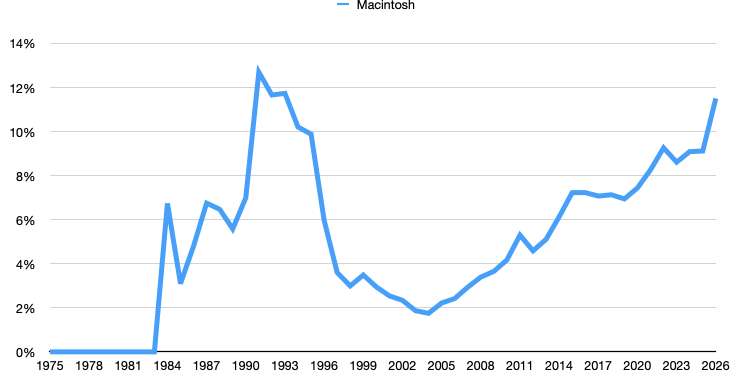
Mac mini and Mac Studio orders booming → Apple's Mac sales are surging due to the M5 chips' enhanced AI capabilities, outpacing other platforms and driving demand despite current shipping delays. →
Gartner adds their Mac Q1 estimate to the pile → In Q1 2026, Apple's Mac sales surged impressively by 10.7% to 12.7% year-over-year, driven by the MacBook Neo's appeal, securing a 10.6% global market share and maintaining fourth place among PC vendors, amidst a 4% rise in overall PC shipments. →
Morgan Stanley just published survey data that makes a strong case for owning Apple stock. The firm's AlphaWise Global Smartphone Survey was released March 22. It shows iPhone upgrade intentions hitting an all-time survey high.
The data support the bank's above-consensus iPhone forecast. Morgan Stanley keeps its overweight rating and $315 price target unchanged. The stock closed at $247.99 on March 20. That target implies roughly 27% upside from that level.
The headline number is a blended global iPhone upgrade rate of 37%, up 2 percentage points year over year. That is the highest reading in the survey's history. The driver is China, where upgrade intentions surged 9 points year over year to reach their own all-time high in the survey.
On the switching side, Apple's net switching rate improved to 11%. That is a five-year high. Apple was the only major smartphone brand in the survey with a positive and improving net switching rate.
Samsung, Xiaomi, Huawei, and others were all negative. That positions Apple to gain market share in 2026 even as the overall smartphone market faces pressure.
Together, these data points support Morgan Stanley's FY26 iPhone shipment forecast of approximately 260 million units, which sits 3% above Street consensus.
The most surprising result in the survey may be the level of interest in a foldable iPhone. Morgan Stanley found that 27% of global iPhone owners are “extremely interested” in paying for one. In China, that figure rises to nearly 40%.
Morgan Stanley expects Apple to more than double the global foldable smartphone market within 18 months of launch. The base case puts foldable iPhone revenue at approximately $40 billion. The bull case reaches $60 billion.
The foldable iPhone is expected to launch in fall 2026 alongside the iPhone 18 Pro lineup. If the survey data translates to actual purchases, the FY27 revenue impact would be significant. Morgan Stanley's FY27 iPhone revenue estimate is already 14% above Street consensus. The foldable is a big reason why.
Apple Intelligence ranked seventh globally as a reason to upgrade to an iPhone.
Willingness to pay for Apple Intelligence fell. Respondents said they would pay approximately $8 per month for an unlimited subscription, down from roughly $9 per month in the prior year's survey.
Morgan Stanley flagged this as a risk worth watching. AI features remain important to smartphone buyers broadly. But Apple appears to be lagging Android competitors in consumer perception of its AI capabilities.
Morgan Stanley laid out the key variables investors should watch this year:
iPhone upgrade cycle. Record upgrade intentions suggest the aged iPhone installed base is beginning to refresh. Replacement cycles are expected to contract by 0.2 years in 2026, which supports shipment volumes.
Foldable launch execution. The survey demand signal is encouraging, but first-generation foldable adoption is inherently uncertain. The revenue upside is large if execution is strong.
Memory cost impact. Unprecedented memory price inflation is expected to push global smartphone prices higher. Morgan Stanley sees this as a bigger headwind for Android competitors than for Apple, given Apple's pricing power. But the June quarter gross margin guidance will be the first real read on how Apple is managing the cost pressure.
Apple Intelligence revamp. The 2026 Siri upgrade needs to meaningfully improve consumer perception. The current trajectory is moving in the wrong direction.
Morgan Stanley's $315 price target is based on 8.5x EV/Sales on FY27 estimates. That implies approximately 32x FY27 EPS of $9.74. Its revenue forecast sits well above the Street even as its EPS estimate is broadly in line with consensus.
The survey does not guarantee an upgrade supercycle. But the data points in that direction. An aged installed base, record upgrade intentions, strong switching dynamics, and a new form factor in the back half of the year make for a compelling setup.
Morgan Stanley thinks the market is not fully pricing that in yet.
Apple the only major global smartphone vendor expected to gain share in 2026
A new global smartphone survey from Morgan Stanley points to record iPhone upgrade intent in 2026.
The AlphaWise survey shows next-12-month upgrade rates in the U.S. and China hitting “all-time highs,” which implies replacement cycles “accelerate to a 10-year low.”
Woodring writes that Apple is “the only major global smartphone vendor expected to gain share in 2026,” driven by “new and advanced features,” stronger device quality and broad upgrade eligibility.
He adds that iPhone switching rates are set to reach a 5-year high, underscoring the company’s relative strength.
By contrast, Android vendors face what Morgan Stanley calls “unprecedented memory cost inflation” that is likely to push device prices higher and “significantly dampen smartphone market demand.”
The bank says lower brand loyalty and greater price sensitivity will leave Android “more vulnerable vs Apple.”
As a result, Morgan Stanley cuts its 2026 global smartphone shipment forecast to 1.1 billion units, down from 1.3 billion previously, or -13% year-on-year.
It now expects Android shipments to fall 15% year over year, compared with just a 2% decline for Apple.
Apple’s App Store revenue growth is strengthening in February, with Morgan Stanley saying the latest data points to a faster pace of expansion heading into the March quarter.
The firm’s analyst, Erik Woodring, said in a note Monday that App Store net revenue is growing 9 percent year-over-year month-to-date, which represents “a 230bps acceleration from January off a 700bps easier Y/Y compare.”
Woodring added that quarter-to-date revenue is now rising 7.5 percent, putting it “50bps behind our +8.0% Y/Y March quarter App Store forecast.”
The bank kept its March-quarter App Store growth and Services growth forecasts unchanged at 8 percent and 13.5 percent, respectively.
Morgan Stanley said the acceleration is broad-based across major markets. China’s App Store is growing 4 percent year-over-year after a decline in January, while the U.S. is rising 3 percent, a 40-basis-point improvement. Japan is down 1 percent, while the rest of the world is seeing 22 percent growth.
The analysts also cited rising Mac lead times, noting they have “quickly inflected to multi-year highs” due to demand for the on-device AI tool OpenClaw.
They said stronger Taiwan component supplier revenue in January is another positive indicator, pointing to “very robust strength in server demand coming from the largest global cloud service providers.”
Despite memory cost inflation being a big deal, it still doesn't fundamentally impact Apple’s tremendous earnings power, Bernstein’s Mark Newman shared in a CNBC interview.
That’s not to say he doesn’t expect iPhone production costs to rise, though.
Heightened component costs could push iPhone prices up by as much as 15%, Newman added, while bumping the overall average selling price by nearly 12% as some customers trade down to cheaper models.
That increase is substantial, and it comes down to a staggering 237% surge in mobile DRAM contract prices since Q2 2025, along with a 70% jump in NAND.
Despite the pressures, Newman feels that Apple separates itself from the pack through its superb execution.
He says Apple is “managing better than competition,” led by unmatched scale advantages, supplier leverage, product mix, and durable pricing power.
To his point, Apple has evolved into a powerful platform company with a walled-garden ecosystem that locks users in.
That matters a ton when costs spike.
That’s why even with the memory pressures in play, Bernstein’s modeling points to iPhone gross margins dropping by nearly 1.5 percentage points by Q4 2027.
Though that’s meaningful, Newman believes the EPS impact will be substantially offset by higher-margin services revenue, mix shift, and aggressive cost management.
Apple’s AI ambitions outweigh rising costs
Newman’s bullish take on Apple centers around AI.
Instead of AI technology showing up just as a chatbot, Newman says Apple is deploying it as a system-level layer, making its ecosystem stickier.
What makes this possible is a hybrid design that handles as many requests on the device and reroutes the heavier ones (advanced reasoning) through Private Cloud Compute using Google’s Gemini.
That robust setup ensures Apple’s privacy positioning remains firmly intact, while delivering cutting-edge responses and features.
Unlike many of its peers, Apple isn’t in the race to win AI benchmarks or translate those gains into tangible financial gains. It just needs those features to change behavior and pave the way for healthier services revenue.
In fact, some of the earlier modeling supports that logic.
Morgan Stanley’s April 2025 survey, as reported by Investing.com, was an early “tell” that Apple’s AI pitch would likely move the needle.
At the time, 51% of iPhone owners said they were “extremely likely” to upgrade in the next 12 months. More importantly, those respondents, compared with those in the previous fall, showed a 12% higher willingness to pay $9.11 per month for Apple Intelligence.
For perspective, the significant Siri 2.0 (the next phase of Apple Intelligence) is reportedly set to launch in spring 2026, according to Mac Rumors.
Ironically, Apple stock was initially blasted for lagging in the AI realm. However, as we’ve gotten deeper into the cycle, Newman argues that investors have actually felt a lot “more comfortable” amid the AI wars.
NB: A 237% surge in mobile DRAM contract prices since Q2 2025 is spot pricing. Apple does not buy on the current market but what is effectively on a futures market. It would behoove the reader to calculate the quantity of orders for e.g. SoC and Memory Apple places vs. hyperscalers. If "51% of iPhone owners said they were “extremely likely” to upgrade in the next 12 months" that's 850 million people worldwide.
Consensus estimates Apple to post about $138.4 billion in revenue and both GAAP and non-GAAP earnings per share (EPS) of around $2.67 for the December quarter. The numbers highlight at least an 11% year-over-year growth in EPS and revenue, but analysts are now tightening their margin forecasts despite favourable iPhone sales and AI roadmap.
In a note, Morgan Stanley analyst Erik Woodring reiterated an Overweight rating and an unchanged price target of $315, but cautioned investors that Apple stock could “trade sideways to modestly lower after earnings.”
The firm expects Apple to beat expectations, driven by stronger, more persistent iPhone demand. Woodring expects December-quarter revenue of about $80 billion, around 4% above consensus, and March-quarter revenue of $55.4 billion, about 8% above consensus, citing supply-chain checks and shipment data.
He said iPhone 17’s “strength remains underappreciated by the Street.”
Morgan Stanley sees cost assumptions as overly optimistic. The firm forecasts March-quarter operating expenses about 7% above consensus and a gross margin forecast 30 basis points below consensus, driven by rising memory costs.
As a result, Woodring sees limited scope for positive EPS revisions for Apple, even with a revenue beat.
Morgan Stanley also flagged potential downside risk to June quarter earnings, estimating EPS of $1.62 versus the consensus of $1.71, citing intensifying memory-related cost pressures. The firm also notes that Apple has historically underperformed the S&P 500 more in Q1 than in any other period.
Looking ahead to 2026
All things considered, Morgan Stanley believes Apple is positioned to outperform in 2026 as a wave of new products and AI-driven catalysts is set to shape the company’s growth trajectory. The firm particularly highlighted the relaunch of Siri in February and Apple Intelligence in June at Apple’s Worldwide Developers’ Conference (WWDC). Some notable introductions expected include its most “innovative iPhone in 10+ years (Foldable)“, plus the first smartphone powered by 2-nanometer chips, part of the iPhone 18 family.
The firm sees greater benefits from share gains and higher average selling prices, with Morgan Stanley underscoring an EPS of $9.77 for FY2027, roughly 7% above Wall Street consensus.
Earnings will be above consensus. All eyes will be on how margin guidance due to pressure from memory pricing. Every year it's another thing that is cause for drama. It never matters.
Katy Huberty (Analyst - Morgan Stanley): You've said in the past that the watch may take longer to ramp given the new category and new interface to customers. Is that, in fact, playing out? Is the watch ramping slower than past product categories?
Tim Cook (CEO): Katy, when you use the word ramp, do you mean from a -- I assume you're talking about supply?
Katy Huberty (Analyst - Morgan Stanley): Yes. Pre-orders and first week in sales and any other data points that you track in terms of interest versus, say, when the iPad launched in 2010?
Tim Cook (CEO): Let me talk about supply and demand and sort of separate those two. Right now demand is greater than supply. And so we are working hard to remedy that. ((This is still true today, three months later))
We've made progress over the last week or so and we're able to deliver more customers an Apple Watch over the weekend than we had initially anticipated. We're going to keep doing that. […] So I'm generally happy that the -- that we're moving on with the ramp.
It is a new product for us, and with any kind of new product, you wind up taking some time to fully ramp.
Having said that, I think we're in a good position. And by some time in late June, we currently anticipate being in a position that we could begin to sell the Apple Watch in additional countries. And so that's our current plan. ((This has been achieved according to plan.))
From a demand point of view, it's hard to gauge when you don't have product in stores and so forth. And so we're filling orders completely online at the moment.
The customer response from people that have gotten theirs over the weekend have been overwhelmingly positive. And we're far ahead of where we expected to be from an application point of view.
To give you a comparison, when we launched the iPhone we had about 500 apps that were ready. When we launched iPad, we had about 1,000. And so our internal goal was to be able to beat the 1,000 level and we felt -- we thought it would be great if we were able to do that by a little bit.
And as I've mentioned before, we now have over 3,500 apps in the App Store for the Watch. And so we couldn't be happier about how things are going from that point of view.
We are learning quickly about customer preferences between the different configurations. There's a much larger breadth of possibilities here for customers than in our other products. And in some cases, we called that well and some cases we're making adjustments to get in line with demand.
But I'm really confident that this is something we really understand how to do and will do. And so I'm really happy where we are currently and happy enough that we're looking forward to expanding into more countries in late June.
[…]
Gene Munster (Analyst - Piper Jaffray and Co.): …question for Luca, in terms of any thoughts on what the margin impact from the Watch as that ramps over the next couple of years?
Luca Maestri (CFO): Apple Watch is, not only a new product, but it's a brand new category with a lot of new features, a lot of new innovative technologies. And Apple Watch margins will be lower than the Company average.
[…]
Toni Sacconaghi (Analyst - Bernstein): I just wanted to revisit the watch.
Tim, I think you said when you were talking about your new products, you said we're, quote, very happy with the reception. And in response to a previous answer you said, relative to demand, it's hard to gauge with no product in the stores.
I would say relative to other product launches where your commentary around demand was characterized by superlative after superlative, that assessment feels very modest. And part of the reason that I ask is, A, are we reading you right in terms of that? But if we look at consensus, consensus is expecting that Apple will ship more watches in its first two quarters than it did iPads, despite, as you said, very limited distribution in terms of only selling through your stores.
So I'm wondering if you can talk a little bit about putting those demand comments in context, given that they do seem different from how you've characterized product demand for other products. And how, if at all, we should think about the modeling demand in the context perhaps of the iPad, which was your most recent significant new category? And then I have a follow-up, please.
Tim Cook (CEO): I'm thrilled with it, Toni. So I don't want you to read anything I'm saying any way other than that. So I'm not sure how to say that any clearer than that.
And in any situation, whether it's the watch or in the past on iPad or on iPhone, when demand is much greater than supply, it's difficult to gauge exactly what it is. And so, as you know, we don't make long term forecasts on here. We maybe forecasts for the current quarter. And so I don't want to make any comment about the consensus numbers.
Honestly, I haven't even studied those. We've got enough to think about here.
I feel really great about it. The customer response, literally from what I've seen, is close to 100% positive. And so it's hard to imagine it being better.
-------
Excerpts from Apple Earnings Report: Q2 2015 Conference Call Transcript, April 27, 2015.