An Office Hours question asked by Bob V., July 31, 2026.
Q: I've seen mostly positive reviews from the press about the AI features in Apple's public betas. How well do you think Apple is doing in pushing back against the perception that they're “too late to AI”?
It seems like by now that story has played out. Most of the reviews have been positive since WWDC. But then it turned into a discussion saying: well, it's not going to move the needle, it's going to take too long, there's dependency on Google, and this and that. None of this matters. AI, from a consumer point of view, is still a technology searching for a job to be done. I'm not in any way a bear on AI. I'm not dismissive of it. But what they call product-market fit hasn't happened. It has niches, and they're not consumers. There are individual users and buyers of the technology, and they might be using it on a day-to-day basis, but that's very early days. It doesn't have that resonance yet. It needs to be packaged in certain ways.
Quality is first and foremost, and once we see how it works, people will slowly, slowly discover things to do with it. And those will resonate. We got there the same way with social media. We got there with short video. We got there with the idea of a great camera on the phone. Nobody asked for it, and when you gave it to them, they went: what do I need so much quality for? I have three lenses on my phone — why do I need three lenses? But it turns out that camera turned out to be a killer app.
So how do we get there? I don't think it's ChatGPT. That's like saying TCP/IP. That's like saying Intel 8088 — something technical. It's also an interface that's notoriously low bandwidth. You have to converse in language, in complex language, prompts, as if we're dealing with a keyboard, the old days of the command line. And I think Apple's initial attempt, which failed, was to make things like emojis, and image editing, and trivial things. Those aren't apps either; those are features. The app is not a technology, it's not a feature. It's something that packages all those things, and does it in a way that's easy to discover and to evolve.
That's the problem Apple faces: it isn't something you can test for, because the number of queries that could be made is indefinite. And I don't think it's very easy to modularize the problem. If you're looking for high quality at all times, which is how Apple operates, it's difficult to meet that criteria. Siri is a natural thing here. Siri was way ahead of its time as an idea, and implementing Siri with the latest technologies makes sense. Maybe Siri usage will go up and up — but that's not a business. Siri is a feature.
Editor's Note: This was one of the questions asked by participants in Asymco's July 2026 Office Hours live Q&A session, held the day after Apple's FQ3 2026 earnings and open to Asymco One subscribers.
Subscribe to Asymco One for full access to this and other content.
A state of the union look at the market for mobiles.
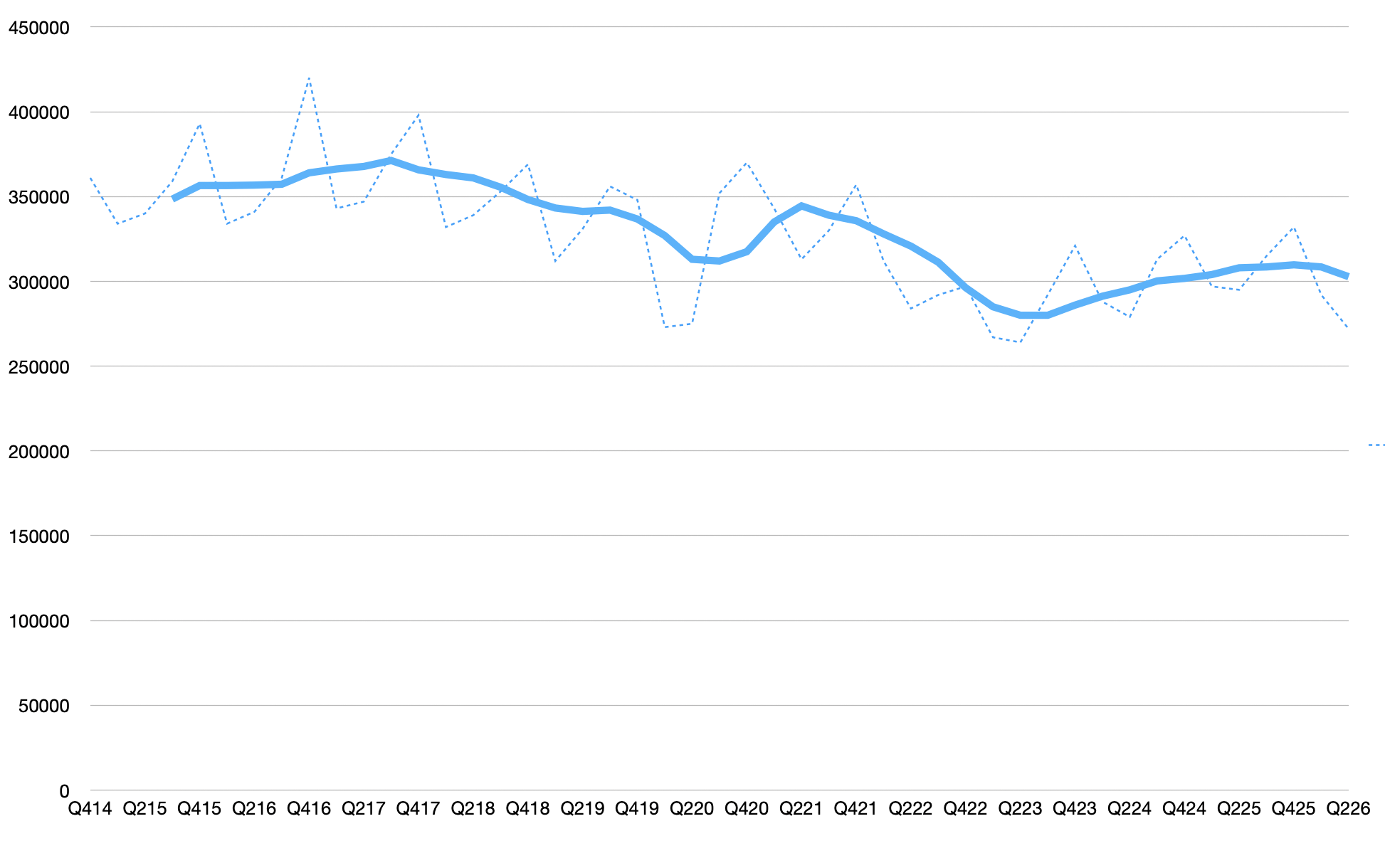
Looking at the IDC data on smartphone shipments (2014 to present), the pattern shows a peak in 2017.
Covid caused a contraction and recovery but since then the unit market has not reached pre-Covid levels. Moreover, the current memory supply crisis is expected to cause a dip unlike any of the previous ones.
IDC expects the market in 2026 to roughly 1.09 billion units and another 1.1% decline in 2027. This may be optimistic. Yearly volumes could drop below 1 billion.
The sub-$100 entry-level device tier remains permanently constrained or uneconomical, pushing average selling prices higher. Emerging markets will fall the most. The Middle East and Africa are forecast to drop roughly 23%, Central and Eastern Europe down 19%, and Asia-Pacific (excluding Japan and China) down 14%.
In the US, Counterpoint says that sub-$100 smartphone sales declined nearly 65% during Q2 2026 compared with the year-ago period. The rest of the market fell by 45% as smaller manufacturers struggled to navigate component cost increases.
US Q2 smartphone market update: Overall: -5% Top 4 OEMs Apple, Samsung, Motorola, Google: -4% All others: -45% Prepaid: -11% Sub $100: -64% Apple reported N. American sales +11%.
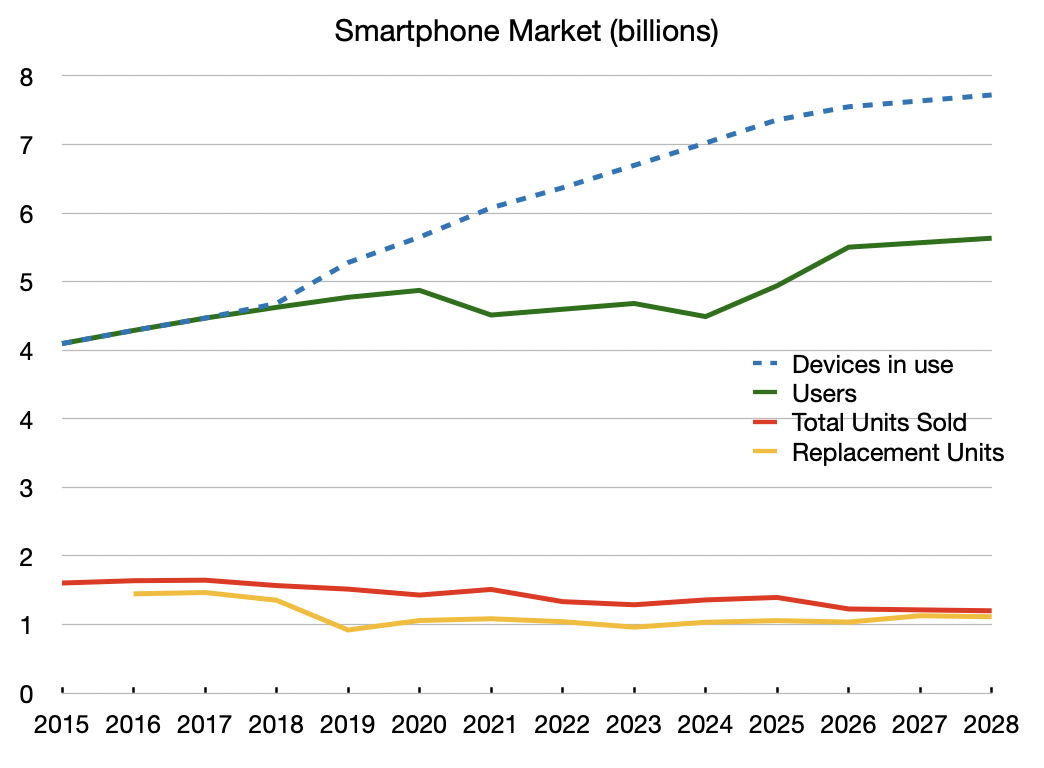
Yet the number of smartphone users is not decreasing. There are approximately 5.78 billion unique smartphone users worldwide, accounting for over 70% of the global population. Moreover, there are over 7.6 billion active smartphones in use globally. (1.3 phones per user.) According to data trackers like Counterpoint Research, the active installed base grows by low single digits annually.
The history and near future of these measures are shown below:
Note the confluence of two trends: the increase of users and devices in use and the decline in unit sales. I also pointed out in the graph that of the units sold a certain number must be going to new users (as long as new users is growing). The remaining units (shown in yellow) are replacement units. That means they are used to maintain the base which is shown as the dashed blue line.
But if the dashed line is increasing (from 4 to nearly 8 billion) and the replacement number is constant (about 1 billion) then the phones in use must be lasting longer.
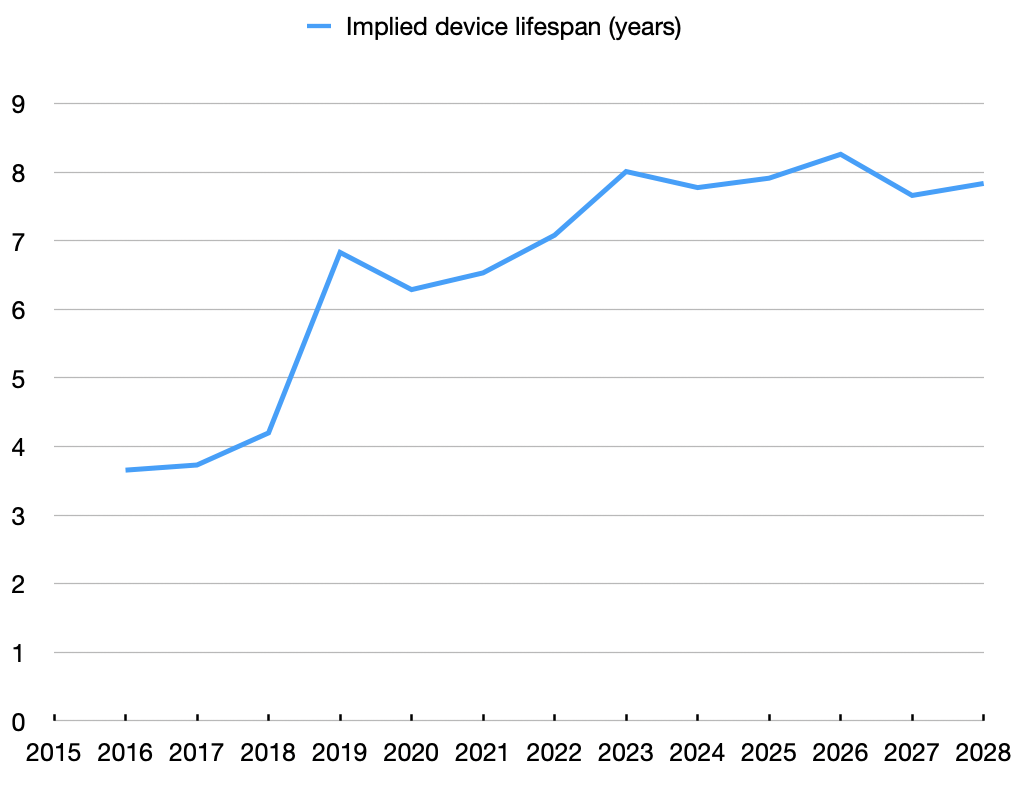
Dividing the base by the replacement rate gives the implied device lifespan, shown below:
If the sales and base data is correct then the lifespan must have grown from below 4 years in 2016 to about 8 years in 2023. It has held steady since and may stay there through 2028.
Eight years is a much longer time frame for an average phone's life than many may consider reasonable. No Android vendor supports their phones that long. However, Apple supports iPhones with major iOS software updates for about 5 to 7 years from their release date. They often provide critical security patches for an extra 1 to 2 years after a phone stops getting main iOS upgrades. This means Apple support lasts about 8 years.
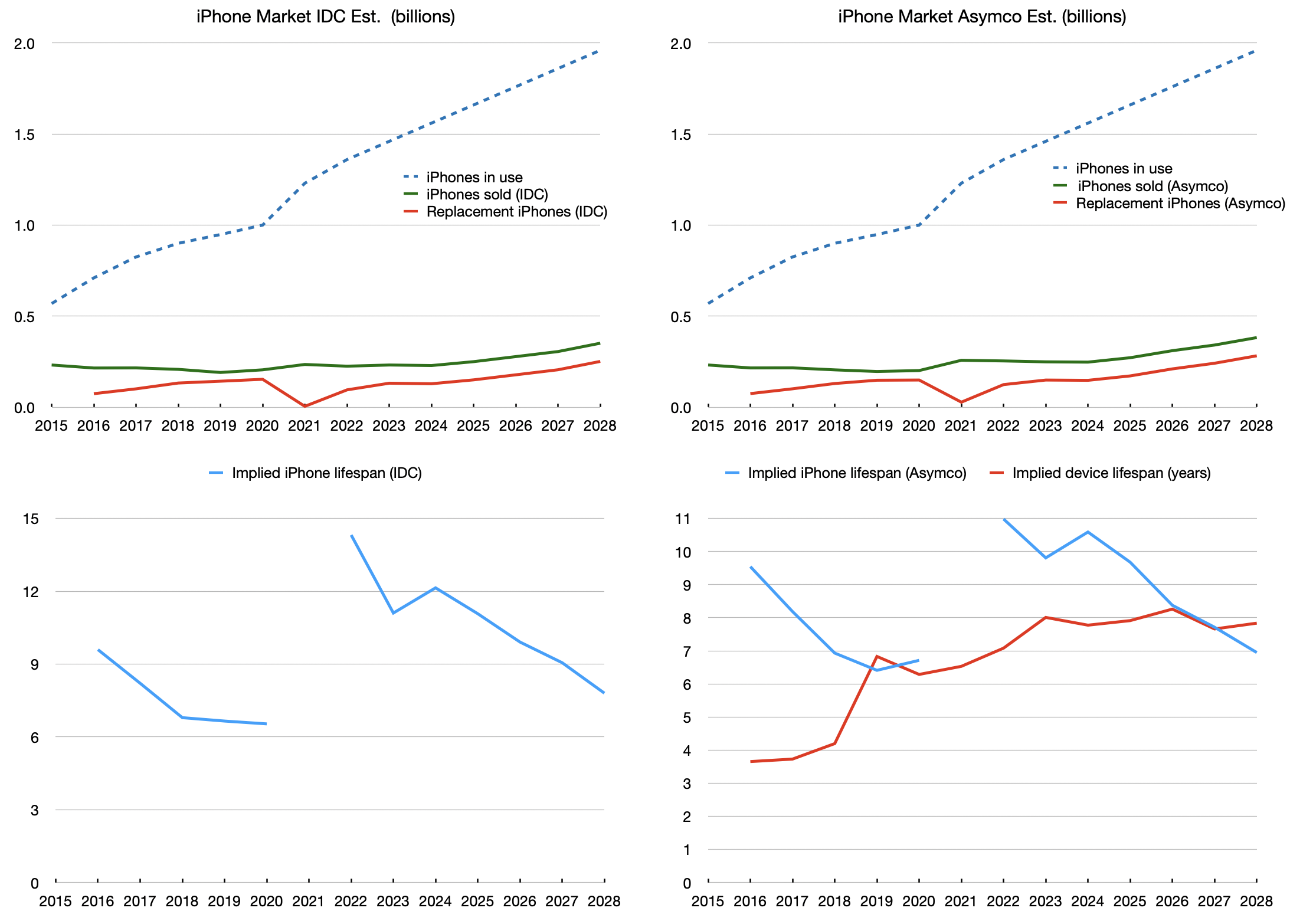
To confirm this we should analyze at the iPhone separately from the global market in the same way: installed base, units sold and implied longevity.
I used IDC data for iPhone unit sales in the graphs on the left and my own estimates in the graphs on the right. The installed base is based on Apple released data and extrapolations.
Apart from an anomaly in 2021 due to the recovery from Covid, the average lifespan for the iPhone (blue lines in the bottom graphs) holds at 8.5 in my data and 9.4 in the IDC data.
There are two reasons I believe my estimates to be more likely correct. First, because they also align with the overall market data (red line, right bottom graph) and second, they align with the support that Apple grants.
One more thing.
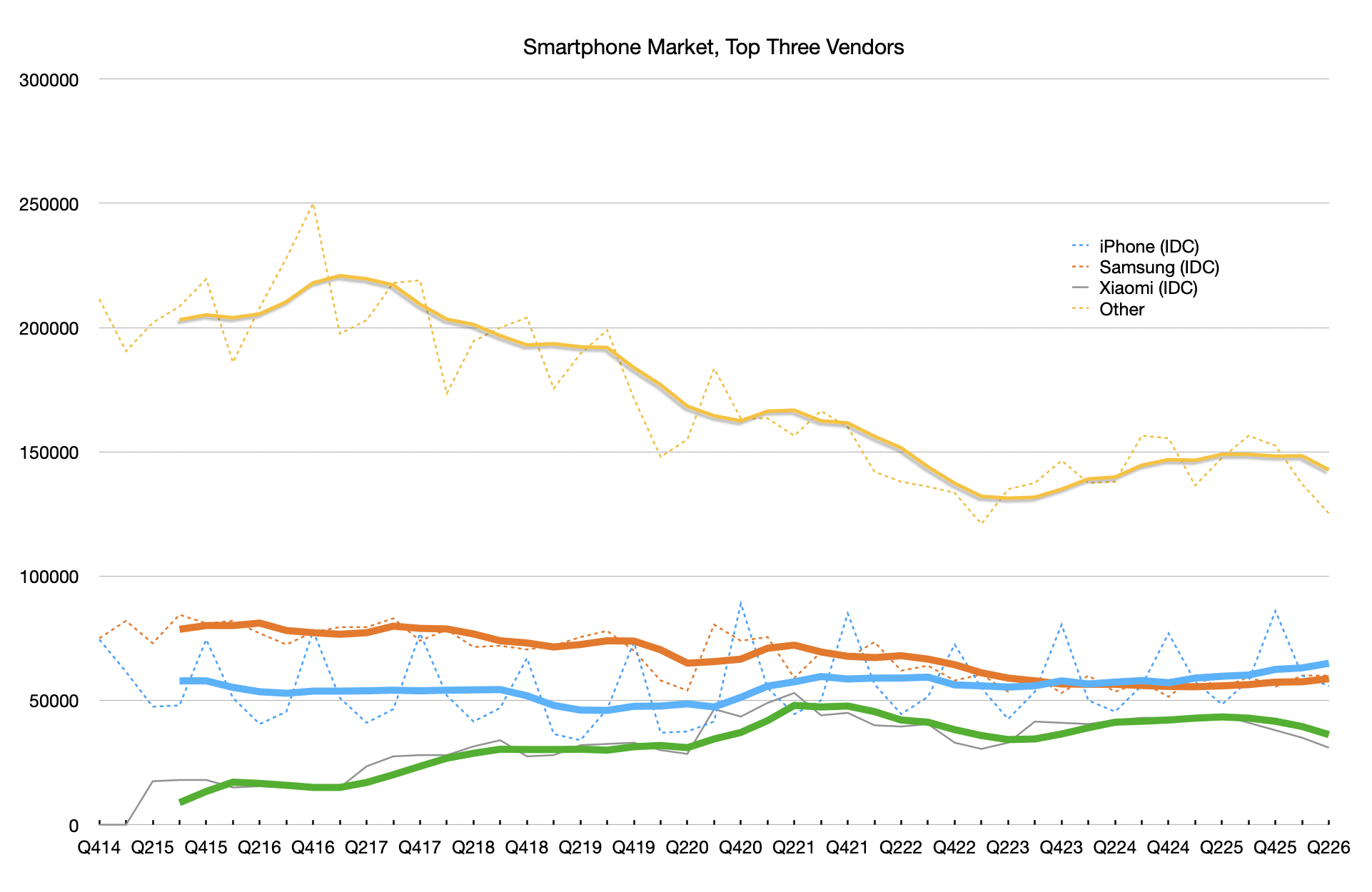
IDC also offers estimates of Samsung and Xiaomi unit sales. I show these estimates below.
To remove the noise of seasonality, I provided twelve-month averages (solid lines). Note that their estimate for the iPhone (which is lower than mine) puts Apple ahead of Samsung since 2024.
Also note that the "Other" vendors combined are in a secular decline in volumes which will accelerate into the rest of 2026 and 2027. It's unknown whether this trend will continue in the longer term.
So what are the takeaways from this state of market review? Where are Smartphones going?
Apple the volume leader. It's been the profit leader since inception. It's been the sales value leader as well for a very long time. Being the volume leader may be a surprise to some. Moreover, we might be seeing a shift in strategy intended to drive even higher share gains and install base gains into new markets. There are profound implications when Apple is no longer only 20%. It already has the best quintile but can it harvest the second?
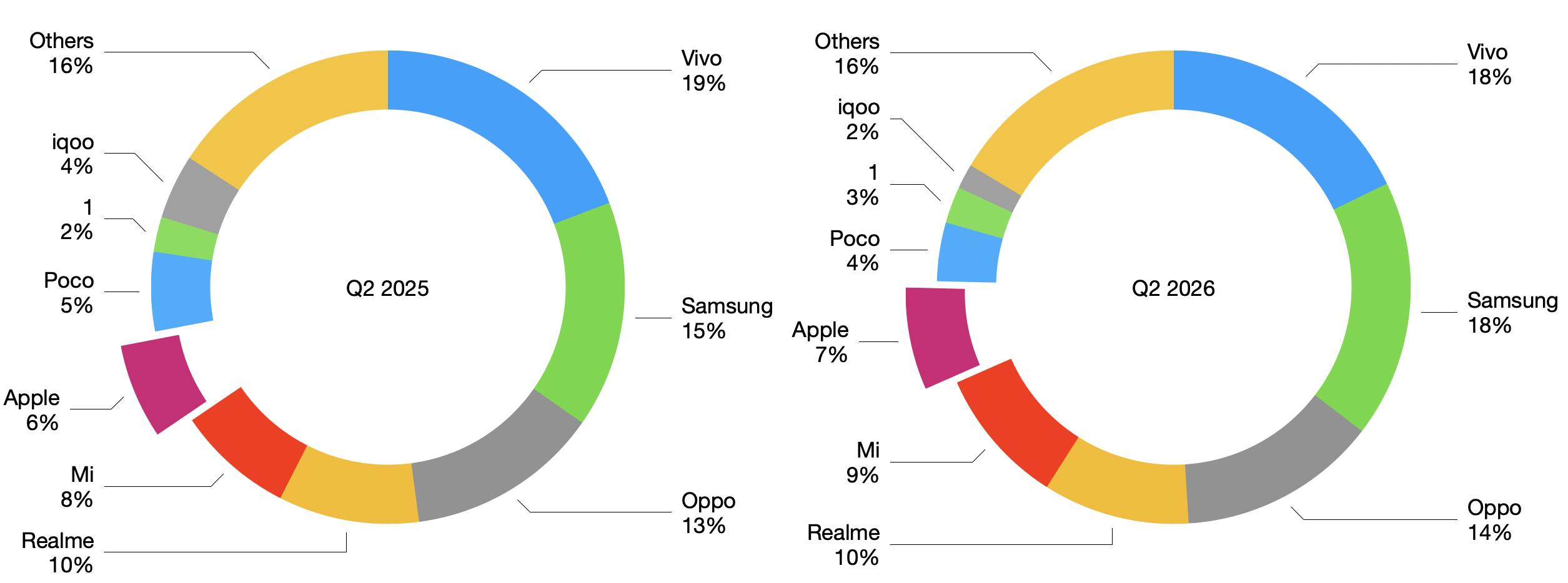
The low-end market may be in check-mate. The premiumization of the market has been underway for a while but apart from Apple, vendors are having a hard time profiting from phones. History has seen the exit of many phone makers. Nokia, Motorola, Sony-Ericsson, Panasonic, and many others are gone. They were all huge at their peak. Now we see brands such as Oppo, Vivo, Poco, RealMe, iqoo in the top 10. See the graph below for the Indian market. They are losing share and the lower the volume, the less likely the recovery.
Longevity matters. Support for 8 years should be standard but it isn't. Apple saw this early and made the infrastructure commitment to carry users to a future device lifespan. This includes the secondary market. This is reflected in the residual value of the phones and in their desirability in the used market. As phones last longer they are also more expensive; a natural tradeoff.
The user base is nearing a peak. 6 billion may not yet be it, but there are only 8 billion people on the planet. I would guess that 7 billion might be saturation. However, we're seeing 1.3 units/user attach rate. That may increase, as it has been.
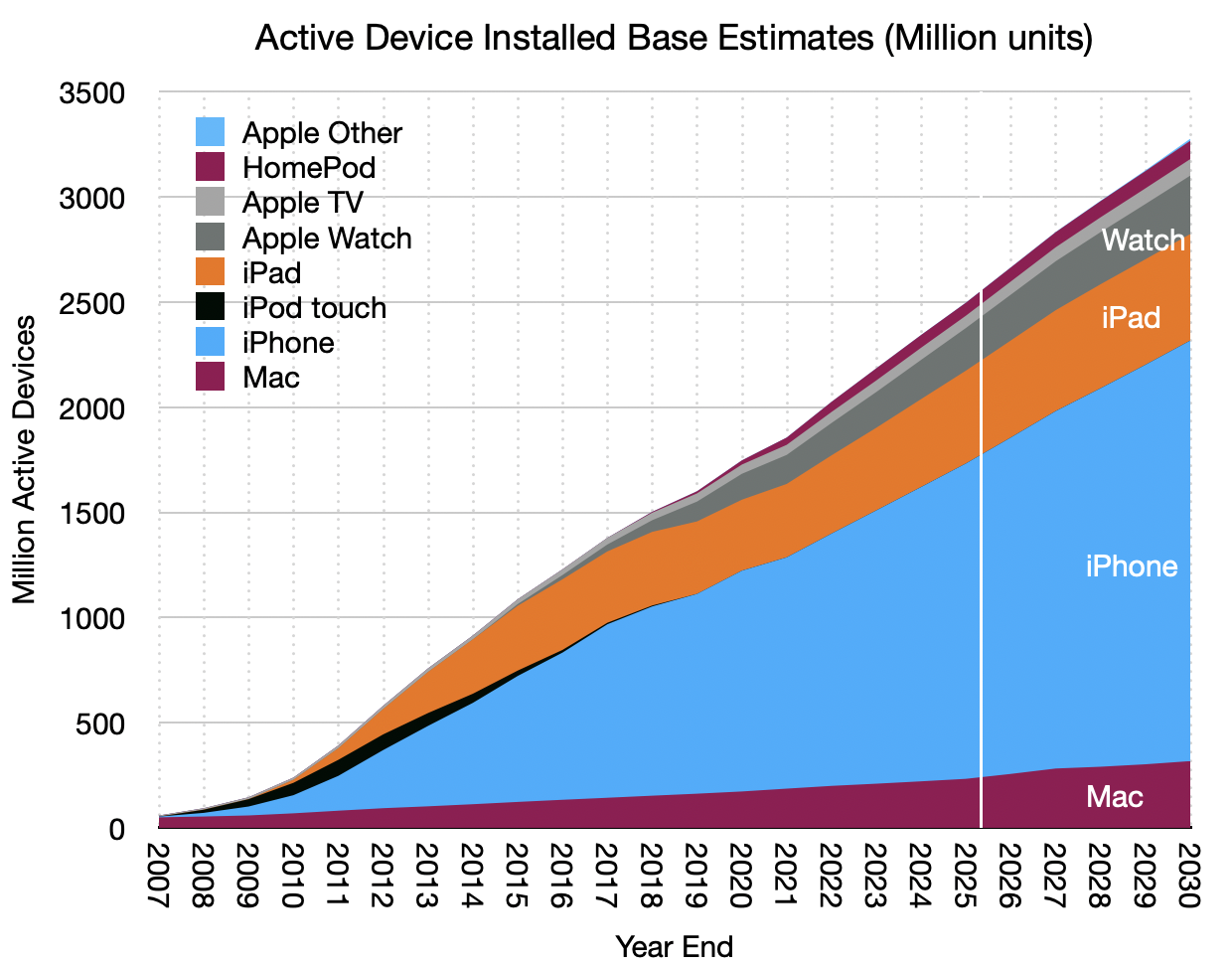
The total smartphone base thus may reach 10 billion (1.4 attached to 7 billion). The iPhone should be able to reach 2 billion in use with a total Apple active device base near 3.5 billion. This could easily happen by 2031.
An Office Hours question asked by Joseph B., July 31, 2026.
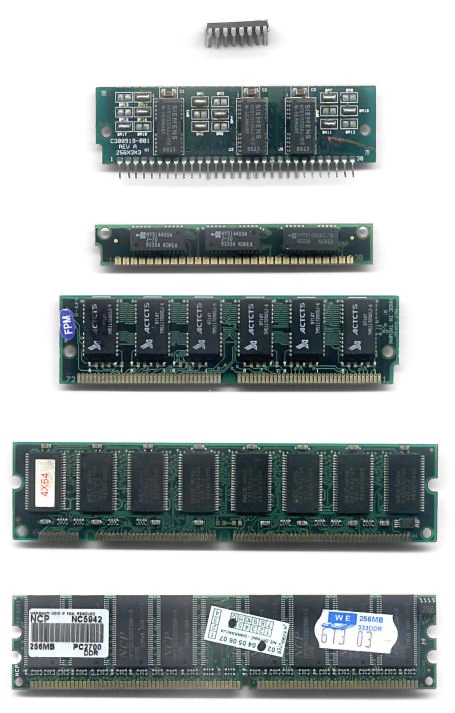
Q: Would Apple buy a memory maker — get into RAM itself?
They said they wouldn't get into this, and I'm surprised they said it — even if they thought they would, I don't know why they would insist on it publicly. I think they feel that it's not within their wheelhouse, as they say. It's not their core competence. It's not that they cannot create it. I'm not going to get into the weeds on this, but basically it's hard. It's unique. It has different dynamics. It's impossible unless you have huge scale, and alone, Apple is probably not big enough as a consumer of its own products, so they'd have to sell them. It just doesn't resonate with them at all.
I thought, maybe six months ago, that as a response to this, they would — despite everybody — buy or build their own. It's funny: they came out with a flat rejection of that. Now I think they'll maybe go behind the scenes, encouraging others to do it, possibly through financing, political maneuvering, something with Intel, something to do with all the cronyism that goes on in Washington these days. I don't know. But they'll back in, as they say. They'll maneuver and figure it out.
It would be ironic if Intel becomes a memory company, after having switched to CPUs from memory at its origin. This is where you are if you're in the semi business: you get whipsawed. It's such a tough business.
Editor's Note: This was one of the questions asked by participants in Asymco's July 2026 Office Hours live Q&A session, held the day after Apple's FQ3 2026 earnings and open to Asymco One subscribers.
Subscribe to Asymco One for full access to this and other content.
Apple Vision Pro as the Primary Visualization Platform for Cataract Surgery
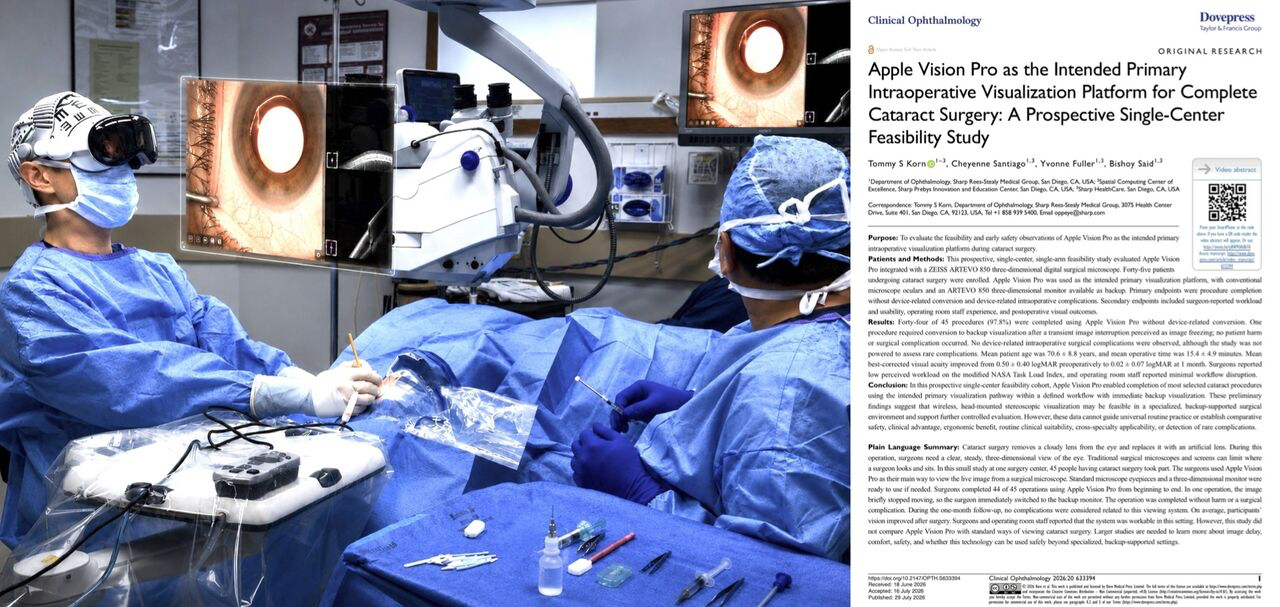
Dr. Tommy Korn authored a new study of the Apple Vision Pro and spatial computing in cataract surgery. It has been peer reviewed and published in Clinical Ophthalmology.
I had spent a day shadowing Dr. Korn as he performed a dozen surgeries. It is remarkable that those delicate operations--saving people's vision--can be assisted so competently by the Apple Vision Pro.
Dr. Korn and his team evaluated the 2nd generation Apple Vision Pro (M5) using the ClearSphere app as the primary 3D view for cataract surgery. This surgery replaces the cataract-clouded natural lens in the human eye with a fixed focal length artificial lens. It restores vision to many who would otherwise be blind.
First of its kind: 1st prospective study of Apple Vision Pro as the ophthalmologist’s primary 3D view for complete live microscopic cataract surgery from start to finish.
Wireless, high-definition 3D microscopic view
45 cataract operations studied
Easy on surgeons: physical demand just 1.07 out of 21
Excellent outcomes: about 20/20 average vision at one month
Strong surgical team acceptance: 100% confident assisting with future cases
Safety built in: Zero device-related surgical complications observed; 2 backup systems always ready
This study helps lay the scientific and clinical foundation for what comes next in spatial computing and surgery.
For generations, eye surgeons have worked through microscope eyepieces and fixed screens, often maintaining painful postures. Spatial computing creates the possibility of something very different: A surgical cockpit built around the surgeon.
At a recent conference on the topic it was clear to me that many surgeons are looking at this platform for multiple benefits:
Ergonomic benefits: comfortable position for surgeon
Navigation (finding/positioning of instruments or procedures on patient)
Visualization of complex data in real time. No need to turn or seek out data on various monitors.
Space saving over fixed monitors.
Situational awareness
Productivity, remote work, remote operation of surgical robots and cost savings over fixed external monitors.
Dr. Korn calls it "A personalized 3D workspace built around the surgeon."
It's still early days for spatial computing and yet the benefits are clearly measured and now peer reviewed.
Congratulations to Dr. Tommy Korn, pictured on the right with yours truly.
Necessity is the mother of invention but return on invested capital is the mother of innovation.
Invention is big ideas with unclear benefits. Innovation is big benefits with unclear ideas. This is why inventions are easy to point out but hard to find useful while innovations are very useful but hard to explain.
Innovation is a matter of many small changes with big returns. The bigger this ratio between return and change, the more profound the innovation. Moving from selling music on physical media to digital files and then to subscribing to an infinite catalog is an example. Moving from hardware warranties to AppleCare subscriptions is another. Overall, the entire Services business is the best example.
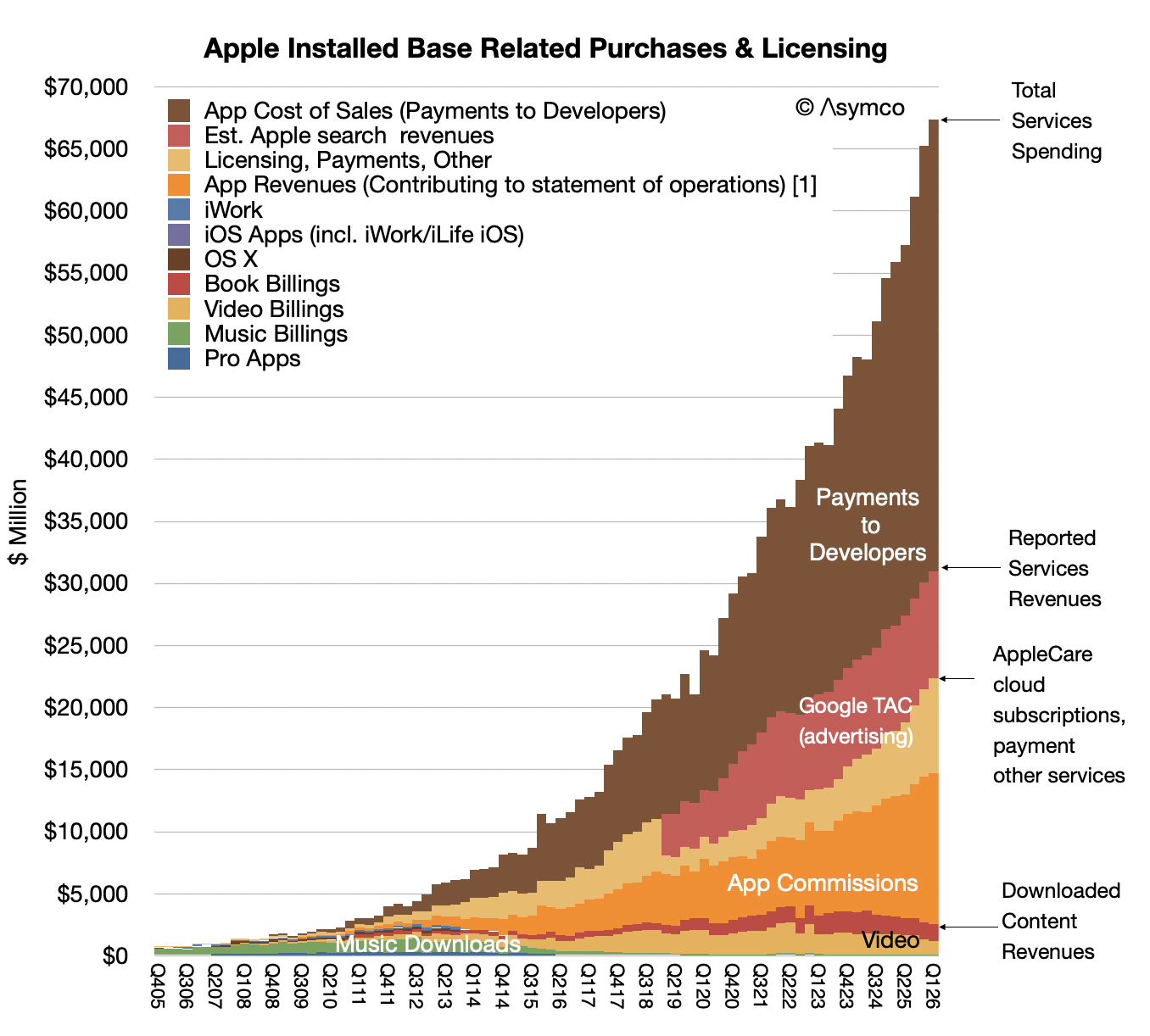
Services has delivered a compound growth rate of 20% for 20 years, growing from $3.3 billion in 2006 (as iTunes Software and Services) to $120 billion for the last twelve months. Along the way, the gross margin on Services has increased to 75%.
A 20% compounded growth rate for 20 years with 75% margins is a strong indicator of innovation. Yet, there is hardly any accounting its components. Hardly and single thing to point to as the "big idea". I tried for decades to provide a view into Services, such as it is:
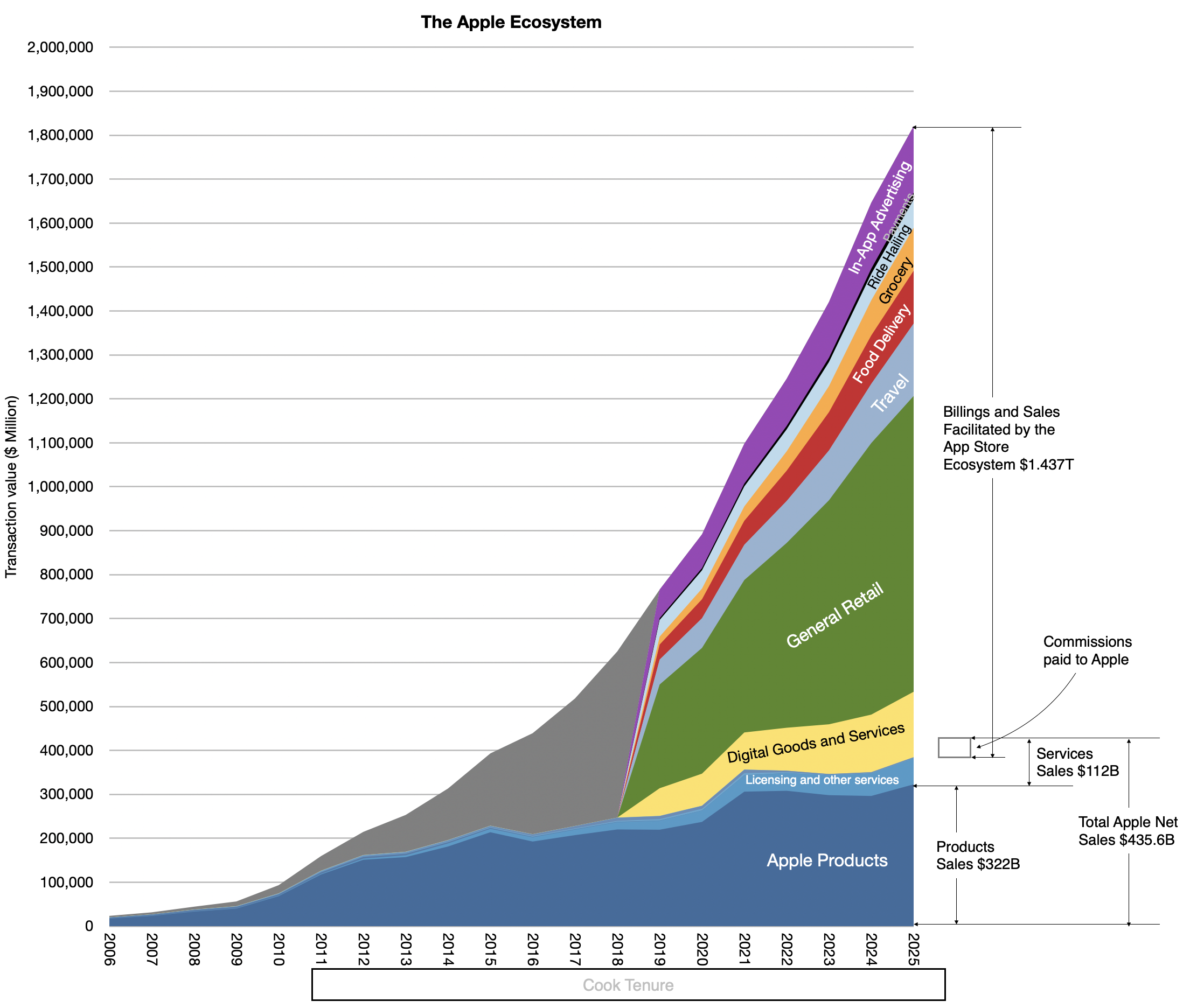
Moreover, Apple's own Services category of revenues is but a small part of the activities on top of the stack of products and services that enable third parties to provide additional value. I call this the Apple Ecosystem and it is approaching $2 trillion/yr.
The servitization of music, warranties, television, storage, food, travel, transportation and many other products is unrelenting and extremely valuable but we can't point out what one thing made it possible.
It's a lot of small things. But one of these things just arrived and most did not notice it.
The innovation is the servitization of Apple's core Products (shown in the bottom of the graph above). The brand is Apple Upgrade.
Apple Products, iPhone, Mac, iPad, Wearables & Home have still been mainly sold individually. A cumulative total of at least 5.2 billion devices of which 2.5 billion are still in use. Each requires a single initial purchase decision from one of 1.5 billion customers. The product then follows a life of use and perhaps a change in user with a secondary purchase decision. Finally it enters a disposal state where it might be recycled.
That's a difficult picture to see. Many participants are involved beside Apple and the initial buyer. Many distribution channels, many secondary markets, many resellers, etc. This is why the products business has not been "servitized" or turned into a service. Services are more predictable but they require management and management depends on data. Apple keeps a relationship with the user once they are registered through iCloud but the path of the product itself is often invisible.
That is what is about to change.
The mechanics, trade-ins, monthly financing, hardware upgrades, aren’t new. Apple has offered versions of all of them for years. What’s new is a subtle change in defaults and what it means for who captures the residual value of a returned device.
Economically, the iPhone Upgrade and iPhone Payments programs are the same as Apple Upgrade. The purchase is "fiancialized" where multiple payments are substituted for a single purchase. But with the older system, only the iPhone was included and the product was default "owned" by the user during the loan period. Apple Upgrade applies to many, almost all, products and the default is that Apple "owns" the product until the finance (lease) term ends.
This ownership comes with risks and rewards. The risk is that the product is damaged, defaulted on or impaired in some way before the term ends. The reward is that there is control over its use after it is returned. The assumption is that the vast majority are returned and not bought-out and that is because of the attraction of new versions and the simplicity of rolling over a new lease.
Therefore the residual value is available to Apple but also access to inventory for resale. The used and refurbished phone market size is estimated at $65.20 billion and 315 million units in 2025 and expected to grow to $70 billion in 2026 and is forecast to reach $100 billion by 2031. That estimate might be low if Apple Upgrade grows rapidly.
iPhones account for roughly 40% to 50% of the global secondary, used, and refurbished smartphone market. That estimate implies that one used iPhone is sold for every two new iPhones. If one were to add the secondary market to the primary, iPhone unit sales are 450 million/yr.
The demand is such that Apple could increase sale (together with resale) volumes by 30% rather than the 15% for new alone. Demand from non-consuming markets in particular could drive this secondary market.
Naturally, the margin on the secondary markets will be lower than the primary but it may be a very sustainable and additive margin. Moreover, the relationship with the customer would be created at purchase time and could lead to a future upgrade path. For instance sale of AppleCare, accessories and personalization. The customer creation process would be better managed and more predictable vs. the third party resale channel.
The knowledge gained would also inform decision making. Usage patterns, pricing, mix, all benefit from perfect visibility into the secondary market. Apple is the one handling the sale, the device setup, the AppleCare pitch, and the accessories conversation. It also knows exactly when that customer is coming back.
This benefit would not appear if the Upgrade program proves unpopular. But that is why the Apple Upgrade is such a good deal. Almost too good.
Effectively, Apple Upgrade is free financing. Instead of paying upfront, the buyer pays monthly but not more than what the product is priced at. Apple is effectively eating the cost of the capital.
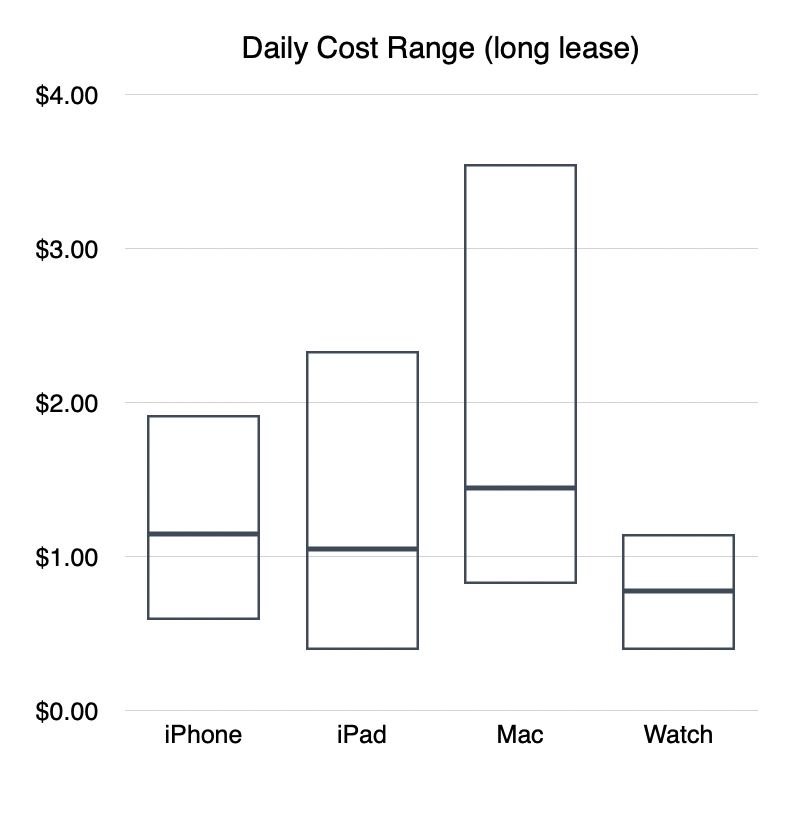
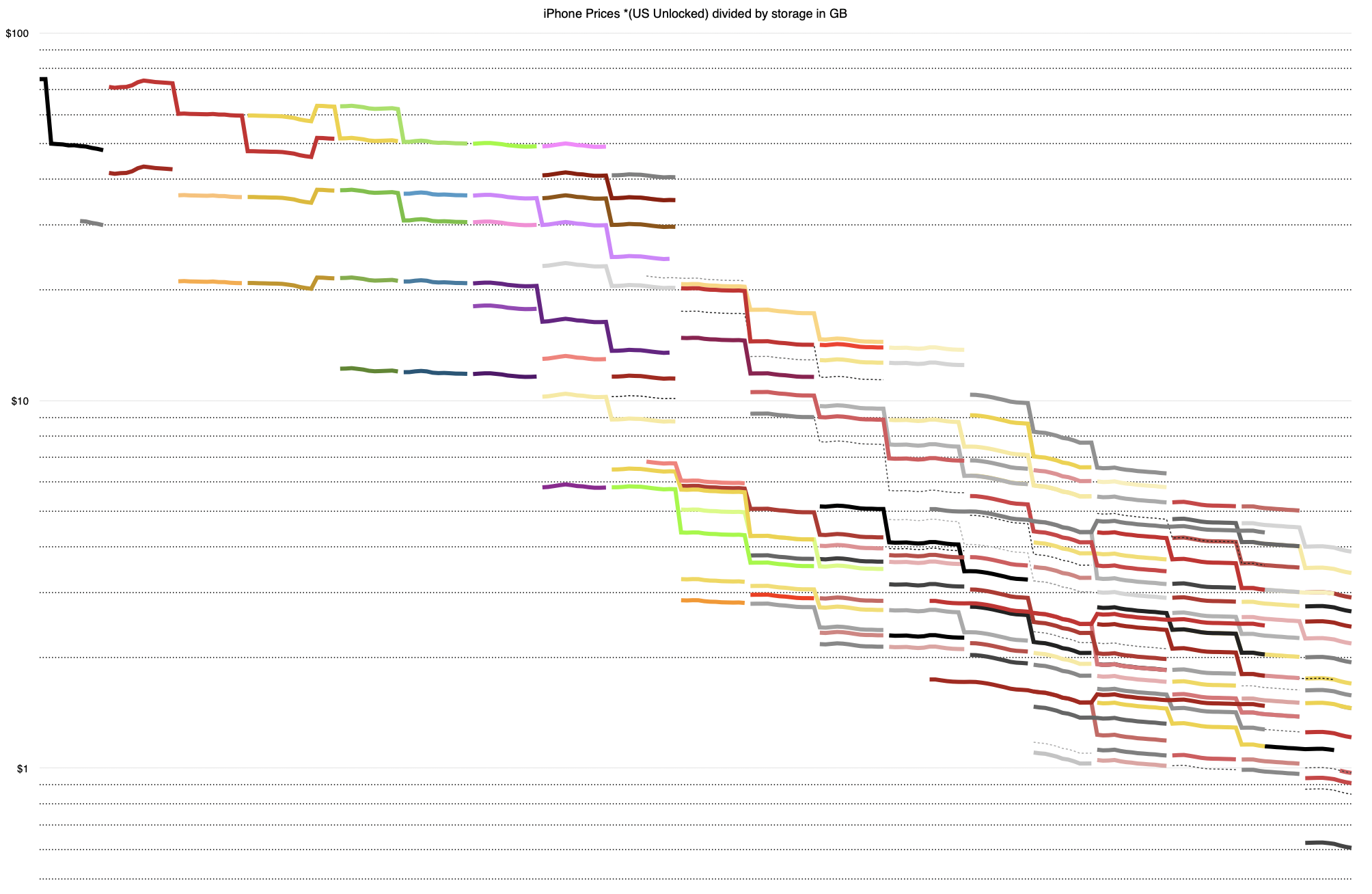
The optics of a price that is almost $1/day, easily calculated, will be very compelling. Apple Upgrade product daily pricing distribution is shown below:
iPhone pricing optics shift entirely. $17.99 a month or $1,099 upfront are the same phone. One of those prices is a lot more agreeable. The psychology of this decision process is well known but there is not baiting here. The lower price is genuinely a better deal.
It's also a lot easier to let go of the product in one or two years and stay with the latest version. And not just for the iPhone any more.
Along the way, with global expansion, the Apple Upgrade program is effectively the servitization of Apple Products. It is both a growth strategy, in terms of users and revenue, and an innovation that changes the relationship between Apple and its customers.
Next will be the bundling of Apple Upgrade into Apple One. The idea that one subscription will offer all the phones, computers, tablets, wearables, home appliances and services for a family under one monthly price.
Bundling and unbundling. The biggest innovations ever.
An Office Hours question asked by Frederick H., July 31, 2026.
Q: What is the reason for the obsession with making movies and TV shows? There must be a strategy behind this.
It's one of those things you get enlightened on after thinking about it for three years, and then it comes together: wait a minute, maybe it's much simpler than I thought. As a strategy thinker, you look at Apple TV and say: if they hadn't done this, then all the content would have been locked up in silos, and you'd have no access to those silos. This was happening already — old titles, movie libraries, TV libraries were being vacuumed up and aggregated into huge piles. People were buying all these rights and locking things up. I remember I used to be able to download, on Apple TV, shows like Big Bang Theory or Seinfeld, and then they just weren't available anymore. Somebody bought them up and locked them away and said: you need to sign up with Amazon to get your favorites, or to get old movies, new movies, whatever.
So Apple said: if that's the way it goes, we're not going to go around trying to buy all these old movies. That's not our way. We're not going to buy content libraries. Instead, we're going to make our own. You literally start with zero, and you build up your own library. The question then is how much you spend, how big it is, what kind of movies. The decision, I think, Tim Cook made was: quality first. And how do you measure quality? Awards — because that's the only metric that exists if you can't measure usage. You don't have box office, and you don't have distribution in theaters. You're never going to get the user numbers, because you'd have to build up a huge chicken-and-egg: buy a huge library, get a lot of users, and then you can say it's the best-selling, or it's the most popular. That doesn't work in streaming. Everything's siloed, everything's compartmentalized, so the ratings make no sense anymore. What you do instead is go for some artificial measure of quality determined by some group of experts, supposedly. Unfortunately, there's no other metric for quality right now. So: we're going to aim for all these awards, and then we can advertise that fact. We can claim that quality is above all.
Why? Because in the age of streaming, if they didn't, the Apple customer would think more and more that the place of content is not Apple. We get music there, we get podcasts there. Already it's not there in terms of YouTube, which is short-form video. But they said: for long-form video, we need to be there for brand reasons, and possibly for the idea that it's the device that consumes the greatest content. I do believe they were also thinking long-term for the Vision Pro and other things: we're going to need to get into sports, into live, into events. Because the screen doesn't stay the way it is now. Screens become more wearable, things become three-dimensional. And if we don't control the content, then we can't create the tools.
This brings me back to the old days when Sony was in this game. Sony was struggling to convince people to start with Betamax versus VHS. They lost that battle, and they said: VHS won because more studios supported it, more content was behind it. So Sony said, we'll have to buy a studio. They became filmmakers, and they became a music company, so that content would reside, ultimately, on Memory Sticks, DVD, and Blu-ray. If we don't own the content, then we cannot sell the product that plays it, and we cannot get royalties from the media it plays on. It's outdated now, but the point was they realized content was king. If you don't own it, then you are at the mercy, and the margins are destroyed, because you can't innovate — you have to go to commodity product. I think that influenced a lot of people back in the day, including Steve Jobs, who realized: if you deal with content — long story with Pixar there. So why make content? Same as always: because content is king. Because without it, if somebody else owns it, then they'll dictate terms to you on what you can use to display it.
I heard from Judd, my podcast partner, that things are rough in Hollywood these days — the industry is going through a terrible crisis, perhaps an existential one. And yet, so much new stuff is coming out; there's so much production going on. Yes, but it's all controlled by the streamers. It has changed dramatically from the creative side. The money flows and the deals that are done are completely different now, and this caused a huge disruption. This spending on production, even if it's billions, is pocket change for Apple and Amazon, maybe Disney. It's the tail wagging the dog: the distributors, who everybody thought were just a bunch of nerds, ended up dominating it.
Editor's Note: This was one of the questions asked by participants in Asymco's July 2026 Office Hours live Q&A session, held the day after Apple's FQ3 2026 earnings and open to Asymco One subscribers.
Subscribe to Asymco One for full access to this and other content.
An Office Hours question asked by Tom M., July 31, 2026.
Q: How do you see the Siri AI stand-off with the EU evolving? Does Apple's key differentiator — deep integration of hardware, software, and services — become an obstacle under extreme EU policy demands?
Dealing with these regulators is like playing chess with someone who only thinks one move ahead. It might sound easy, but it's also super frustrating if you're trying to enjoy the game. They are very poorly educated — that's the nicest way I can put it — about how technology works, how the business of technology works. They might know engineering, they might know science, but they don't know business, especially tech business, and the platform game. Or they've read about the theory in a book written 20 years ago, which they think is the Bible. The book might be saying things about platforms and lock-in and how monopolies emerge in technology industries. They take that as their Bible, and then they apply it to a world that has moved on dramatically since.
I felt this very much when I was at Nokia. Even 20 years ago at Nokia, we were thinking: the way you create an ecosystem is by encouraging creators to create apps, but also by encouraging retailers to sell apps — having a large abundance of app sellers, because they'll know how to sell. You don't need to have a store; let a thousand stores bloom. We didn't think that apps would be sold by one store — and that consumers would hate the idea of having to go shopping for apps in a thousand stores. That's a dumb idea. But regulators probably still think it's a great idea — a dumb idea from 20 years ago, that the distribution of apps, or for that matter music, should be fragmented. At the time, we did see the emergence of the iTunes store. iTunes was a singular store, and everybody was appalled: no, there should be 15,000 music stores online. Because if you looked at the physical world, you'd say: I don't buy CDs in one monopoly store. If I want a CD, I can go to Tower Records or Barnes & Noble. If I want to watch a movie, I have a choice among all these theaters.
Here's why it doesn't work in the digital world: if you can't find these thousand stores easily, you're not going to spend your time looking for them, so you have to ask somebody — where do I find this music? — and that somebody would have to be Google or Microsoft, and they become the monopolist, because they're the gatekeeper. Before them it was Yahoo, your entry point to everything on the internet. When you have too many options, you don't give the consumer any benefit at all. It actually makes it impossible to discover, impossible to find. The digital domain has no analogy in the physical domain. But from the point of view of a regulator, they're using an economic theory that's decades old, calling these companies gatekeepers because they have some number of users, and then applying gatekeeping theory not just to distribution but suddenly to components of the operating system — as if AI becomes a component of the operating system.
It's frustrating to play chess with someone who plays one move ahead, or doesn't even know the rules of the game. You'd just walk away — but they can't do that. They have to deal with this. I don't know how many lobbyists and how many consultants and how many lawyers you need to hire to explain your position. There's a back and forth, and eventually something is decided. Usually what happens is you compromise and deliver something to the consumer that is horrible, and the consumer rejects it — as they did GDPR, as they did cookies and all these other things. You just make life worse, and eventually people rebel and say: we want the best things, not the crappy things.
If they delay Siri AI because of the EU? Then they won't launch any product that depends on AI in the EU, and EU citizens will have to say: why am I a second-class citizen? Europeans not having access to, for example, smart home technology, or smart glasses, or smart other things. That might happen. People will start to smuggle things. I've always maintained — this was in the era of tariffs — if you fight against the market, the market reacts and wins, because it finds ways to work around you. It's unpleasant, but that's how things happen. Markets are powerful. I wouldn't worry too much about Apple. Apple's just going to stick to its guns.
Editor's Note: This was one of the questions asked by participants in Asymco's July 2026 Office Hours live Q&A session, held the day after Apple's FQ3 2026 earnings and open to Asymco One subscribers.
Subscribe to Asymco One for full access to this and other content.
Apple’s 50th anniversary is a moment of celebration, but also a moment for reflection. What is the biggest weakness Apple needs to examine most soberly right now? Among its dependence on manufacturing in China, tighter regulation, the maturity of the smartphone market, and intensifying AI competition, which do you see as the greatest source of pressure going forward? In the AI era, Apple appears to be a late mover, and there are concerns that the longer tensions with China and broader geopolitical strains persist, the weaker Apple’s competitiveness could become.
On geopolitical and supply chain challenges, these are, in my opinion, management challenges. That is to say that they are resolved by the skill (and luck) of the people involved. They are resource and process questions not ones of priorities. Apple has an amazing team in charge and many say that is their “secret sauce” or their superpower. I would say the team is super important but it’s also a system at work.
AI is however a strategic question. AI is a dramatic new technology which might enable disruptive change. Apple has been cautious. As I pointed out with the three key management tenets (user dedication, focus on advantage, integration/modularity,) AI does not meet the criteria for investment. It might prove very wise to proceed cautiously but it may also be a big vulnerability. If AI is an infrastructure, like networking, open source or search, Apple would be good to partner and wait for commoditization. If AI becomes a platform with user lock-in and sustainable advantage for model builders and hyper-scalers then it can be dangerous.
What is the next strategic move Apple needs to make in order to remain one of the world’s most influential technology companies? Do you think the strengths that shaped Apple’s first 50 years will still work for the next 50, or does it now need an entirely different formula for success? Looking ahead, which area do you see as the most important pillar of Apple’s next decade: AI, healthcare, spatial computing, semiconductors, or services?
Apple has always ended up, either deliberately or accidentally, at the interface between man and machine. It’s a critical location that gives a very strong control over the entire tech stack. When looking forward I always ask what will be the future of the man/machine interface. If that interface is passive (as in audio or ambient computing) then Apple does not have a “design surface” on which it can add value. If it’s engaging (as in Spatial or Immersive Computing) then Apple has an even bigger “design surface”, namely the entire physical world, on which it can add value.
The debate today is whether AI creates a new passive computing world where agents whisper in your ear while watching and listening through wearable pendants, buttons or badges or whether wearables mean we put lenses between us and the world so that all that we see and hear comes through a new computer. Apple could play in both worlds but it would have a lot more to say about the latter than the former.
Of course, it may be that the dichotomy is false and that the future is much more of the same and we will simply roll out mobile computing to all people on earth and there will be more than 10 billion devices in use of which Apple will provide a signification portion. That may be the case for decades in which case the smartphone will become even more important.
I think we have not reached saturation in either the number of users and in the types of usage that phones can offer. So it may be that perhaps the next 20 to 30 years are going to be “sustaining” to Apple. But something will change eventually.
Apple’s succession plan may be far more important than the market assumes. At this 50th anniversary juncture, do you see succession planning as one of the company’s biggest management challenges?
Briefly, no. The company has succession planning at all levels and is part of what Jobs built. One thing that hints in that direction is that board members are limited to age 65 and Tim Cook has reached the limit (though it can be extended). One alternative hypothesis however is that he's too valuable. Not so much as the manager but as the negotiator and as the diplomat. Because we live in such difficult times from a geopolitical point of view he somehow has managed, i don't know how, nobody knows how, even Warren Buffett recently pointed out that he thinks that's one of his greatest skills: that everybody likes Tim Cook.
That includes China that includes Trump that includes Europe. Somehow he gets along with everyone. So his ability to be the diplomat, will it be perhaps valued further? One possibility would be that he becomes executive chairman.
I always maintain if you study the company from a cultural point of view, you'll realize that there are people who cannot be CEO. You may not know who it's going to be, but I can tell you who won't be. Many people over the years suggested candidates, and I would disregard them. Here are examples. Johnny Ive would never be CEO. An external hire would never be CEO. Even a head of marketing would never be CEO. Many people think that Apple is a brilliant marketing company. No, it's an engineering company. This is a common misunderstanding.
If you look at the headcount, if you divide the employees by their job functions, you'll see that engineering is by far bigger than the next category, which would be perhaps marketing or operations. So what does that mean from a cultural point of view? It means that the people who are engineers want to have a boss who can listen and understand them.
And so the people who need to run Apple have to be competent with engineering. In the case of operations, it's acceptable because they are at least covering engineering as one of their constituencies. They have to bridge between manufacturing, design and distribution. Engineers respect operations. Engineers respect manufacturing. So in that sense, when you look at the candidates, I do think John Ternus is one of those who fits the bill. Of course, there could be many others as well.
Please let us know if there is anything else you would like to emphasize.
I come from an engineering or analytical background and I did my work always with a lot of data. But the more I study Apple, the more I think it needs to be analyzed culturally. It's a very difficult thing to do because we have no data about culture. We have only some anecdotes. But as an analyst you have to be humble and see that the data, perhaps that which is matters most, is not available.
When it's dark outside and you're searching with a lamp, well, that's the only area that you have light. but the truth could be in the darkness. And that area under the light, that's your data set. And the solution is somewhere else perhaps. That's why you have to have other tools than a lamp. What can we use other than looking at the light? We have to use all our senses. Use other perceptions.
And so that's why I think Apple is a peculiar thing. There is little data but a lot of perception. And so it turns out that the analysts out there who do try to move beyond data delve more into psychology--they tend to really study the man or woman involved. They'll study the personality as an alternative. So they'll say, well, the company's success depends on Zuckerberg, or Gates or Bezos. We have to know who he is so we can understand the company.
There are people who specialize in understanding that person but i don't think that helps with Apple. I think personality is important but you have to study the culture too. The whole way they do things internally. They give us plenty of hints; they say all the time that it's a team effort. They'll always say "no it's not me, it's a group effort”. Rarely do we study the groups.
Why do you think Apple chose John Ternus as its new CEO? Do you believe John Ternus is the right person to lead Apple? How do you expect Apple to change under his leadership?
I believe the choice was made because John Ternus was the most capable and most respected candidate at this time. I don’t know who were the candidates but I assumed it would be someone from engineering. if you study the company from a cultural point of view, you may not know exactly who would be the next leader but you determine that there are people who cannot be CEO. Many people over the years suggested candidates, and I would have said no. Here are examples. Johnny Ive would never be CEO. An external hire would never be CEO. Even a head of marketing would never be CEO.
Many people think that Apple is a brilliant marketing company. It is, but culturally it’s an engineering company.
If you look at the headcount, if you divide the employees by their job functions, you’ll see that engineering is far bigger than the next category. Not only that but if there is a large turnover or competitors poach the best, then the company can be damaged severely. So what does that mean from a governance point of view? It means that the people who are engineers want to have a boss who can listen and understand them. And they don’t think that someone who’s from marketing is going to be able to understand them because they don’t have the cultural and the educational background or the mentality around engineering. I think Tim Cook knew this and the board knows this.
And so the people who need to run Apple have to be competent with engineering. In the case of operations, it’s one of those acceptable categories because they are at least analytical. So they have to be a bridge between manufacturing, distribution, and engineering. So engineers respect operations. Engineers respect manufacturing. So in that sense, when I looked at the candidates over the years, I did think John is one of those who fits the bill. Of course, there could be many others as well.
The premise of this post is to take a look at John’s tenure from the point of view of 2040 when I expect him to retire. It is written in the style of a post by a mainstream financial news publisher.
To summarize, I don’t think Apple will change much culturally but the strategy might shift toward gaining more share of global active devices. I believe he can put a plan together that reaches 40% (4.5 billion) of the world’s personal devices.
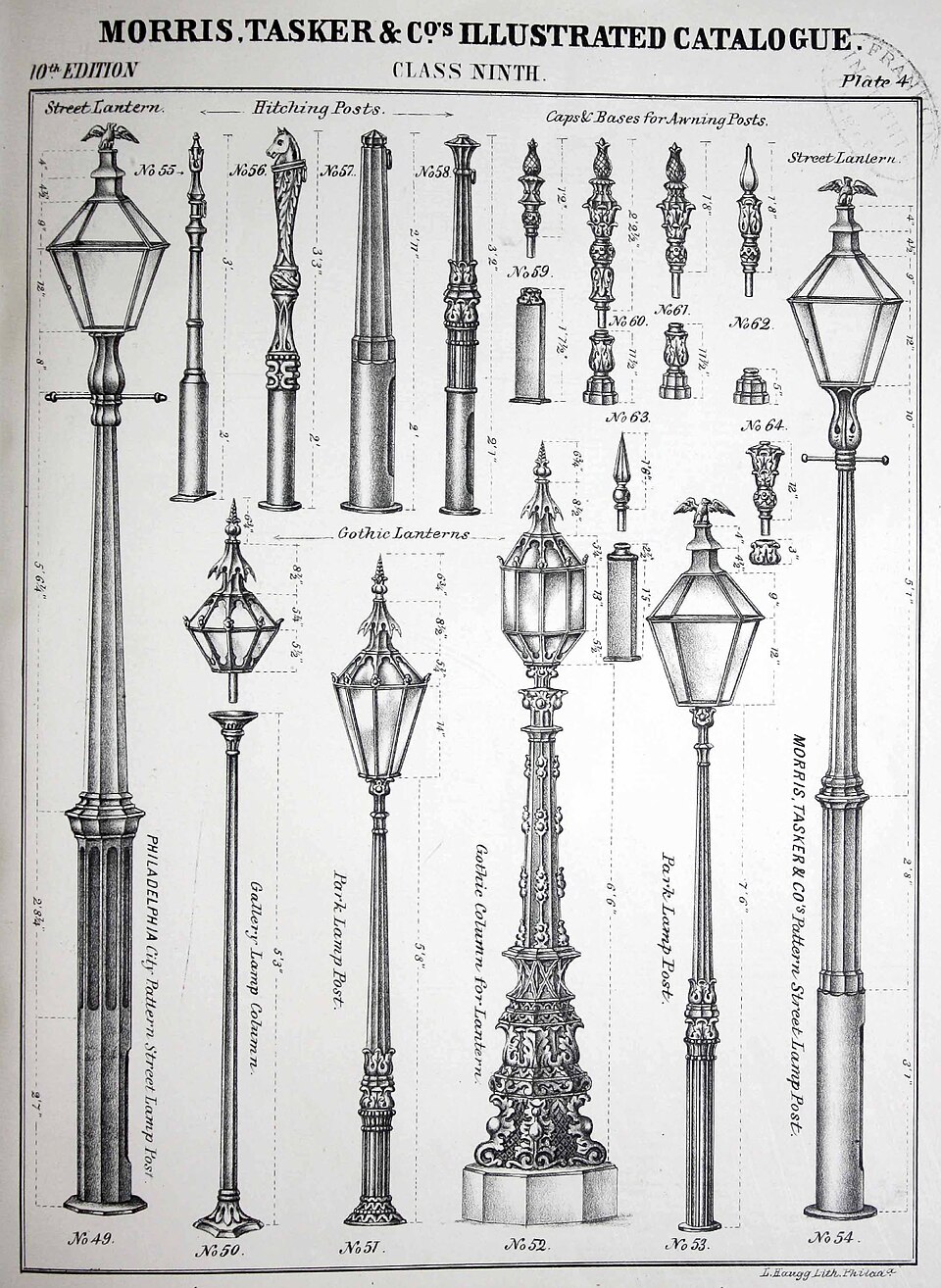
Street Lighting and Posts, Morris, Tasker & Co. Illustrated Catalogue, Pascal Iron Works Philadelphia, Tasker Iron Works New Castle, Del., Tenth Edition, June 1st, 1871 https://archive.org/details/IllustratedCataloguePascalIronWorks
My thanks to Sungmin Ko, a staff reporter from Economy Chosun for allowing me to answer a few questions for an Article on Apple.
Economy Chosun is a highly respected economic weekly magazine, published by the Chosun Media Group, which has a legacy of over 100 years and boasts the largest readership in Korea
Apple has reached its 50th anniversary. A startup that began in a garage has grown into one of the world’s most prominent corporations. In your view, what explains Apple’s extraordinary success over the past 50 years? Was the core of Apple’s success its technological edge, its design, or the way it structured its relationship with consumers?
First, I must say that no matter how big any company gets, it always starts small. It’s the same with people. No matter how powerful we become, we all start out as babies. Now it certainly helps that we have powerful parents and grow up in a wealthy society. The analogy for prominent corporations is that they have talented founders and wealthy backers. But the story of Apple is not this. The founders were of modest means and they did not get large backers.
The success of Apple was more driven by good timing and persistence. The company was born almost at the same time as Microsoft. Both took advantage of the birth of the microprocessor and separately built the hardware and software that would harness that enabling technology. But they were not the only ones.
Hundreds of startup PC and software companies were born at the same time but did not become dominant or even survive. We become victims of survivor bias if we are to assume that Apple and Microsoft had unique configurations destined for dominance.
What matters more than birthright is how persistent and adaptable the company is. What I would note is that Apple almost died a few times. Most dramatically it was during the late 1990s when they had to bring Steve Jobs back. I see that as the death of one Apple and the birth of another. The second Apple was more grounded in well-designed software (an operating system based on Unix) and was able to pivot into devices (something which notably Microsoft could not do.). This idea of rebirth is crucial to long-term survival. Mostly it’s luck but sometimes it’s planning. Apple’s second life has little to do with the first but we still see it as one 50 year old continuity.
Although I’m saying that luck, especially timing, is a big part of this, there is a lot to learn from individual actions of management which helped it to leverage its circumstances. These are:
A maniacal dedication to customer satisfaction. It sounds banal but few companies really prioritize this above all else. The idea that Apple did not try to convince enterprise buyers to buy Macs is a classic example. The decision that the user rather than the buyer matters more is not an “economically optimal” solution. This also led to strategic decisions on controlling the user interface which turned out to be essential in preserving their value proposition.
Working on projects that bring only specific advantages to bear. We hear this often as “focus”. The idea is to say “no" to many good ideas. Apple may work on cars but they chose not to continue because they could not bring any unique advantage to the segment. Perhaps they could have made a lot of money making cars but ultimately it would have diluted their attention and responsiveness to market conditions.
Integration vs. modularity pragmatism. Do you build a piece or the whole? Do you partner or do you go alone? It turns out that it’s not a binary question. Sometimes you do one and sometimes the other. Sometimes you do both. Apple carefully chose and sometimes flipped the “architecture” of the firm. Building their own Operating System then building on Open Source. Building their own stores but also having 500 retail partners. Buying multiple types of microprocessors but then building their own. Investing in Silicon but not in AI data centers. The list goes on and on.
At what point do you think Apple became more than just an IT company and turned into a cultural symbol? In Apple’s 50-year history, what was the turning point that made it a fundamentally different company? Also, if you had to choose just one product that most clearly represents Apple’s identity, what would it be?
Being the original “personal computer” was a cultural milestone. The whimsical name itself, “Apple Computer” and the counter-cultural hints, rainbow logo, youthful founder, etc. Apple positioned itself opposite IBM and government and business-oriented incumbents. This was a start. The Macintosh extended this branding with a rebellious attitude.
The magic of it was that this “rebel” was not cheap. It was not a product for the poor. It was a product for the upper middle class that allowed them to say they were revolutionaries. See also the “Think Different” campaign dedicated to the crazy ones. That was version 1.0 of Apple. The product was the Macintosh and the identity was "the computer for the creatives."
Apple 2.0, started right around the turn of the century. It became first an entertainment brand with the iPod and then a device brand with the iPhone. The name change from Apple Computer to Apple Inc. cemented this transition. Apple Inc. could no longer be seen as a rebel as it had too many millions of users. Today it has over 1.5 billion users or 20 percent of the world. And they are a quintile with the highest income. The company had to project an image of premium, privilege and privacy. The product was the iPod and the identity was “the computer in your pocket”
My prediction is that the company has more pivots to go through. I don’t think they will stop where they are now and a future Apple will emerge.
Is Apple under Tim Cook a completely different company from the Apple of its founding era, or is it a company practicing the same philosophy in a different way? Some say Apple in the Tim Cook era is less innovative than it was under Steve Jobs, but has become a stronger company. What is your view?
Apple under Tim Cook is quite similar (though not identical) to Apple 2.0 under Steve Jobs. It is indeed very different than Apple 1.0 under a different version of Steve Jobs. I think Apple 2.0 differs also in that they decided to understand themselves. Jobs became more introspective and started to ask how to build an organization that outlasts him. He saw not only how Apple evolved but also Pixar and Disney and NeXT. He matured and thought about processes not just heroism.
Tim Cook took this and cemented it. The result is that Apple today is full of processes and many lament that it is no longer heroic. I think it’s a more complex picture than that but it is trying to balance what Clayton Christensen would call the “sustaining” vs. the “disruptive” under one roof. It is not an easy task. Being heroic can mean some leaps forward but also the leap could be into an abyss. Sustaining is growth but you are vulnerable to asymmetric attacks.
Is Apple today still an innovative company? Do you agree with the view that the innovation Apple has shown since the iPhone has fallen short of what it once was?
To expand on the Christensen Innovation thesis, Apple under Tim Cook has excelled at sustaining innovation. 80% or more of all innovation is sustaining. It’s essential and not something bad in any way. It’s just typically not enough to sustain a business through the technological changes that occur over a long term. However, that is not to say that Apple today does not make leaps into new categories.
The Wearables and Services businesses are impressive and protect Apple from disruptive attacks. Imagine if Apple did not make a watch or AirPods or Services. Someone else would. And those accessories to the iPhone could direct customer purchase away from the iPhone into new ecosystems. The pure defensive play of making more phones was not what Apple did.
The introduction of the Apple Vision Pro is another case study. Though too expensive for mass market, the introduction of a completely new user interface (spatial computing) is very risky and implies a direction completely asymmetrical to the iPhone. I should not have to point out that the Vision Pro does not need an iPhone to be used.
An Office Hours question asked by Jeff S., July 31, 2026.
Q: On the SoC supply shortage: what are Apple's options? They could increase prices, which reduces demand — but what else can they do to capture this demand?
What they've said they're doing is to take some costs away from other components. A big target would have been the screen, then the battery — non-silicon parts, maybe the casing. Now, that's a tough thing to negotiate; these suppliers probably already are on very thin margins to begin with. But Apple may have other ways to negotiate: in terms of duration of contract, in terms of exclusivity, or other things that they can pull. I think they're trying to get as much as they can from everybody. They'll say: if you don't do this, units are going to go down, and if units go down, you make less money too. So there's probably something going on there in negotiating.
On the SoC, there's just an overall crunch across the board with semis, as we know. We're not privy to all that. But I think they've had tougher problems in the past. It's a 100-year flood, but they've had fires too. They've had earthquakes. As I always say, the biggest problem is the workforce that walks out the door every day at five. What if they don't come back? There are other issues that are existential, if I'm honest. But that's what management is about.
Editor's Note: This was one of the questions asked by participants in Asymco's July 2026 Office Hours live Q&A session, held the day after Apple's FQ3 2026 earnings and open to Asymco One subscribers.
Subscribe to Asymco One for full access to this and other content.
An Office Hours question asked by Ian H., July 31, 2026.
Q: We're used to remarkably flat Apple pricing over the years — a pound a day, the stairway to heaven. Generally, increasing revenues have correlated with increasing unit sales. Now price increases are feeding through, yet revenue is only forecast to grow about 10%. That may translate to lower unit sales for the first time in some time. What are the consequences, and the second-order effects, such as on subscriptions?
First of all, we're not talking about a mature quarter — it's like a launch quarter for some things, but maybe not too much volume will happen. Another thing bothers me a little: I don't know when they're going to launch the next portfolio of products. If it happens in early September, they might see a surge into September. But maybe for constraints — things in manufacturing, other things in the supply chain — they delay; they couldn't get the lines up and running. So they may announce, say, September 15th, but start to fill orders a week later. And that doesn't hit the quarter, because the quarter ends at the end of September. That might actually cause what they've excused themselves with — this “constrained” language.
There's a lot that could be different this quarter. I warned about it and said the guidance could be weird. I was actually referring to the December quarter, because maybe not all the products are out in the fourth quarter — they're going to push some things into the first. So they're changing the mix, they're changing the pricing, they're under constraint with supply. There's a lot that's difficult to perceive here. I think this is temporary, though.
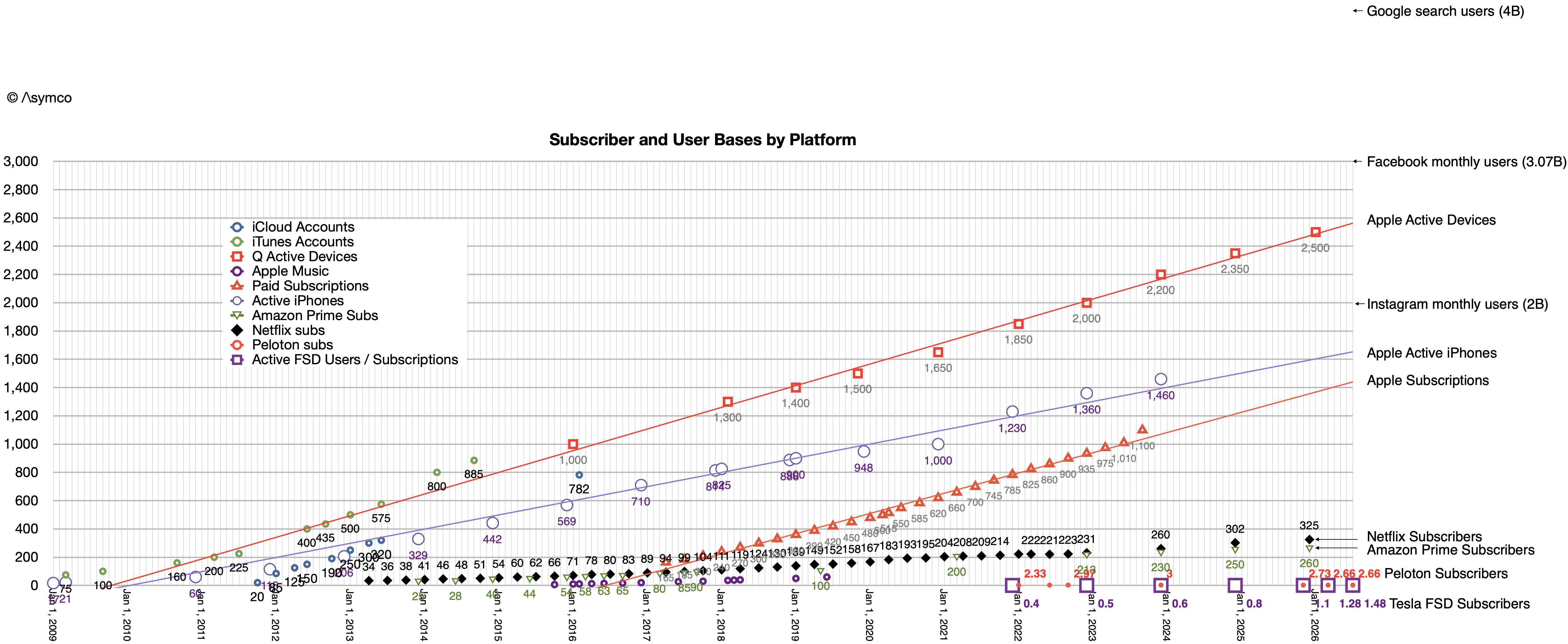
The number of devices out there depends mostly on the number of customers, first of all, which is growing, and the duration of use, which is also growing. I don't think we should worry that one quarter the unit number isn't as high. There have been quarters where unit numbers were going down, and everybody wrote Apple off and said it's all over. Focus on the number of users. Focus on those lines on the graph showing proxies for the number of users: subscriptions, active devices, and phones in use, if we can get that data. ACTIVE is still the model to go with.
I wouldn't read too much into this quarter, or even the next two or three quarters, because we might have these weird things happening where they decide to spread things out. When I thought about this, I said: we're probably going to have people freak out, because the guidance is going to be weak. I didn't think it would be because of this or that constraint — I thought they would say something that wouldn't tip their hand. Because if you're going to launch this folding product, and it's going to be limited in production, and you're delaying the low-end product until next year, maybe your units are going to be pretty thin going into the next quarter and the one after. I was worried about the guidance, and I thought most people would freak out. But they're doing this for a purpose, and they've been planning it for years. Not just the folding — what's been planned for years is Apple Upgrade, and splitting the product launch into two quarters. They've probably wanted to do this for 15 years and just said: no, it's not coming together. I think it makes sense to do all of these things. But on a comp basis, it's going to look ugly, because you're readjusting everything. So let's watch and see what happens. There's a lot of work going on here.
Editor's Note: This was one of the questions asked by participants in Asymco's July 2026 Office Hours live Q&A session, held the day after Apple's FQ3 2026 earnings and open to Asymco One subscribers.
Subscribe to Asymco One for full access to this and other content.