Asymco

Asymmetric Intelligence

2026FQ3

  1. AI: a technology in search of a job

    Office Hours Research · 3 comments

    An Office Hours question asked by Bob V., July 31, 2026.

    Q: I've seen mostly positive reviews from the press about the AI features in Apple's public betas. How well do you think Apple is doing in pushing back against the perception that they're “too late to AI”?

    It seems like by now that story has played out. Most of the reviews have been positive since WWDC. But then it turned into a discussion saying: well, it's not going to move the needle, it's going to take too long, there's dependency on Google, and this and that. None of this matters. AI, from a consumer point of view, is still a technology searching for a job to be done. I'm not in any way a bear on AI. I'm not dismissive of it. But what they call product-market fit hasn't happened. It has niches, and they're not consumers. There are individual users and buyers of the technology, and they might be using it on a day-to-day basis, but that's very early days. It doesn't have that resonance yet. It needs to be packaged in certain ways.

    Quality is first and foremost, and once we see how it works, people will slowly, slowly discover things to do with it. And those will resonate. We got there the same way with social media. We got there with short video. We got there with the idea of a great camera on the phone. Nobody asked for it, and when you gave it to them, they went: what do I need so much quality for? I have three lenses on my phone — why do I need three lenses? But it turns out that camera turned out to be a killer app.

    So how do we get there? I don't think it's ChatGPT. That's like saying TCP/IP. That's like saying Intel 8088 — something technical. It's also an interface that's notoriously low bandwidth. You have to converse in language, in complex language, prompts, as if we're dealing with a keyboard, the old days of the command line. And I think Apple's initial attempt, which failed, was to make things like emojis, and image editing, and trivial things. Those aren't apps either; those are features. The app is not a technology, it's not a feature. It's something that packages all those things, and does it in a way that's easy to discover and to evolve.

    That's the problem Apple faces: it isn't something you can test for, because the number of queries that could be made is indefinite. And I don't think it's very easy to modularize the problem. If you're looking for high quality at all times, which is how Apple operates, it's difficult to meet that criteria. Siri is a natural thing here. Siri was way ahead of its time as an idea, and implementing Siri with the latest technologies makes sense. Maybe Siri usage will go up and up — but that's not a business. Siri is a feature.


    Editor's Note: This was one of the questions asked by participants in Asymco's July 2026 Office Hours live Q&A session, held the day after Apple's FQ3 2026 earnings and open to Asymco One subscribers.

    Subscribe to Asymco One for full access to this and other content.

  2. Apple and memory chips: a flat no, then a quiet maneuver?

    Office Hours Research · 6 comments

    An Office Hours question asked by Joseph B., July 31, 2026.

    Q: Would Apple buy a memory maker — get into RAM itself?

    They said they wouldn't get into this, and I'm surprised they said it — even if they thought they would, I don't know why they would insist on it publicly. I think they feel that it's not within their wheelhouse, as they say. It's not their core competence. It's not that they cannot create it. I'm not going to get into the weeds on this, but basically it's hard. It's unique. It has different dynamics. It's impossible unless you have huge scale, and alone, Apple is probably not big enough as a consumer of its own products, so they'd have to sell them. It just doesn't resonate with them at all.

    I thought, maybe six months ago, that as a response to this, they would — despite everybody — buy or build their own. It's funny: they came out with a flat rejection of that. Now I think they'll maybe go behind the scenes, encouraging others to do it, possibly through financing, political maneuvering, something with Intel, something to do with all the cronyism that goes on in Washington these days. I don't know. But they'll back in, as they say. They'll maneuver and figure it out.

    It would be ironic if Intel becomes a memory company, after having switched to CPUs from memory at its origin. This is where you are if you're in the semi business: you get whipsawed. It's such a tough business.


    Editor's Note: This was one of the questions asked by participants in Asymco's July 2026 Office Hours live Q&A session, held the day after Apple's FQ3 2026 earnings and open to Asymco One subscribers.

    Subscribe to Asymco One for full access to this and other content.
  3. Apple TV: content is still king

    Office Hours Research · 1 comment

    An Office Hours question asked by Frederick H., July 31, 2026.

    Q: What is the reason for the obsession with making movies and TV shows? There must be a strategy behind this.

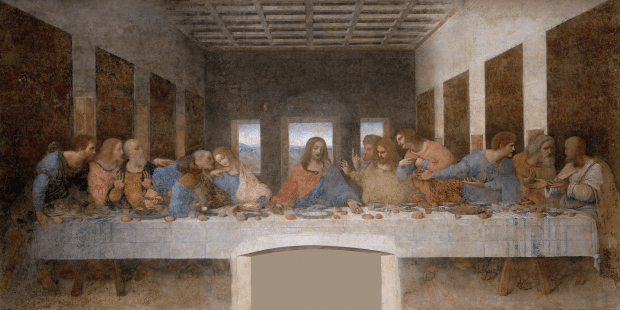
    It's one of those things you get enlightened on after thinking about it for three years, and then it comes together: wait a minute, maybe it's much simpler than I thought. As a strategy thinker, you look at Apple TV and say: if they hadn't done this, then all the content would have been locked up in silos, and you'd have no access to those silos. This was happening already — old titles, movie libraries, TV libraries were being vacuumed up and aggregated into huge piles. People were buying all these rights and locking things up. I remember I used to be able to download, on Apple TV, shows like Big Bang Theory or Seinfeld, and then they just weren't available anymore. Somebody bought them up and locked them away and said: you need to sign up with Amazon to get your favorites, or to get old movies, new movies, whatever.

    So Apple said: if that's the way it goes, we're not going to go around trying to buy all these old movies. That's not our way. We're not going to buy content libraries. Instead, we're going to make our own. You literally start with zero, and you build up your own library. The question then is how much you spend, how big it is, what kind of movies. The decision, I think, Tim Cook made was: quality first. And how do you measure quality? Awards — because that's the only metric that exists if you can't measure usage. You don't have box office, and you don't have distribution in theaters. You're never going to get the user numbers, because you'd have to build up a huge chicken-and-egg: buy a huge library, get a lot of users, and then you can say it's the best-selling, or it's the most popular. That doesn't work in streaming. Everything's siloed, everything's compartmentalized, so the ratings make no sense anymore. What you do instead is go for some artificial measure of quality determined by some group of experts, supposedly. Unfortunately, there's no other metric for quality right now. So: we're going to aim for all these awards, and then we can advertise that fact. We can claim that quality is above all.

    Why? Because in the age of streaming, if they didn't, the Apple customer would think more and more that the place of content is not Apple. We get music there, we get podcasts there. Already it's not there in terms of YouTube, which is short-form video. But they said: for long-form video, we need to be there for brand reasons, and possibly for the idea that it's the device that consumes the greatest content. I do believe they were also thinking long-term for the Vision Pro and other things: we're going to need to get into sports, into live, into events. Because the screen doesn't stay the way it is now. Screens become more wearable, things become three-dimensional. And if we don't control the content, then we can't create the tools.

    This brings me back to the old days when Sony was in this game. Sony was struggling to convince people to start with Betamax versus VHS. They lost that battle, and they said: VHS won because more studios supported it, more content was behind it. So Sony said, we'll have to buy a studio. They became filmmakers, and they became a music company, so that content would reside, ultimately, on Memory Sticks, DVD, and Blu-ray. If we don't own the content, then we cannot sell the product that plays it, and we cannot get royalties from the media it plays on. It's outdated now, but the point was they realized content was king. If you don't own it, then you are at the mercy, and the margins are destroyed, because you can't innovate — you have to go to commodity product. I think that influenced a lot of people back in the day, including Steve Jobs, who realized: if you deal with content — long story with Pixar there. So why make content? Same as always: because content is king. Because without it, if somebody else owns it, then they'll dictate terms to you on what you can use to display it.

    I heard from Judd, my podcast partner, that things are rough in Hollywood these days — the industry is going through a terrible crisis, perhaps an existential one. And yet, so much new stuff is coming out; there's so much production going on. Yes, but it's all controlled by the streamers. It has changed dramatically from the creative side. The money flows and the deals that are done are completely different now, and this caused a huge disruption. This spending on production, even if it's billions, is pocket change for Apple and Amazon, maybe Disney. It's the tail wagging the dog: the distributors, who everybody thought were just a bunch of nerds, ended up dominating it.


    Editor's Note: This was one of the questions asked by participants in Asymco's July 2026 Office Hours live Q&A session, held the day after Apple's FQ3 2026 earnings and open to Asymco One subscribers.

    Subscribe to Asymco One for full access to this and other content.
  4. EU tech policy: playing chess by looking ahead one move

    Office Hours Research · 1 comment

    An Office Hours question asked by Tom M., July 31, 2026.

    Q: How do you see the Siri AI stand-off with the EU evolving? Does Apple's key differentiator — deep integration of hardware, software, and services — become an obstacle under extreme EU policy demands?

    Dealing with these regulators is like playing chess with someone who only thinks one move ahead. It might sound easy, but it's also super frustrating if you're trying to enjoy the game. They are very poorly educated — that's the nicest way I can put it — about how technology works, how the business of technology works. They might know engineering, they might know science, but they don't know business, especially tech business, and the platform game. Or they've read about the theory in a book written 20 years ago, which they think is the Bible. The book might be saying things about platforms and lock-in and how monopolies emerge in technology industries. They take that as their Bible, and then they apply it to a world that has moved on dramatically since.

    I felt this very much when I was at Nokia. Even 20 years ago at Nokia, we were thinking: the way you create an ecosystem is by encouraging creators to create apps, but also by encouraging retailers to sell apps — having a large abundance of app sellers, because they'll know how to sell. You don't need to have a store; let a thousand stores bloom. We didn't think that apps would be sold by one store — and that consumers would hate the idea of having to go shopping for apps in a thousand stores. That's a dumb idea. But regulators probably still think it's a great idea — a dumb idea from 20 years ago, that the distribution of apps, or for that matter music, should be fragmented. At the time, we did see the emergence of the iTunes store. iTunes was a singular store, and everybody was appalled: no, there should be 15,000 music stores online. Because if you looked at the physical world, you'd say: I don't buy CDs in one monopoly store. If I want a CD, I can go to Tower Records or Barnes & Noble. If I want to watch a movie, I have a choice among all these theaters.

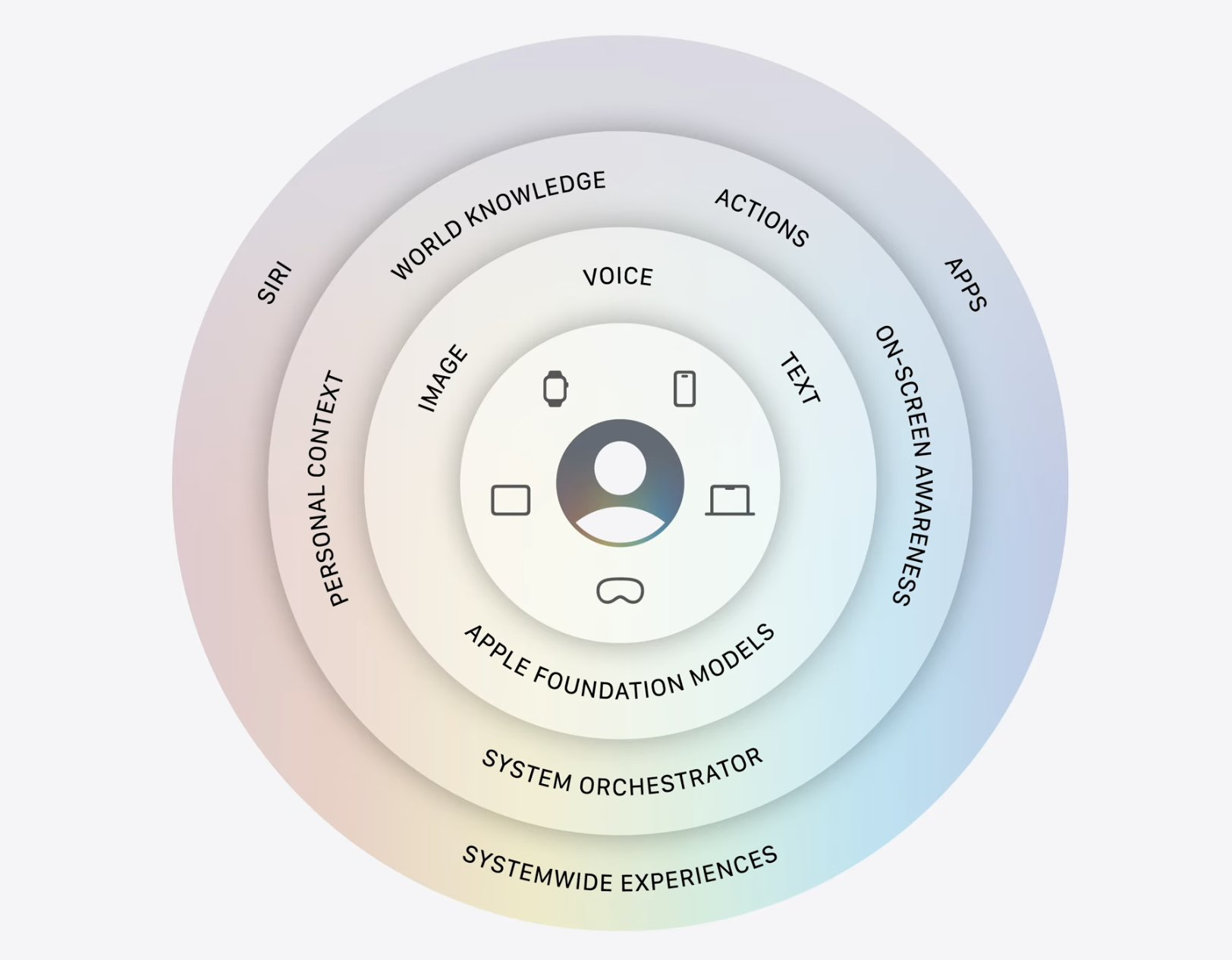
    Here's why it doesn't work in the digital world: if you can't find these thousand stores easily, you're not going to spend your time looking for them, so you have to ask somebody — where do I find this music? — and that somebody would have to be Google or Microsoft, and they become the monopolist, because they're the gatekeeper. Before them it was Yahoo, your entry point to everything on the internet. When you have too many options, you don't give the consumer any benefit at all. It actually makes it impossible to discover, impossible to find. The digital domain has no analogy in the physical domain. But from the point of view of a regulator, they're using an economic theory that's decades old, calling these companies gatekeepers because they have some number of users, and then applying gatekeeping theory not just to distribution but suddenly to components of the operating system — as if AI becomes a component of the operating system.

    It's frustrating to play chess with someone who plays one move ahead, or doesn't even know the rules of the game. You'd just walk away — but they can't do that. They have to deal with this. I don't know how many lobbyists and how many consultants and how many lawyers you need to hire to explain your position. There's a back and forth, and eventually something is decided. Usually what happens is you compromise and deliver something to the consumer that is horrible, and the consumer rejects it — as they did GDPR, as they did cookies and all these other things. You just make life worse, and eventually people rebel and say: we want the best things, not the crappy things.

    If they delay Siri AI because of the EU? Then they won't launch any product that depends on AI in the EU, and EU citizens will have to say: why am I a second-class citizen? Europeans not having access to, for example, smart home technology, or smart glasses, or smart other things. That might happen. People will start to smuggle things. I've always maintained — this was in the era of tariffs — if you fight against the market, the market reacts and wins, because it finds ways to work around you. It's unpleasant, but that's how things happen. Markets are powerful. I wouldn't worry too much about Apple. Apple's just going to stick to its guns.


    Editor's Note: This was one of the questions asked by participants in Asymco's July 2026 Office Hours live Q&A session, held the day after Apple's FQ3 2026 earnings and open to Asymco One subscribers.

    Subscribe to Asymco One for full access to this and other content.
  5. The SoC crunch: Apple has had fires and earthquakes too

    Office Hours Research

    An Office Hours question asked by Jeff S., July 31, 2026.

    Q: On the SoC supply shortage: what are Apple's options? They could increase prices, which reduces demand — but what else can they do to capture this demand?

    What they've said they're doing is to take some costs away from other components. A big target would have been the screen, then the battery — non-silicon parts, maybe the casing. Now, that's a tough thing to negotiate; these suppliers probably already are on very thin margins to begin with. But Apple may have other ways to negotiate: in terms of duration of contract, in terms of exclusivity, or other things that they can pull. I think they're trying to get as much as they can from everybody. They'll say: if you don't do this, units are going to go down, and if units go down, you make less money too. So there's probably something going on there in negotiating.

    On the SoC, there's just an overall crunch across the board with semis, as we know. We're not privy to all that. But I think they've had tougher problems in the past. It's a 100-year flood, but they've had fires too. They've had earthquakes. As I always say, the biggest problem is the workforce that walks out the door every day at five. What if they don't come back? There are other issues that are existential, if I'm honest. But that's what management is about.


    Editor's Note: This was one of the questions asked by participants in Asymco's July 2026 Office Hours live Q&A session, held the day after Apple's FQ3 2026 earnings and open to Asymco One subscribers.

    Subscribe to Asymco One for full access to this and other content.
  6. iPhone unit sales: count users, not phones

    Office Hours Research · 1 comment

    An Office Hours question asked by Ian H., July 31, 2026.

    Q: We're used to remarkably flat Apple pricing over the years — a pound a day, the stairway to heaven. Generally, increasing revenues have correlated with increasing unit sales. Now price increases are feeding through, yet revenue is only forecast to grow about 10%. That may translate to lower unit sales for the first time in some time. What are the consequences, and the second-order effects, such as on subscriptions?

    First of all, we're not talking about a mature quarter — it's like a launch quarter for some things, but maybe not too much volume will happen. Another thing bothers me a little: I don't know when they're going to launch the next portfolio of products. If it happens in early September, they might see a surge into September. But maybe for constraints — things in manufacturing, other things in the supply chain — they delay; they couldn't get the lines up and running. So they may announce, say, September 15th, but start to fill orders a week later. And that doesn't hit the quarter, because the quarter ends at the end of September. That might actually cause what they've excused themselves with — this “constrained” language.

    There's a lot that could be different this quarter. I warned about it and said the guidance could be weird. I was actually referring to the December quarter, because maybe not all the products are out in the fourth quarter — they're going to push some things into the first. So they're changing the mix, they're changing the pricing, they're under constraint with supply. There's a lot that's difficult to perceive here. I think this is temporary, though.

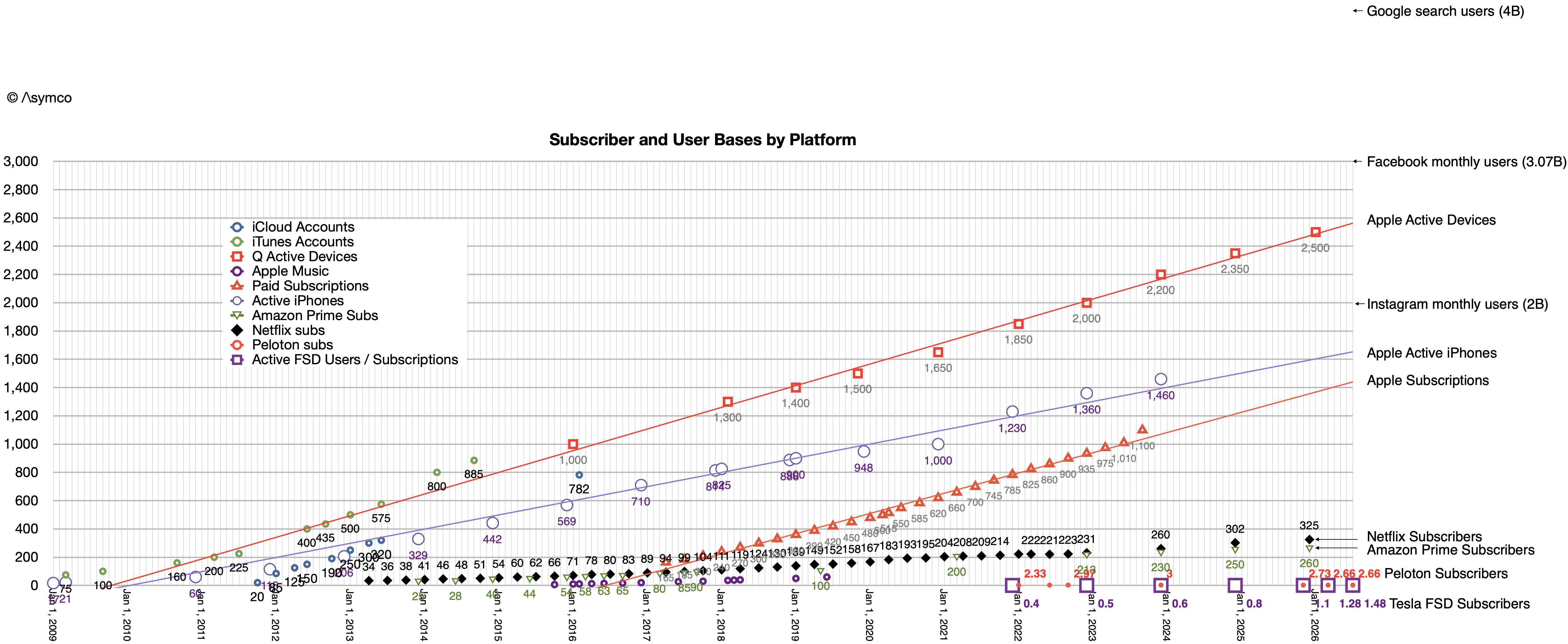
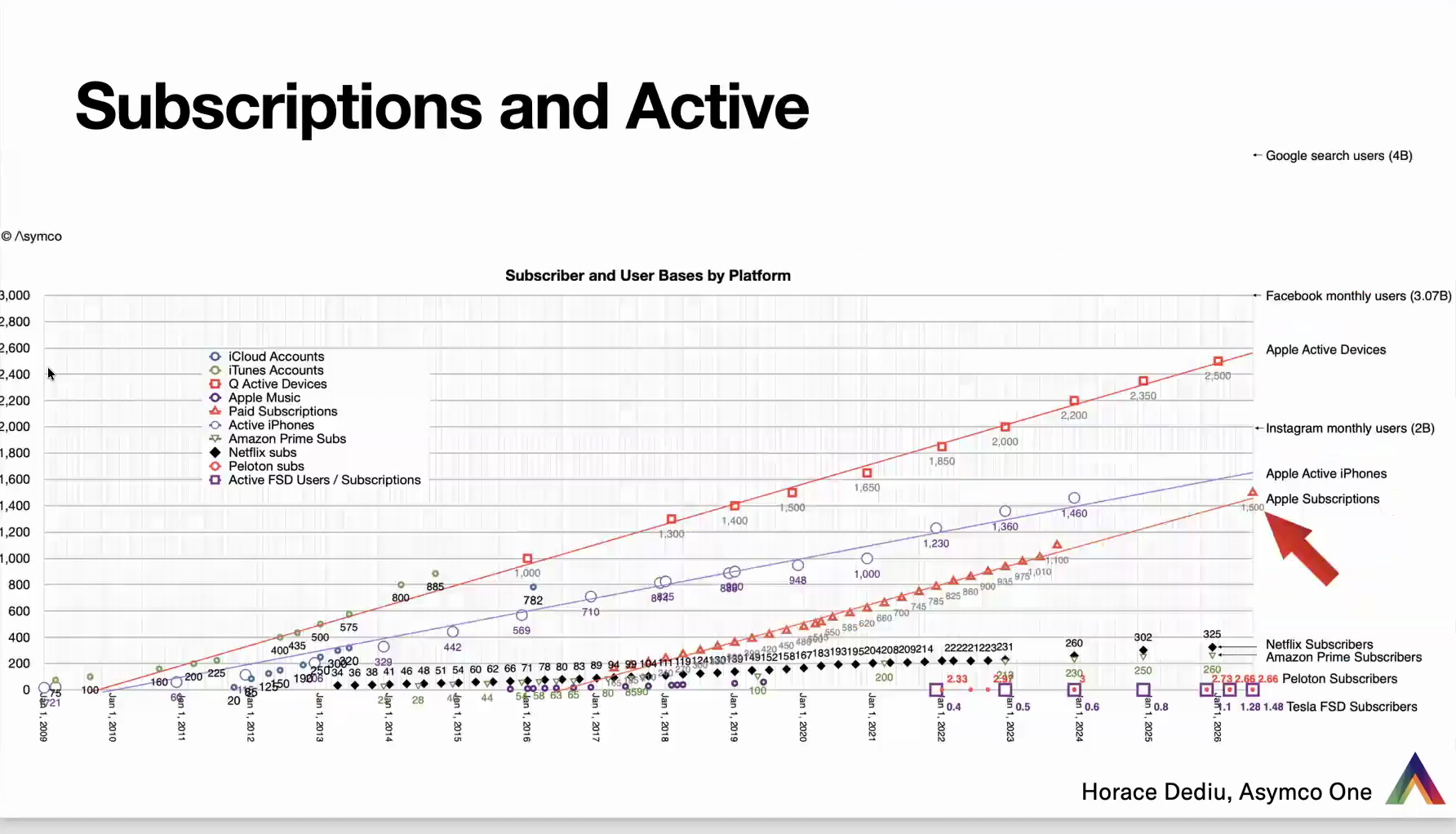
    The number of devices out there depends mostly on the number of customers, first of all, which is growing, and the duration of use, which is also growing. I don't think we should worry that one quarter the unit number isn't as high. There have been quarters where unit numbers were going down, and everybody wrote Apple off and said it's all over. Focus on the number of users. Focus on those lines on the graph showing proxies for the number of users: subscriptions, active devices, and phones in use, if we can get that data. ACTIVE is still the model to go with.

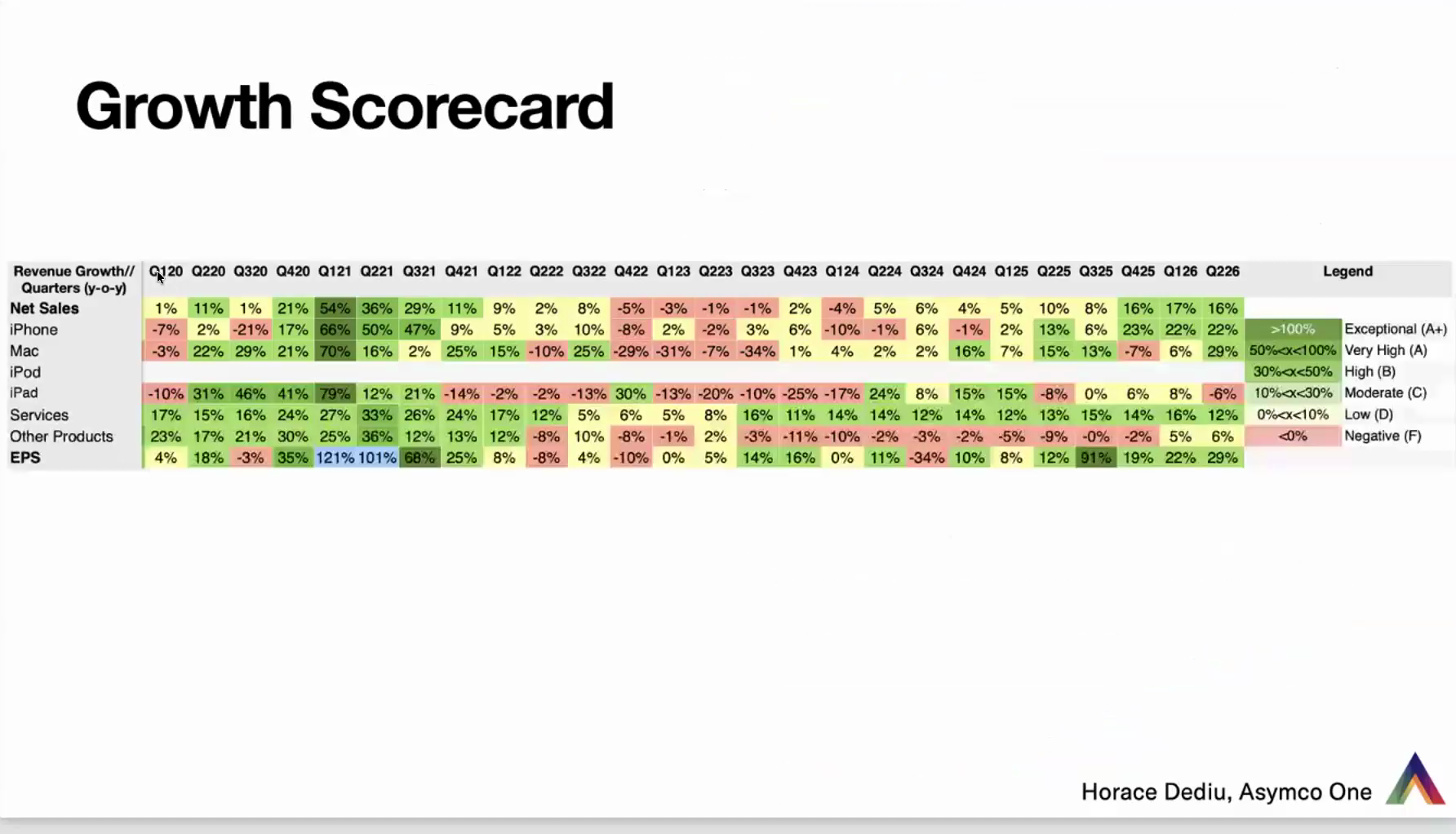
    I wouldn't read too much into this quarter, or even the next two or three quarters, because we might have these weird things happening where they decide to spread things out. When I thought about this, I said: we're probably going to have people freak out, because the guidance is going to be weak. I didn't think it would be because of this or that constraint — I thought they would say something that wouldn't tip their hand. Because if you're going to launch this folding product, and it's going to be limited in production, and you're delaying the low-end product until next year, maybe your units are going to be pretty thin going into the next quarter and the one after. I was worried about the guidance, and I thought most people would freak out. But they're doing this for a purpose, and they've been planning it for years. Not just the folding — what's been planned for years is Apple Upgrade, and splitting the product launch into two quarters. They've probably wanted to do this for 15 years and just said: no, it's not coming together. I think it makes sense to do all of these things. But on a comp basis, it's going to look ugly, because you're readjusting everything. So let's watch and see what happens. There's a lot of work going on here.


    Editor's Note: This was one of the questions asked by participants in Asymco's July 2026 Office Hours live Q&A session, held the day after Apple's FQ3 2026 earnings and open to Asymco One subscribers.

    Subscribe to Asymco One for full access to this and other content.
  7. Cook Doctrine's remedy: floods don't change architectures

    Office Hours Research · 4 comments

    An Office Hours question asked by Craig D., July 31, 2026.

    Q: Cook's moat was built by being the biggest buyer in a market where consumer electronics set the bid; hyperscalers set it now. Is he handing Ternus a structurally diminished asset — and does an engineer CEO help or hurt when the binding constraint is procurement rather than design?

    As Tim Cook says, this is the 100-year flood. The fact that there's a flood doesn't mean that you shouldn't live in cities. It so happens that floods damage cities more than they damage rural lands, because there's a low density of people there. The floods don't change our architectures. We might try to prevent them in the future, we might build dams. There are countries that live with earthquakes, like Japan; there are countries that live with all kinds of other natural disasters. And this should be seen as that.

    I think Apple's not going to say: these semiconductor companies made a lot of money, let's become a semiconductor company. They made a lot of money, and it could kill them. It's possible that the decisions they make now, in this moment of abundance — it's like winning the lottery. That doesn't make you rich. A lot of people who win the lottery will actually end up broke, and worse off. It's almost guaranteed in some cases that a windfall is damaging.

    The way you think about this is: is it likely to happen again? If so, we better protect ourselves. And Apple did protect itself. It was damaged by retail, damaged by distribution back in the old days, so they built stores — and everybody said that's a dumb idea. Then they said: we got damaged by Intel and Microsoft, so we built silicon. Then we built our own browser. All of these were reactions — the birth of Safari, the birth of silicon and Maps. All these were reactions to the fact that Apple was not in control of the things it needed to preserve and protect itself. I would even argue that Android was such a thing for Google. They needed to protect themselves against Microsoft controlling all access to end users. Microsoft together with Apple, but Microsoft was a far bigger threat than Apple was at the time. So they got into things they didn't necessarily want to do, that were not natural. Apple is also not naturally a content creator, but they got into TV. It had to be done.

    Semis are complex, but also simple. As businesses, they're very, very tough. And they're not great, which is why we have so few people involved. And then you get into a situation where, lo and behold, things are really tough. You treat it as something you need to make sure doesn't happen to you. You have to have fire departments, because you have fires once in a while. I think they're just going to work their way through this.

    Having leverage is not because they're mean and evil. Having leverage is because they are in the right part of the value network, where the customer is most important. Having that relationship with the customer determines everything, including saying: after we get scale, we're going to make sure we get a good price from suppliers. But it isn't like you started off saying, we're going to build a computer company and we'll begin by twisting the arm of everybody who makes chips. That's not how Steve thought, and it's not how anyone has thought since. It's all about: I want to focus on customers, but I don't want to be blindsided by some random natural phenomenon that's out of my control. And for that, you have to build insurance.


    Editor's Note: This was one of the questions asked by participants in Asymco's July 2026 Office Hours live Q&A session, held the day after Apple's FQ3 2026 earnings and open to Asymco One subscribers.

    Subscribe to Asymco One for full access to this and other content.

  8. Vision Pro and glasses: the job is seeing, not capturing

    Office Hours Research

    An Office Hours question asked by Jared P., July 31, 2026.

    Q: Will Apple continue developing the Vision Pro? Hopefully there's a growing community.

    Absolutely. The more time goes by, the more I think it's evident that it's a project Apple is doing because they think it's worth doing. It's not motivated by the other product histories or anything. They feel this should be done.

    I'm not sure I can reveal, but I've been working with people in the healthcare world who use these products, and we have a paper coming out. It's amazing the way it transforms some of these professions. Some are in engineering, but some are in healthcare, particularly in surgery. When Apple is putting this out there and seeing residents with surgeons, it may learn from that, it may develop it, but I don't think it's a cynical move. I think they're just going to say: it's a good thing for surgeons to do this, and maybe that's why this product should exist.

    Far more interesting — and I have written a piece about this — is plain old glasses. When you look at that market, they're probably folding a lot of the learning from the Vision Pro into a new form of wearables that are on your eyes. I'll give you a very simple example. You have a relationship with Carl Zeiss. Zeiss makes the drop-in lenses for the Vision Pro. Amazing how easy it is to put them in. Why? Because they're magnetic. Who's ever done a magnetic frame for glasses?

    When the Apple Watch came, it was a tremendous innovation in the way the bands work. Bands were user-replaceable, in an instant, super easy to take on and off with the design of the loop. We forget that Apple changed the way watches are worn and put on, and the fact that you can create accessories for them. Now, for spectacles: the idea of a user changing lenses, the idea of perhaps even having those lenses be somehow magical. How much of that learning about behaviors with face-worn devices comes because of the research project that is effectively the Vision Pro?

    Historically, they probably had these research projects internally. They would learn internally and launch ten years later. In this case, they decided to make the experiment global, and had their customers and developers identify killer applications. It's a very different approach. It's not something Steve would have done. The Vision Pro is following an emergent strategy, and people are not used to Apple doing emergent strategies in the wild. Not to mention the price point, not to mention it's not part of the Upgrade program. But I think they're going to keep it going and make improvements to it. Maybe the ultralight version has been put on hold while they develop the glasses — at least this is the rumor — and I don't find that alarming at all.

    I think glasses are a huge opportunity. Glasses are bigger than watches — far bigger, it turns out. You should read the piece I wrote about EssilorLuxottica, one of the most incredible business stories ever, and how the industry of eyewear has evolved. It is ripe for, if not disruption, then transformation: injection of software, injection of sensing, injection of new technology. All of that is perfect for Apple. It hasn't been scratched by others yet, even though we have Meta in there. AI is going to also be sustaining it. My enthusiasm for the Vision Pro is becoming an enthusiasm for eyewear in general. Whether it includes displays or not is just a matter of time before we get to face-worn machines that are effectively ubiquitous. More people will wear a computer on their face than on the wrist — and maybe as many as will carry one in their pocket.

    There's a lot of focus in glasses, with Meta and everyone else, on recording what you're seeing. But the job of putting cameras on this thing is not its purpose. Its purpose isn't to capture data. This is one of those things that also confused people when it came to smart speakers. I pointed out that a smart speaker is actually a smart microphone. Only Apple's entry bothered with the acoustics, bothered with making something that sounds great, and positioned it as a great speaker. It didn't succeed — there were other reasons for that — but everyone else approached the problem saying: we just want to listen to what everybody says when they want to ask something. They approached it as computational acoustics, which, by the way, is prevalent in all kinds of products today. The idea of spatial audio comes from it.

    When it comes to wearables on the face, the job is going to be optics. When the Watch came out, they said: by the way, it's a timepiece. It took a lot of cues from timepieces, a very old category. So if you study eyewear, you have to study deeply what people are using it for. It isn't natural at all to use eyewear to take pictures. What's natural is to see better. The whole objective of eyewear is to give you clarity, not to collect information and process it in the cloud. So you pivot away from what the early versions of the products are. You listen to what the early entrants did and you get confused, because they all had the wrong jobs, or the wrong approach, or the wrong processes, or their own priorities. And you assume that what they did is what Apple's going to do. They're going to come at it a whole different way. Of course it can see — but to the extent that it can see, it helps you see. I really think they're going to position it as a great optical device, as they did with the Watch, saying it's a great chronograph.


    Editor's Note: This was one of the questions asked by participants in Asymco's July 2026 Office Hours live Q&A session, held the day after Apple's FQ3 2026 earnings and open to Asymco One subscribers.

    Subscribe to Asymco One for full access to this and other content.
  9. Apple Upgrade: down to the penny, up to an algorithm

    Office Hours Research · 2 comments

    An Office Hours question asked by Bob V., July 31, 2026.

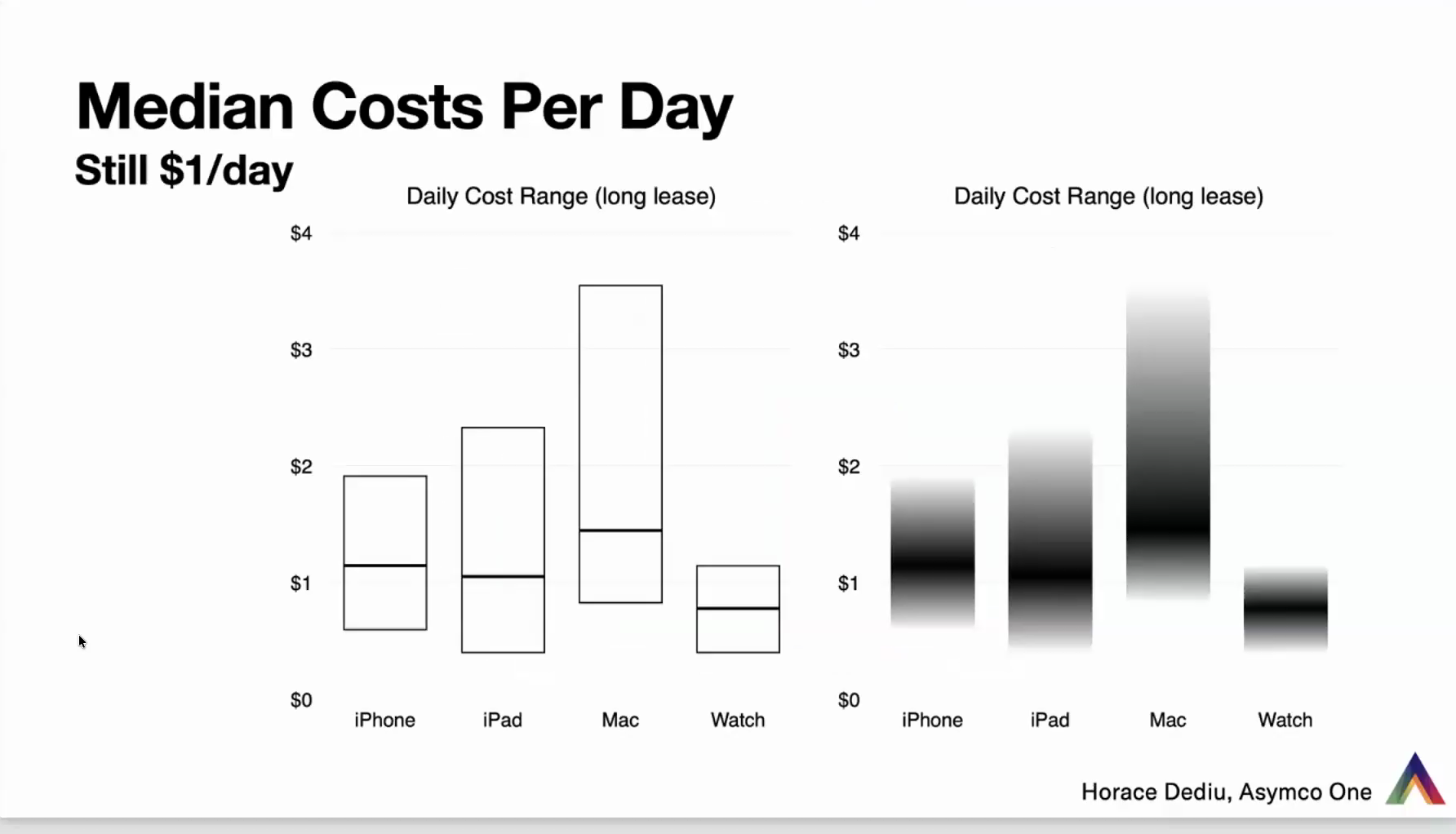
    Q: Is there any “message” in the short-term versus long-term lease price difference between the iPhone and the iPad? I recall the iPhone being about 1:1.5 and the iPad being closer to 1:1.

    This was a surprise to me, because I've never bothered with trying to figure out all the permutations and configurations of iPads out there. When I did it, I thought: wow, there's a lot more than I thought. (The back catalog is even more, but they took away a lot of options when you do the lease.) As it happens, the medians tend to move around.

    Why is there this similarity between the short term and the long term on the iPad? It might have something to do with the depreciation rate. iPads, as opposed to phones, probably last longer, and they calculated these prices on that basis. Remember, they have to consider the residual value: what are they able to get for the product once they get it back.

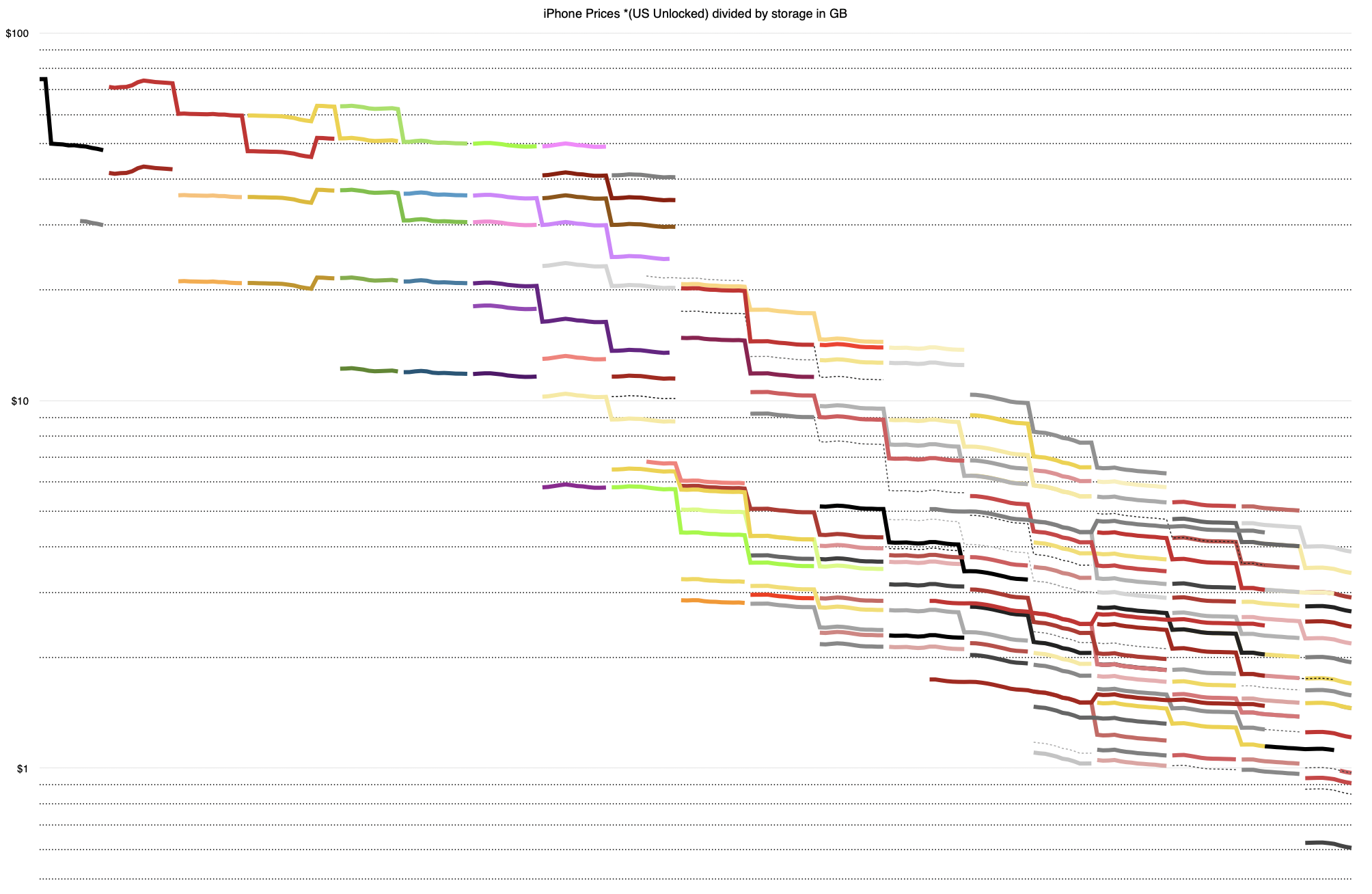
    I think all these prices are algorithmic. You couldn't have somebody suggest the price; you would have to calculate it every time. You see $50.01 — that's the two-terabyte 11-inch iPad Pro. You could give this as a research topic for a business school student, to try to understand what's going on here. It's fascinating, because I spent a long time trying to figure out iPhone pricing, and the feedback I got was that there's a very directed approach — they're doing it on purpose. The choice of prices is part and parcel of the product development. This is somehow different. Maybe it learns from that, it feeds into it, there's human input, but then they calculate these prices based on the economics of the product in use. That's probably what's going on here.

    We'll have to see if they change this. We have to track it — build an AI to scrape all this data, because there's no easy way to do it. You have to click a lot to get even what I got. It's a full day's work. Someone has to sit and do it every day to make sure prices haven't changed. Somehow we need to automate this and track the evolution of pricing as if it were a market signal.

    When I saw it, I said: something's different. This is not the way Apple's ever done things. Maybe it's reading too much into it, but think about the implications even from the accounting point of view, because this is not a sale. Do they book it as a sale if the product is in the hands of the consumer? Do they put it in Services somehow? I don't think technically you're allowed to declare a sale unless Klarna buys it from you, or something like that. The answer would be to look at how accounting for leased products is done.


    Editor's Note: This was one of the questions asked by participants in Asymco's July 2026 Office Hours live Q&A session, held the day after Apple's FQ3 2026 earnings and open to Asymco One subscribers.

    Subscribe to Asymco One for full access to this and other content.
  10. The foldable iPhone: what will it be good for?

    Office Hours Research · 8 comments

    An Office Hours question asked by Frederick H., July 31, 2026.

    Q: What job does a foldable iPhone accomplish? Aren't iPads suitable for a decent screen experience, and iPhones for what they do, with plenty good screens?

    Honestly, I don't feel I have that job to do. I have an iPad mini, in a waterproof case, and the new supposed Fold product — I don't like to talk about rumors, but it is pretty believable by now — is not going to be that much smaller than this. And I don't find myself reaching for the iPad mini if I have my iPhone in hand. Now, if it were to open up, maybe I would watch a few things there. But I'm still so used to the form factor of the iPhone that I'm not sure I would crave a new form factor. But then you never know.

    One of the things that surprised me about my own job to be done: back in the day, remember when the iPhone was small. It was tiny — look at an original iPhone. Then the 4, then the 6, began to be bigger. Then there were the Max sizes, and I kept saying the problem with the Max, or any big iPhone, is that you can't reach all the points on the screen with one hand. It becomes a two-handed device, and I thought that was inconvenient. I always thought the majority of people would prefer smaller phones that were easy to put in your pocket and completely usable with one hand. But it turned out I was wrong. Big screens were desirable. I myself ended up with one, and now I only get the Max form factor. So maybe we need to try it before we learn what it can be used for.

    I have other reservations — durability reservations, price reservations. Any moving parts are bound to fail sooner than those without moving parts. But some people have convinced me that there is a significant market out there for this product, if only to demonstrate that you are able to buy one. That alone may drive sales for at least the first quarter or two. So it isn't clear what the job is. I do believe, though, it'll do fairly well.

    The other thing against it is that the other fold products, from Samsung and others, haven't done that great. They've been around for six years or more, and no one seems to say this is the greatest thing and everyone's switching to it. Perhaps Apple's version will be the perfect match, the perfect package, perfect in every way, that will cause adoption to take off. So I think it's a wonderful addition to the portfolio, but perhaps again a little bit more towards the highest end, and limited in how many users will take it up. Let's see how it goes.

    Q (follow-up, Frederick H.): What would a foldable phone do to iPad interest? Is this an experiment? And how does this relate to the apparent convergence of Apple's software platforms?

    If, when you open it, it looks like an iPad mini — people are speculating about this — the operating system will be effectively two operating systems: the small screen and the big screen. Apple has a great interface for big screens in iPadOS. Then the question is: is there value in having your iPad in your pocket with you? I think it's going to be an experiment. We'll see how people and developers take to it.


    Editor's Note: This was one of the questions asked by participants in Asymco's July 2026 Office Hours live Q&A session, held the day after Apple's FQ3 2026 earnings and open to Asymco One subscribers.

    Subscribe to Asymco One for full access to this and other content.
  11. Apple's guidance: in six months there will be a new set of worries

    Office Hours Research · 4 comments

    An Office Hours question asked by Joseph B., July 31, 2026.

    Q: What's up with the guidance? And why does this seem to be news to Mr. Market?

    Start by not getting emotional about this, because I've seen so many times mispricing of Apple. But the market, as they say, is always right. It is simply the voting of a lot of people, and what it determines is the market price. It doesn't determine right or wrong, it just says that's what the market thinks.

    The thing about the last few weeks, or even months, has been that Apple's been caught in a debate about whether AI is going to pay off or not. It was used by a lot of people who wanted to rotate out of AI names into something safe, and Apple seemed to be that choice. Apple never wanted to be chosen as a safe harbor. Management doesn't have that as their KPI, or in their plans, or in the product pipeline.

    So strange things happen. It was unexplainable to me why the stock went up as it did in many days over the last few weeks. It was good and I felt it was fair. If it had been trading at 50 P/E, I would have been getting a little bit nervous, thinking it's maybe not justifiable. But there are many companies trading at hundreds of P/E, and who's to say that's wrong?

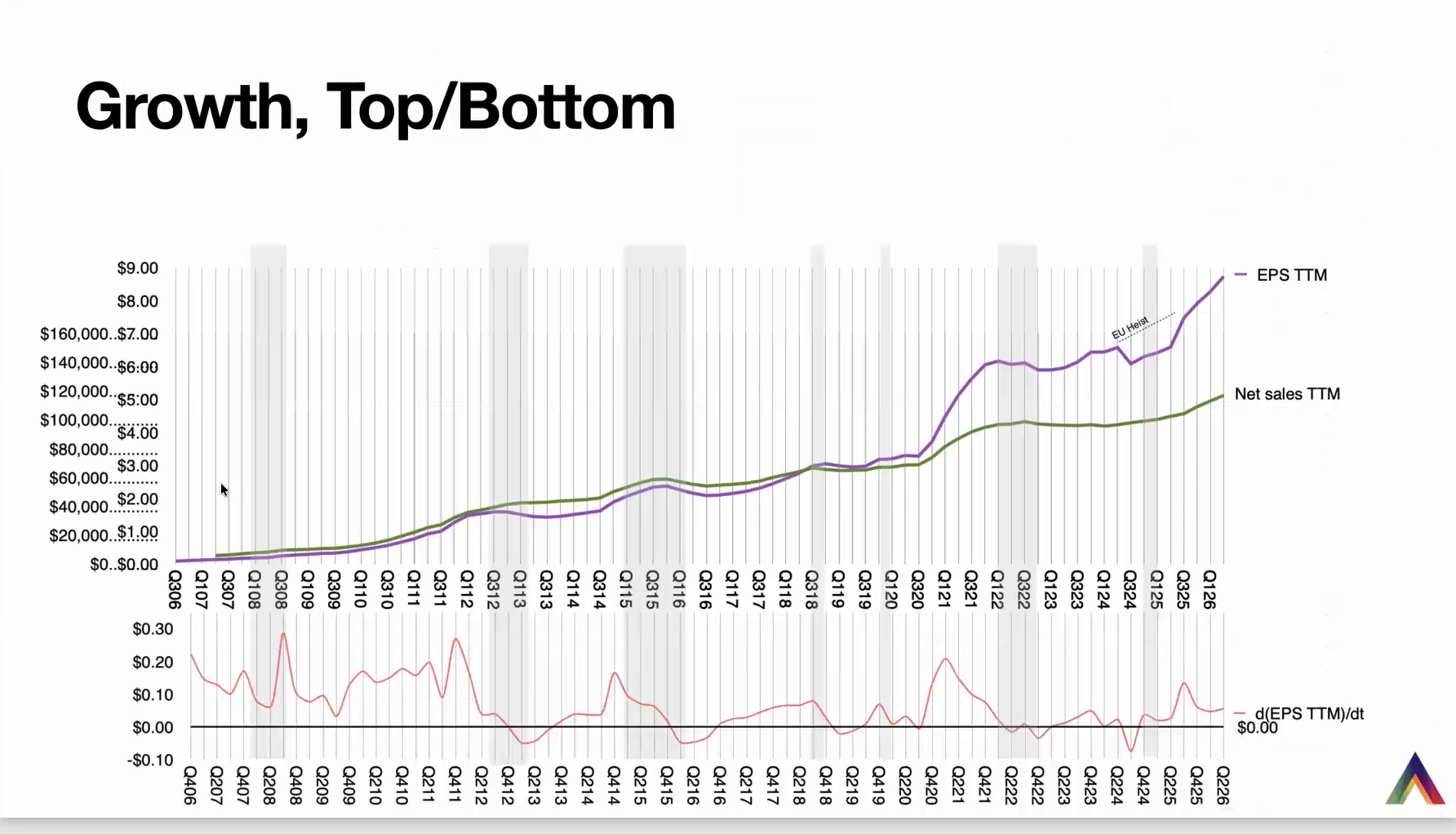
    It seemed to have run ahead of itself a little bit. But on the other hand, the reaction is completely unwarranted if it's based on what Apple reported. Apple reported a very strong quarter. It reported some circumstances that are unusual. Foreign exchange is one. The struggle with getting supply is another. By the way, nobody seems to talk about memory anymore. Nobody seems to talk about the fact that we've seen price increases, which was just a month ago. It's all now that Apple is constrained, for other reasons. In six months we'll totally forget about this, and there'll be a new set of worries.

    Fundamentally, the company is doing very well. I think it is entering a cyclical period of above-average growth. It might be because products are getting a little bit old in people's hands. It might be that demand will truly pull forward a lot of new consumption, but it's constrained by being able to deliver. Again, not the first time.

    It's surprising to me how volatile, though — to see a 10% drop in one day, including after hours. I don't recall there being that much movement even in the times of Steve Jobs, when we did have huge volatility. But perhaps my memory's weak. On fundamentals alone: the next quarter, which isn't even a holiday quarter, growing 10% — as a disappointment? It'll re-accelerate.


    Editor's Note: This was one of the questions asked by participants in Asymco's July 2026 Office Hours live Q&A session, held the day after Apple's FQ3 2026 earnings and open to Asymco One subscribers.

    Subscribe to Asymco One for full access to this and other content.