Asymco

Asymmetric Intelligence

Nota Bene

News Commentary from Asymco's Horace Dediu.

  1. Apple Maps Is Getting Ads. It’s Apple’s Riskiest Bet Yet

    Nota Bene · 5 comments

    Oh the humanity

    On Tuesday, Apple announced updates to its Apple Business program

    Apple Business isn’t so much a new thing as a consolidation of what used to be two separate products–Apple Business Manager and Apple Business Essentials–into one. The new platform includes device management, company email and calendar at your own domain, an employee directory, and brand management tools across Maps, Mail, Wallet, and Siri.

    The device management piece used to cost money and was only available in the U.S. While you still pay if you want to add iCloud storage or AppleCare+ for business, the core business tools are now free. “We’ve unified Apple’s strongest business offerings into one simple, secure platform,” said Susan Prescott, Apple’s vice president of Enterprise and Education Marketing.

    There are a number of ways this is a smart play for Apple. The company has been growing its share of small businesses, and having a suite of tools to help those businesses manage devices and software is a big part of that. And it’s even smarter than it might look, because the goal is to make Apple devices the default option at work. Once your company email, device management, and employee directory all run through Apple, leaving gets a lot harder.

    All of that is actually helpful context for the new thing Apple announced: ads are coming to Apple Maps this summer in the US and Canada. That means that local businesses with a physical location can claim their listing through Apple Business, upload photos, set a budget, and run a campaign. Apple’s automated system runs an auction and delivers ads, much in the same way ads work on Google or Instagram. Advertisers only pay when someone views or taps their ad.

    What’s most notable, however, is how Apple is approaching ads in its Maps app differently from Google Maps. The company says it will only show one ad per search, and won’t allow competitor search targeting, meaning you can’t buy an ad that shows up when someone searches for the coffee shop down the street.

    “A user’s location and the ads they see and interact with in Maps are not associated with a user’s Apple Account,” Apple said in its announcement. “Personal data stays on a user’s device, is not collected or stored by Apple, and is not shared with third parties.”

    That’s a distinction that means a lot because, generally, consumers aren’t huge fans of ads. Partly that’s because they’re usually just in the way of finding whatever you were actually looking for, and partly because where there are ads, there’s usually data tracking.

    Apple’s model is meaningfully different from how Google Maps advertising works. If you’ve opened Google Maps lately and searched for a local business, it’s not uncommon to see several sponsored results for other businesses before you see the one you actually searched for. I get that there’s money there, but it’s an absolutely garbage experience. If I type in the name of a business, there should never be paid results before the thing I asked you to show me.

    Source: Inc.

    NB: "It’s Apple’s Riskiest Bet Yet" No, it's not.…

    Whereas Apple probably landed a strong value proposition to its small business offering, the commentary is hyperbole around the idea of ads in Maps. Apple went to great lengths to clarify how it works but it does not matter, the doom must be layered on thick. To suggest that it's "the riskiest bet" Apple made should be coupled with the enormous upside that would follow. Why would Apple take "the riskiest bet" without "the biggest payoff" as an objective. The article itself contradicts the writer's thesis.


  2. MacBook Neo Market Impact: Analysts weigh in

    Nota Bene · 2 comments

    Market analysts analyze market

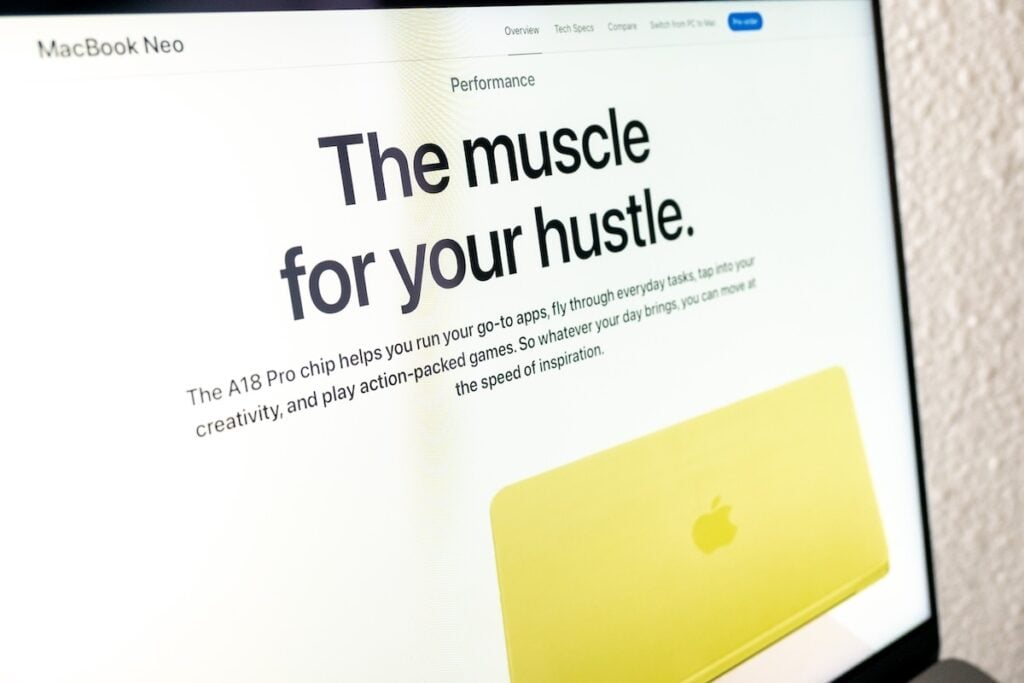
    Francisco Jeronimo, Vice President of Client Devices at IDC, told Benzinga, "The MacBook Neo will have a significant impact on the low-end PC segment, particularly in education, which accounts for 6.7% of global PC shipments, or 13.4 million units in 2025."

    He said that the market is currently dominated by Windows notebooks, with an average selling price of $682 and Chromebooks, which average at $362.

    "Apple's ASP in Education was $1,425 in 2025 and accounted for only 5% of the segment," he said.

    He echoed the statements by the above analysts while adding that MacBook Neo will allow Apple to acquire users early in their digital lives.

    "Omdia’s February 2026 forecast shows Windows OEMs facing component cost increases of $90 to $165 per unit, pushing average notebook selling prices from approximately $850 toward $915," the research firm stated.

    It went on to say that to maintain margins after these cost increases, many Windows laptops would need to be priced above $1,000 to "stay profitable."

    On the other hand, Apple benefits from higher margins, making it easier for the iPhone-maker to sell the product at low-cost while still maintaining profitability.

    In the education segment, the $499 price for students removes the cost barrier. However, the firm noted that the price isn't the only hurdle.

    "Displacing Chrome in K-12 would require Apple to match Google’s admin tooling and institutional relationships, not just its price point," Canalys stated.

    David Naranjo, associate director at Counterpoint, told Benzinga that Apple's real opportunity lies in higher education.

    It is because the launch comes when Google continues to dominate the K-12 sector through Chromebooks, Google Workspace and school-managed devices.

    "The MacBook Neo is unlikely to displace Chromebooks at scale in the K-12 market in the near term. Schools remain highly price-sensitive and deeply integrated into the Google ecosystem," Naranjo stated.

    Source: Benzinga

    NB: Competing products are flimsy and don't hold up making cost of ownership higher.…

    The Neo value proposition will become very evident. The Chromebook protection orifice will pass. We've seen this before. Apple will continue to chip away at the institutionalized technology choices that prioritize control and management over user benefit.


  3. Survey shows record upgrade interest for iPhones

    Nota Bene · 1 comment

    Apple the only major global smartphone vendor expected to gain share in 2026

    A new global smartphone survey from Morgan Stanley points to record iPhone upgrade intent in 2026.

    The AlphaWise survey shows next-12-month upgrade rates in the U.S. and China hitting “all-time highs,” which implies replacement cycles “accelerate to a 10-year low.”

    Woodring writes that Apple is “the only major global smartphone vendor expected to gain share in 2026,” driven by “new and advanced features,” stronger device quality and broad upgrade eligibility.

    He adds that iPhone switching rates are set to reach a 5-year high, underscoring the company’s relative strength.

    By contrast, Android vendors face what Morgan Stanley calls “unprecedented memory cost inflation” that is likely to push device prices higher and “significantly dampen smartphone market demand.”

    The bank says lower brand loyalty and greater price sensitivity will leave Android “more vulnerable vs Apple.”

    As a result, Morgan Stanley cuts its 2026 global smartphone shipment forecast to 1.1 billion units, down from 1.3 billion previously, or -13% year-on-year.

    It now expects Android shipments to fall 15% year over year, compared with just a 2% decline for Apple.

    Source: Yahoo Finance

    NB: I doubt we'll see a decline for Apple. The memory costs impact has already been discussed here as beneficial to Apple...

    ...The mainstream analysts are starting to come to the same realization but slowly. Initially we are seeing the observation that Android is more affected than Apple but not yet that Apple will use this as leverage.

    The big question is indeed whether there is a change in replacement cycles. So far the data points to a huge installed base not matching the sales volume plus switching rate. Perhaps it's time to consider an iPhone Neo?


  4. Apple turns component crisis into competitive advantage

    Nota Bene

    When the going gets tough...

    “Apple is moving into attack mode. They see the memory crisis as an opportunity to gain share,” said Francisco Jeronimo, Vice President at IDC. “All other smartphones in this price range will have to increase prices,” he added, noting that the shift could accelerate migration from Android to iOS, and from Chromebooks or traditional PCs to Mac devices.

    The impact is expected to be most severe in the low-end Android segment, where profit margins are already thin. PC and Chromebook markets face similar challenges, with shipments forecast to decline by 11%.

    Source: VietNamNet News

    NB: ...the tough get going.

  5. Apple’s Custom Silicon Opens up Potential for a Cellular MacBook

    Nota Bene · 1 comment

    iPhone Air share of mix samples 2x iPhone Plus

    Explore how Apple’s C1X modem performs in the real world, with Ookla Speedtest data from Q4 2025 showing the iPhone Air matching Qualcomm’s X80 download speeds while setting new latency benchmarks.

    iPhone Air marginalizes competing slim form-factors. The iPhone Air has largely eclipsed the Samsung Galaxy S25 Edge globally, out-sampling it 3-to-1 in the U.S. based on Speedtest data, while the Edge remains statistically negligible in terms of adoption across European markets. South Korea remains the primary competitive exception, driven by strong home-market bias.

    In 2024, the iPhone 16 Plus was the clear laggard of the range, capturing a mere 2.9% of the launch mix. By sunsetting the iPhone Plus and replacing it with the design-centric iPhone Air, Apple more than doubled the share of this roster slot to 6.8%. This suggests that “Slim” as a category successfully resonates with a segment of the market that “Large” simply did not.

    Apple’s newest hardware cycle centered on a key question: could Apple’s first high-performance modem, the C1X, improve upon the original C1? Furthermore, could it match the industry-standard Qualcomm X80, without the thermal headroom of a “Pro” chassis. Despite its slim form-factor, the iPhone Air does include a vapor chamber to aid cooling, while its titanium frame also aids heat dispersion. Qualcomm remains a formidable incumbent with its X85 modem, which alongside MediaTek’s M90, will feature in newer Android flagship devices this year. Based on comparisons with the X80, our data suggests that Apple’s silicon has reached a critical maturity point, shifting the conversation from a performance gap to a strategic “equalizer” in real-world performance.

    Source: Ookla®

    NB: Lots of very interesting data in the source. Definitely worth looking at carefully. The conclusion is quite a bombshell…

    … The conclusion stands out:

    The introduction of the iPhone Air and its C1X modem confirms that Apple’s custom RF silicon is no longer a work in progress, achieving real-world download parity with the Qualcomm X80 in the iPhone 17 Pro Max, and outpacing it on latency. The modem’s lead in responsiveness will benefit Apple’s hardware in an AI-first world, where network latency will represent a clear bottleneck for real-time cloud computing.

    However, the C1X is merely the opening salvo. As we look ahead to the anticipated launch of the iPhone 18 and the likely next-generation C2 modem later this year, Apple’s immediate engineering hurdle remains mastering complex uplink carrier aggregation. They must close this final gap against a moving target, as flagship Android devices transition to the Qualcomm X85 and in the future to the X105, which according to Qualcomm will both offer faster peak speeds and greater efficiency than the X80. Yet, the most disruptive potential of Apple’s modem program ultimately lies beyond the smartphone. The power efficiency and architectural integration demonstrated by the C1X sets the stage for the long-rumored “Always-Connected MacBook.” By embedding the C2 (or its derivatives) in its Apple MacBooks, Apple is poised to sever the MacBook’s reliance on Wi-Fi alone, and in doing so, redefine baseline expectations for portable computing.

    This is quite the bombshell.

    The question of why laptops don't have cellular connectivity even though phones, iPads and even Watches do has always been a paradox.

    The author asserts that there is a performance issue but also the fact that paying Qualcomm for the IP involved killed the economics of laptops. It has been said that Qualcomm requests a percent of product price as licensing fees and for a laptop, even if priced in the thousands of dollars that margin was simply not there. Apple silicon might finally break this economic blockade on always connected MacBooks.


  6. Apple TV is a categorization failure

    Nota Bene · 3 comments

    19 years of failure

    Apple TV completes 19 years since its launch, as reports suggest a new model may arrive soon. Apple introduced the original Apple TV in January 2007, and released it in March the same year. The device marked Apple’s early step into home entertainment.

    From simple streaming box to smart hub

    Source: The Mac Observer

    NB: The product was always misunderstood. Judged as a product, Apple TV was always without traction. Never seen as a hit, often ignored. The problem has always been with the assumption that Apple was a "product company" or a "design/marketing company" or the "Mac | iPod | iPhone company". The hint is in the observation of the name Apple TV being both a product and a service. From a hardware point of view, the Apple TV is almost a Mac Mini, but with an A-series chipset and a funny input device. It was also priced so low that it probably had minimal margins. But that was never the point. Apple TV hardware ended up being the "brains" of the TV itself and the "set-top box" and the gateway to all content on the screen. Quite an achievement for a flop.

  7. How to read the MacBook Neo as bad news for the stock

    Nota Bene · 7 comments

    Apple is doomed because product is too successful

    A quick search on Apple’s website shows that Neos are sold out and won’t be available for in store pickup until the middle of April. Air and Pro models are available for in store pickup today.

    investors might be concerned about margin pressures as the product that’s doing so well is so cheap

    ‘I view the recent launches of Mac products as a major success for Apple near-term and medium-term,’ Oppenheimer analyst Martin Yang said. “Neo may have slightly lower-than-average margin comparing to other Mac products, but I don’t think margin headwind is large enough to be notable on Apple’s consolidated income statement.”

    Source: Barron’s

    NB: Money quote: "investors might be concerned about margin pressures as the product that’s doing so well is so cheap."…

    … No good news goes unpunished. My assumption is that Apple will not have "slightly lower-than-average margin" on the MacBook Neo. First, because it is reusing a chipset that has gone down the cost curve and the production is fully depreciated. Second because components are feature-stripped and anything with a modicum of marginal cost is removed (e.g. touch ID, backlit keyboard). Third, high-volume manufacturing leverage. Apple knew pretty well how demand would scale and is buckled in for the ride. The assumption is false and demonstrates how no benefit of the doubt is afforded to the company, resulting in the usual opportunity for investors.


  8. Forget Streetview, Immersion hints at what's to come

    Nota Bene · 1 comment

    You can't explain it, have to experience it.

    "Waddle” is a visionOS application designed for the Apple Vision Pro that allows users to explore the world using immersive 360° Street View. The latest update has high resolution Street views and is breathtaking visiting places.

    Source: Instagram

    NB: We are in a time when the old 2-D media can't convey the new media and we're forced to explain what the audience cannot see…

    …. This is like trying to use newspapers, magazines and TV to explain to an audience what the internet is like. Having lived through that you realize that the only way to understand the new medium is to use it. It's a classic problem in technology adoption.

    https://asymco.com/wp-content/uploads/2026/03/visionpro-waddle.mov


  9. Mac fastest growing PC brand in India in Q4 2025

    Nota Bene · 1 comment

    24% growth in Mac

    India's PC market reached a record high of 15.9 million units in 2025. Omdia analyzes this growth, forecasting a 9.8% decline for 2026 as rising component costs and supply pressures limit device affordability and availability.

    Source: Omdia

    NB: Mac sales grew 24% year over year, iPad sales by 40%. If the Q4 is representative for the year, Apple could be selling 1.2 million Macs in India each year. The Mac Neo could light this market on fire.

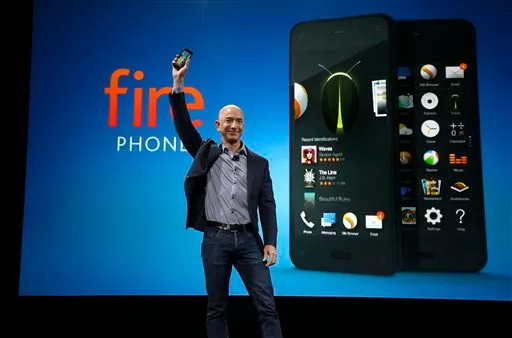
  10. Amazon developing a new phone more than a decade after its first

    Nota Bene · 2 comments

    Who remembers the Fire?

    The latest effort, known internally as “Transformer,” is being developed within its devices and services unit, according to four people familiar with the matter. The phone is ‌seen as a potential mobile personalization device that can sync with home voice assistant Alexa and serve as a conduit to Amazon customers throughout the day, the people said.

    The initiative is the newest chapter in a years-long effort to bring ‌to market Bezos’ long-held vision of a ubiquitous voice-driven computing assistant akin to the voice-controlled computer in science fiction series “Star Trek.”

    Bezos had envisioned a smartphone that had shopping at its core and could take on Apple by offering shipping convenience and discounts through the Prime membership. Along the way, Amazon could gain a wealth of ​new data about users only available through mobile phones combined with purchase history and content preferences.

    As envisioned, the new phone’s personalization features would make buying from Amazon.com, watching Prime Video, listening to Prime Music or ordering food from partners like Grubhub easier than ever, the people said. They asked for anonymity because they were not authorized to discuss internal matters.

    A key focus of the Transformer project has been integrating artificial intelligence ‌capabilities into the device, the people said. That could eliminate the need for traditional app stores, ⁠which require downloading and registering for applications before they can be used.

    The project is being led by a year-old group within Amazon’s devices unit called ZeroOne, whose mandate ​is to create “breakthrough” gadgets, the people said. ZeroOne is led by J Allard, a former Microsoft executive involved in such devices ​as the Zune music player and Xbox gaming console.

    The head of Amazon’s devices and services unit, Panos Panay, has been working to reverse years of unprofitability in the division. That includes a forthcoming tablet that ‌will—for the first time—run Android instead of Fire OS and could sell for around $400, which Reuters was ​first to report.

    One inspiration for the new phone has been the Light Phone, two of the people said, a $700 minimalist smartphone with a camera, map, calendar and not much else, such as an app store or web browser.

    A dumbphone or feature phone could also ​help Amazon market it as a potential second handset to accompany iPhones and Samsung Galaxies already ‌in customers’ pockets, the people said. Such handsets, like the Light Phone and flip phones, accounted for 15% of global handset sales in 2025, according to Counterpoint Research.

    Source: Yahoo Finance

    NB: The problem with any new phone, whether it's from Amazon or Google or Meta or OpenAI or Trump…

    ... isn't that there isn't a logic for it. The problem is that phones only work at scale and that means extreme distribution, manufacturing and supply chain competency. Small players are short lived. If you don't have scale, the platform dies from lack of developer support and there is no resonance with an ecosystem.

    Even Microsoft could not make it happen with a licensing model, followed by its own hardware. It's an old story. The Fire was particularly badly received. It lasted barely a year.

    The other problem is that, like Alexa, the Amazon phone is positioned as a shopping product. Many users are not happy with an "assistant" who happens to be moonlighting for the people trying to get your money. You want to have a phone on your side not on the seller's side. Alexa ended up in a dead end because it's not trustworthy.

    Finally there is the problem of iterating over interfaces and jobs-to-be-done. The failure of Humane, Rabbit, and Meta VR as well as probable failure of other wearables from the usual suspects is that nobody knows how interaction will work, and to figure it out, you need to have an open platform where developers actually iterate and discover resonance. And you can't solve the interface and killer app problem without scale, iteration and developer interest.

    As the article notes, consumer AI is an open problem. Solutions will take time and emerge slowly--similar to the gestation periods of the internet and social media.


  11. “There’s So Much Left” in iPhone: Tim Cook

    Nota Bene · 3 comments

    Center of people's lives

    Apple’s recent performance supports Cook’s view, as iPhone revenue reached $85.2 billion last quarter, marking a new all-time high for the company. Cook described the demand as “simply staggering,” with strong sales across every region.

    The iPhone is also approaching a major milestone, as it turns 20 next year, yet its popularity continues to rise instead of slowing down. Apple sees this as a sign that the device still holds strong value in a rapidly changing tech landscape.

    Cook also spoke about Apple’s broader vision, saying the company’s strength comes from its people and focus on simplicity. He said Apple’s future products will continue to reflect that approach.

    On artificial intelligence, Cook stressed the importance of keeping users at the center of development. He said, “If you’re always trying to enrich the life of someone else, then you keep them at the center.”

    Source: The Mac Observer

    NB: He's right. The number of people who don't have iPhones…

    …is a staggering number. It's still imaginable to see a doubling of the user base, at least. The script is standard comms-talk. The message that should be taken though is that Apple knows that the iPhone is still climbing the adoption curve. Saturation is not in sight.