Asymco

Asymmetric Intelligence

iPhone

  1. Maemo

    Research

    Insipid and irrational politics are symptomatic to a company trapped by rigidity of response to asymmetric attack (and you can quote me on that.)

    Nokia, the world's leader in total mobile phone sales seems to be having new problems deciding on its OS strategy. There were some murmurings about embracing Android last summer, but Nokia seems to have decided against it. Stefan Constantinescu had this to say about the results of Nokia World 2009:

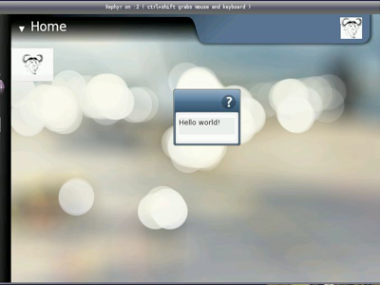
    "The [new] software, Maemo 5, is a pain in the ass for developers since Nokia has admitted in public that Maemo 6 will come out in a year and it will break compatibility due to a switch from the GNOME environment to Qt. The browser, built on top of Mozilla technology, the same code that powers Firefox, is a step away from WebKit, the browser engine that powers Safari in the iPhone, the browser in Symbian, the browser in Nokia’s dumbphone OS known as S40, the browser in Android and soon the browser in RIM BlackBerry devices. Why is Nokia supporting something contrary to what the industry has already accepted as best in class? What’s the strategy?"

    Technical mistakes and internal politics can sink a company in an intense competitive environment. Mr. Constantinescu didn't perceive a coherent strategy. There may not be one.

    http://www.macobserver.com/tmo/article/iphone_competitor_forecast_stormy_with_a_chance_of_fail/
  2. Serving the Needs of IT

    Research

    An interesting note in the latest Canalys Smartphone quarterly summary (http://www.canalys.com/pr/2009/r2009112.htm):

    "...in our October study of 600 European decision makers in medium and large enterprises, more than 20% said they expect the iPhone to be the dominant smart phone platform for running business applications in their organisation within the next 3 to 5 years. In France, the iPhone was ahead of Windows Mobile and RIM in this regard – a remarkable result.”

    This short quote brought back to mind the recently formed partnership between Nokia and Microsoft to deal with RIM. One fruit of this relationship is a recent job posting atcareers.microsoft.com which seeks Symbian developers to work for Microsoft:

    Job Category: Software Engineering: Development Location: India, Hyderabad Job ID: 702365 Division: Microsoft Business Division

    The Office team is looking for a self-motivated and highly passionate Developers to contribute in building a new team and drive discipline excellence in the delivery of Office Mobile and Communication experiences for Nokia’s Symbian smartphones.

    Microsoft and Nokia have formed a global alliance to design, develop and market mobile productivity, communications and collaboration solutions.

    Under the terms of the agreement, the two companies will begin collaborating immediately on the design, development and marketing of productivity solutions for the mobile professional, bringing Microsoft Office Mobile and Microsoft business communications, collaboration and device management software to Nokia’s Symbian devices. These solutions will be available for a broad range of Nokia smartphones starting with the company’s business optimized range, Nokia Eseries. The two companies will also market these solutions to businesses, carriers and individuals.

    This project builds on the existing relationship with Nokia who is optimizing access to email and other personal information with Exchange Activesync. Next year, Nokia intends to start shipping Microsoft Office Communicator Mobile on their smartphones, followed by other Office applications and related software and services in the future.

    (related job description)

    While the iPhone wins hearts and minds in IT through sheer brilliance Nokia tries to become a supplier to IT departments through a strategy deeply rooted in the 1980s: the manipulation and exertion of control over file formats. As IT has diminished in importance (to the point of ceasing to matter to some) it's hard to understand this misplaced alliance with Microsoft over something so inconsequential.

  3. Apples vs. Nokia in North America

    Research · 1 comment

    Comparing US sales of iPhones vs. Nokia's NA device business.

    AT&T iPhones activated in Q3: 3.2 million

    Nokia phones sold in North America Q3: 3.1 million

    (obviously, Nokia's figures include Canada and Apple might have sold a few more phones in the US than AT&T activated so Apple outsold Nokia by a significant margin in units in the US.)

  4. iPhone Money Trail

    Research

    Peter Oppenheimer, Apple's Chief Financial Officer, said that the Average Selling Price of iPhones in the quarter "was just over $600. This reflects both high mix of 3GS sellthrough and benefits of rebalancing the ending channel inventory toward the 3GS."

    An astonishing admission from Apple who has never revealed their iPhone ASP. Previous analyst estimates had the iPhone ASP at $550. If this is true, then Apple has violated one of the cardinal mobile industry rules: "Thy ASP shall always erode". Given what is known about the components, iPhone gross margin is likely to be above 50%. The gross margin, or what you are able to capture in value above the bill of materials, isthe primary indicator of value creation in the device business. Apple's number is astronomical vis-a-vis the competition. Stay tuned as this gets scrutiny.

  5. On Units and Platforms

    Research

    When thinking about the number of devices shipping out of Apple, and the relative value of those units compared to the competition you have to always think of the platform.

    The market leader Nokia claimed to have sold 16+ million smartphones in the quarter. When comparing platforms, to whatever Apple ships in iPhones you have to add the iPod touch units. I see that number being about half of the iPhone numbers or about 4 million. Let's say 10 to 12 million as a range for the platform. Already this is within striking range of Nokia.

    It may sound that Apple has some catching up to do, however the important thing is that most of the Nokia devices are not uniformly addressable by developers because they are different platforms and the Symbian platform itself will be broken next year as it has been broken many times before. This is also true for Blackberry and Windows Mobile and will become true for Android as vendors fork and splinter the code to differentiate.

    This already puts Apple in the pole position today in terms of contiguous addressable units volumes.

    I cannot over-emphasize the importance of this platform effect. It's what made Windows dominant and it should be the most important issue in the planning of new mobile products, but it clearly isn't for Apple's competitors. Either product planners are ignorant of history or completely hamstrung by other constraints on their businesses (I expect the latter).

    As a result it's inevitable that Apple will have a dominant platform. The numbers in apps and consumption of apps already are telling this story, and devs are voting with their code in a landslide. But going into 2010, this will become evident in the units and Apple share numbers will accelerate toward lead position.

    The bogie therefore is to look for contiguously addressable installed base. On this basis of competition, I expect at least 100 million for Apple at the end of next year and less than 10 million for any competitor. At that point the game will be officially over.

  6. On App Store as a Content Store

    Research

    The implications of the new app transaction model are profound. To begin with, consider the following:

    • 10 MB limit - Devs can now get their apps under 10MB much more easily. This allows them to take advantage of users downloading over the carrier networks and not wi-fi. They can offer more content via in app purchase and make up the difference.
    • Rankings - It will be curious to see how Apple changes the rankings over time. "Top Paid" and "Top Free" just don't really don't make sense anymore with this model. Will they make "Top Freemium" or something equivalent?
    • Infrastructure - Developers have to deal with content delivery and updates to that content. Apple handles the transaction in the normal fashion and takes their 30% but then they leave it up to the developers to actually get the content to the iPhone. What if there is a bug in the content? The developer has to deal with making sure the user is notified of the update and then initiate the update.
    • Piracy - There has been a lot of talk about how this may help fight piracy but I think the numbers will tell a different story.
    • Apps as content - The deeper story relates to the transformation of the app store into a content store. I made that prediction a year ago but had no idea how it would happen. In the long term I expect Apple to merge the iTunes music/video content management system with the app store content management. This way you could buy music/video/books/games from within an app and have it available through your iTunes UI.
    • Addiction - "Apping" as the activity of using iPhone apps has come to be known, is already something that did not exist a year ago but has proven to be wildly useful/common/profitable. Only a year has passed and we are already in the realm of uncharted waters.
  7. Fortune 500 iPhone Use

    Research

    Curious possibility:

    More companies have promotional apps on the iPhone than permit their employees to use one. About 30% of the Fortune 200 already have iPhone apps.

  8. Windows Immobile

    Research

    John Herrman reviews the new Windows Mobile 6.5 for Gizmodo:

    To put it another way, handset manufacturers have done more in the last two years to improve Windows Mobile than Microsoft has, which borders on pathetic. In the time since Windows Mobile 6.0 came out in February of 2007, Apple has released the iPhone — three times. Palm has created the Pre, with its totally new webOS. Android has come into being, and grown into something wonderful. RIM has created a touch phone and a revamped BlackBerry OS. For these companies, the world has changed.

    And Microsoft? They eked out some performance enhancements and a new homescreen in 6.1, and executed a gaudy facelift for 6.5. This is what they’ve done to Windows Mobile.

    The review from Gizmodo concludes:

    I'd like to think that 6.5's stunning failure to innovate is a symptom of a neglected project—maybe Microsoft just needed something, anything to hold people over until the mythical Windows Mobile 7 comes out, whatever it is. But as Steve Ballmer himself has plainly admitted, it's worse: Microsoft has simply lumbered in the wrong direction for two years, letting everyone, save maybe Nokia, fly right past them.

    John Gruber adds:

    Microsoft’s irrelevance in today’s mobile space is nothing short of a spectacular failure. Worse than the mere fact that Windows Mobile 6.5 is a total turd is that no one is surprised, and no one cares.

    I've said it before and I'll say it again: Microsoft will take 4 to 6 years to respond to the iPhone. Nearly 3 years have already passed and indications are that Windows 7 will ship in devices by end of 2010. I expect another 2 years hence will be needed to polish it.

    Nokia will take at least as long, though probably longer.

    Neither response will be sufficient or effective. Curiously perhaps, throughout this time both Nokia and Microsoft will use each other as benchmarks of competitiveness.

  9. Android Fantasies

    Research

    http://adage.com/digitalnext/article?article_id=139414

    “Three Reasons Android Could Terminate Apple Despite the Hype, iPhone Isn't the Only Mobile Platform in Town”

    All three reasons he cites apply to the incumbents Windows Mobile, Symbian and Palm OS of old PalmSource. Android therefore is a symmetric response to the incumbents whereas iPhone is an asymmetric response. To suggest that Android has a chance to defeat iPhone implies that the incumbents do as well. If the incumbents do have a chance, why would they not destroy Android as they have vastly greater resources in a symmetric match-up? (Incumbents always win sustaining battles).

    His argument depends on Google “being better”. History suggests that resource-based matches always benefit the incumbent.

  10. Assessing Nokia’s Competitive Response

    Research · 11 comments

    When the iPhone was announced in January 2007 I tried to envision the competitive response from Nokia. The method involved some knowledge of the product development cycle that I was faintly aware of.

    Here is what I predicted:

    • 2007.There would be no response within the first year, meaning there would be no perceived threat of any kind. No process change, No roadmap changes and no business review. Apple is not considered a competitor.
    • 2008.There would be plans made to respond with press releases, dismissing the challenge as a non-threatening "positive" for the industry. No process changes, no product plan changes, no business model changes. Apple would not be considered a competitor except in "high end multimedia" (invisible in any of the segments Nokia uses to define markets).
    • 2009.In the third year, product development teams would be asked to begin roadmapping some of the hardware features that would keep Nokia ostensibly competitive (unfortunately for Nokia, hardware is not what sells iPhones). Results from these efforts would emerge in 18 to 24 months. Apple not considered a competitor except in "high end converged devices" (i.e. a few consumer segments/categories are considered vulnerable).
    • 2010.Realization that iPhone is a threat from new dimensions (user experience). Planning begins on reshaping the software base as a market-driven (not technology-driven) asset (5 year cycle). Apple begins to be evaluated as a competitor in devices and services, although still not compliant with current market definitions.
    • 2011.The realization that the iPhone competes as a platform. Planning begins on repositioning Symbian/Ovi. Products planned in 2009 begin shipping--this means first capacitive touch screens but crude, almost unusable software.
    • 2012.The realization that the iPhone is an integrated product and that integration is a key to competitiveness enters management consciousness. Planning begins on organizational change and a realignment of incentives to account for this new threat. Crude shuffling of internal assets and management musical chairs begins. Organizational change amounts to mostly new names for old departments. Touch screen phones with slightly better software begin shipping (similar in feel to Blackberry Storm from 2008). Incentives are added for employees (in across-the-board performance objectives) to hit user experience targets.
    • 2013.Management begins planning a new organization structure that takes into consideration the fundamental causes of iPhone's success: integration, software, user experience over the objections of sales and markets org that depends on shipping plastic to distributor. Another reorganization that is slightly more rational and aligned with the market is initiated. The plan is to have the assets in place by 2019 to compete effectively as a platform.
    • 2014.First products that are roughly comparable with iPhone version 1 begin shipping. The required software redesign started in 2010 is coupled with the integration efforts. Nokia's response to the iPhone has begun.

    I tried to revisit the prediction to update it with anecdotal evidence but so far there has been little activity that has affected the trajectory.

    1. Note 1: Whether an iPhone v1.0 shipping in 2014 would be competitive is left as an exercise to the reader.
    2. Note 2: The N97 shipping in 2009 is the result of work begun in 2007, it has had no influence at all from the iPhone.
    3. Note 3: The Microsoft response cycle is slightly shorter (perhaps 5 years vs. 7) but they lose a year in efforts to integrate with licensees. As neither MSFT nor GOOG are able to integrate products, they will never be able to actually deliver a competitive product. In this regard, Nokia has an advantage.
    4. Note 4: The key takeaway from this analysis is that the industry standard product cycle for an integrated, platform based product is 5 to 8 years and if one competitor can achieve a 2 to 3 year cycle, then the more nimble competitor can "turn inside" the industry and, within two cycles, dominate it. Although smaller competitors are able to turn product faster, they are usually unable to sustain the platform heavy lifting (which takes an order of magnitude more effort/assets).