Asymco

Asymmetric Intelligence

iPhone

  1. Blackberries are not Smartphones

    Research

    It's time to re-evaluate the categorization of smartphones. The term has always been problematic. It loosely means a phone that runs an advanced operating system and has third party SDKs. There is no industry standard definition and some call it a converged device or a multimedia device. One analyst famously said that the iPhone did not count as a smartphone on launch because it was not open to developers.

    I'd propose a different definition, not based on the attributes of the device, but the jobs that the device is hired to do. This is in a way, the same distinction between Facebook and MySpace. They are clearly hired to do different things by their users and as a result don't directly compete. When you do this job-based segmentation, you realize that iPhones, Android devices and Windows Mobile and Palm are fairly similarly used. Blackberry, however, does not match the profile. (Neither do most recent Symbian devices, though for different reasons.)

    The most common jobs I can see in use with the first cohort of devices is (Comscore data exists to back this up)

    • browsing
    • social networking
    • applications/games
    • email
    • media consumption
    • navigation

    The Blackberry has relatively poor utilization of any function except for email and perhaps social networking (though the latter is not likely in company-sourced devices). The focus on a large number of jobs to be done is what distinguishes smartphones from the more limited "feature phones". By this logic Blackberry is hired as a "feature phone".

    It's also instructive to follow commentary among enthusiasts. It's fairly clear that this segmentation exists implicitly: Android, iPhone, Palm and WinMo are comparable while Blackberries are for a different demographic, different user, different usage.

    Finally, there is the gut check. It's become clear to me that what users do with Blackberries is similar to what they do with voice phones: voice and messaging. Although additional functionality is available, it hardly gets used because it's hard to use.

    But you may ask: so what? The reason this is significant is that smartphones are embryonic mobile computers with a clear trajectory for improvement. Feature phones are overshot voice phones which are likely to be disrupted by data-centric entrants.

    On a different level, it also means that growth stats for the two product types are not comparable. Saying that the Blackberry is outgrowing the iPhone (or vice versa) is meaningless.

    It also means that Blackberries, being an evolution of voice products, still have a huge growth potential with those customers which are looking for messaging as an improvement for their good enough voice products and for whom smartphones are over-serving.
  2. That River in Egypt

    Research

    Mini-MSFT:

    Windows Mobile 7: we so dropped the ball in our early phone OS presence that now it seems like it's a losing battle to have a dog in this fight. But WinMo7 is out there. To me, I can imagine this becoming like the Zune HD: well praised and all, but not making a dent in the market because everyone has already moved on to the iPhone platform. David Worthington interviews Brandon Watson, “director of product management in the developer platform at Microsoft”: Watson claimed that many developers of applications for the iPhone OS–which the iPad uses–are not making money. Developing applications for the iPhone and iPad is expensive, he said, because iPhone OS uses the Objective-C language rather than Microsoft’s more pervasive .NET platform. And Apple’s control over the platform has alienated some people that make software for its products, he said.

    Now if we can get the Grand Poobah of Ovi to chime in, we'll be all set.

  3. First Thoughts on the iPad

    Research · 7 comments

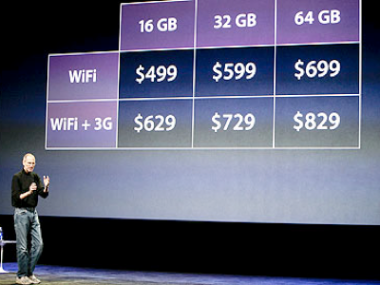
    I think it's a logical evolution of mobile computing. A hop along the trajectory. When the iPhone first rolled out as an embodiment of the new touch-based UI--a disruptive technology, I said it was far too good as a phone. It could not be a better phone because phones were as good as they could be. It was a pretty lousy computer so I reasoned all it could become was a better computer. The iPad is a better computer.

    Will it be a big hit? I think it will grow nicely and be profitable. It will take several iterations but eventually it will absorb usage from low-end laptops and move computing to new contexts. It will have amazing applications in certain verticals like education, health care, travel and automotive use.

    All these steps are like checkboxes in the disruptor's playbook. In 5 years, this will be as big a business as the Mac and then Apple will have to think how they break out of the 5% share ghetto.

    Will there be a response? Yes, but, like with the iPhone, not for a long time, and not symmetrically. The PC guys will dismiss this and the phone guys will see it as outside scope. Once they begin the effort in earnest, it will fall well short of the entrenched, incumbent, integrated(*), rapidly evolving juggernaut that will be Apple Mobile Computing.

    (*) Note the emphasis from Apple on its own CPU in the device. Apple does not talk about chipsets in their devices, but they did this time. Not only are they signaling control, but it also shows that value-chain integration down to silicon is what is needed to go up the performance trajectory for good-enough mobile computing.

  4. The Dynabook

    Research

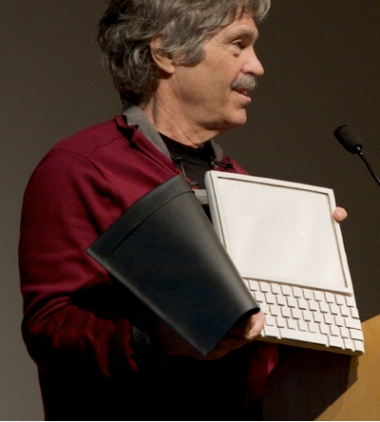
    Alan Kay, regarding his reaction to the iPhone in January 2007:

    When the Mac first came out, Newsweek asked me what I [thought] of it. I said: Well, it’s the first personal computer worth criticizing. So at the end of the presentation, Steve came up to me and said: Is the iPhone worth criticizing? And I said: Make the screen five inches by eight inches, and you’ll rule the world.

    http://gigaom.com/2010/01/26/alan-kay-with-the-tablet-apple-will-rule-the-world/

    See also: Dynabook

  5. Keeping it Real

    Research

    From the VP of marketing for the Limo Foundation:

    Growth within the siloed Apple ecosystem will actually stifle the grass-roots innovation

    It's interesting that this comment came on the day after Rob Glaser left Real Networks. Let's take a stroll down memory lane of Glaser quotes:

    (in 2003) “It’s absolutely clear now why five years from now, Apple will have 3 (percent) to 5 percent of the player market. … The history of the world is that hybridization yields better results.”

    “Apple’s (market) share will go down if they continue to do this. The only way to presently put songs on an iPod is to (buy) them from iTunes.”

    The (unforeseen) standard that emerged from the iPod is iTunes marketplace. It allowed Apple to establish itself as the premier and dominant merchant of all media including disruptive new media like apps. The iPod was "closed", "siloed" and "locked-in" users. But it worked and grew and grew to the point where it set the standard.

    The same arguments raised against the iPhone were raised against the iPod and Windows before it. Last I checked iPod had 70% share 9 years after the launch and Windows has 90% share 20 years after launch. iTunes sells more songs than any other retailer on the planet and more apps that anyone imagined possible.

    Perhaps this data bears repeating:

    • 140,000 apps - made by over 28,000 developers
    • Users downloaded an average of 3.7 apps each in December.
    • One Quarter of apps downloaded are paid. Average cost of $2.59/app.
    • Each iPhone user spends an average of $10/mo.
    • There are over 75 (est.) million active users
    • 200 million apps are being downloaded every month
    • $500 million in revenues each month. 70% to developers or $385 million

    All these numbers are increasing and accelerating. iPhone Platform Fastest Ecosystem Ramp in History.

  6. 77 % des téléphones vendus par Orange à Noël ont été des iPhone

    Research · 5 comments

    http://www.lesechos.fr/info/hightec/020299379592--77-des-telephones-vendus-par-orange-a-noel-ont-ete-des-iphone-.htm

    A loose translation:

    France Telecom CEO Didier Lombard:

    Remember that at Christmas, 77% of telephones with a fixed-rate tariff that Orange sold were iPhones! It’s amazing. I cannot say why so many other mobile telephone manufacturers have fallen so far behind and have been unable to catch-up.

    I am still trying to get my head around this data point. Is it an anomaly? Is France unique or is this a Christmas-only phenomenon? Other data points also showed that iPhone is phenomenally popular in France, but this is unheard of. Would broad availability in the US also lead to >50% market share of all phones sold? Could the possibility of runaway, iPod-like, Apple monopoly of the sector be contemplated? Anecdotally, I also observed a large number of iPhones while in Terminal 3 at Heathrow.

  7. L'iPhone, le smartphone préféré des Français

    Research

    More than half of the 3.5 million smartphones shipping to France this year should be iPhone variant, while Apple should account for about 20 percent of the entire cellphone market's revenue. The company's popularity will have helped smartphones as a whole more than double their share of France from 7 percent in 2008 to 16 percent this year.

    http://www.electronista.com/articles/09/12/29/as.many.as.2m.iphones.in.france.for.2009/

  8. Nokia shutters U.S. flagship stores

    Research · 1 comment

    In other news:

    • Nokia shutters flagship Regent Street store in face of Apple retail’s domination - December 08, 2009
    • Nokia sees flat market share as Apple gains - December 02, 2009
    • Nokia Chief Strategist: Apple will remain a niche player in smartphones, just like in computers - November 30, 2009
    • Nokia to cut another 330 R&D jobs - November 20, 2009
    • To understand market share vs. profits, look no further than Nokia vs. Apple - November 11, 2009
    • How Apple passed Nokia to become the world’s most profitable handset vendor - November 11, 2009
    • Strategy Analytics: Apple passes Nokia to become world’s most profitable handset vendor - November 10, 2009
    • Nokia sues Apple claiming iPhone infringement of Nokia GSM, UMTS and WLAN patents - October 22, 2009
    • Nokia posts loss of 559 million euros on weaker smartphone sales - October 15, 2009
    • Nokia’s earnings plummet 66 percent - July 17, 2009
    • Jim Cramer: The problem with Dell and Nokia is that no one wants their products; Buy Apple - July 17, 2009
    • Nokia’s failures vs. Apple’s vibrant iPhone platform puts market share at risk - June 24, 2009
    • Nokia Ovi Store launch a complete disaster - May 26, 2009
    • Nokia ships 19% fewer phones in Q1, bleeds more share - April 16, 2009
    • Nokia axes 1700 jobs worldwide - March 17, 2009
    • Nokia halts sale of iPhone killer; 5800 handset plagued with major problems - March 02, 2009
    • Nokia hops on bandwagon, unveils knockoffs of Apple’s iTunes Store, App Store - February 16, 2009
    • Nokia profit collapses 69% in fourth quarter 2008 - January 22, 2009
    • Nokia’s profits plummet 30 percent - October 16, 2008
    • Nokia’s fatally flawed ‘Comes With Music’ service no Apple ‘iTunes Store killer’ - October 03, 2008
    • Nokia fumbles iPhone lookalike-not-workalike launch in U.S. and Europe - October 02, 2008
    • Nokia sputters that iPhone ‘not worthy of discussion’ - August 13, 2008
    • Apple takes top spot from Nokia on AMR Research’s 2008 Supply Chain Top 25 list - May 30, 2008
    • Nokia shares slammed in wake of miss; Nokia CEO calls Apple iPhone ‘niche product’ - April 17, 2008
    • The knockoff parade continues: Nokia exec shows Apple iPhone lookalike ‘Tube’; dismisses Apple - April 08, 2008
    • Nokia previews blatant Apple iPhone knock-off (with video) - August 29, 2007
    • Nokia CEO challenges Apple over iPhone - February 13, 2007

    http://www.macdailynews.com/index.php/weblog/comments/nokia_shutters_us_flagship_stores_as_floundering_cellphone_maker_fails/

  9. Game Platforms vs. iPhone

    Research · 1 comment

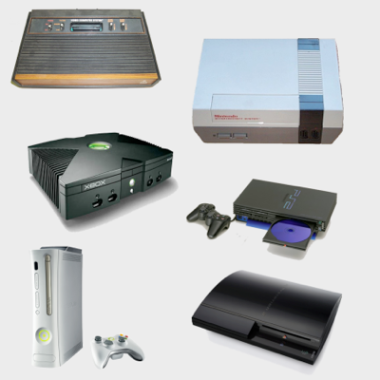
    The number of games per platform. All approximate.

    • Nintendo DS 600
    • Sony PS3 600
    • Microsoft Xbox 700
    • Sony PSP 700
    • Nintendo Wii 1000
    • Google Android 3,000
    • iPhone/iPod touch 22,000

    If IDC prediction of 300,000 iPhone Apps by end of next year holds and if the ratio is preserved at about 20% games, then there could be 60,000 games on the Apple platform by next year. It's doubtful that the other platforms will grow by more than 10% in the same time frame. Are there any implications if one game platform has more titles than another? It's interesting that all the other platforms are in the same order of magnitude.

    source:http://www.macworld.com/article/144725/2009/12/appstore.html?lsrc=rss_main

  10. Stack ‘em high!

    Research

    In comparing two platforms like iPhone and Android, the question of addressable market for developers must come first. Apple has the advantage of an early lead plus its iPod touch devices which add another 40% to volumes. As a result, Apple created a 57 million units base with 100% yearly growth. It's not a stretch to assume that before the end of 2010, Apple will have 100 million units in the field with 150 million by 2011.

    All told, current Android licensees offered up less than 4 million devices to developers to date. When accounting where future Android volumes will come from, the chances are that Nokia, Samsung and RIM will not deploy Android widely as they have their own platforms to protect. That leaves Motorola, Sony Ericsson, HTC and LG and the current Windows Mobile licensee base. Even assuming unprecedented growth (270% y/y--greater than iPhone ever achieved) from this less-than-stellar list of vendors, it's hard to imagine more than 30 million Android installed base by end of 2011.

    One Android device for every five iPhone OS devices does not compel ecosystem switching costs for developers. Fragmentation and low volumes coupled with a tenuous vendor story leads us to conclude that iPhone will still have the upper hand by 2011.

  11. One Hundred Million

    Research

    On April 9th, 2007 Apple announced that the 100 millionth iPod had been sold, making the iPod the fastest selling music player in history. The first iPod was sold five and a half years earlier, in November 2001.

    Three months after that 100 millionth iPod, Apple sold the first iPhone.

    My prediction is that sometime next year Apple will announce the 100 millionth iPhone OS device sold, making the iPhone the fastest selling platform in history. The iPhone will have been on the market for three years.

    As of now there are at least 57 million iPhone/iPod touch devices in the field. This season there are likely to be over 15 million more sold. The bar to clear is therefore 28 million next year which seems achievable by Q3.

    It goes without saying that 100 million contiguously addressable devices makes it the largest such device platform, but it may make it so by an order of magnitude.