Asymco

Asymmetric Intelligence

share

  1. The biggest surprise of the MacBook Neo

    Research · 2 comments

    Remembering the PC market

    Almost 10 years ago I said "Managing the Mac product line must be one of the most challenging problems at Apple. That may not be obvious given the product’s success." I pointed out that although the company grew the Mac into a redeemed and prosperous platform, "The big change in computing has not been a growing Mac vs. declining PC. It has been a huge surge in mobile device use vs. a decline in PC use overall."

    It's time to revisit this observation.

    First, a status update:

    • The Mac is in its 32 42nd year of market presence. A longevity that is (still) unmatched by any other PC maker.
    • Apple reached a top five four position in the ranking of PC vendors. This was achieved far along in the evolution of the market.
    • With about $23 $33 billion in revenues per year, Apple places among the top four three PC vendors in terms of revenue.
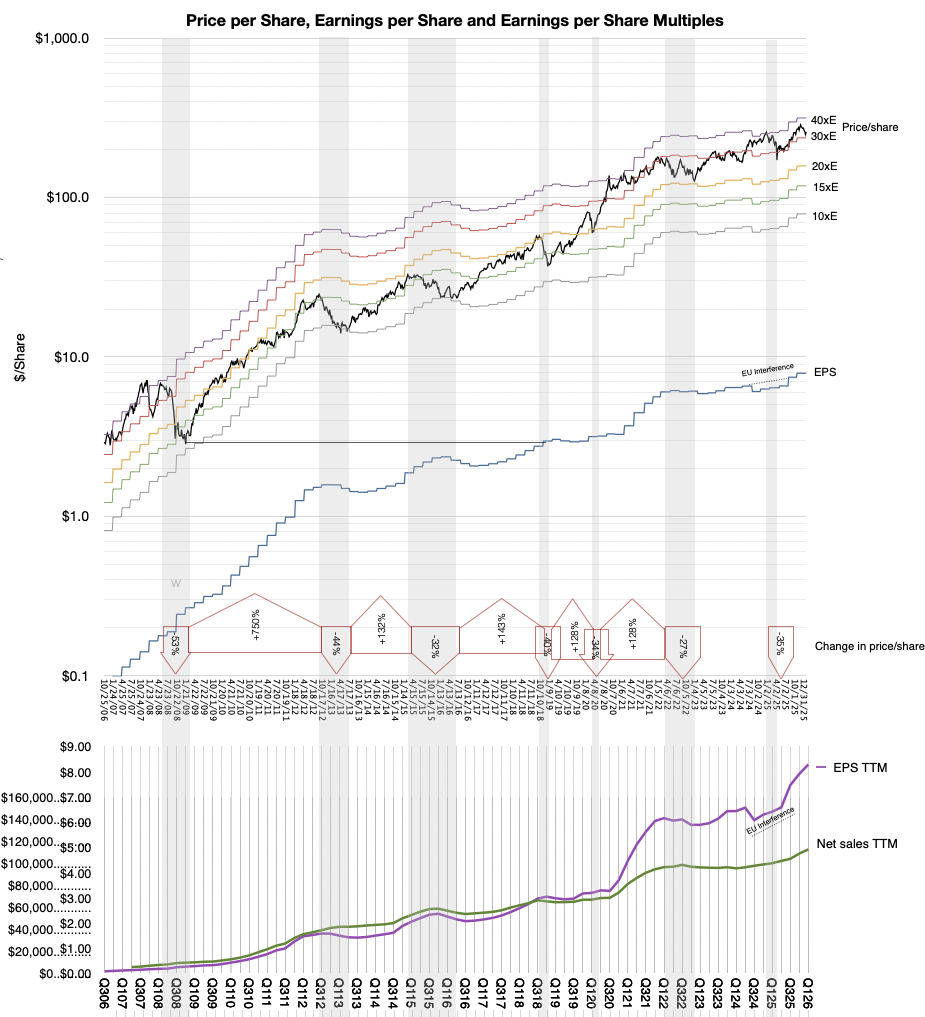
    • With an estimated $5.5 $13.8 billion in operating margin Apple is the most profitable PC vendor, capturing over 60% of the available PC hardware profits.
    • The product has retained an average selling price of over $1200 ($1400 last year) for at least a decade. At the same time the average pricing of Personal Computers has more than halved.
    • Volumes increased by about 20% over a decade.

    The overall picture of the market is shown the following graphs. First, the overall quarterly shipments.
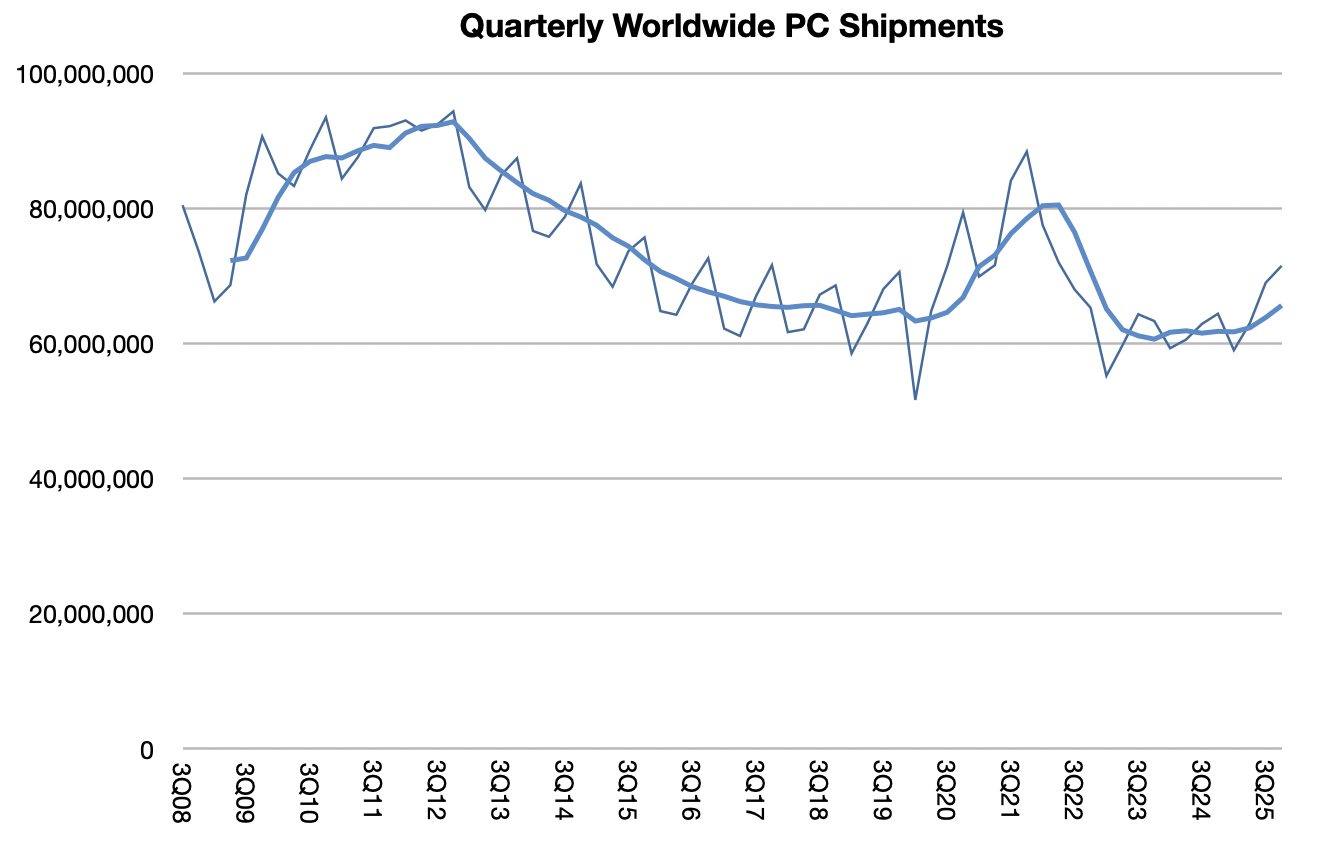
    Note the Covid-era surge during 2020 and 2021 but overall decline from peak in 2012. Yearly shipments were 262 million in 2025 vs. 371 million in 2012. The install base of users is largely unchanged. Microsoft has cited "over 1 billion" to 1.4 billion monthly active devices, with figures varying between official statements. My estimate has been 1.2 billion PC users with an additional 250 million Mac users, more about this later.

    The shipments data provided by Gartner over the last 17 years is shown below:
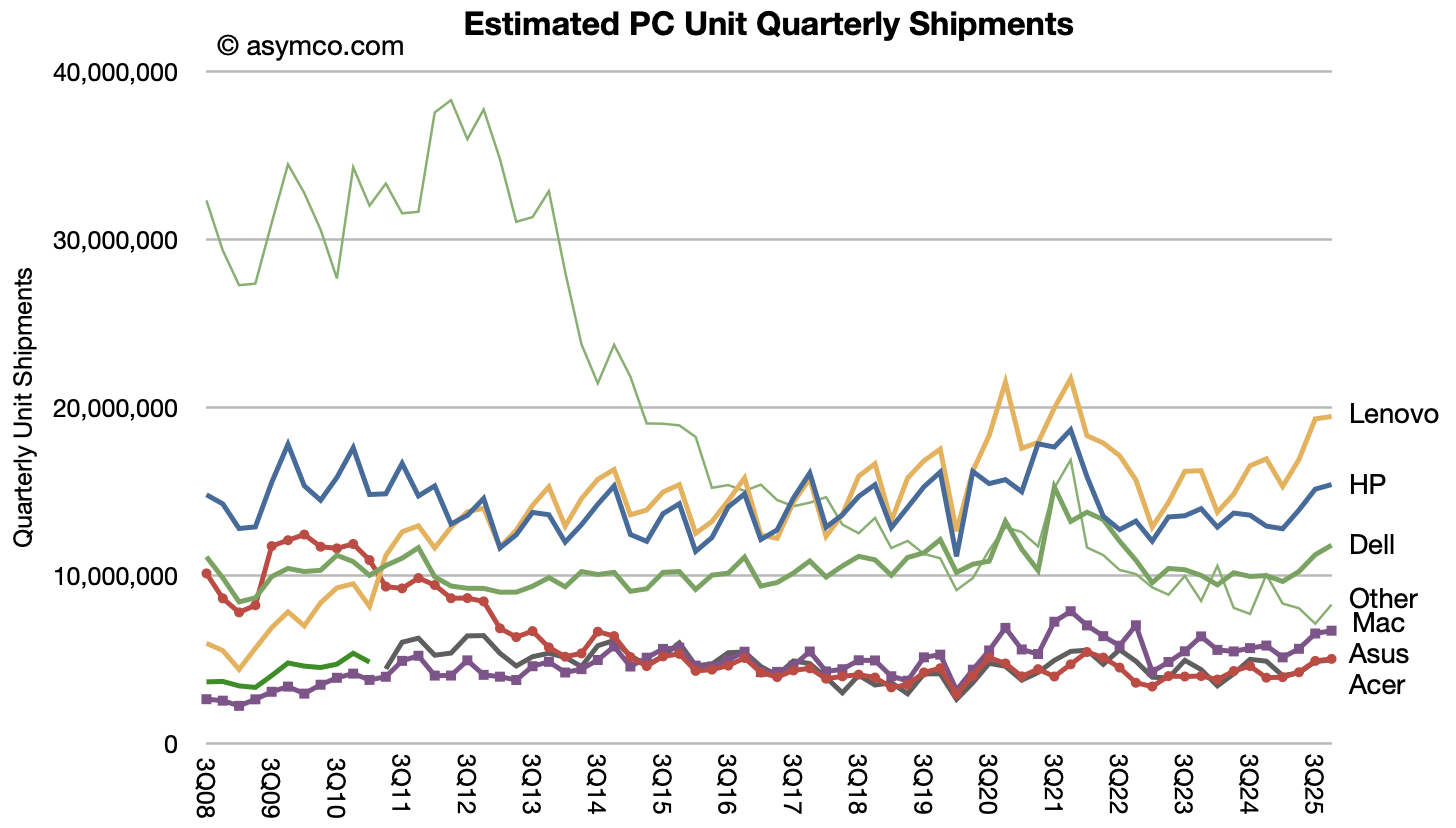
    Notable are the declines in "other" vendors and the gains from Lenovo and Apple. Broadly speaking, "other" are assumed to be mostly consumer markets and that has either declined or been captured by Mac with consolidation around Lenovo. Lenovo, HP, Dell are likely to maintain enterprise accounts serving large customers and that has been a steady but low margin business for decades.

    Mac has grown to fourth place but still a way to go to third place Dell. Apple may overtake "other" combined in a year or two.
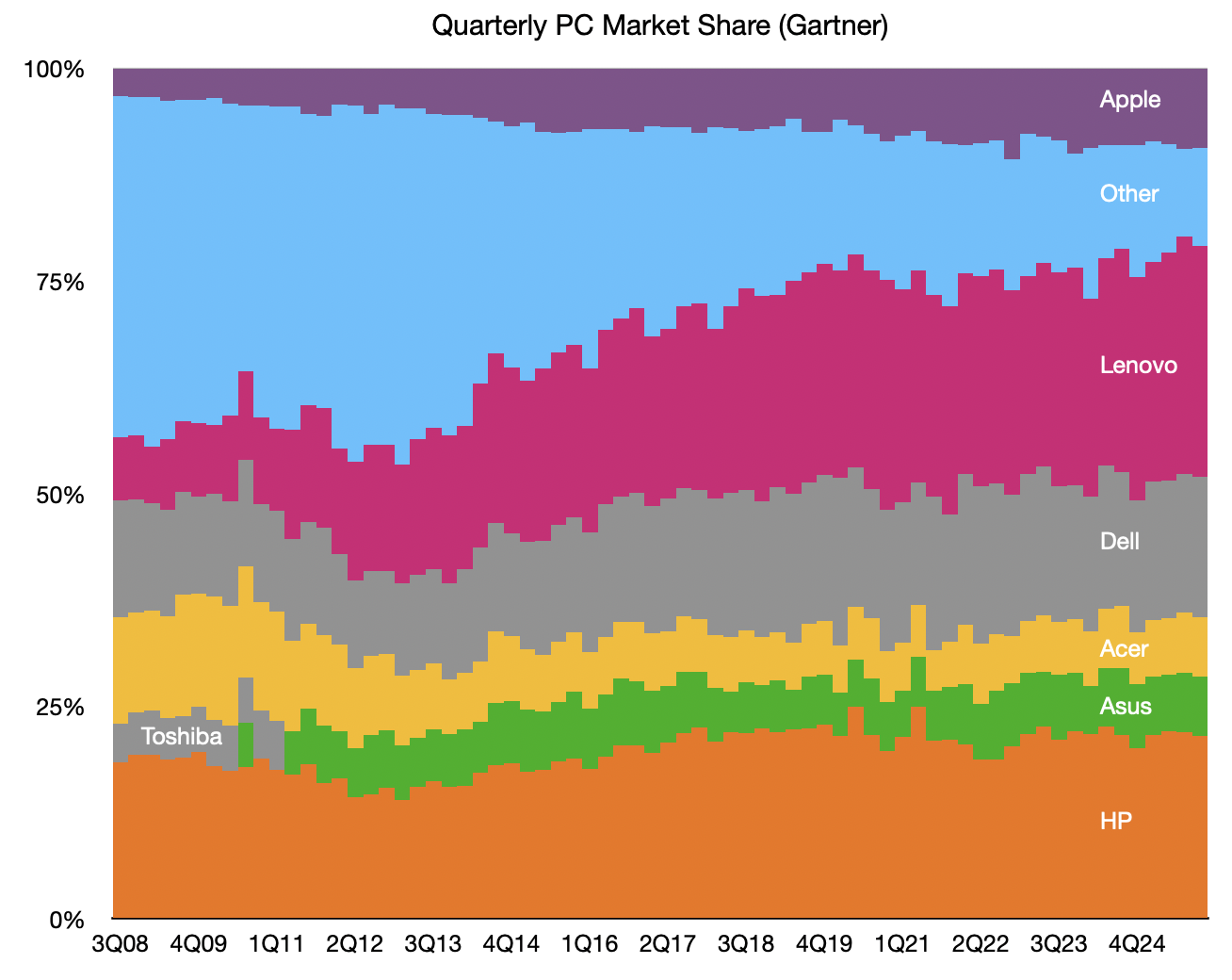
    Quarterly PC Market Shares by Vendor

    The market share data shows how "other" has been squeezed between Lenovo and Apple while the other players have largely held steady. Acer and Asus somehow managed to survive.

    So what does this mean for the future? What is Apple's strategy with the MacBook Neo. Or for that matter, for Studio and iMac and Mac Mini and MacBook Air and MacBook Pro?

    The Neo was such a surprise for many given its incredible price/performance ratio and the overall quality and affordability (and distribution potential). I've read many reviews suggesting it will "disrupt" the market and that Windows PCs are just no longer competitive.

    Will the MacBook Neo move the needle? Will it take share from the Windows world (or for that matter from the Chromebook and even iPad?)

    One more thing: Apple's sales of about 24 million Macs for a base of 260 million users implies a life span for Macs of nearly 11 years. However, all the other PCs sold add up to 238 million for a user base of 1.2 billion. That means the life span for the non-Mac PC is only 5 years.

    This is, of course, reflected in the price difference but with the MacBook Neo, the potential for a 10 year old life for a $500 laptop puts the Neo price at $50/yr or 14c/day. Based on data for 2025, the average selling price of a new Windows PC is estimated to be $600 to $900 for consumer models. At $700 for a life span of 5 years makes the PC cost $140/yr or 38c/day.

    This means that the average PC is more than twice the cost of the MacBook Neo. Now that is a surprise.
  2. ‘No Near-Term Catalyst,’ KeyBanc on Apple Stock

    Nota Bene · 3 comments

    Difficult to draw firm conclusions

    Apple may not have a clear trigger to push the stock higher right now, according to top KeyBanc analyst Brandon Nispel. He reiterated a Sector Weight (Neutral) rating on the stock, saying recent spending data and current valuation leave limited room for near-term upside.

    KeyBanc’s consumer spending tracker showed indexed spending down 9% month over month in February, worse than the three-year average decline of about 4%. On a yearly basis, spending rose 4%, slightly above January’s 3% growth. Nispel said the data from January and February remains mixed, making it difficult to draw firm conclusions about Apple’s demand this quarter.

    KeyBanc also updated its forecasts after Apple’s recent product launches. The firm now expects Apple’s Fiscal 2026 revenue to reach about $466.5 billion. It also raised its Fiscal 2026 earnings estimate to $8.52 per share and Fiscal 2027 earnings to $9.11 per share.
    For the second quarter of 2026, KeyBanc estimates revenue of about $108.7 billion, which would represent roughly 14% year-over-year growth.

    With Apple trading close to its historical valuation levels, Nispel said he does not see a “clear near-term catalyst” that could push the stock higher.

    Turning to Wall Street, analysts have a Moderate Buy consensus rating on AAPL stock based on 15 Buys, nine Holds, and one Sell assigned in the past three months. Furthermore, the average AAPL price target of $305.18 per share implies 17% upside potential.

    Source: TipRanks Financial

    NB: Near-term you say?…

  3. When does Apple split its stock?

    Nota Bene

    Is there a pattern?

    Apple has split its stock 5 times in its corporate history. Here’s a history of Apple’s stock splits and where its price would be now had it not divided its shares.

    After its first stock split in 1987, the tech giant conducted four additional splits, bringing its total to five in its corporate history as of mid-March 2026: 

    On June 21, 2000, Apple conducted a second 2-for-1 stock split.

    Apple conducted its next 2-for-1 stock split on Feb. 28, 2005.

    Apple’s next stock split was also its biggest: 7-for-1 on June 9, 2014.

    The most recent was a 4-for-1 stock split on Aug. 31, 2020.

    Current Apple stock price x 4 x 7 x 2 x 2 x 2 = Apple stock price had the stock never been split

    Based on the March 12, 2026, closing price, Apple stock would be $57,290.24 per share had it never been split.

    Source: TheStreet

    NB: The question on when would be the next split sometimes comes up…

  4. Asymco Bulletin 002 / March 1, 2026

    Bulletin

    Asymco Bulletin is a digest of all the work we have published for the week ending March 1, 2026.

    Office Hours

    Our first Office Hours interactive seminar and Ask Me Anything questions/answer session will be on March 4th, after, presumably all the new announcements Apple will be making during the week. I will be broadcasting to you en vivo y en directo from Paris.

    Apple March 4 Special Event – Q&A

    Apple March 4 Special Event – Q&A → Join us for an exclusive Asymco One live Q&A on March 4 at 3pm ET to dissect Apple's latest business moves. →

    Research

    How many Apple users are in China?

    Greater China (GC) is a specific reporting segment for Apple, encompassing Mainland China, Taiwan, Hong Kong, and Macao, with a combined population nearing 1.5 billion. This region is not just a significant contributor to Apple's revenue—accounting for 18% of net sales in Q4 2025—but also a dynamic landscape of technological adoption and consumer behavior. The smartphone user base in GC has surged from 690 million in 2016 to nearly a billion in 2025, with projections reaching 1.08 billion by 2029.

    The iOS ecosystem within GC exhibits varied dynamics across its constituent regions. While Macao maintains a steady iOS share of around 60%, Mainland China and Taiwan show different trajectories. Analyzing these trends through mobile OS share data reveals iOS's ascent, suggesting robust potential for further penetration and user engagement. As Apple navigates this complex market, understanding GC's historical growth patterns and future prospects is crucial for capitalizing on emerging opportunities and sustaining its competitive edge. →


    Nota Bene

    Apple #1 phone vendor in Europe → Apple leads Q4 2025 with a 7% YoY shipment rise driven by iPhone 17, while Samsung follows with 4% growth; Xiaomi faces a 6% decline amid shifting regional dynamics. →

    Are Solid State Batteries Finally Here? → Donut Lab has partnered with VTT for independent battery tests, with full reports and videos to follow. →

    iPhone becomes India’s top single export item → In 2025, Apple's iPhone exports from India, driven by Tata and Foxconn plants and a robust supply chain, reached $23 billion, making smartphones the top export category. →

    Apple’s App Store growth is reaccelerating → Apple's Services, beyond just the App Store, are poised for robust growth, driven by global market expansion and strong hardware demand. →

    Here’s why demand for Macs has spiked → Mac lead times have surged to multi-year highs due to increased demand, notably impacting models like Mac Studio, MacBook Pro M4, and Mac Mini. →

    A resource for AVP news → "AVP VIP offers a weekly, ad-free digest of tech news and insights, accessible to Asymco One members." →

    Apple to Start Assembling Mac mini in the United States This Year → Apple revamps the Mac mini with M4 chips and boosts U.S. chip sourcing, starting at $599 without display, amid rising demand. →

    Apple Pay Aiming Launch in India This Year → Apple Pay aims to launch in India by late 2026, pending regulatory approvals and fee negotiations with card issuers. →

    iPhone and iPad approved to handle classified NATO information → Apple's iPhone and iPad achieve unprecedented NATO compliance, marking a pivotal shift in secure mobile technology acceptance. →

    Eddy Cue says Brazil is Apple TV’s second-largest market, talks Netflix-Warner merger → In an interview, Apple's Eddy Cue highlighted Brazil as the second-largest and fastest-growing market for Apple TV subscribers, while noting potential impacts from proposed streaming regulations and a possible Netflix-Warner deal. Specific user and device numbers were not disclosed. →

    DRAM Shortage Will Cause ‘Seismic Shift’ in Smartphone Market, But Apple Will Be Less Affected → A looming DRAM shortage due to AI demand will slash smartphone sales by 13% in 2026, forcing a market shift towards pricier devices, with relief not expected until mid-2027. →


    Asymco One gives you full access to our research, analysis, and commentary. Subscribe with code BULLETIN for a discount.

    Feedback: Have questions or comments? Reach out to us at contact@asymco.com. We’d love to hear from you.

  5. How many Apple users are in China?

    Research · 2 comments

    Greater China.

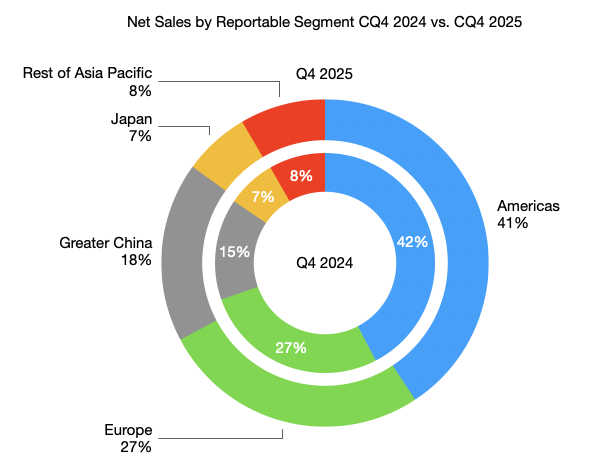
    As previously reported, China represented 18% of net sales for Apple in the fourth quarter of 2025. This was up from 15% the year before and the third largest reporting segment. The segment grew by 37.9% year-on-year.

    It's time to understand precisely how big this market is in terms of users, iPhone install base and device install base, with an eye toward understanding the history and potential for growth.

    First, it's important to note that Apple refers to "Greater China" (GC) not just China. That means within this reporting segment are Mainland China, Taiwan, Hong Kong and Macao. The populations are approximately, 1.4 billion, 23.2 million, 7.5 million and 700k respectively.

    Second, the population of smartphone users has been growing dramatically. In 2016 there were about 690 million (GC) and in 2025 the number is about 997 million. The forecast for 2029 is 1.08 billion.

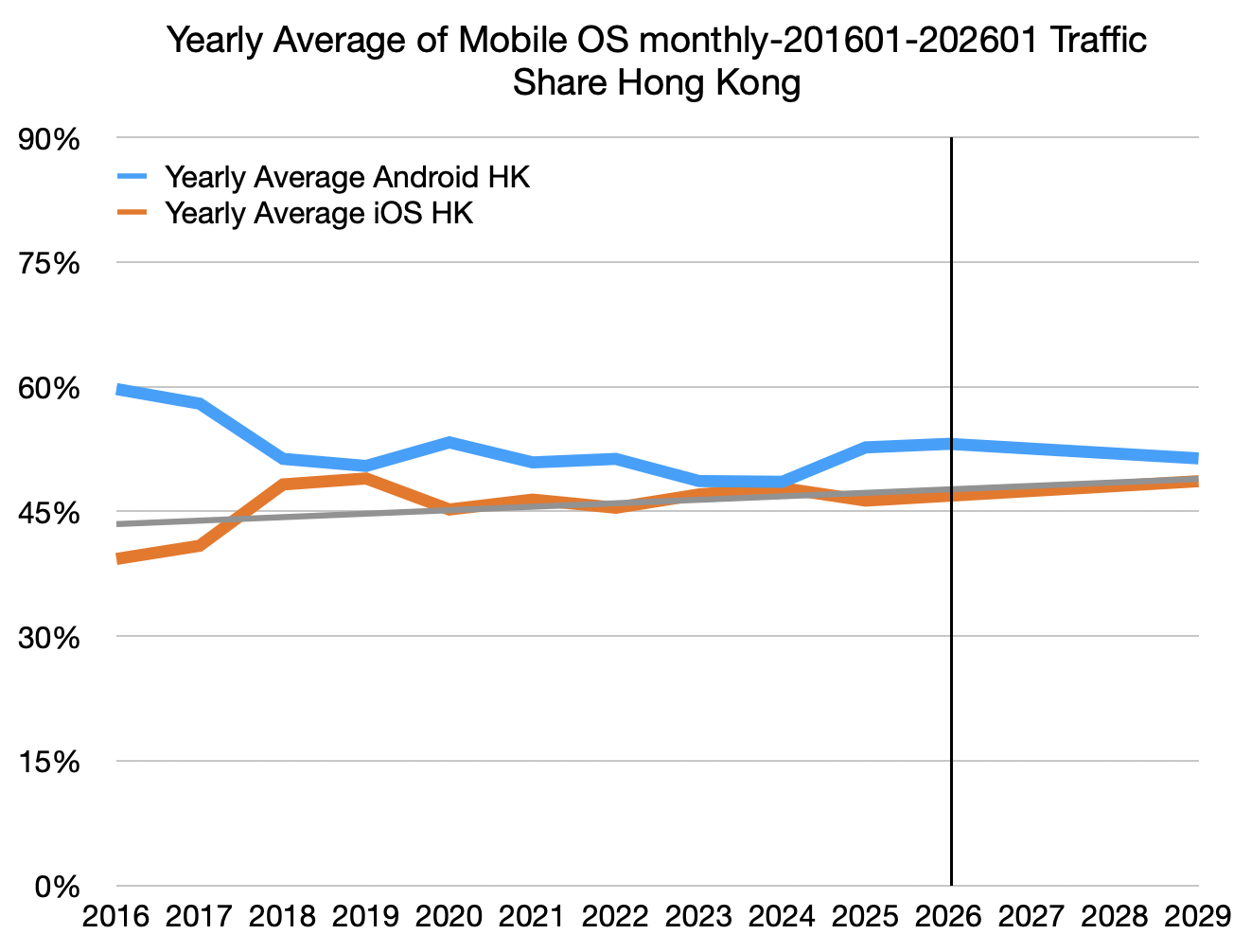
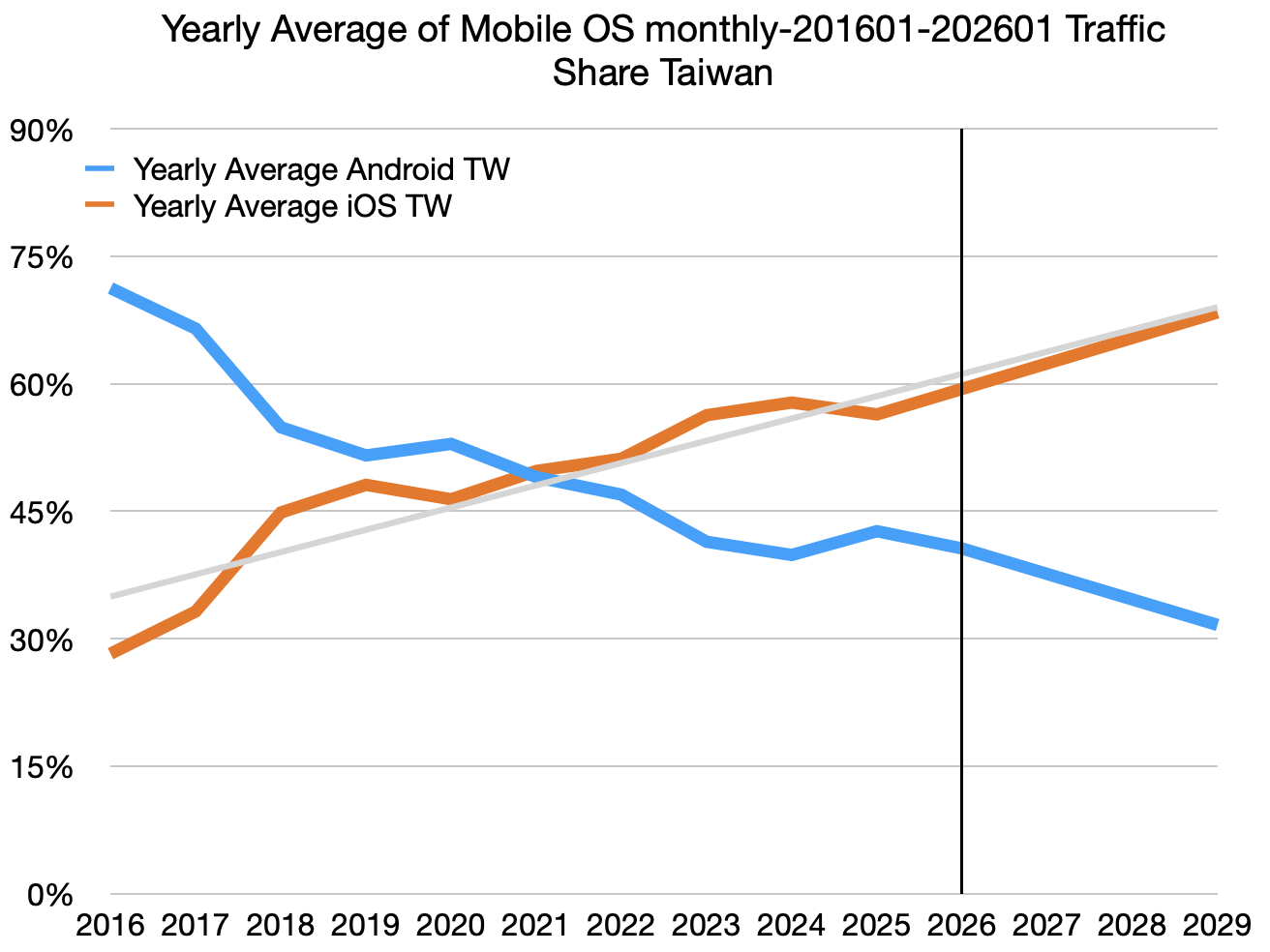
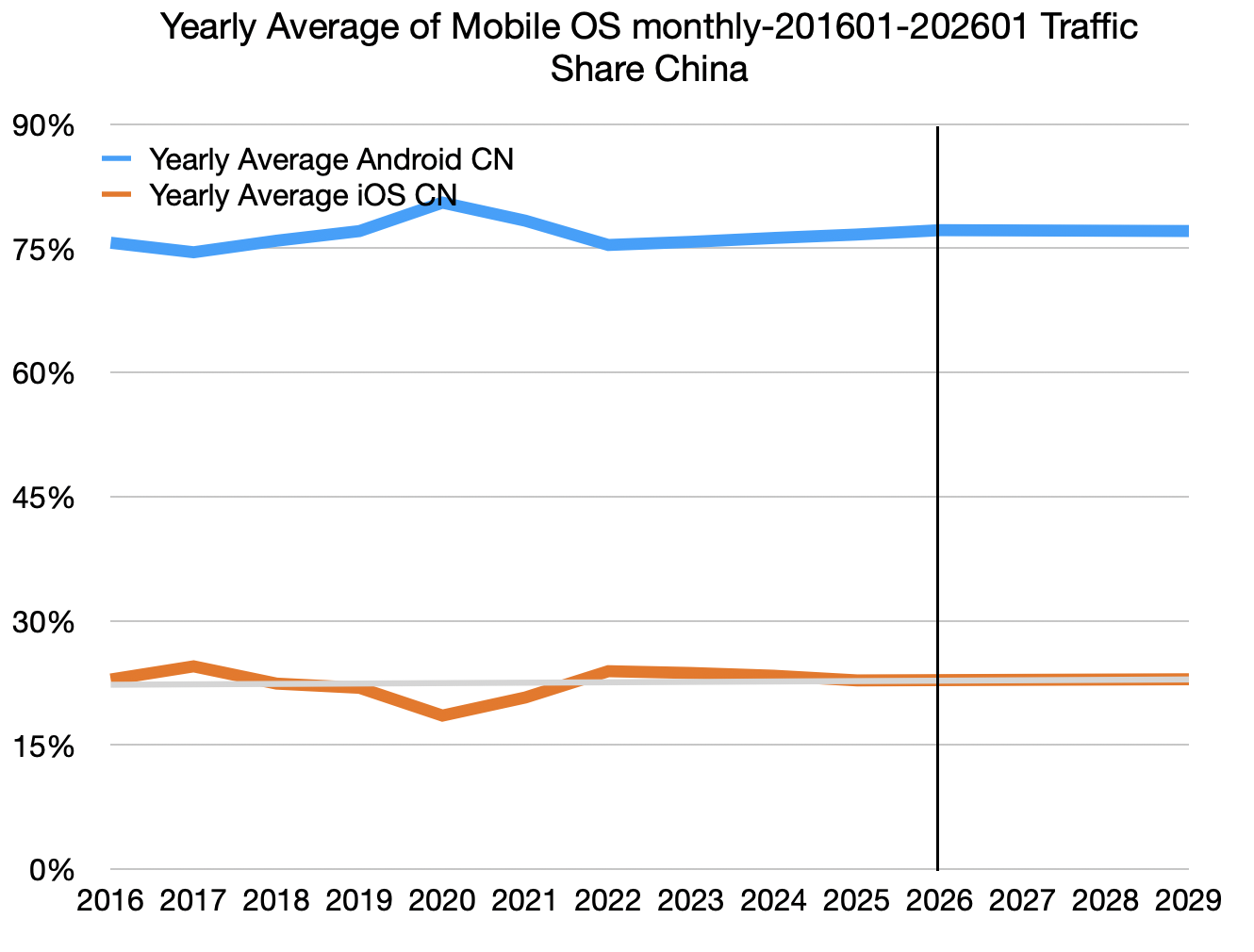
    Third, the share of iOS has been rising but at different rates in the three regions (Macao is excluded because of small relative size, but Apple is holding iOS share steady at about 60%.)

    These graphs represent the trends in Mobile OS share as collected by Statcounter and trendlines for iOS are shown with projections to 2029.

    Multiplying the share numbers by the user numbers, including projections gives the following iOS users summary.

  6. Apple #1 phone vendor in Europe

    Nota Bene

    Up 7 percent y/y in Q4

    As expected, Apple took the top spot in Q4 2025 and increased its share compared to Q4 2024, with shipments growing 7% YoY thanks to a strong performance by the iPhone 17 series.

    Samsung took second place, with its shipments growing 4% YoY and share also increasing YoY to 29%.

    Apple’s strong growth in Eastern Europe and increased competition in Western Europe ate into Xiaomi’s market share, causing a 6% YoY decline.

    Source: Counterpoint

    NB: Original article suggests bad news on the way ...

  7. Asymco Bulletin 001 / 22 Feb 2026

    Bulletin

    Asymco Bulletin is a digest of all the work we have published for the week ending Feb 22, 2026.

    Research

    Teen Survey Update: What happens when teens grow up?

    Latest data indicates 88% of teens own and intend to purchase iPhones, marking a decade-long trend of increasing adoption. This phenomenon transcends mere functionality; the iPhone has become a cultural icon, symbolizing status and identity.

    Unlike other Apple products, such as Apple TV+ or Apple Music, which struggle for traction among teens, the iPhone's appeal is deeply woven into the social fabric, partly due to generational continuity—the children of early iPhone adopters are now loyal users themselves.

    In contrast, social media platforms illustrate the fickle nature of tech usage among younger demographics. While Facebook remains prevalent among older millennials, Gen Z gravitates towards Instagram and TikTok, reflecting shifts in cultural preferences and digital behaviors.

    For Apple, success in services like Music and TV+ hinges on leveraging existing family dynamics through bundling.

    Read More →→→

    Apple in Europe: How many iPhone switchers are addressable in the near term?

    On the Q4 call, Tim Cook highlighted Greater China’s 38% year-over-year revenue growth, fueled by record iPhone sales, strong upgrade activity, and double-digit retail traffic gains.

    Europe, however, drew little attention—despite generating more revenue for Apple than China. This is peculiar.

    Europe’s smartphone market shows steady structural gains for iOS. Since 2018, share has risen from 24% to 39%, while Android has fallen from 74% to 60%—a 15-point swing equal to roughly 70 million additional users. With an installed base near 459 million users versus about 300 million in the U.S., Europe combines scale with affluence.

    In sum, the pattern for Apple in Europe is not saturation but share transfer, signaling durable competitive strength in a mature market and an inkling of how all markets will eventually behave in maturity.

    Read More →→→

    Estimating 2035 iPhone Users

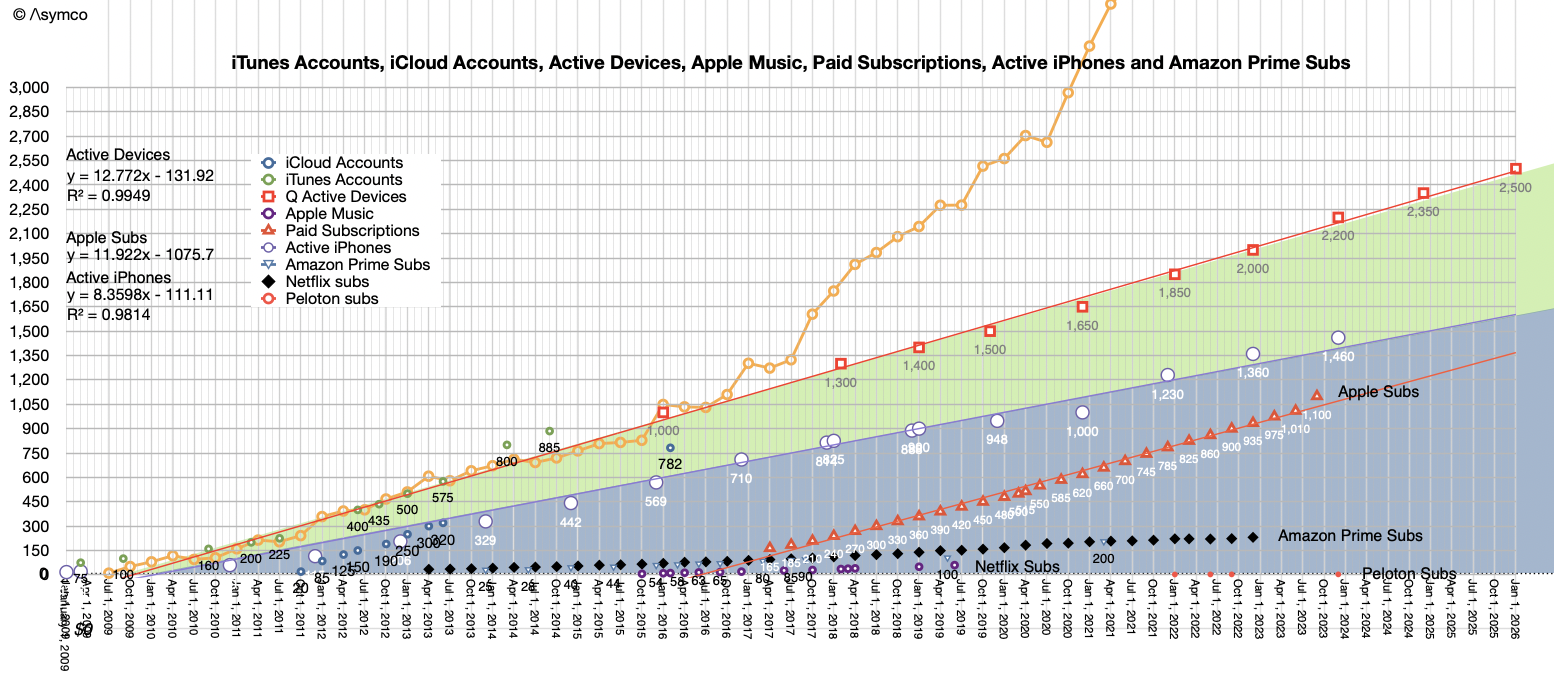
    In the last quarter Apple reported 2.5 billion active devices. Of those, I estimate 1.6 billion are iPhones.

    Using this as a base, I've created an iPhone installed base estimate looking forward to 2030, integrating Statcounter’s market share data, Ericsson’s global smartphone user forecasts, and BankMyCell’s smartphone install base.

    The sources broadly align through 2025, though Statcounter’s historical iOS share (2017–2023) diverges somewhat, possibly reflecting Android’s heavier web traffic footprint due to usage patterns and bot activity rather.

    Taken together, the data points to iPhone nearing 2 billion active devices by 2030, consistent with overall smartphone adoption. Android’s projected rise toward 4.5 billion users signals continuing headroom.

    If switching dynamics and monetization trends persist, Apple’s ecosystem could expand to 2.5–3 billion users by 2035, with growth thereafter driven by switching and increased engagement depth and value extraction per user.

    Read More →→→


    Nota Bene

    Apple Announces Special Event in New York, London, and Shanghai on March 4 → Apple is hosting intimate, global "Special Apple Experience" events on March 4, 2026, likely unveiling new products like the iPhone 17e and M5-powered MacBooks, marking a fresh twist on traditional live-streamed launches.

    Apple adds video experience to Apple Podcasts → The "pod" in podcasts originated from Apple's iPod, with the company popularizing the medium by integrating podcasting into iTunes in 2005, and continuing to innovate with features like video podcast support and dynamic ad insertion.

    Why not maroon? The Macalope ponders the power of color → Apple's upcoming lineup, featuring color-excited anticipation for the iPhone 17e and modest updates to iPads, promises subtle yet intriguing tech advancements.

    Dan Ives Says Apple’s AI Alone Could Be Worth $1.5 Trillion → Apple's unparalleled distribution through its vast user base offers a significant competitive edge for rapidly monetizing AI innovations, potentially adding $1.5 trillion in value.

    While big tech burns cash on AI, Apple waits → As foundation models commoditize, Apple strategically curates top AI tech into its ecosystem, prioritizing user experience over engine development.

    Secure the chips, absorb the costs, and grab more market share → Apple faces memory cost inflation potentially raising iPhone prices, yet its strong ecosystem and execution provide resilience, whereas competitors like Samsung may struggle more due to lesser volume leverage.

    iPhone Emergency SOS via Satellite Helped Six Skiers Survive Tahoe Avalanche → Six skiers survived a deadly Lake Tahoe avalanche by using iPhone's Emergency SOS via satellite, highlighting its transition from luxury to essential. This feature enabled crucial communication with rescuers in remote areas lacking cellular service. The evolution mirrors mobile phones but faces slower adoption due to satellite bandwidth constraints.

    The US Supreme Court has ruled against US President Donald Trump’s decision to impose a raft of global tariffs → Apple and other affected companies may soon seek refunds for tariffs paid, following the Supreme Court's decision to invalidate Trump's tariffs, though the exact timeline and amount remain uncertain.

    Bankers complain that Apple has a tight grip on mobile payments → Canadian banks struggled to compete in the mobile wallet market, dominated by tech giants like Apple and Google, due to their risk-averse nature clashing with tech's innovation-driven approach.


    The all new Asymco One

    Introducing Asymco One Early Bird Pricing. → Asymco celebrates 17 years of insightful Apple analysis, launching Asymco One to guide stakeholders through Apple's evolving era with comprehensive content and community engagement. →

    Introducing: Asymco One Office Hours → Join Asymco One's monthly Office Hours with Horace to get live insights on Apple's business and financials, with special editions during key events.

    All Asymco Podcasts. All in One: Asymco One. → Exciting news: All Asymco Podcasts now under Asymco One subscription with remastered classics and new episodes.


    Asymco One gives you full access to our research, analysis, and commentary. Subscribe with code BULLETIN for a discount.

    Feedback: Have questions or comments? Reach out to us at contact@asymco.com. We’d love to hear from you.

  8. The US Supreme Court has ruled against US President Donald Trump's decision to impose a raft of global tariffs

    Nota Bene · 1 comment

    When do we get our money back?

    The US Supreme Court has ruled against US President Donald Trump's decision to impose a raft of global tariffs.

    Six of the court's nine judges voted to overturn the signature economic policy.

    The judgment was in response to an application brought by businesses affected ‌by the tariffs from 12 mostly Democrat-run states.

    The applicants challenged US President Donald Trump's use of an executive order to impose the sweeping country-specific taxes.

    Trump latest: Tariffs snubbed by Supreme Court

    From 2 April, a day described by Mr Trump as "Liberation Day", countries across the world were hit with taxes on their exports.

    Source: Threads, Sky News.

  9. Estimating 2035 iPhone Users

    Research

    Surveying multiple sources

    We have a firm hold on the number of active devices as well as the number of iPhones in use. This is due to Apple reporting the data. The latest active device count was 2.5 billion and the estimate for active iPhones is 1.6 billion.

    This patters also allows us to forecast the active base pretty accurately as the growth is predicted by the tight fitting linear approximation.

    For more confidence it would be useful to confirm these predictions with different estimates. For this I turned to two additional sources: the Statcounter GlobalStats measure of Mobile Operating System Market Shares Worldwide coupled with Number of Smartphone Users Worldwide (forecast by Ericsson) and the Number of of iPhone Users from Bankmycell.

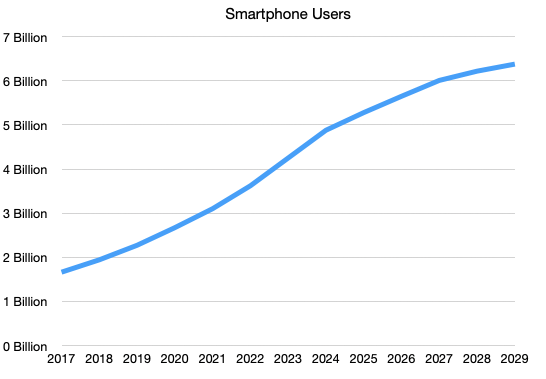
    The total Smartphone Users history and forecast is shown below:

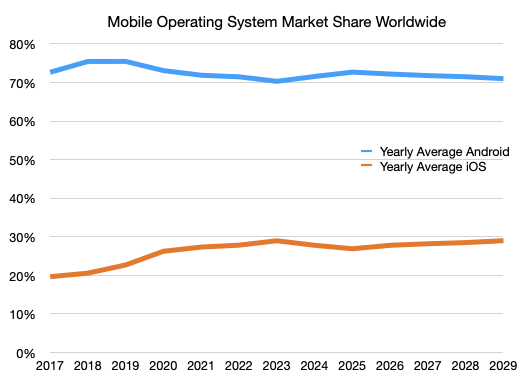
    The Mobile Operating System Market Share Worldwide is shown below:

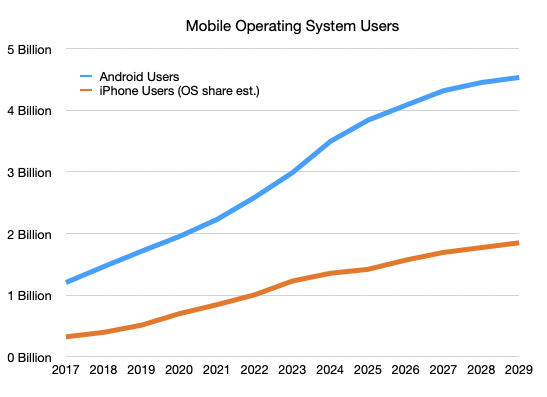
    Multiplying these two yields the Mobile Operating System Users

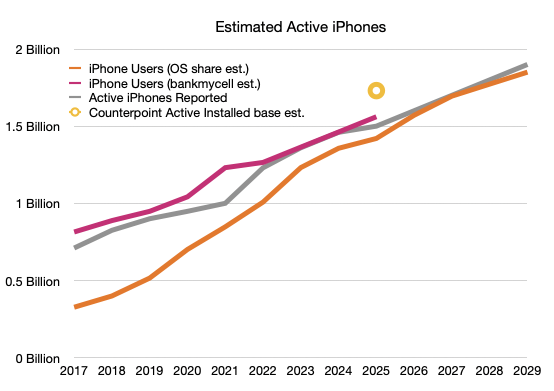
    The iOS users (orange line) can now be compared to Apple's own reported active device total (grey line) and the Bankmycell estimate as well as a derived estimate from Counterpoint (24% share of install base)

    The graph includes forecasts from 2025 to 2029.

    Discussion:

    That, coupled with value captured per customer will determine the value of the firm.

  10. Introducing Asymco One Early Bird Pricing

    Invitation

    The all-in-one on Apple

    In July this of this year Asymco turns 17. In April of this year Apple turns 50. 

    This means that Asymco has been following Apple for one third of its life. I regret that it has not been for longer but oh, what a third it has been.

    • During 2009, Apple Net Sales were $46.7 billion.  17 years later revenues should comfortably top $500 billion. 
    • Earnings per share (split-adjusted) in 2009 were 37c. This year EPS will be around $9.5. 
    • Most importantly, at the end of 2009 Apple had about 107 million active devices (43 million Macs, 33 million iPhones and 30 million iPods!) Today it has 2.5 billion. 

    The increases in multiples:

    • 23x Active devices, or a compounded annual growth (CAGR) of 20%
    • 11x Revenues, CAGR of 15%
    • 26x Earnings, CAGR of 21%
    • Apart from the customer love affair these numbers reveal, investors were awakened.
      36x increase in Apple share price, from $7.5 to about $270. That’s 17 years of 23.5% growth. 

    The appreciation of the share price faster than the other underlying metrics reflects the undervaluation that existed for most of the last 17 years. Its value grew a lot more because it was too cheap to begin with. 

    That was perhaps my most important observation. A recurring undervaluation reflecting a perceived fragility. The more I studied and came to learn how the company operates the more I realized that the perception was wrong. It was in fact the opposite of reality.

    When I started my “Apple model” in 2009 I did it out of indignation. I had access to a few analyst reports covering the company and, when looking at their forecasts and assumptions, I was shocked to read that they treated Apple as a computer company. Two years had passed since the iPhone launched and I had made the radical assumption that the future of the company would be determined by the dynamics of phones--later to be broadened into “devices.” This did not appear radical to me because five years earlier Apple had created the market for music players. A market it came to dominate. It seemed very rational to me that with the iPod (and iTunes), Apple had demonstrated that it was more than a computer company. Or perhaps more accurately, it was so profoundly different as a computer company that it redefined what computers were. Nonetheless, observers seemed stuck with the perception that once a PC maker, always a PC maker.  

    So here is my prediction today: Apple at 50 is no less capable than Apple at 20. Indeed, it is more so.  This is because, even if it has not yet completed its quest, the company has sought self knowledge.  A knowledge which I have sought to gain as a distant observer.

    And so here I am, inviting you to come along with me on this journey. 

    Asymco is being re-launched. Apple at 50 is entering a new era. It has transitioned from Apple ][ to Mac to iPod, iPhone, iPad, Watch and Spatial Computing. But it has always been the company that brought computers to people and people to computers. The new era of computers that appear more like people is dawning and the connection between the two needs to be built. Only Apple is capable of creating this connection. And only Asymco is able to tell the asymmetric story of how it will happen.

    Let’s learn together. 

    To make this research possible we’re launching Asymco One. 

    Asymco One is the analysis you need for understanding everything in the world of Apple. It’s a bundle of seven categories of content:

    1. Curated news and commentary with Nota Bene. 
    2. Reconsider your assumptions with Research. 
    3. Save time with the weekly summary in the Bulletin. 
    4. Supercharge your narrative with Asymetric podcasts. 
    5. Get your questions answered during Office Hours. 
    6. Attend in-person or online the full-day Conference.
    7. Search over 1800 posts, 60,000 comments, 400 podcasts and thousands of graphs since July 2009 in the Archives.

    All while connecting with the most knowledgeable community of thinkers and investors in Apple.

    Asymco One is a bundle which will offer over one thousand updates per year providing the ultimate intuition on Apple for stakeholders and connoisseurs of the most important phenomenon of our time.

    It’s available as a subscription for $1000/yr, about the price of an adequately configured iPhone. 

    For early adopters we are offering a discount of $150 with the code INNOVATE.

    I hope to see you in the Comments, the Office Hours, the only Conference and in person. 

    Yours,

    Horace Dediu

    –
    Asymco One: About | Subscribe
    Use code PIONEER to save 25%.

  11. Apple in Europe: How many iPhone switchers are addressable in the near term?

    Research · 2 comments

    An update using operating system market share

    Apple's performance in China is often noted and scrutinized. During the last quarterly earnings call Amit Daryanani asked:

    ... the other second question I have for you is maybe just touch on the China strength you folks had. I think this is very close to all-time high revenues you have had in China. What is driving the strength over here?

    To which Tim Cook gave the following answer:

    Greater China was up 38% year on year. It was driven by iPhone, where we set an all-time revenue record. So it was the best iPhone quarter in history in Greater China. It is driven by the customer enthusiasm for the iPhone 17 lineup. And I would tell you that during the quarter, traffic in our stores in China grew by strong double digits year over year. It was a terrific quarter. Our installed base reached an all-time high in both Greater China and Mainland China. And we set an all-time record for the upgraders, and we saw strong double-digit growth on switchers.

    That's remarkable growth and every quarter we get this sort of discussion. But I don't recall ever there being a similar discussion about Europe. This is strange because, and the following graph shows, Europe is a bigger market for Apple than China.

    Europe also grew, and at 12.7%, grew faster than the Americas and faster than Japan.

    Regional Sales CQ420252024Growth 
    Americas58,52952,64811.2%
    Europe38,14633,86112.7%
    Greater China25,52618,51337.9%
    Japan9,4138,9874.7%
    Rest of Asia Pacific12,14210,29118.0%

    So why is Europe not discussed. Management does offer some mentions: