Asymco Bulletin is a digest of all that was published during the week ending Aug 16, 2026.
Next Office Hours will be in-person
We are planning a face-to-face live Office Hours this fall, either in Boston or the Bay Area, open to Asymco One subscribers. If you would be interested in attending, write to events@asymco.com.
Part 1 is about culture and innovation: how a company with modest founders and no wealthy backers survived on timing, persistence, and the willingness to be reborn, because Apple 2.0 has little to do with Apple 1.0 and we still call it one fifty year continuity. Part 2 is about the interface, which is where Apple has always ended up, deliberately or by accident, and which determines whether the next computing paradigm gives Apple a design surface or takes one away. Supply chains and geopolitics are management problems with management solutions. AI is the only genuinely strategic question, and the answer depends entirely on whether it turns out to be infrastructure or a platform. →
Nota Bene
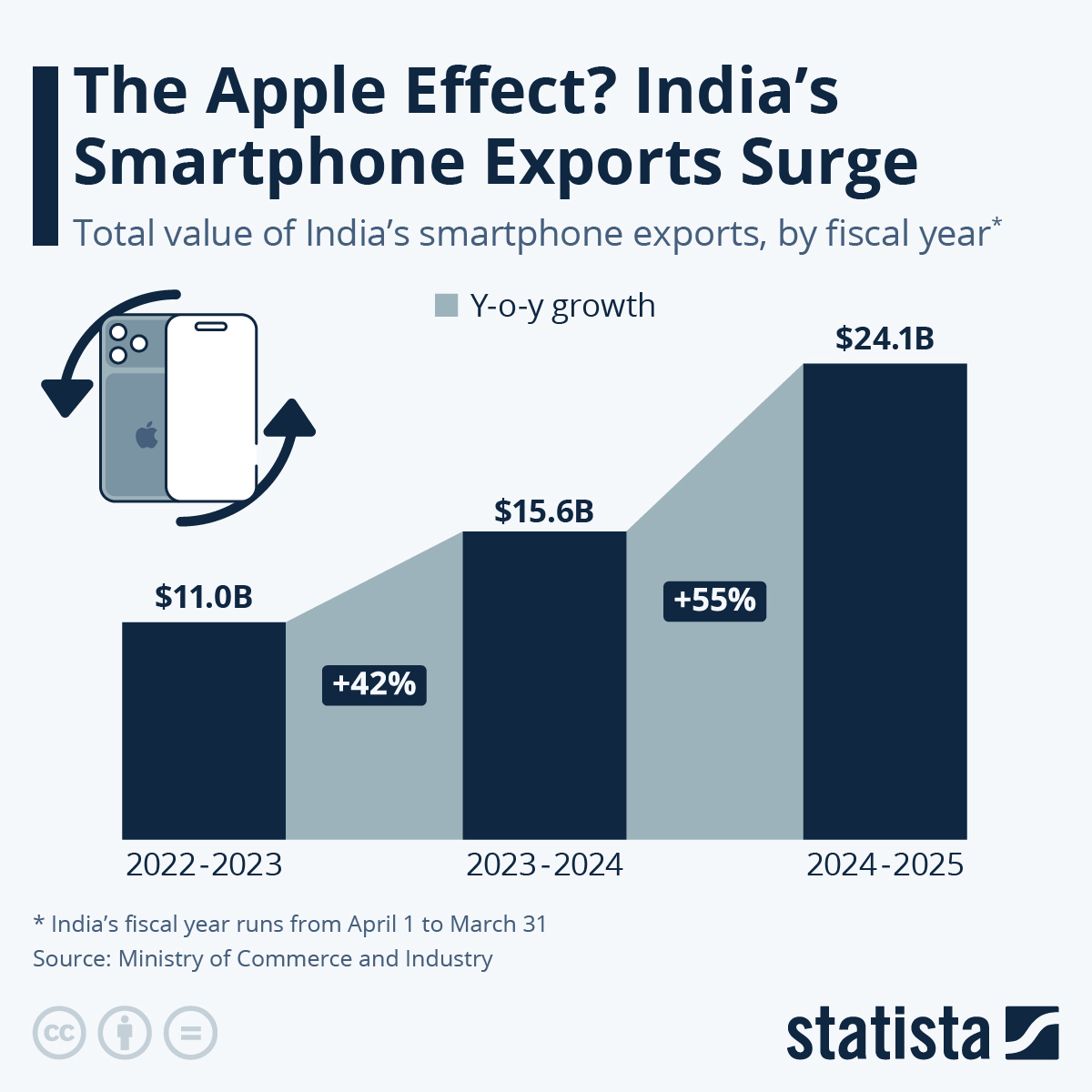
Apple passes $10B/yr sales in India → India crossed $10 billion in annual Apple sales for the first fiscal year, up 11% and led by the iPhone with iPad and Mac also climbing. The market is still tiny next to Greater China's $18.8 billion in a single quarter or Japan's $6.6 billion. A weakening rupee and higher local pricing make it look better in dollars than it feels to a buyer paying $870 for the entry iPhone 17 versus $800 in the US. →
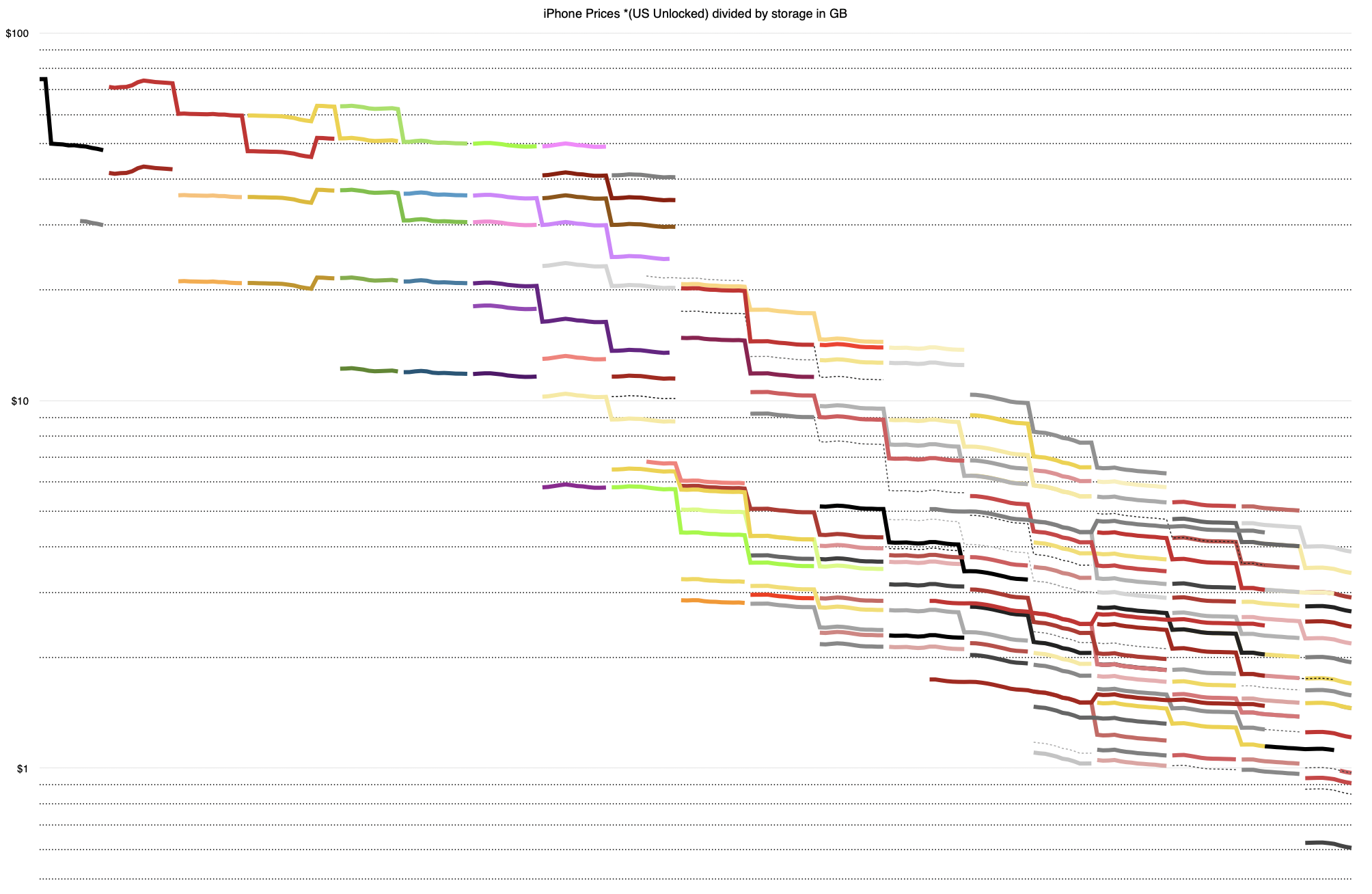
Apple Upgrade: down to the penny, up to an algorithm → The gap between short and long term lease multiples on the iPad, versus the iPhone's steeper 1:1.5, likely comes down to depreciation and residual value rather than any messaging. Every price looks algorithmic now, down to $50.01 for the two terabyte 11 inch iPad Pro, a sharp break from the deliberate, human-directed pricing that shaped the iPhone lineup. Someone needs to build a scraper and track this the way a market signal gets tracked, because these prices move and nobody is watching. The real puzzle is accounting: a leased device sitting in a customer's hands is not a sale, so where does Apple book it. →
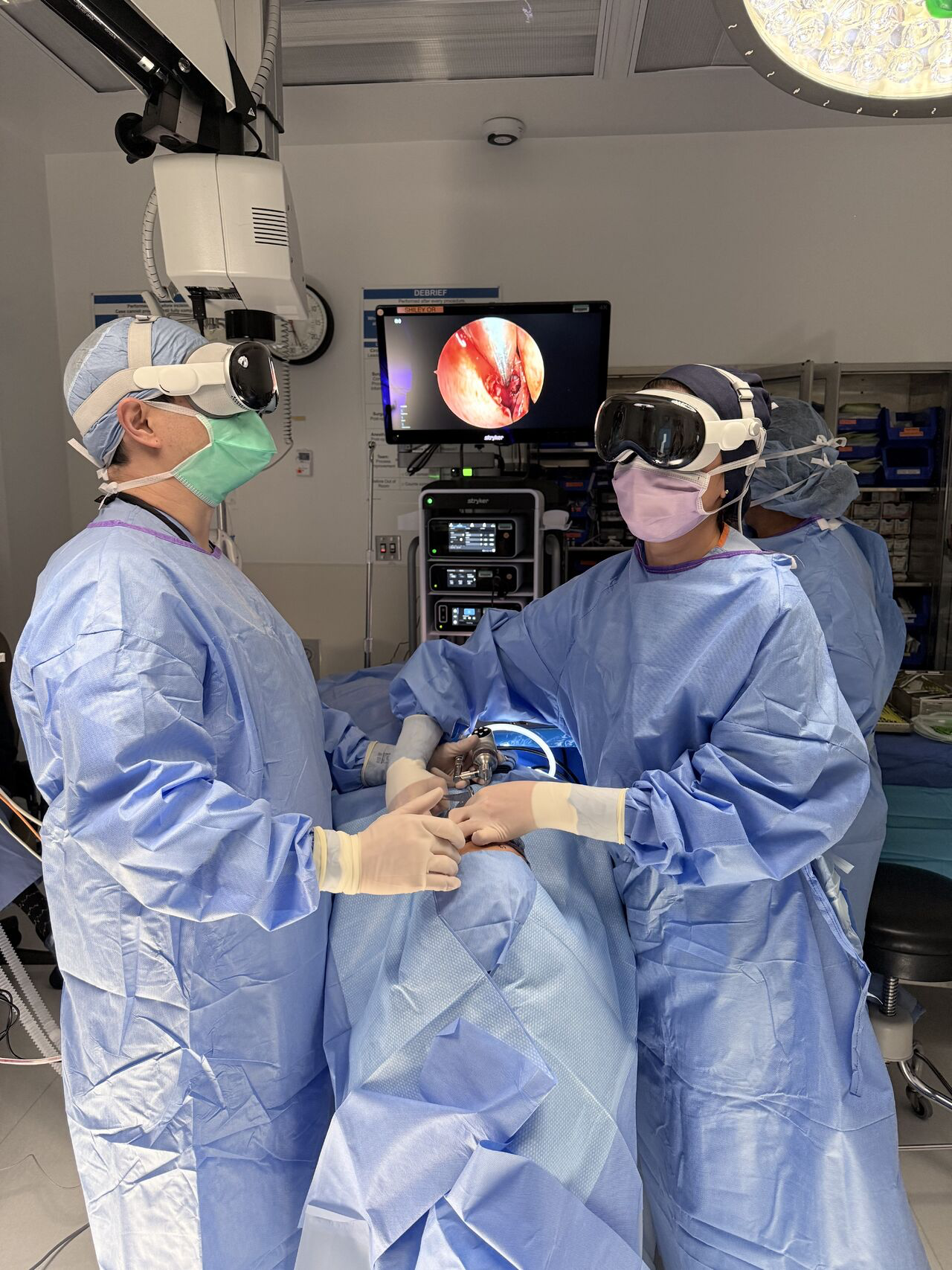
Vision Pro and glasses: the job is seeing, not capturing → Vision Pro keeps getting funded because Apple believes in it, not because of some product roadmap logic, and the surgical results already coming out of hospitals are proof it does something real. The bigger opportunity is plain eyewear: the magnetic lens swap Zeiss built for Vision Pro is the same trick Apple pulled with Watch bands, and glasses are a market larger than watches ever were. Everyone else building smart glasses treats them as cameras for capturing what you see, the same mistake made with smart speakers built as microphones instead of speakers. Apple's glasses will be sold as an optical device first, the way the Watch was sold as a chronograph, because the job of eyewear has always been to help you see, not to record you. →
Cook Doctrine's remedy: floods don't change architectures → Cook calls the current semiconductor crunch a hundred year flood, and floods do not change how cities are built, they just get the dams built afterward. Apple is not going to turn itself into a chipmaker just because chip companies are printing money right now, because a windfall like that is closer to winning the lottery, and lottery winners often end up worse off. The pattern is always the same: Apple gets burned by a dependency, retail, Intel, Microsoft, Google Maps, and builds its own version so it never happens again. Leverage over suppliers is not a personality trait, it is what falls out of owning the customer relationship first and negotiating from scale second. →
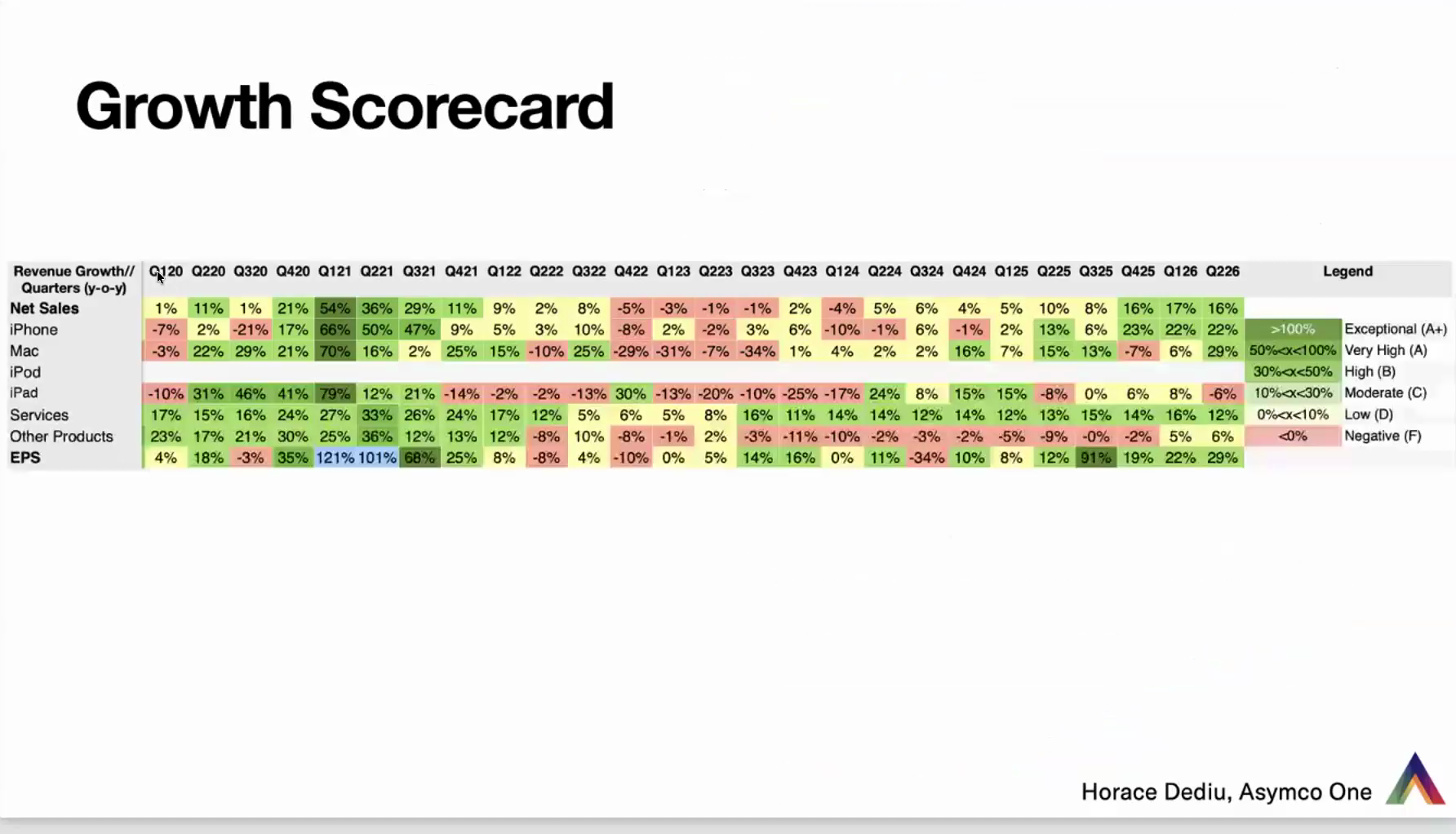
iPhone unit sales: count users, not phones → A weak unit number this quarter or the next few does not matter, because the installed base depends on the number of customers and how long they keep devices, both of which keep growing. Apple has had quarters with falling unit sales before and people wrote it off every time, so watch subscriptions and active devices instead of phones shipped. The guidance looks soft mostly because of engineering: a folding phone in limited production, a low end model pushed to next year, and the long planned split launch tied to Apple Upgrade. The comps will look ugly for a while because Apple is deliberately rearranging the calendar it has wanted to rearrange for fifteen years. →
The SoC crunch: Apple has had fires and earthquakes too → Apple's lever on the chip shortage is squeezing everyone else in the bill of materials first, the screen, the battery, the casing, even though those suppliers are already thin on margin. Contract length and exclusivity give Apple more room to negotiate than price alone. This is a hundred year flood, but Apple has weathered fires and earthquakes before and treats a components crunch as a solvable operational problem, not an existential one. The real existential risk is simpler: a workforce that walks out the door one day and does not come back. →
EU tech policy: playing chess by looking ahead one move → EU regulators play chess one move ahead while applying a twenty year old theory of gatekeepers and app store fragmentation to a digital world that has already moved past it. A thousand app stores sounds like consumer choice until nobody can find anything, so the market collapses back to a single gatekeeper anyway, the same lesson from Nokia's era as from iTunes. Compromise legislation tends to produce something consumers hate, GDPR and cookie banners being the proof, and people simply route around it. If Siri AI gets delayed in Europe over this, Europeans become second class users of their own devices, and Apple will still just stick to its guns. →
Apple passed $10B in annual sales in India for the first time in FY 2026, up from $9B in 2024-25 and $6B in 2022-23, as it expands its retail footprint — Apple Inc. exceeded $10 billion in annual sales in India for the first time last fiscal year.
NB: $10 billion was for the 12-month period running to March. It represents a 11% year-on-year increase over the previous fiscal year.
The bulk of the sales are for the iPhone, the source claimed. However, the demand for other products, such as iPad and Mac sales, also rose in the year.
Compared to other markets, India is still relatively small. Greater China recorded $18.8 billion in revenue in Apple's most recent quarter and Japan $6.6 billion.
It's also facing exchange rate headwinds with the rupee declining 10% against the dollar.
Moreover, the entry-level iPhone 17 is $870 in local currency versus $800 in the United States (though US buyers have to pay additional state sales tax).
The growth rate of 11% is not as strong as the 50% during the previous year though it exceeds GDP growth. I have a hypothesis that the Apple Upgrade program may provide some options to increase access to refurbished inventory for Apple to sell directly.
Exports have been rising at 50%+ rates. During Apple’s fiscal Q3 FY26 earnings call, CEO Tim Cook said the company achieved June quarter revenue records across every geographic segment, including India.
There is much more upside in India but I would expect 20%+ growth.
Apple’s 50th anniversary is a moment of celebration, but also a moment for reflection. What is the biggest weakness Apple needs to examine most soberly right now? Among its dependence on manufacturing in China, tighter regulation, the maturity of the smartphone market, and intensifying AI competition, which do you see as the greatest source of pressure going forward? In the AI era, Apple appears to be a late mover, and there are concerns that the longer tensions with China and broader geopolitical strains persist, the weaker Apple’s competitiveness could become.
On geopolitical and supply chain challenges, these are, in my opinion, management challenges. That is to say that they are resolved by the skill (and luck) of the people involved. They are resource and process questions not ones of priorities. Apple has an amazing team in charge and many say that is their “secret sauce” or their superpower. I would say the team is super important but it’s also a system at work.
AI is however a strategic question. AI is a dramatic new technology which might enable disruptive change. Apple has been cautious. As I pointed out with the three key management tenets (user dedication, focus on advantage, integration/modularity,) AI does not meet the criteria for investment. It might prove very wise to proceed cautiously but it may also be a big vulnerability. If AI is an infrastructure, like networking, open source or search, Apple would be good to partner and wait for commoditization. If AI becomes a platform with user lock-in and sustainable advantage for model builders and hyper-scalers then it can be dangerous.
What is the next strategic move Apple needs to make in order to remain one of the world’s most influential technology companies? Do you think the strengths that shaped Apple’s first 50 years will still work for the next 50, or does it now need an entirely different formula for success? Looking ahead, which area do you see as the most important pillar of Apple’s next decade: AI, healthcare, spatial computing, semiconductors, or services?
Apple has always ended up, either deliberately or accidentally, at the interface between man and machine. It’s a critical location that gives a very strong control over the entire tech stack. When looking forward I always ask what will be the future of the man/machine interface. If that interface is passive (as in audio or ambient computing) then Apple does not have a “design surface” on which it can add value. If it’s engaging (as in Spatial or Immersive Computing) then Apple has an even bigger “design surface”, namely the entire physical world, on which it can add value.
The debate today is whether AI creates a new passive computing world where agents whisper in your ear while watching and listening through wearable pendants, buttons or badges or whether wearables mean we put lenses between us and the world so that all that we see and hear comes through a new computer. Apple could play in both worlds but it would have a lot more to say about the latter than the former.
Of course, it may be that the dichotomy is false and that the future is much more of the same and we will simply roll out mobile computing to all people on earth and there will be more than 10 billion devices in use of which Apple will provide a signification portion. That may be the case for decades in which case the smartphone will become even more important.
I think we have not reached saturation in either the number of users and in the types of usage that phones can offer. So it may be that perhaps the next 20 to 30 years are going to be “sustaining” to Apple. But something will change eventually.
Apple’s succession plan may be far more important than the market assumes. At this 50th anniversary juncture, do you see succession planning as one of the company’s biggest management challenges?
Briefly, no. The company has succession planning at all levels and is part of what Jobs built. One thing that hints in that direction is that board members are limited to age 65 and Tim Cook has reached the limit (though it can be extended). One alternative hypothesis however is that he's too valuable. Not so much as the manager but as the negotiator and as the diplomat. Because we live in such difficult times from a geopolitical point of view he somehow has managed, i don't know how, nobody knows how, even Warren Buffett recently pointed out that he thinks that's one of his greatest skills: that everybody likes Tim Cook.
That includes China that includes Trump that includes Europe. Somehow he gets along with everyone. So his ability to be the diplomat, will it be perhaps valued further? One possibility would be that he becomes executive chairman.
I always maintain if you study the company from a cultural point of view, you'll realize that there are people who cannot be CEO. You may not know who it's going to be, but I can tell you who won't be. Many people over the years suggested candidates, and I would disregard them. Here are examples. Johnny Ive would never be CEO. An external hire would never be CEO. Even a head of marketing would never be CEO. Many people think that Apple is a brilliant marketing company. No, it's an engineering company. This is a common misunderstanding.
If you look at the headcount, if you divide the employees by their job functions, you'll see that engineering is by far bigger than the next category, which would be perhaps marketing or operations. So what does that mean from a cultural point of view? It means that the people who are engineers want to have a boss who can listen and understand them.
And so the people who need to run Apple have to be competent with engineering. In the case of operations, it's acceptable because they are at least covering engineering as one of their constituencies. They have to bridge between manufacturing, design and distribution. Engineers respect operations. Engineers respect manufacturing. So in that sense, when you look at the candidates, I do think John Ternus is one of those who fits the bill. Of course, there could be many others as well.
Please let us know if there is anything else you would like to emphasize.
I come from an engineering or analytical background and I did my work always with a lot of data. But the more I study Apple, the more I think it needs to be analyzed culturally. It's a very difficult thing to do because we have no data about culture. We have only some anecdotes. But as an analyst you have to be humble and see that the data, perhaps that which is matters most, is not available.
When it's dark outside and you're searching with a lamp, well, that's the only area that you have light. but the truth could be in the darkness. And that area under the light, that's your data set. And the solution is somewhere else perhaps. That's why you have to have other tools than a lamp. What can we use other than looking at the light? We have to use all our senses. Use other perceptions.
And so that's why I think Apple is a peculiar thing. There is little data but a lot of perception. And so it turns out that the analysts out there who do try to move beyond data delve more into psychology--they tend to really study the man or woman involved. They'll study the personality as an alternative. So they'll say, well, the company's success depends on Zuckerberg, or Gates or Bezos. We have to know who he is so we can understand the company.
There are people who specialize in understanding that person but i don't think that helps with Apple. I think personality is important but you have to study the culture too. The whole way they do things internally. They give us plenty of hints; they say all the time that it's a team effort. They'll always say "no it's not me, it's a group effort”. Rarely do we study the groups.
Why do you think Apple chose John Ternus as its new CEO? Do you believe John Ternus is the right person to lead Apple? How do you expect Apple to change under his leadership?
I believe the choice was made because John Ternus was the most capable and most respected candidate at this time. I don’t know who were the candidates but I assumed it would be someone from engineering. if you study the company from a cultural point of view, you may not know exactly who would be the next leader but you determine that there are people who cannot be CEO. Many people over the years suggested candidates, and I would have said no. Here are examples. Johnny Ive would never be CEO. An external hire would never be CEO. Even a head of marketing would never be CEO.
Many people think that Apple is a brilliant marketing company. It is, but culturally it’s an engineering company.
If you look at the headcount, if you divide the employees by their job functions, you’ll see that engineering is far bigger than the next category. Not only that but if there is a large turnover or competitors poach the best, then the company can be damaged severely. So what does that mean from a governance point of view? It means that the people who are engineers want to have a boss who can listen and understand them. And they don’t think that someone who’s from marketing is going to be able to understand them because they don’t have the cultural and the educational background or the mentality around engineering. I think Tim Cook knew this and the board knows this.
And so the people who need to run Apple have to be competent with engineering. In the case of operations, it’s one of those acceptable categories because they are at least analytical. So they have to be a bridge between manufacturing, distribution, and engineering. So engineers respect operations. Engineers respect manufacturing. So in that sense, when I looked at the candidates over the years, I did think John is one of those who fits the bill. Of course, there could be many others as well.
The premise of this post is to take a look at John’s tenure from the point of view of 2040 when I expect him to retire. It is written in the style of a post by a mainstream financial news publisher.
To summarize, I don’t think Apple will change much culturally but the strategy might shift toward gaining more share of global active devices. I believe he can put a plan together that reaches 40% (4.5 billion) of the world’s personal devices.
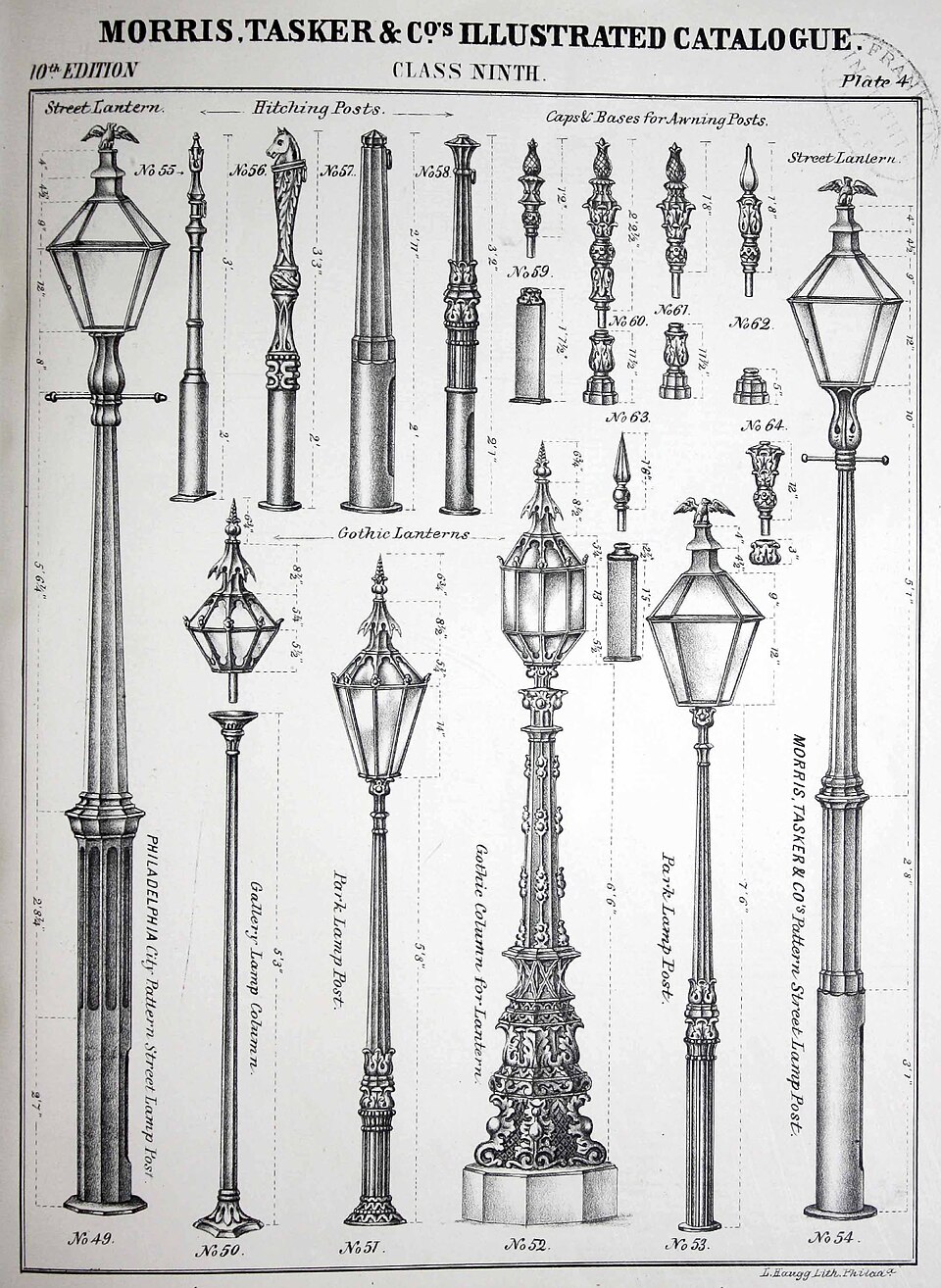
Street Lighting and Posts, Morris, Tasker & Co. Illustrated Catalogue, Pascal Iron Works Philadelphia, Tasker Iron Works New Castle, Del., Tenth Edition, June 1st, 1871 https://archive.org/details/IllustratedCataloguePascalIronWorks
My thanks to Sungmin Ko, a staff reporter from Economy Chosun for allowing me to answer a few questions for an Article on Apple.
Economy Chosun is a highly respected economic weekly magazine, published by the Chosun Media Group, which has a legacy of over 100 years and boasts the largest readership in Korea
Apple has reached its 50th anniversary. A startup that began in a garage has grown into one of the world’s most prominent corporations. In your view, what explains Apple’s extraordinary success over the past 50 years? Was the core of Apple’s success its technological edge, its design, or the way it structured its relationship with consumers?
First, I must say that no matter how big any company gets, it always starts small. It’s the same with people. No matter how powerful we become, we all start out as babies. Now it certainly helps that we have powerful parents and grow up in a wealthy society. The analogy for prominent corporations is that they have talented founders and wealthy backers. But the story of Apple is not this. The founders were of modest means and they did not get large backers.
The success of Apple was more driven by good timing and persistence. The company was born almost at the same time as Microsoft. Both took advantage of the birth of the microprocessor and separately built the hardware and software that would harness that enabling technology. But they were not the only ones.
Hundreds of startup PC and software companies were born at the same time but did not become dominant or even survive. We become victims of survivor bias if we are to assume that Apple and Microsoft had unique configurations destined for dominance.
What matters more than birthright is how persistent and adaptable the company is. What I would note is that Apple almost died a few times. Most dramatically it was during the late 1990s when they had to bring Steve Jobs back. I see that as the death of one Apple and the birth of another. The second Apple was more grounded in well-designed software (an operating system based on Unix) and was able to pivot into devices (something which notably Microsoft could not do.). This idea of rebirth is crucial to long-term survival. Mostly it’s luck but sometimes it’s planning. Apple’s second life has little to do with the first but we still see it as one 50 year old continuity.
Although I’m saying that luck, especially timing, is a big part of this, there is a lot to learn from individual actions of management which helped it to leverage its circumstances. These are:
A maniacal dedication to customer satisfaction. It sounds banal but few companies really prioritize this above all else. The idea that Apple did not try to convince enterprise buyers to buy Macs is a classic example. The decision that the user rather than the buyer matters more is not an “economically optimal” solution. This also led to strategic decisions on controlling the user interface which turned out to be essential in preserving their value proposition.
Working on projects that bring only specific advantages to bear. We hear this often as “focus”. The idea is to say “no" to many good ideas. Apple may work on cars but they chose not to continue because they could not bring any unique advantage to the segment. Perhaps they could have made a lot of money making cars but ultimately it would have diluted their attention and responsiveness to market conditions.
Integration vs. modularity pragmatism. Do you build a piece or the whole? Do you partner or do you go alone? It turns out that it’s not a binary question. Sometimes you do one and sometimes the other. Sometimes you do both. Apple carefully chose and sometimes flipped the “architecture” of the firm. Building their own Operating System then building on Open Source. Building their own stores but also having 500 retail partners. Buying multiple types of microprocessors but then building their own. Investing in Silicon but not in AI data centers. The list goes on and on.
At what point do you think Apple became more than just an IT company and turned into a cultural symbol? In Apple’s 50-year history, what was the turning point that made it a fundamentally different company? Also, if you had to choose just one product that most clearly represents Apple’s identity, what would it be?
Being the original “personal computer” was a cultural milestone. The whimsical name itself, “Apple Computer” and the counter-cultural hints, rainbow logo, youthful founder, etc. Apple positioned itself opposite IBM and government and business-oriented incumbents. This was a start. The Macintosh extended this branding with a rebellious attitude.
The magic of it was that this “rebel” was not cheap. It was not a product for the poor. It was a product for the upper middle class that allowed them to say they were revolutionaries. See also the “Think Different” campaign dedicated to the crazy ones. That was version 1.0 of Apple. The product was the Macintosh and the identity was "the computer for the creatives."
Apple 2.0, started right around the turn of the century. It became first an entertainment brand with the iPod and then a device brand with the iPhone. The name change from Apple Computer to Apple Inc. cemented this transition. Apple Inc. could no longer be seen as a rebel as it had too many millions of users. Today it has over 1.5 billion users or 20 percent of the world. And they are a quintile with the highest income. The company had to project an image of premium, privilege and privacy. The product was the iPod and the identity was “the computer in your pocket”
My prediction is that the company has more pivots to go through. I don’t think they will stop where they are now and a future Apple will emerge.
Is Apple under Tim Cook a completely different company from the Apple of its founding era, or is it a company practicing the same philosophy in a different way? Some say Apple in the Tim Cook era is less innovative than it was under Steve Jobs, but has become a stronger company. What is your view?
Apple under Tim Cook is quite similar (though not identical) to Apple 2.0 under Steve Jobs. It is indeed very different than Apple 1.0 under a different version of Steve Jobs. I think Apple 2.0 differs also in that they decided to understand themselves. Jobs became more introspective and started to ask how to build an organization that outlasts him. He saw not only how Apple evolved but also Pixar and Disney and NeXT. He matured and thought about processes not just heroism.
Tim Cook took this and cemented it. The result is that Apple today is full of processes and many lament that it is no longer heroic. I think it’s a more complex picture than that but it is trying to balance what Clayton Christensen would call the “sustaining” vs. the “disruptive” under one roof. It is not an easy task. Being heroic can mean some leaps forward but also the leap could be into an abyss. Sustaining is growth but you are vulnerable to asymmetric attacks.
Is Apple today still an innovative company? Do you agree with the view that the innovation Apple has shown since the iPhone has fallen short of what it once was?
To expand on the Christensen Innovation thesis, Apple under Tim Cook has excelled at sustaining innovation. 80% or more of all innovation is sustaining. It’s essential and not something bad in any way. It’s just typically not enough to sustain a business through the technological changes that occur over a long term. However, that is not to say that Apple today does not make leaps into new categories.
The Wearables and Services businesses are impressive and protect Apple from disruptive attacks. Imagine if Apple did not make a watch or AirPods or Services. Someone else would. And those accessories to the iPhone could direct customer purchase away from the iPhone into new ecosystems. The pure defensive play of making more phones was not what Apple did.
The introduction of the Apple Vision Pro is another case study. Though too expensive for mass market, the introduction of a completely new user interface (spatial computing) is very risky and implies a direction completely asymmetrical to the iPhone. I should not have to point out that the Vision Pro does not need an iPhone to be used.
An Office Hours question asked by Jeff S., July 31, 2026.
Q: On the SoC supply shortage: what are Apple's options? They could increase prices, which reduces demand — but what else can they do to capture this demand?
What they've said they're doing is to take some costs away from other components. A big target would have been the screen, then the battery — non-silicon parts, maybe the casing. Now, that's a tough thing to negotiate; these suppliers probably already are on very thin margins to begin with. But Apple may have other ways to negotiate: in terms of duration of contract, in terms of exclusivity, or other things that they can pull. I think they're trying to get as much as they can from everybody. They'll say: if you don't do this, units are going to go down, and if units go down, you make less money too. So there's probably something going on there in negotiating.
On the SoC, there's just an overall crunch across the board with semis, as we know. We're not privy to all that. But I think they've had tougher problems in the past. It's a 100-year flood, but they've had fires too. They've had earthquakes. As I always say, the biggest problem is the workforce that walks out the door every day at five. What if they don't come back? There are other issues that are existential, if I'm honest. But that's what management is about.
Editor's Note: This was one of the questions asked by participants in Asymco's July 2026 Office Hours live Q&A session, held the day after Apple's FQ3 2026 earnings and open to Asymco One subscribers.
Subscribe to Asymco One for full access to this and other content.
An Office Hours question asked by Ian H., July 31, 2026.
Q: We're used to remarkably flat Apple pricing over the years — a pound a day, the stairway to heaven. Generally, increasing revenues have correlated with increasing unit sales. Now price increases are feeding through, yet revenue is only forecast to grow about 10%. That may translate to lower unit sales for the first time in some time. What are the consequences, and the second-order effects, such as on subscriptions?
First of all, we're not talking about a mature quarter — it's like a launch quarter for some things, but maybe not too much volume will happen. Another thing bothers me a little: I don't know when they're going to launch the next portfolio of products. If it happens in early September, they might see a surge into September. But maybe for constraints — things in manufacturing, other things in the supply chain — they delay; they couldn't get the lines up and running. So they may announce, say, September 15th, but start to fill orders a week later. And that doesn't hit the quarter, because the quarter ends at the end of September. That might actually cause what they've excused themselves with — this “constrained” language.
There's a lot that could be different this quarter. I warned about it and said the guidance could be weird. I was actually referring to the December quarter, because maybe not all the products are out in the fourth quarter — they're going to push some things into the first. So they're changing the mix, they're changing the pricing, they're under constraint with supply. There's a lot that's difficult to perceive here. I think this is temporary, though.
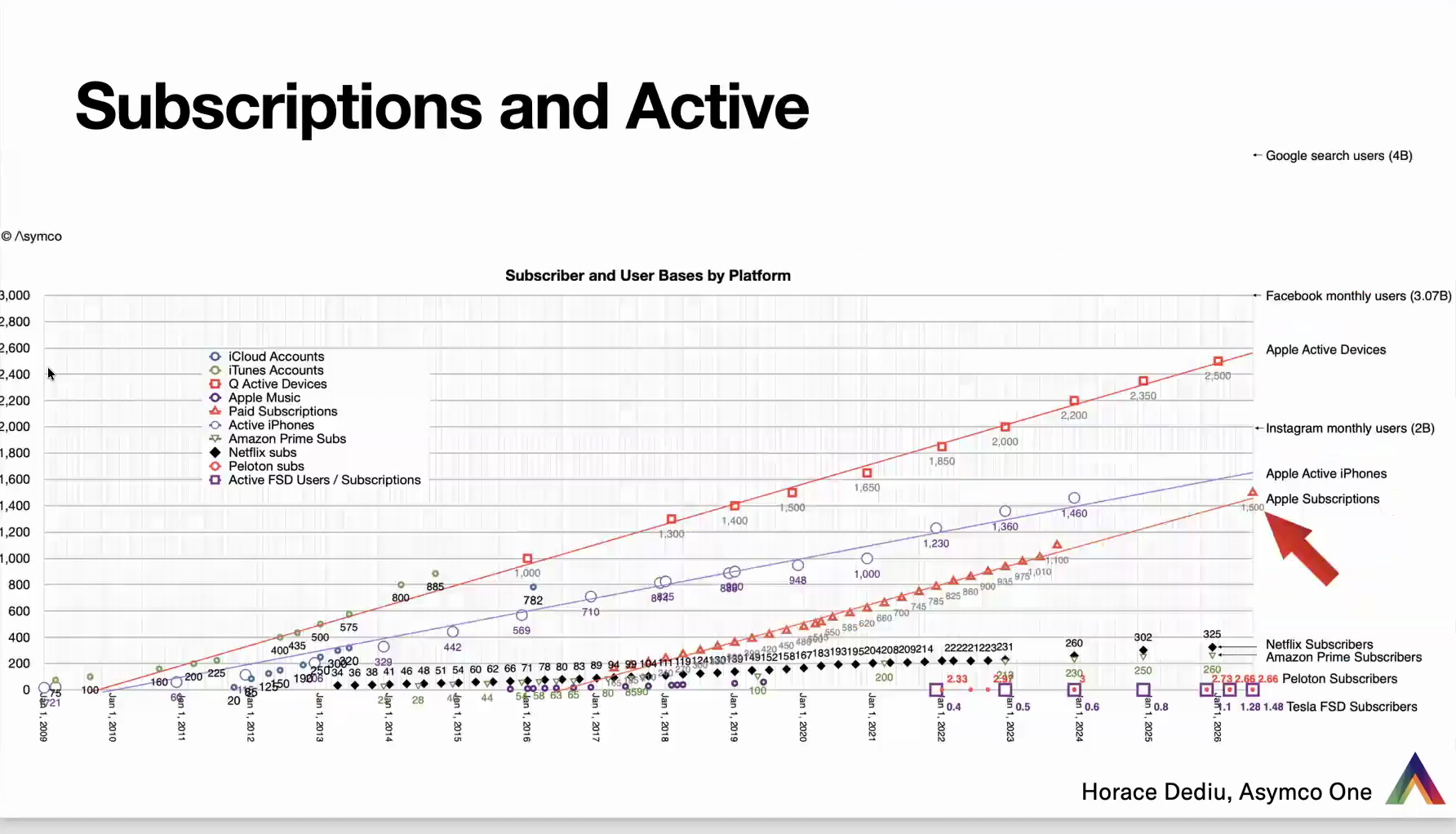
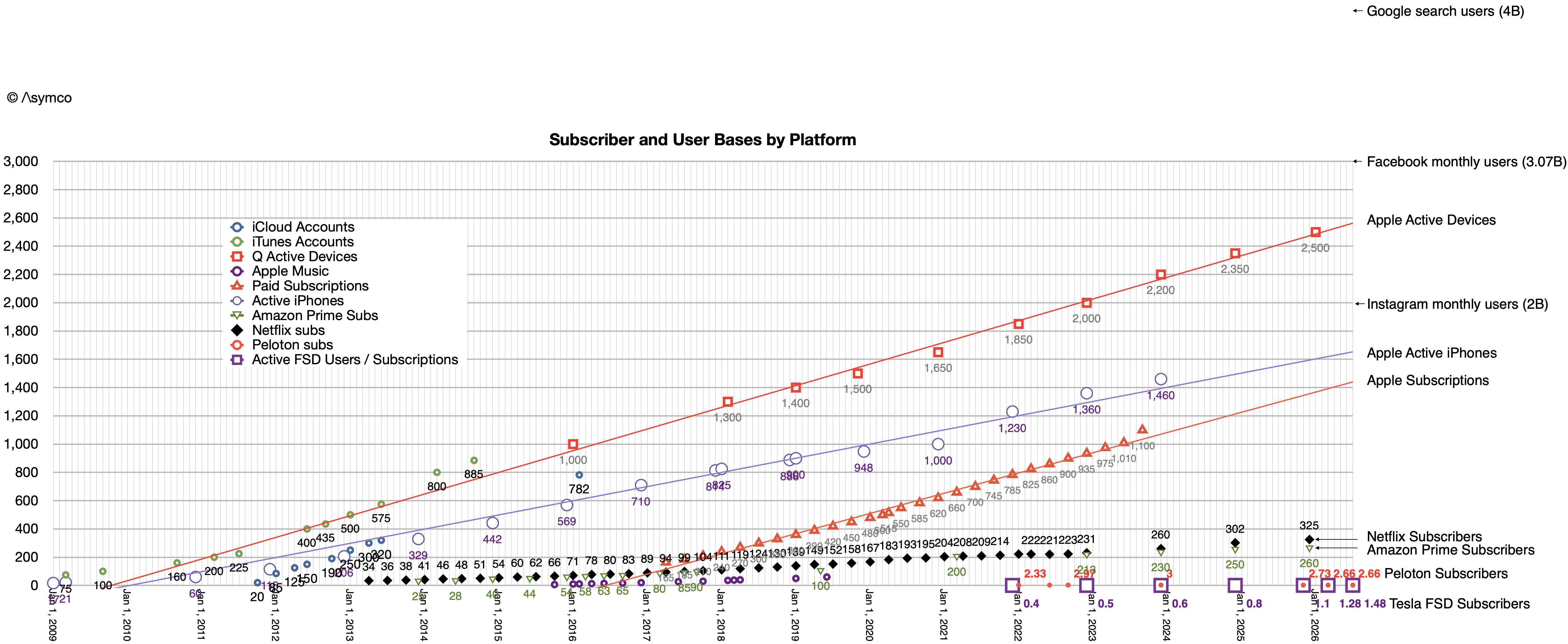
The number of devices out there depends mostly on the number of customers, first of all, which is growing, and the duration of use, which is also growing. I don't think we should worry that one quarter the unit number isn't as high. There have been quarters where unit numbers were going down, and everybody wrote Apple off and said it's all over. Focus on the number of users. Focus on those lines on the graph showing proxies for the number of users: subscriptions, active devices, and phones in use, if we can get that data. ACTIVE is still the model to go with.
I wouldn't read too much into this quarter, or even the next two or three quarters, because we might have these weird things happening where they decide to spread things out. When I thought about this, I said: we're probably going to have people freak out, because the guidance is going to be weak. I didn't think it would be because of this or that constraint — I thought they would say something that wouldn't tip their hand. Because if you're going to launch this folding product, and it's going to be limited in production, and you're delaying the low-end product until next year, maybe your units are going to be pretty thin going into the next quarter and the one after. I was worried about the guidance, and I thought most people would freak out. But they're doing this for a purpose, and they've been planning it for years. Not just the folding — what's been planned for years is Apple Upgrade, and splitting the product launch into two quarters. They've probably wanted to do this for 15 years and just said: no, it's not coming together. I think it makes sense to do all of these things. But on a comp basis, it's going to look ugly, because you're readjusting everything. So let's watch and see what happens. There's a lot of work going on here.
Editor's Note: This was one of the questions asked by participants in Asymco's July 2026 Office Hours live Q&A session, held the day after Apple's FQ3 2026 earnings and open to Asymco One subscribers.
Subscribe to Asymco One for full access to this and other content.
Judd Several microphones, several local hard drives, several cloud drives, and yet sometimes. Nothing gets recorded. This is asymmetric.
Apple announced Apple upgrade. Some people are very upset. Other people are loving it.
You've talked about how this was This idea of basically a hardware subscription had kind of been inevitable. Yeah. But it's taken us a little while to get here.
So You you are I've never seen you happier. Tell us tell us why you're overjoyed and why we should all be overjoyed.
Horace think about Apple products as a some something you pay on a month on a daily basis. Not pay as I should say you should consider what it costs you on a daily basis. And that's a un that's called unit economics.
It's like, what does it cost for a cup of coffee? But what does it cost to own a car? What does it cost to rent a house or whatnot.
So years and years ago I have to give a little credit to to who gave me this inspiration. It was actually Jean-Louis Gasset. And like could like twenty JLG twenty 12 or earlier even.
We had a lunch in Palo Alto, I remember. And you know he's he's Who paid? I think I think he did, yeah.
Yeah, he's a good guy. he said, you know, you should look at Macs and phones and everything as a what does it cost per day? The problem back then and for until last week, was that, you know, you paid a thousand bucks for a computer or a phone or whatever it was.
And the way to calculate what it's costing you a day is knowing how long you're gonna use it. then subtracting how much you're gonna get for it as a secondary, you know, or as a as a used product. So you're gonna trade it in or you're going to sell it to your friendly you know f Facebook marketplace or you're gonna find the you know a a mall guy or something.
I don't know how people even do that. Or you give it to your children or you give it to your family. And so they use it for another year or two, and then you calculate, okay, I've this has been in use for five years now, so I'd have to take my initial purchase price divided by the number of months in five years and th and then and then do all the math.
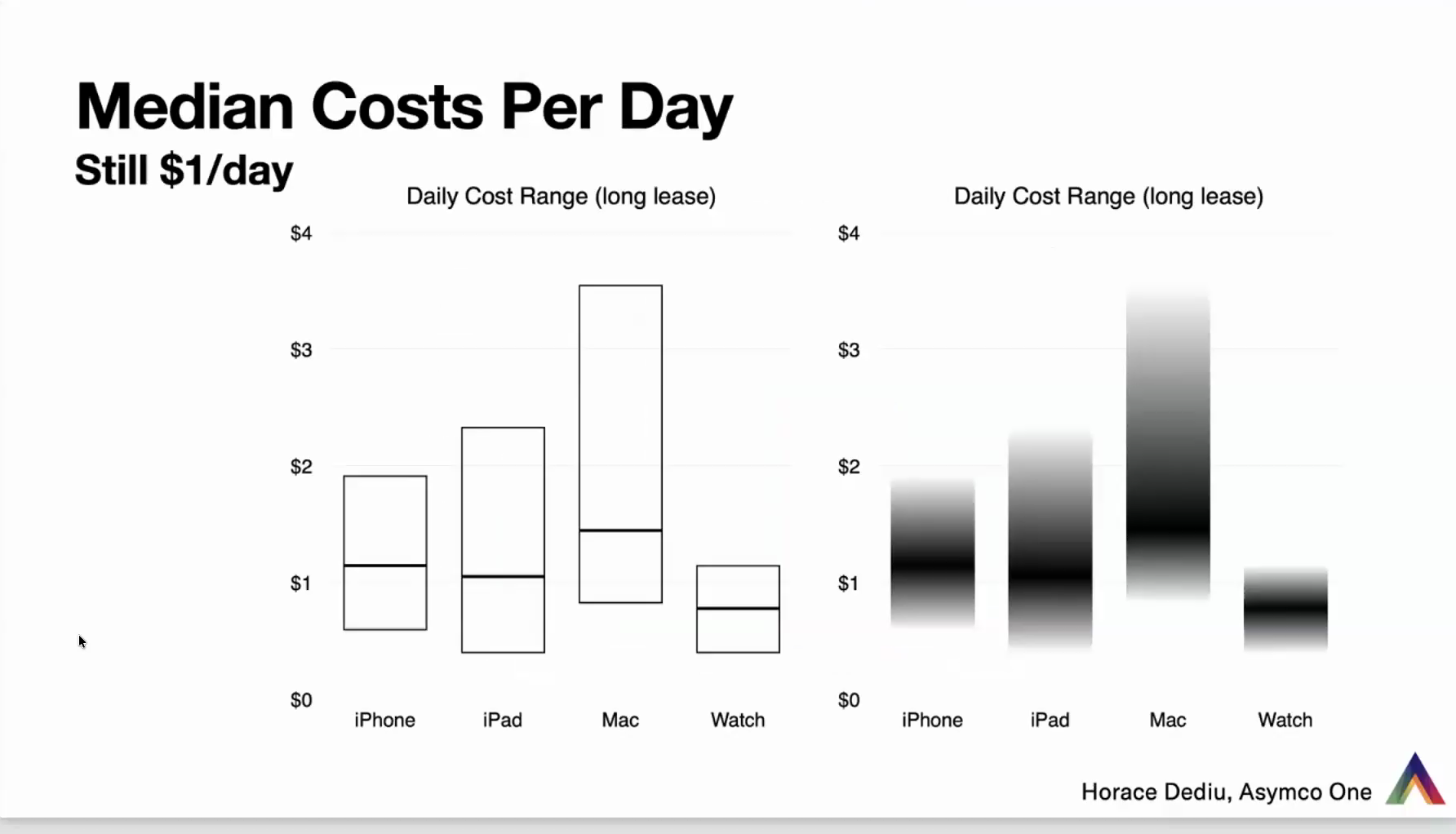
Well, if you did that on average My point was, based on this suggestion, that Apple products were about a dollar a day. Now that assumed that, for example, you would keep an iPhone that cost you let's say eight hundred dollars, you'd keep it for three years and then get back. m whatever it was like two hundred dollars at the end, right?
So that would be like roughly six hundred dollars divided over two years. You know, give or take, you it comes out to about a dollar a day. But now it's a lot easier because now when you go through Apple upgrade, you'll get that price on a monthly basis.
All you have to do is divide by thirty or m you know the equivalent average month. which is 365 divided by 12. So that is b that becomes your daily cost to own the product.
And at the end, yeah, you could extend its life or your ownership of it. through buying out the lease and the value is whatever it is left over from the original purchase price having you know paid into it with with lease So there's no there's no interest, by the way. That's the amazing thing.
It's like you you get a an interest-free loan, at the end you can choose to pay the remainder. That you owe, or you can just turn it in and get another one and continue. And all of that works out so the the w most expensive option is to have the one-year lease.
and you're paying a little bit higher, I think, for depending again, so depending on on the configuration. Now this is where it gets gets a little bit tricky. So you have to go And what I did is actually to calculate on average, you have to go out there and and pull every configuration.
Get those those revenue or those cost numbers and then decide okay what is the average from all of these price points because some are more popular than others. Now the good thing is that these tend to d what I did is I picked the median, which is the midpoint of all these prices and said, okay, let's call that the most common and call that the average. And if you do that with the iPhone, it comes up to about a dollar 13 to $1.
15 per per per day. So the old rule of thumb of the dollar per day holds even though this was initially determined In 2012, and it hasn't changed since. So I was very surprised.
By the way, this is on the longer lease. Shorter lease is a little bit more money, like a dollar thirty or something like that So anyway, it's but but most people think of it as like, oh my god, it's a thousand dollars or it's twelve hundred dollars or it's uh whatever the Mac might be, you know. And Macs, by the way, are surprisingly also in fairly cheap, like a buck fifty a day because you hold on to them a little bit longer.
By the way the lease terms on the Mac are two years or three years. On the phone it's one year or two years. And the iPad is also two to three years.
Judd So a couple of things. So right now it's only available in the US. And they've had programs like this before, at least for the phone.
I don't think they've done it before for um for the Mac itself. But for Apple, what's the real advantage? Like what's the they they have the Apple card, so if you you know, you wanted to get basically interest-free loan, you get an Apple card and then Buy it with an Apple card.
Horace And you get your three percent cash back, all that. You So what's the advantage for Apple for Well a couple of things economically it might be a little bit advantageous because you get the product back with a reliability of like most people are gonna turn them in and and they get to probably resell it at a little bit higher than would have been the residual value. because people have been yeah, so they you know if it's residual 200 then maybe it's worth a little bit more, it's maybe 400, depend again, a lot of variables.
We're talking hundreds of different configuration here so that's one thing is is that the majority of people are probably leaving a little bit of money on the table, whereas they if they paid for it off they could maybe even get a better price on their own if they went and shopped around or or or marketed their product. That's one thing. The other thing though that's more interesting to me as an analyst is that you get a lot more predictability in terms of having access to large inventory of used products, which means for Apple, now the some might be in poor shape and they're gonna get refurbished or disposed of, but there might be quite a few that allow them to market more effectively into emerging markets.
So the problem has been that they've always offloaded that job, you know, like dealing with second hand and third gen. I mean there's refer, but but this is gonna drive that volume a lot higher and then it might allow them to kind of maybe create a secondary market that's a little bit more upscaled than what they have. what people have to rely on today in these markets.
So there's there's something interesting in that secondary market control. And and there's also the data overall. Like you have you know having people on lease paying you every month.
You have that same relationship with with the mobile operators who kind of know the financial activities if you if you will a little bit. And and so inf it's funny actually how they might steal, quote unquote, steal a little bit of that knowledge away from operators, because operators may end up not having as f as many sales through that channel 'Cause you'll get through Apple and it's monthly. But that's why they bundled the operator with the phone.
You'll notice if you try to buy a phone, you have to buy it with an operator contract now. even though it's unlocked. So the assumption is that in the US you're going to still need to go through a major operator to get the phone.
So there's there's something of a of a glitch there but but there's something knowledge this on so number one it's it's gonna be secondary markets are more more reliable for apples and s and and and in addition there's There's probably more information they're gonna be able to mine.
Judd So just to clarify, so when you say secondary market, do you mean Apple will sell in a used you know pre a Apple will sell a lease return phone in Bangladesh, as opposed to a local retailer or an Apple store doing it. And does that mean that they're not going to expand the program outside of the city?
Horace No, I think they will. And I think what's going to happen is they'll have They'll have Apple Store Referb for lack of better term, because I think it's used now, but Apple Store Refurb inventory will be much higher. And maybe they'll market them a bit better And then they'll have the the Refurb refurb Apple certified products in those secondary markets or used markets. Um under Apple branding, there'll be a lot more inventory there and it'll be much easier for Apple to then get that customer in the front door in these markets.
Judd Well, I'm glad you're excited.
Horace I Well I would I'm so excited I w I would do it this way. If I had probably the next phone I'll buy. I'm gonna do it this way.
And I'm a little bit concerned about that operator deal but but but maybe I'll do it for other products. The watch is available, the iPad, the I the Mac And and I would recommend this over it's it's essentially an interest-free loan and you you still get three percent if you pay with their your Apple card. 3% back, cash back.
Judd Yeah. This was also the last last week Apple reported earnings. I hear they did quite well.
So congratulations to all involved. This is the last earnings call that Tim Cook was on as CEO. He will very quickly become executive chairman and there will be a new CEO, mister Suns out, guns out himself, John Turnus.
what is the one thing he absolutely cannot do. And I don't mean like a major strategic decision. I mean a very small tactical decision.
Like what is one tiny little thing that he absolutely cannot do as CEO of this company we refer to as Apple.
Horace first of all let me just say I the the the word is that the way he's referred to internally is JT. So Justin Timberlake?
Judd No, just John Turn is his JT and Justin Timberlake is JT.
Horace Oh no.
Judd I had If Justin Timberlake became CEO of Apple I would be I think that would be just very impressive.
Horace Maybe maybe I'm wrong about this, but I heard him referred to as JT. So but because I don't know what to say. You know, there's Tim, Tim Apple Cook, I don't know if we're gonna call him John, you know.
John is so generic. Um Yeah. Turnus.
Turnus is also a little too formal. Anyway, um, yeah, maybe it'll be John Apple. Could be.
So what was your question? What is it something that he cannot do
Judd Yeah, absolutely like if he does this one little thing, I don't mean like a big thing, I don't mean like he decides to put out the Apple car I mean a small thing. What's a small thing he cannot do or Apple will truly be doomed?
Horace Well, I probably I'm gonna it's a little a little weird question, but I think He cannot go to the Apple Mac Cafe and expect not to pay for his lunch If he walks out the door without paying, I think his reputation will be demolished. I think he'll be ostracized Famously, you know the story of how Steve Jobs did this. He he he somehow always paid you know, if you were if you were a guest.
And and the thing was though that the way it works is you swipe your your ID and then it will deduct from your paycheck the uh the amount and this was very convenient. And the thing was though that at that time Steve Jobs had a paycheck of one dollar. He he was insisting to pay for other people And in so doing I was stealing from the company lunch once in a while.
So nobody nobody bothered to catch him on that. But I think if he Steve could get away with that, but I think John He's not gonna be able to get away with that. He's he's he's gonna have to pay for lunch.
Judd Has he offered to work for speaking of a dollar, was it a dollar a day or was it a dollar a day?
Horace A dollar a year actually, I think For a while at least, he pr he you know he came on with that deal.
Judd I've never seen him eat. Steve or John? John. Well.
Horace You know, he's a fit guy. He probably eats a lot. He seems to be a swimmer.
I think he was a swimmer, right? He's got the physique. Gotta have those long arms.
Yeah. Long legs. I used to be a swimmer, but I'm not a very good one.
I swam in high school and
Judd I wasn't very good because I don't have the the long arms. It took a while for Tim Cook to have his his own product that was not just considered the latest version of something that had had been introduced under Steve Jobs. I think it was the watch. Yep Is there we're running out of of things to introduce. does JT need to have his own No I think he will.
Horace In fact, and I know what it is. it's gonna be the glass the Spectacles, the Apple Vision, not Vision Pro. I don't know what they're gonna call it, but it'll be it'll be the equivalent of of um whatever Meta's name is, but yeah, it will be eyewear.
And I think the eyewear market is very exciting and I think There's been rumors and rumors about what they'll do next. the vi the Vision Pro was sort of looked like a bit early. and maybe the next first the next version will actually not even have any display in the in the lenses but it'll be just it'll just be passive lenses But eventually the lenses will be displays and that category of product, um, although under development But you don't consider that the same category as the Vision Provision Pro I mean Vision Pro if anything was a prototype and yes it is it is effectively the beginning of that category, but it's like saying You know, because the iPad was developed before the iPhone, and and yet the iPhone is reco regarded as the sort of the defining product for multi touch and all of that thing, all that followed with the iOS.
and you don't you interface. But spatial computing is what we're talking about at a software level and as an interface level. And spatial computing is gonna carry on and be embedded in other things.
But but I think the the whatever they're gonna be called, the Apple Vision it will be the product that most people remember. Remember also the Model T was not the first car that existed and certainly not even the m first car that Henry Ford built. I mean the you know so we tend to remember version three of something usually as the the sort of the the actual s genesis even though it is it is it is really built on generations of other work.
Judd But it was the first one that people could afford. That could be mass produced.
Horace Well, if even the models that Henry Ford always developed were a little bit the probably they didn't work so well, they weren't marketed, they weren't There wasn't a production system for them. And so he he had something called a quadricycle as one of his earliest cars. And that was like I forget what year it was, 1905 or something.
Yeah, anyway, I digress. But but the the the the the work on Vision Pro started seven, eight years before it launched. So we're probably you know already a decade into it now.
Judd Okay. So you would consider those to be this d distinct products though, the vision and the vision product.
Horace Well, I think John will be remembered as the guy who introduced the vision. That's how old it'll be. It won't be that Tim oh wait a minute.
Wasn't there a Vision Pro before that and Tim introduced that? No, I think John will be I'm gonna bring it up. Well John I think John will be remembered for this.
This is the thing.
Judd I wish him luck. Um You posted a YouTube video to your X account. Maybe you maybe you post it elsewhere.
as well. But it was it was a a gentleman, I forget his name, some sort of he is a doctor, I believe in Aussie, and he works at a place called Kira And they are making software in order for people to make their own local AI, most likely using upcoming Mac Studio that'll have all the RAM in the world. And your your only comment was a data center never Oh oh I see.
Horace Yeah I okay I remember now it finally clicks. That the I thought you meant a video that I made, but it was a video someone else made, yes And that was Yeah, so this guy who I don't really follow, but I have seen a couple of his videos and he's he's a I think he's British or Australian, like you said. And he he he he writes or speaks a lot about AI and you know he s he got excited about the fact that There's a generation of Macs that will come soon that will have unified memory in the dozens of gigabytes.
Okay? Now That means, as he put it, as a data center on your desk, you have multiple processors, you have multiple cores, and then you have multi-this giant addressable memory and so yeah the you know I don't know what that really means but in practice the and also by the way Apple in invested in a company that shrinks the size of models by like a factor of ten or more. So there's there's so the models are shrinking in size and there might it might be soon possible to fit everything.
in a in a desktop. That's why it's interesting. And I think I you know, the the lI sound a little bit old fashioned here, but I do remember when we went through this before with mainframes and other big computers becoming small.
And then the Apple would just rode that wave of my miniaturization, the so-called microcomputer Then it rode the wave of getting even smaller to the pocket sized computer. And now many people are saying, yeah, but these models are so big they can only be be delivered by the cloud cloud data centers that are the size of I don't know buildings big buildings and yeah I just keep thinking the old days you know we we The tendency is to get things to be smaller and s get things to be personal, get things to be cheaper, and uh That's that's where we're going. I do believe, I've said this before, but I do believe Apple is even going to make their own servers.
And their own server processors as well. So even though that future of a data center on your desk will be possible, maybe they'll also have Apple Silicon data centers as well because they you know they'll they'll they'll be doing some heavy lifting in the cloud for Apple's own LLMs. and their own services.
So the the the chances are they they are developing their own alternatives to nvidia's processors So Apple's doing its own data centers for a long time, not always with its own Macs in the data centers, but We'll see more and more of Apple's data center strategy coming forward.
Judd Maybe clarify that a little bit for me. What if there you know if more and more of this stuff is gonna be if it's gonna be easier for more of this stuff to be local Yeah, what does the data sit?
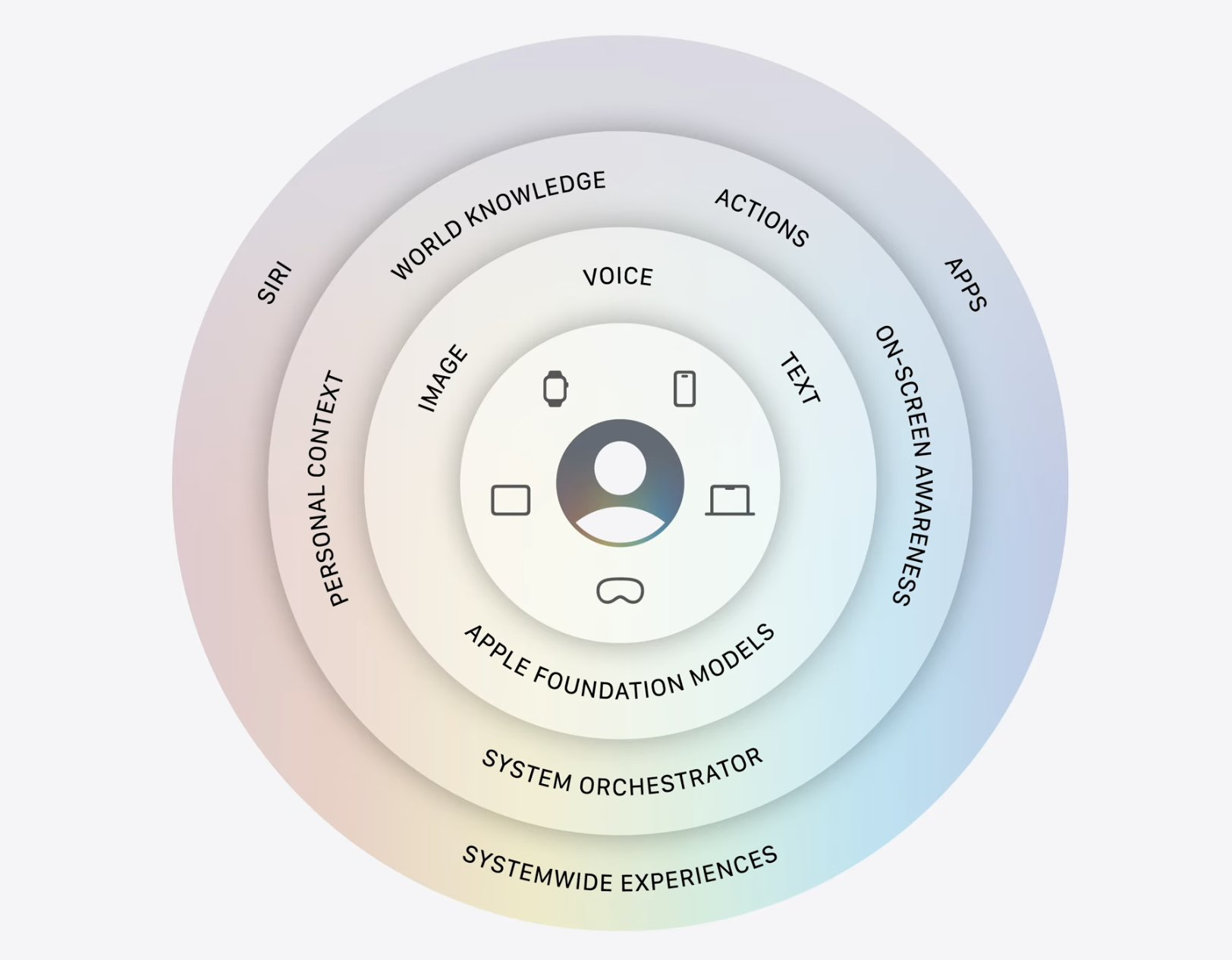
Horace Well there's a local model and there's a global model. So Apple's already kind of hinted at this in dubbed up DC. So what they what they've done there is They're using Google on the world models that are in the cloud, and then they're using their own, there's like four, I think, four different um models that are available to to developers and users.
And the stuff in the cloud is is also used to train some of the local models But the global stuff is, let's say, knowledge, general knowledge, world knowledge, world understanding, okay? And it's also up to date, constantly being refreshed. And the problem with the local is that that's where the private knowledge is.
So to the extent that you need, hey, can you index my emails? Or rather index this like the kind of questions you're going to ask your computer to do would be organize my calendar. you know connect to my friends and contacts, do things with my personal data that that I need done and so that gets processed locally.
But but but then you ask When's the next flight or how do I connect to databases? Those are gonna be in the cloud. And so the the the the the Google models are better at that world stuff and then Apple's models are better at the private stuff.
and private cloud compute is what Apple's bridging these with. So to the extent that they send information to Google to say, can you fit this data into the global data that will be protected against Google's indexing of it. And so this is why a lot of people were like suspicious that there handing over the keys to Google.
There's a lot of suspicion about Google being the brains behind everything Apple does on AI. That's not the case at all. There's a lot of heavy lifting on on Apple's side as well.
In fact, some suppose you know suppose you are to launch in China, for example, as as Apple will and has been actually authorized to do. They're not going to be using Gemini in China. Or the or in India they're probably not going to use Gemini in in many parts of the world.
So the question is, th there's a plug-and-play architecture where they can they can substitute the world models that fit the markets, right? And so the they've they've architected this whole thing so that there is there is a lot of modularity, I believe. so th that's why I think it you know and also the access to these things will be through through possibly through agents and apps, which are third parties.
that you know will will be yet another level of integration.
Judd Are these large language models in the process of being bundled or being unbundled?
Horace Well, they're bundling the global knowledge, and then the the commoditization is happening simultaneously where other open source models are unbundling them So that the this is all happening simultaneously. And this is one of the things that's perplexing is that a lot of Chinese open source models are essentially scraping or copying the the the pr the so-called frontier models and they seemingly are good enough because they're just one one step behind and as as the the As the best models move forward, the open source models are like like right behind. And you're dealing with like a one maybe a one-year lag, maybe less.
And w in which case, I mean last year's AIs were pretty damn good. So if you can get that for free, a lot of people are saying, why am I paying, you know, so much for the latest version of Anthropic or or whatnot. So I think that's the commodization angle is a modularization, somewhat.
And then Apple's gonna just say, well we treat all of these as modules because we think of these as as as modules that we plug into our operating system. And and for that reason I think there's there's this is why there's the whole economics of AI is is cracking or there's a lot of confidence the being uh lost by by by the s by the hyperscalers and and if their economics don't work then they stop spending on data centers. Then then the whole semiconductor bubble bursts And and the data center bubble bursts.
By the way, I don't know how much you've been paying attention. There's a lot of chaos going on in in Korea with with that market. The stock market there went through Girations up up over 100% in a couple of months, now crashing like 30-40% in a couple of days and then up again fifteen percent the next day.
It's tripping all of these circuit breakers almost every other day. And there was a the th this was done the this is ha the tr the circuit breakers were being tripped once every ten years and now it's like every ten days.
Judd Circuit breakers in terms of the market being shut down.
Horace So the you you know the market opens. The market opens and these were circuit breakers were established precisely to protect let's say I don't know, the small investor or or whomever. But it was if it drops I think it was there's a threshold, I forget what it is, maybe five percent.
So if it drops be beyond that, then suddenly the the market stops. You know the biggest thing, but trading ends for for a while until the O starts again. And and this is causing not just pain, but the problem is that a lot of the people who are investing in the Korean stock market are small investors, retail investors, mom and pop investors And they've been getting in the game while the m market is booming, and then they've been leveraging themselves with so-called single what is it single equity ETFs, exchange traded funds that are trading just one thing so that they can get leverage.
So people are, you know, four times exposed to to something. But you're four times up and four times down. So you're you're They they get margin called.
And so what happened is millions, literally millions of Korean small investors have gotten wiped out in like the last week and and various estimates out there, how many people are were affected and it it's it's it's scary and it's all because semiconductors, as I said which is including Samsung are being bit up to crazy trillion dollar valuations and then the rug is pulled. and and I think it's it it's one of the aspects of the mania that is driving also Apple's component pricing up, but it's actually causing complete societal level disturbance in in the in a major economy right now. So we're we're we're you you know we're talking about potential for trauma and maybe even a a recession, maybe even a a a real estate crisis.
One of the funny things. Yeah, in Korea. So far so far it hasn't spread yet, but you know, it could spread to Japan.
Japan's having its own issues with the currency there. The yen is being is is being bailed out and under pressure and there's all kinds of things. We could be looking at m at at bank runs, we could be looking at a lot of things.
Russia is another case in point. the oil market is in chaos. But the what I want to point out about Korea that's particular is why so many mom and pop investors exist is because As I understand it in Korea, if you had a landlord, you're not allowed to to own you're not allowed to charge rent.
What you do is you collect a deposit. from the renter and then you're s you're supposed to give it back to them on the lease end fully. And so people who rent in quote unquote rent in in uh in Korea really don't have enough money to buy, but they may have like twenty or thirty percent of the value of the house, so they'll hand over hundreds of thousands of dollars equivalent as a deposit and the only way that the landlord makes money is by investing that money to try to maximize their return and that it should be higher than what you get in rent.
Now think about that Because then that that encourages speculation and encourages precisely these sort of investments in crazy in crazy leverages. And and so these landlords who might be doing this and they get margin called, then they lose their house because the bank says, you know, um This is only only collateral or the only capital you have. So I don't know exactly.
I'm just saying that this this is scary. AI is not just An interesting odd technology, the way it's being and one of the big lessons here is if it's a bad business generally speaking, right, and we are not sure it is what it is right now. It's it could be good for some, bad for others.
But the ide the problem with misallocating capital is that it's not as it's not a victimless crime. It's like saying, well, the investor lost. But when y when society does it on such a grand scale, when with capital is so badly allocated, markets are supposed to be really good and efficient and really smart about allocating capital, right?
They make mistakes, but the the damage is contained. and and the the investor learns pro supposedly. But here we have something.
And I wrote this piece, Why is everyone all in on AI? and m my problem with this is that they're all in even though we're not sure it's a great business And if it isn't, then then it it it's maybe the first equity led financial crisis we've ever seen, because everything else has been debt driven. I mean ever, not ever, you know, the initial investments in by you know in peop the famous Dutch pul bulbs that were tulip tulips, yeah That that would that was effectively also like an equity an equity.
Judd I'm a little rusty on the Dutch tulip crisis. Um in the from the sixteen hundreds. tie those together for me.
Horace How how make What I'm trying to point out is that there's typically when you get to s what we call typically a um Not just a market crash, but it's contagious enough so that an entire economy, globally possibly, ends up in a recession. So do you have a global crisis? So we have the last was 2008.
And that was driven by bets on on i e derivatives, but ultimately real estate exactly. And a lot of those were mortgage backed securities and and a lot of those were fundamentally tied into the bond market. It wasn't that it was any stock market bubble.
It was it was it was something in a whole different type of equity. I mean that that the stock market got dragged down by a crisis in debt, let's put it this way simply. And if you go back and look at other crises It's been usually behind the real estate like Japan has problems I mentioned Korea, but also China.
China has huge real estate problems. And because the amount of debt out there is far bigger than the amount of equity, the debt market is far, far, far bigger. Than the equity market.
So the equity market, if you were to sit all up, is you imagine all the businesses that are traded on all the stock exchanges in the world. Take all that market capitalization, add it all up, it wouldn't be one percent of the debt market. Because everything in real estate is debt.
Everything in commercial real estate, private real estate, then you have commercial loans to to you know businesses that are f you know underwriting things like factories and other things though that may be capital in capital expenses. But it there's real estate is by far the biggest asset class, even in amongst let's say all the wealth in the world. More than I'd I you know, I'd guess equities make up probably fifteen percent of the wealth in the world.
And and and so everything else is debt or or cash. And and and so then or other things. I don't know, the art market is tiny, but but the y you know, I can't overstate the importance of a stable debt market.
And this is why when even when Trump was messing around with tariffs, he had to pull back from some statement or p policy because he quote quote unquote, you know the the the bond market was getting jittery. I used the different phrase, but it was essentially the bond market was and if bonds by the way, the bond market crashes then you know, treasuries are in trouble. The m the US can't borrow anymore you know, there's there's issue issues with with the federal federal government liquidity.
So so there's there's it's profound and what what I'm saying is that when you talk about contagion There's a famous phrase or s word. It says that the the the bad debt is contagious. Well, what means is a the bank fails And because other banks have pieces of that bank or the assets in that bank, they're all going down start to you know domino effect.
So the the thing about AI so far is that it seems like it's not apart from the hyperscalers. It's not likely that it's going to be contagious to other parts of the economy if things go bad. But it looks more and more, and it's always surprising because you don't know where it's coming from, where the threat is Sometimes these things are hidden from view and they're deliberately hidden because they're nasty.
So here the problem we have with AI is is a circular is circularity in terms of relationship that Nvidia is paid by the hyperscalers but then it turns around and finances the hyperscalers. Right. Finances and owns equity in OpenAI and Anthropic in in this or that whatever project is involved, startups and so on.
And and so you get this process of knocking over one another. So you know I'm just warning. I'm not an expert any of this, but I'm just warning that The bigger it is, the more likely that there's stuff that you cannot see as far as the the dirty laundry.
Judd Well I'm worried about I'm worried about these Korean landlords. What are they gonna do?
Horace Yeah, and I I've I have one friend from who from from Korea and I'm sometimes pinging him and asking him are you alright? Are you on a ledge somewhere? Um But I try to I try to to get some inside info because I'm I'm just reading reading the headlines is not the You know, there's a there's there's a lot going on on the street level.
So Korea is a weird place, you know. You also have North Korea, but you also have you have politics. Yeah, but the the the whole c I've been there a couple of times.
The whole it's very different than uh Then what you might expect. I mean in many ways.
Judd Rent thing is I don't think I've ever heard of that before.
Horace Yeah, but plus there's other things like like the government interferes a lot in the Chables.
Judd The Chables are the large organizations, like conglomerates.
Horace Conglomerates. So what happens is like they're not allowed to participate in certain businesses there, you know, because they don't want the small businesses to be crushed. So one example is I was there visiting and I was talking about micromobility and I said hey why don't you let's say Samsung or LG I'm not gonna name who it is but it was one of the Chables And I said, why don't you guys build e-bikes or or scooters?
And they're like, we're not allowed to because bikes are considered a small business. that local people are running and if and Samsung is has a gentleman's agreement with the government that they're not gonna go make bicycles. I mean that's a that's a sort of like informality but also like there's there's this this and there's a bit of socialism if I may say because I think there's a lot of a lot of Koreans are kind of Quite, although it's a very capitalistic country, there's a lot of social justice d demanding.
You know, people are very kind of w the workers' rights and this and that and there's I suppose there's a there's a left and a right in politics and the left is swinging sometimes w you know, one you know, in power and others there's a reaction. And so when when they had this gr constitutional crisis it was exactly because like the right was was one fomenting for for, you know, a coup and stuff like that. So it's a very is is I don't know what to say, but I would say that in it sounds to me like Korea is a little bit A little bit of a canary in the coal mine here.
So maybe maybe you should keep an eye on it as as this AI story develops.
Judd Yeah, no, for sure. Can you briefly I think I have a decent understanding of what a che ball is, but maybe you could explain it more succinctly than I could.
Horace So the Che Balls are similar to the Keiretsu in Japan. And Kiretsu in Japan were informal or formal relationships between so it's not quite as you said a conglomerate but it's let's say a big company is in a partnership with another big company and they form together Not a cartel because they're in different businesses. So Toyota will be in a relationship with Denso.
Denso makes parts, Toyota makes cars, but somehow Denso is nearly exclusive to Toyota. And then Denso then gets into a relationship with a chemicals company and another relationship with a steel company and so on. And then therefore Toyota is linked to all these other companies and they all kind of are happy together and doing business together but not really a classic cartel.
And so Che Ball is similar, but in this case, maybe Samsung has divisions doing all kinds of things, and that that is a conglomerate. But also is a relationship with, I don't know, they're big vacucleaners, but they're also like, you know, have a relationship with a rental company or something. It's funny Samsung when I looked it up started as a rice trading company or noodles or something.
It was it was food and it was a it was a it was a it was like a wholesale or intermediary. and trading and doing random random things and and over the decades it just became um it just became a a a m a ma mass of business.
Judd and and I think they were tolerated but isn't there something isn't there like a there's a family component to this. There's something And most of them are family do the there was a original
Horace Because these are all old post war. They're not that old. We're talking since the fifties probably.
so the the founder or his direct descendants are still alive. And it they tended to be majority but then maybe minority shareholders, but still a huge chunk of the of the equities held by by a family and it gets ugly because again you got this social y you know, resentment against the ultra rich and and and and then they have to they're sometimes accused of all kinds of uh economic white collar crimes and the msometimes they go to jail. The the the the their behavior is scrutinized for signs of insensitivity.
I remember there was a the the daughter of the f president or maybe part owner of the major airline in Korea had an incident where she was flying first class and she she complained to the steward that the service was inadequate, like but she s was so violent and angry about it that You know, he was almost like injured. And it it bubbled out of this, you know, this incident came out because of this. And then she ha Man, she was almost she w they almost lost everything because of that because everybody turned against this.
You know, they'd like canceled her in a sense. But i it's a strange strange thing where you have these well I suppose wasn't there a movie Crazy Crazy Rich Asians or something like that, but that was set in Singapore Mm-hmm. It was about very wealthy people.
Good movie.
Judd That's a it's a it's a perfect airplane movie. That's a perfect airplane movie. Okay, so basically, uh, in order to keep track of how the the so-called AI business may bring us all down Download and listen to every single BTS alband we'll we'll have a clear understanding.
Horace That is your expert advice. Correct. Fascinating also Korea becoming a a a an exporter of of soft power and cultural goods, which I always think is an interesting indicator.
Because Japan began that too with uh Comics with cartoons, with with films, famous famous movies in the fifties, Godzilla, all those things from Japan. manga or whatever the comics are. Manga anime.
Yeah anime. But the but I think w again Korea many ways replicates whatever happens in Japan because they they copy what's successful and they decided hey we should do that too so they said hey we can do pop music And then that we can do it with boy bands and we can do it with this. So they you know, K-pop came around and and that to me I would without disrespect, but it just seems a little bit manufactured, you know Like like it's a business business development.
Judd Yeah, I can't I can't speak to the music part of it, but I will say there are some of the most interesting and exciting filmmakers are Korean.
Horace Nowadays, yes. Nowadays.
Judd Yeah. Yep. Yeah. And I ca when I was growing up that really wasn't the case. But I'd say you know fifteen, twenty years ago. For me, there's a movie called Old Boy, and that was the first one that really kind of broke over, and now it's
Horace well didn't they get an Oscar for what was it Several Parasite in a one one
Judd several Academy Awards. but it's not uncommon to see in Minnesota at the movie theater cor you know, movies from Korea in Korean
Horace and Unheard of, unheard of, unbelievable.
Judd It's it's wild. So kudos, kudos to the Koreans, but man, I hope they figure that out because we want more movies, we want better movies
Horace So we don't want we don't want Korea to go down in flames and they won't make movies anymore. But I would say it's also by the way, they're living next to an existential threat of North Korea, nuclear nuclear armed f m the second third largest army in the world. And and and and yet they're like they're like super cr super productive, creative, and And apparently super willing to gamble on on on very very very precarious bets on the on the stock market
Judd Well every day is precarious if you're living next to insane an insane person with nuclear weapons.
Horace My my questions when I go there is like aren't you guys worried and like well not really but you know if you were in Taiwan and you look at China same thing it's like existential.
Judd Well hopefully everybody in South Korea and Taiwan listening is feeling good about their prospects. And Horace, anything we're we're coming up on our our time. Anything you'd like to add before we before we bid adieu?
Horace we're gonna post a b a few videos I believe from my office hours. So if you want to check in on on some of the some of the details of the quarter, but it was a it was a it was a surprisingly good quarter but also there was a surprisingly bad guidance and that had to do with with shortage of components and and so th there's a lot of m madness in the markets right now but uh But overall demand demand for Apple's products is is through the roof. It reminds me a lot of COVID when things were looked very, very crazy and yet people just couldn't get enough Apple product But this time there's there's there's a there's actually not enough supply. So anyway, interesting times. but stay tuned and we'll talk about it all.
Judd Horace, thanks for the time. Thanks to everybody listening. We will see you again very soon on asymmetric.
An Office Hours question asked by Craig D., July 31, 2026.
Q: Cook's moat was built by being the biggest buyer in a market where consumer electronics set the bid; hyperscalers set it now. Is he handing Ternus a structurally diminished asset — and does an engineer CEO help or hurt when the binding constraint is procurement rather than design?
As Tim Cook says, this is the 100-year flood. The fact that there's a flood doesn't mean that you shouldn't live in cities. It so happens that floods damage cities more than they damage rural lands, because there's a low density of people there. The floods don't change our architectures. We might try to prevent them in the future, we might build dams. There are countries that live with earthquakes, like Japan; there are countries that live with all kinds of other natural disasters. And this should be seen as that.
I think Apple's not going to say: these semiconductor companies made a lot of money, let's become a semiconductor company. They made a lot of money, and it could kill them. It's possible that the decisions they make now, in this moment of abundance — it's like winning the lottery. That doesn't make you rich. A lot of people who win the lottery will actually end up broke, and worse off. It's almost guaranteed in some cases that a windfall is damaging.
The way you think about this is: is it likely to happen again? If so, we better protect ourselves. And Apple did protect itself. It was damaged by retail, damaged by distribution back in the old days, so they built stores — and everybody said that's a dumb idea. Then they said: we got damaged by Intel and Microsoft, so we built silicon. Then we built our own browser. All of these were reactions — the birth of Safari, the birth of silicon and Maps. All these were reactions to the fact that Apple was not in control of the things it needed to preserve and protect itself. I would even argue that Android was such a thing for Google. They needed to protect themselves against Microsoft controlling all access to end users. Microsoft together with Apple, but Microsoft was a far bigger threat than Apple was at the time. So they got into things they didn't necessarily want to do, that were not natural. Apple is also not naturally a content creator, but they got into TV. It had to be done.
Semis are complex, but also simple. As businesses, they're very, very tough. And they're not great, which is why we have so few people involved. And then you get into a situation where, lo and behold, things are really tough. You treat it as something you need to make sure doesn't happen to you. You have to have fire departments, because you have fires once in a while. I think they're just going to work their way through this.
Having leverage is not because they're mean and evil. Having leverage is because they are in the right part of the value network, where the customer is most important. Having that relationship with the customer determines everything, including saying: after we get scale, we're going to make sure we get a good price from suppliers. But it isn't like you started off saying, we're going to build a computer company and we'll begin by twisting the arm of everybody who makes chips. That's not how Steve thought, and it's not how anyone has thought since. It's all about: I want to focus on customers, but I don't want to be blindsided by some random natural phenomenon that's out of my control. And for that, you have to build insurance.
Editor's Note: This was one of the questions asked by participants in Asymco's July 2026 Office Hours live Q&A session, held the day after Apple's FQ3 2026 earnings and open to Asymco One subscribers.
Subscribe to Asymco One for full access to this and other content.
An Office Hours question asked by Jared P., July 31, 2026.
Q: Will Apple continue developing the Vision Pro? Hopefully there's a growing community.
Absolutely. The more time goes by, the more I think it's evident that it's a project Apple is doing because they think it's worth doing. It's not motivated by the other product histories or anything. They feel this should be done.
I'm not sure I can reveal, but I've been working with people in the healthcare world who use these products, and we have a paper coming out. It's amazing the way it transforms some of these professions. Some are in engineering, but some are in healthcare, particularly in surgery. When Apple is putting this out there and seeing residents with surgeons, it may learn from that, it may develop it, but I don't think it's a cynical move. I think they're just going to say: it's a good thing for surgeons to do this, and maybe that's why this product should exist.
Far more interesting — and I have written a piece about this — is plain old glasses. When you look at that market, they're probably folding a lot of the learning from the Vision Pro into a new form of wearables that are on your eyes. I'll give you a very simple example. You have a relationship with Carl Zeiss. Zeiss makes the drop-in lenses for the Vision Pro. Amazing how easy it is to put them in. Why? Because they're magnetic. Who's ever done a magnetic frame for glasses?
When the Apple Watch came, it was a tremendous innovation in the way the bands work. Bands were user-replaceable, in an instant, super easy to take on and off with the design of the loop. We forget that Apple changed the way watches are worn and put on, and the fact that you can create accessories for them. Now, for spectacles: the idea of a user changing lenses, the idea of perhaps even having those lenses be somehow magical. How much of that learning about behaviors with face-worn devices comes because of the research project that is effectively the Vision Pro?
Historically, they probably had these research projects internally. They would learn internally and launch ten years later. In this case, they decided to make the experiment global, and had their customers and developers identify killer applications. It's a very different approach. It's not something Steve would have done. The Vision Pro is following an emergent strategy, and people are not used to Apple doing emergent strategies in the wild. Not to mention the price point, not to mention it's not part of the Upgrade program. But I think they're going to keep it going and make improvements to it. Maybe the ultralight version has been put on hold while they develop the glasses — at least this is the rumor — and I don't find that alarming at all.
I think glasses are a huge opportunity. Glasses are bigger than watches — far bigger, it turns out. You should read the piece I wrote about EssilorLuxottica, one of the most incredible business stories ever, and how the industry of eyewear has evolved. It is ripe for, if not disruption, then transformation: injection of software, injection of sensing, injection of new technology. All of that is perfect for Apple. It hasn't been scratched by others yet, even though we have Meta in there. AI is going to also be sustaining it. My enthusiasm for the Vision Pro is becoming an enthusiasm for eyewear in general. Whether it includes displays or not is just a matter of time before we get to face-worn machines that are effectively ubiquitous. More people will wear a computer on their face than on the wrist — and maybe as many as will carry one in their pocket.
There's a lot of focus in glasses, with Meta and everyone else, on recording what you're seeing. But the job of putting cameras on this thing is not its purpose. Its purpose isn't to capture data. This is one of those things that also confused people when it came to smart speakers. I pointed out that a smart speaker is actually a smart microphone. Only Apple's entry bothered with the acoustics, bothered with making something that sounds great, and positioned it as a great speaker. It didn't succeed — there were other reasons for that — but everyone else approached the problem saying: we just want to listen to what everybody says when they want to ask something. They approached it as computational acoustics, which, by the way, is prevalent in all kinds of products today. The idea of spatial audio comes from it.
When it comes to wearables on the face, the job is going to be optics. When the Watch came out, they said: by the way, it's a timepiece. It took a lot of cues from timepieces, a very old category. So if you study eyewear, you have to study deeply what people are using it for. It isn't natural at all to use eyewear to take pictures. What's natural is to see better. The whole objective of eyewear is to give you clarity, not to collect information and process it in the cloud. So you pivot away from what the early versions of the products are. You listen to what the early entrants did and you get confused, because they all had the wrong jobs, or the wrong approach, or the wrong processes, or their own priorities. And you assume that what they did is what Apple's going to do. They're going to come at it a whole different way. Of course it can see — but to the extent that it can see, it helps you see. I really think they're going to position it as a great optical device, as they did with the Watch, saying it's a great chronograph.
Editor's Note: This was one of the questions asked by participants in Asymco's July 2026 Office Hours live Q&A session, held the day after Apple's FQ3 2026 earnings and open to Asymco One subscribers.
Subscribe to Asymco One for full access to this and other content.
An Office Hours question asked by Bob V., July 31, 2026.
Q: Is there any “message” in the short-term versus long-term lease price difference between the iPhone and the iPad? I recall the iPhone being about 1:1.5 and the iPad being closer to 1:1.
This was a surprise to me, because I've never bothered with trying to figure out all the permutations and configurations of iPads out there. When I did it, I thought: wow, there's a lot more than I thought. (The back catalog is even more, but they took away a lot of options when you do the lease.) As it happens, the medians tend to move around.
Why is there this similarity between the short term and the long term on the iPad? It might have something to do with the depreciation rate. iPads, as opposed to phones, probably last longer, and they calculated these prices on that basis. Remember, they have to consider the residual value: what are they able to get for the product once they get it back.
I think all these prices are algorithmic. You couldn't have somebody suggest the price; you would have to calculate it every time. You see $50.01 — that's the two-terabyte 11-inch iPad Pro. You could give this as a research topic for a business school student, to try to understand what's going on here. It's fascinating, because I spent a long time trying to figure out iPhone pricing, and the feedback I got was that there's a very directed approach — they're doing it on purpose. The choice of prices is part and parcel of the product development. This is somehow different. Maybe it learns from that, it feeds into it, there's human input, but then they calculate these prices based on the economics of the product in use. That's probably what's going on here.
We'll have to see if they change this. We have to track it — build an AI to scrape all this data, because there's no easy way to do it. You have to click a lot to get even what I got. It's a full day's work. Someone has to sit and do it every day to make sure prices haven't changed. Somehow we need to automate this and track the evolution of pricing as if it were a market signal.
When I saw it, I said: something's different. This is not the way Apple's ever done things. Maybe it's reading too much into it, but think about the implications even from the accounting point of view, because this is not a sale. Do they book it as a sale if the product is in the hands of the consumer? Do they put it in Services somehow? I don't think technically you're allowed to declare a sale unless Klarna buys it from you, or something like that. The answer would be to look at how accounting for leased products is done.
Editor's Note: This was one of the questions asked by participants in Asymco's July 2026 Office Hours live Q&A session, held the day after Apple's FQ3 2026 earnings and open to Asymco One subscribers.
Subscribe to Asymco One for full access to this and other content.
An Office Hours question asked by Frederick H., July 31, 2026.
Q: What job does a foldable iPhone accomplish? Aren't iPads suitable for a decent screen experience, and iPhones for what they do, with plenty good screens?
Honestly, I don't feel I have that job to do. I have an iPad mini, in a waterproof case, and the new supposed Fold product — I don't like to talk about rumors, but it is pretty believable by now — is not going to be that much smaller than this. And I don't find myself reaching for the iPad mini if I have my iPhone in hand. Now, if it were to open up, maybe I would watch a few things there. But I'm still so used to the form factor of the iPhone that I'm not sure I would crave a new form factor. But then you never know.
One of the things that surprised me about my own job to be done: back in the day, remember when the iPhone was small. It was tiny — look at an original iPhone. Then the 4, then the 6, began to be bigger. Then there were the Max sizes, and I kept saying the problem with the Max, or any big iPhone, is that you can't reach all the points on the screen with one hand. It becomes a two-handed device, and I thought that was inconvenient. I always thought the majority of people would prefer smaller phones that were easy to put in your pocket and completely usable with one hand. But it turned out I was wrong. Big screens were desirable. I myself ended up with one, and now I only get the Max form factor. So maybe we need to try it before we learn what it can be used for.
I have other reservations — durability reservations, price reservations. Any moving parts are bound to fail sooner than those without moving parts. But some people have convinced me that there is a significant market out there for this product, if only to demonstrate that you are able to buy one. That alone may drive sales for at least the first quarter or two. So it isn't clear what the job is. I do believe, though, it'll do fairly well.
The other thing against it is that the other fold products, from Samsung and others, haven't done that great. They've been around for six years or more, and no one seems to say this is the greatest thing and everyone's switching to it. Perhaps Apple's version will be the perfect match, the perfect package, perfect in every way, that will cause adoption to take off. So I think it's a wonderful addition to the portfolio, but perhaps again a little bit more towards the highest end, and limited in how many users will take it up. Let's see how it goes.
Q (follow-up, Frederick H.): What would a foldable phone do to iPad interest? Is this an experiment? And how does this relate to the apparent convergence of Apple's software platforms?
If, when you open it, it looks like an iPad mini — people are speculating about this — the operating system will be effectively two operating systems: the small screen and the big screen. Apple has a great interface for big screens in iPadOS. Then the question is: is there value in having your iPad in your pocket with you? I think it's going to be an experiment. We'll see how people and developers take to it.
Editor's Note: This was one of the questions asked by participants in Asymco's July 2026 Office Hours live Q&A session, held the day after Apple's FQ3 2026 earnings and open to Asymco One subscribers.
Subscribe to Asymco One for full access to this and other content.