Asymco

Asymmetric Intelligence

Nota Bene

News Commentary from Asymco's Horace Dediu.

  1. Goldman Raises Price Target Ahead of Q3 Earnings

    Nota Bene · 1 comment

    Goldman Sachs reiterated a Buy rating on AAPL stock and raised its price target ahead of Q3 FY26 earnings.
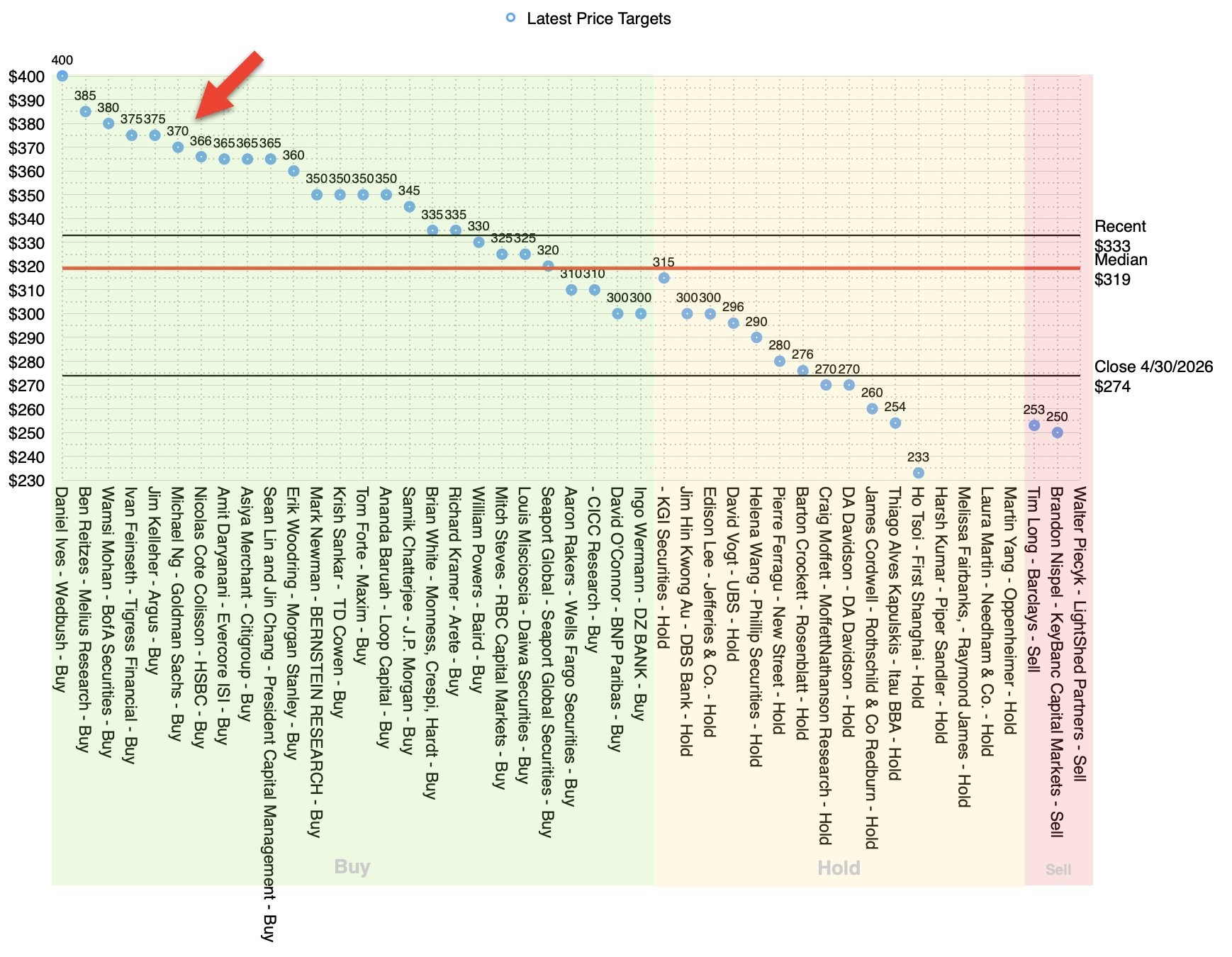
    The analyst raised his price target for AAPL stock to $370 from $330, increasing his valuation multiple to reflect his growing optimism in the company’s iPhone replacement cycle and AI efforts.

    Ng expects Apple to report better-than-expected Q3 FY26 earnings, driven by 17% revenue growth to $110.1 billion, which is at the high end of AAPL’s revenue growth guidance range of 14%-17%. He also expects iPhone revenue of $54.8 billion (23% growth), above the consensus estimate of $53.7 billion. Ng expects iPhone revenue growth to be driven by a 15% unit growth and a 7% rise in ASP (average selling price) on a premium mix shift.

    Additionally, Ng projects 15% growth in Apple’s Services revenue, in line with the Street’s expectations. Within Apple’s Services business, Ng noted continued slowdown in App Store growth due to lower commission rates across markets such as China and Japan. Nonetheless, the analyst expects double-digit growth in the Services business, driven by strength in the services tied to Apple’s products (such as iCloud+ and AppleCare+).

    Ng noted that Apple stock is outperforming the broader market since the beginning of the second quarter, as investors rotated away from traditional AI infrastructure stocks. He added that investor sentiment also improved as Apple gained market share despite industry-wide price hikes due to elevated memory costs. Furthermore, the progress in Apple Intelligence following the WWDC event also helped address AI disruption concerns.

    Meanwhile, Ng expects Apple’s recently announced price hikes for Mac and iPad to support earnings growth over the next few quarters, as he believes that the company’s user base is “relatively price inelastic given brand stickiness, U.S. carrier subsidies, and availability of recent low-cost product launches (iPhone 17e, MacBook Neo).”

    Source: TipRanks

    NB: Ng is near the high range for both his price target and quarterly estimates.
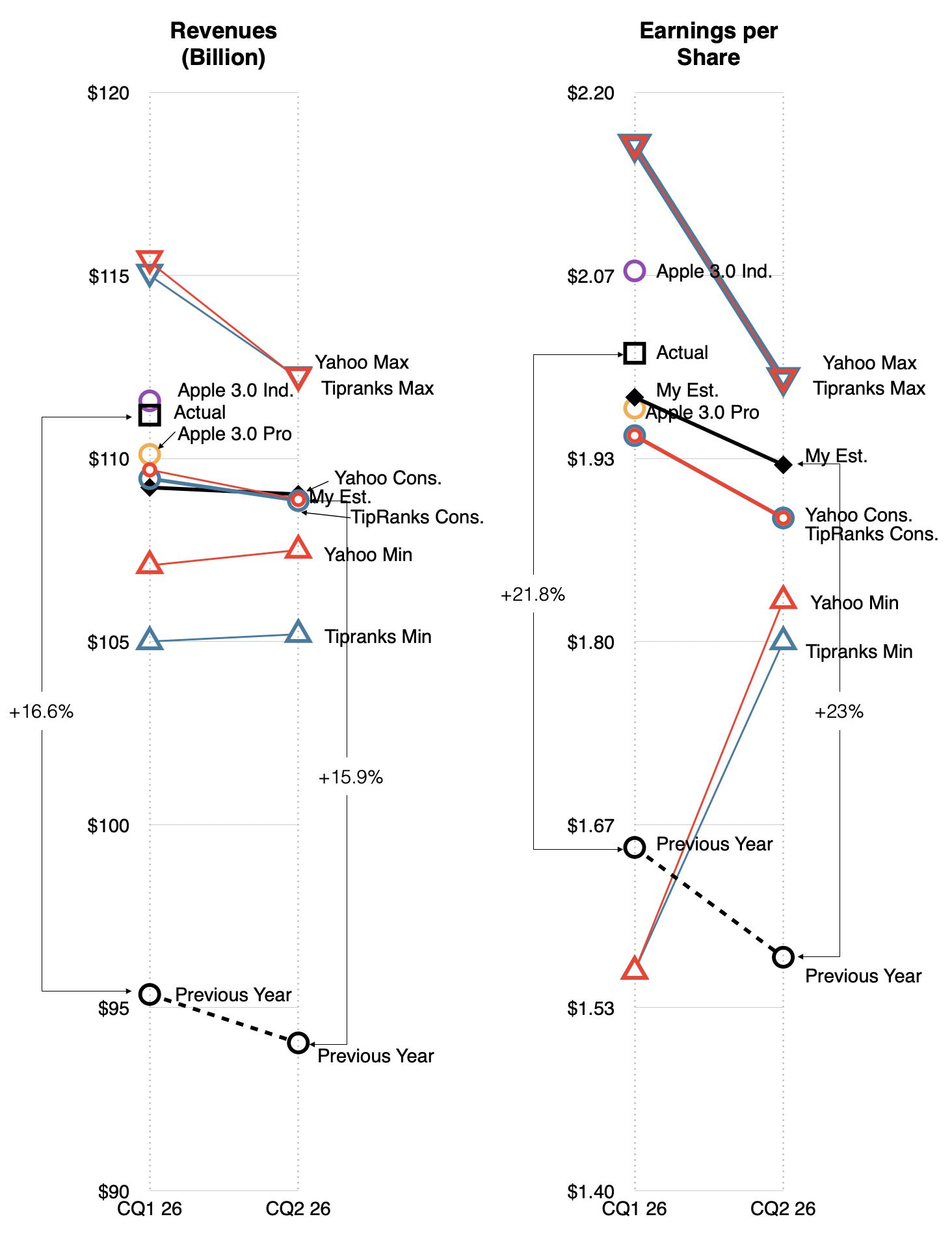
    My estimate is higher on the iPhone unit growth but lower on the ASP growth. Regarding iPhone revenue growth, my estimate is 21% vs. his 23%. We are $1 billion apart on net revenues, almost all attributed to the iPhone ASP difference.


  2. Time to Buy, Time to Sell.

    Nota Bene

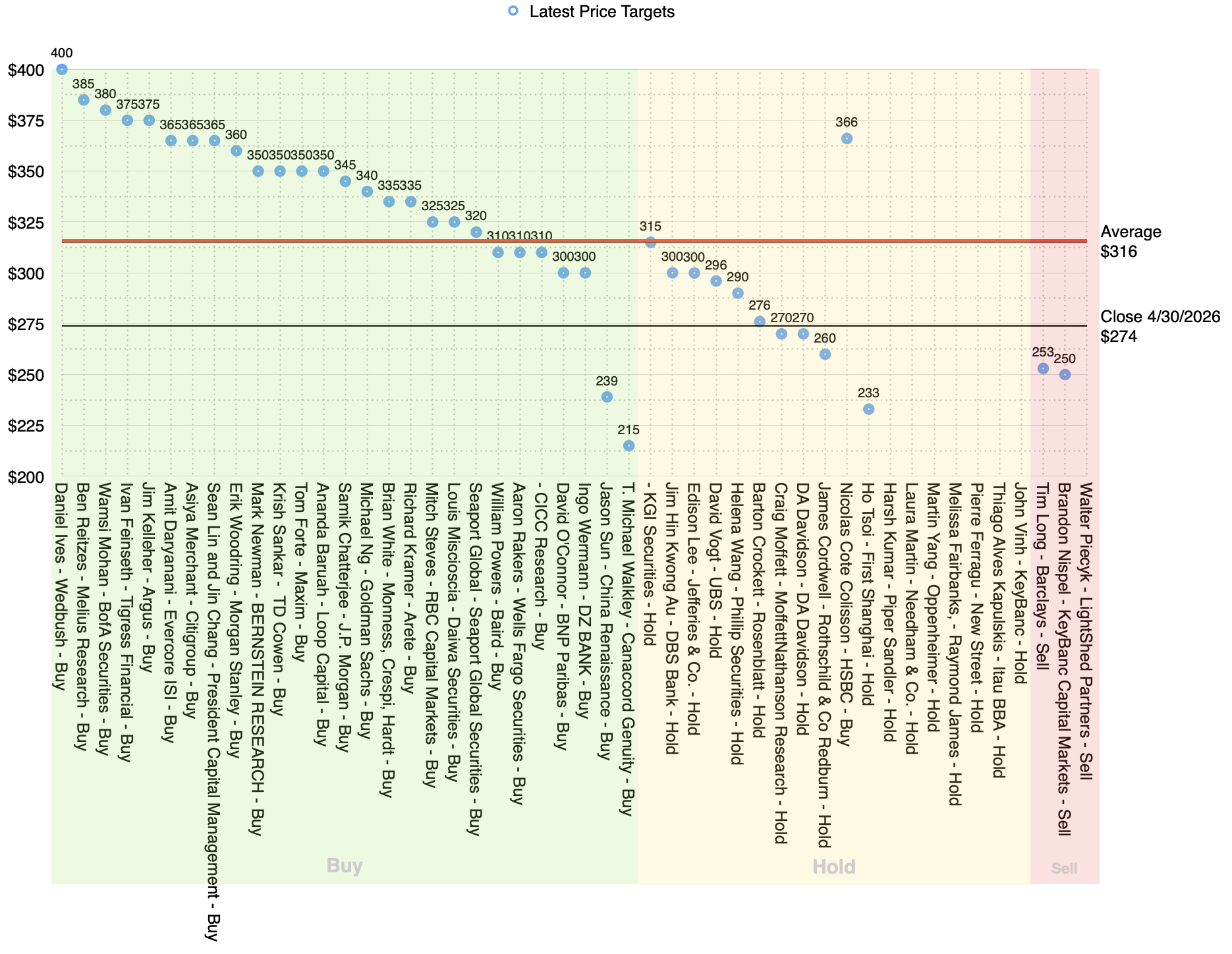
    One flipped to Buy, one flipped to Sell. By my count 28 say Buy and 20 say Hold or Sell.

    Apple stock inched lower in pre-market trading on Friday even after HSBC analyst Nicolas Cote Colisson upgraded the iPhone maker to Buy from Hold and raised its price target by about 41% to $366 from $260. The firm said Apple is nearing an “operational turning point,” helped by its AI plans and what it called “one of its most innovative product pipelines.”

    Colisson said Apple is now better placed to benefit from AI than before. He believes the company can stay away from the “too high capex debate” while using its installed base of 2.5 billion devices to expand Apple Intelligence.

    The analyst expects Apple’s revamped AI platform to play a key role. He said the new agentic Siri AI will add visual intelligence and richer interactions. It will also access information across apps to deliver better responses. According to HSBC, the AI upgrade comes at the right time as Apple prepares to launch new devices.

    HSBC also highlighted Apple’s strong hardware roadmap. The analyst expects the iPhone 18 Pro and Pro Max later this year, followed by an iPhone Air, a book-style foldable iPhone, a 20th-anniversary iPhone, and smart glasses over the next two years. He believes these products, along with better AI features, could trigger a “strong renewal cycle” among iPhone users.

    Reflecting this outlook, HSBC raised its 2027 and 2028 revenue forecasts by 7% to 9%. It also increased its 2027 iPhone sales forecast by 11% to 13% and lifted its 2027 EPS estimate by about 8%.

    Source: TipRanks

    NB: 41%! From $260 to $366 is quite a jump. Meanwhile, KeyBanc Capital Markets downgraded the iPhone maker to Underweight from Sector Weight…

    … slapping a $250 price target on a stock that closed at $317.31 on Monday ($333 at time of writing).

    KeyBanc sees iPhone revenue up 23.2% in FY26, ahead of consensus at 19.7%, but growth slowing sharply to 4.9% in FY27 versus Street at 8.3%.

    As hardware unit growth cools, the firm also cuts back its Services view, modeling FY27 Services growth decelerating to 7% versus consensus near 12%.

    With Apple trading at about 24.5x FY27 EV/EBITDA and roughly 35x forward earnings — more than two standard deviations above the S&P 500 and Nasdaq — KeyBanc argues the multiple no longer fits a maturing, slower‑growth hardware and services story.

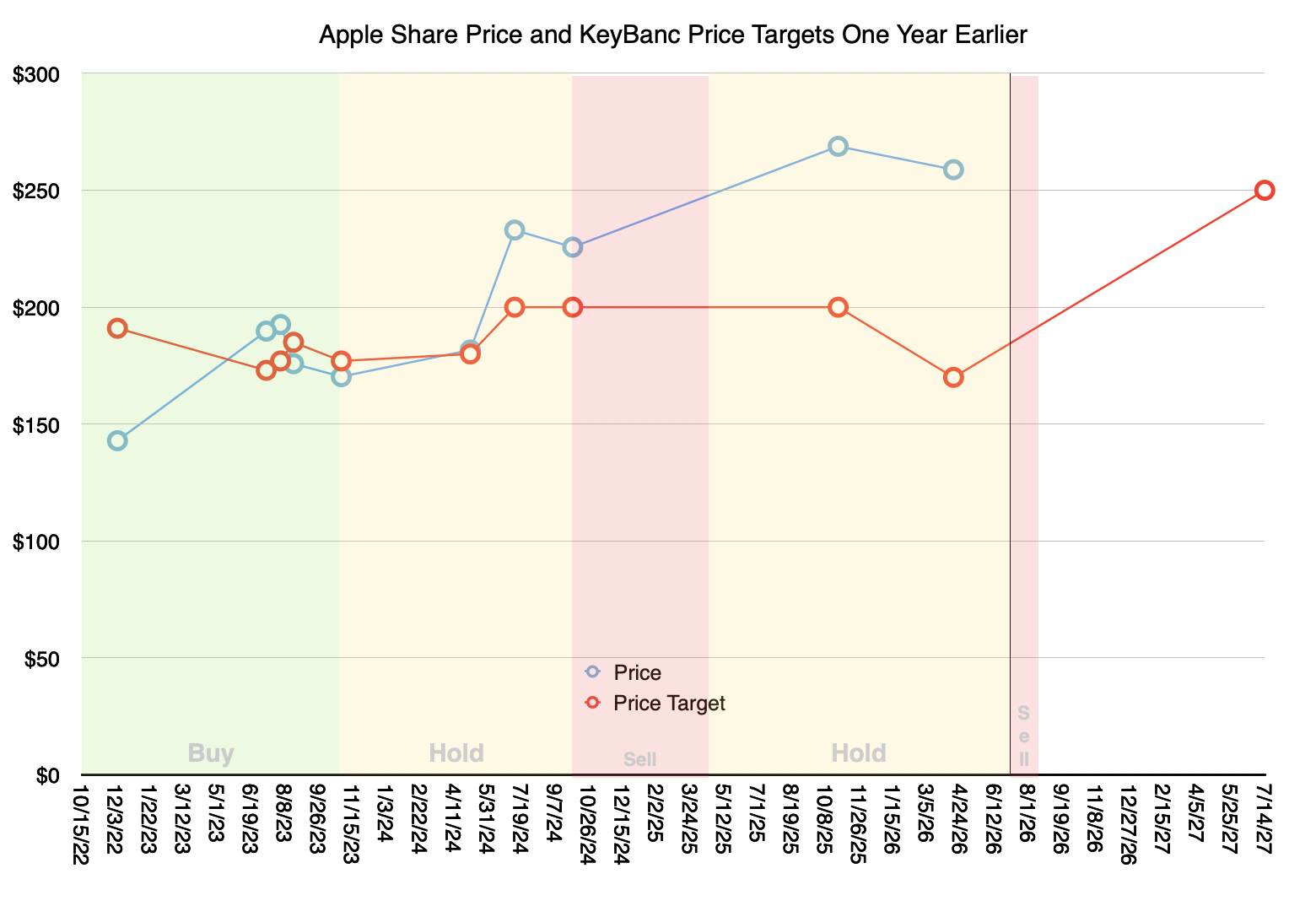
    Here is Keybanc's performance on Apple targets. The red line shows the year-ago targets and the blue line shows the performance of the share price. Note that during the time when the rating was "Buy" the targets and results aligned very well, surprisingly so. As the rating switched to Hold and later to Sell, the targets diverged from results dramatically.

    That happened already in 2024 and got worse since. The latest target set for $250 happened the day before the share price rallied and it now sits at $333. The implication is that shares will drop $83 or 25%.


  3. Why Huawei and Apple Grew While China's Smartphone Market Fell Again in Q2 2026

    Nota Bene

    Apple gaining share in China

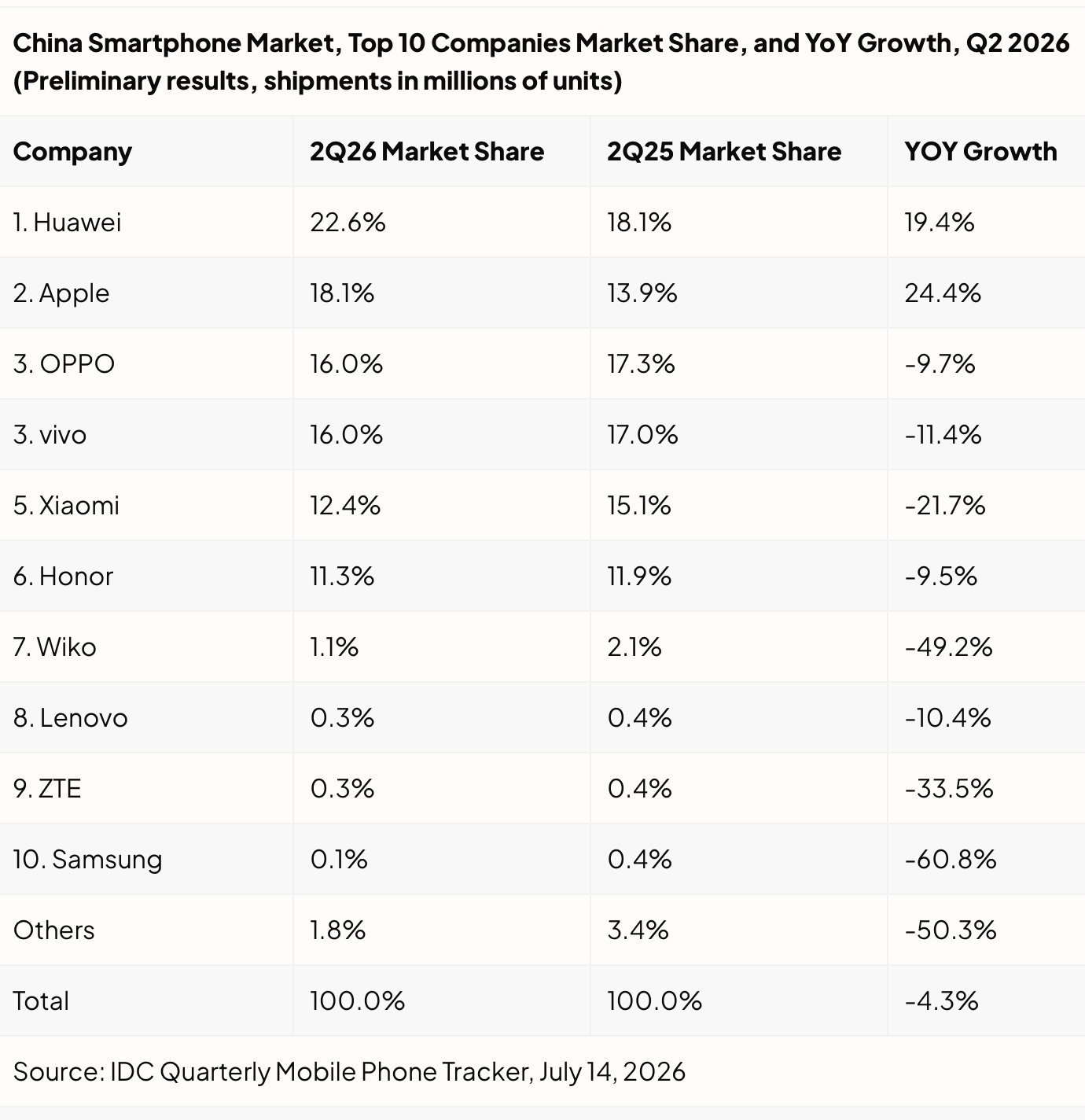
    China’s smartphone shipments came in at roughly 66 million units in the second quarter of 2026, down 4.3% year over year and the fifth straight quarter of decline. Rising memory and component costs pushed most Android vendors to raise prices, which cooled upgrade demand. Huawei and Apple were the exceptions, growing close to 20% and 25% respectively.

    Huawei and Apple moved in the opposite direction for reasons that were just as concrete. Both held prices steady while the rest of the Android field raised them, and both layered on targeted promotions. Huawei kept widening its lineup to cover more of the market, while Apple’s early signaling of price increases on its second-half products pulled some buyers forward into the iPhone 17 series sooner than they might have bought otherwise. Strong brand pull helped as well.

    The top six vendors now hold about 96% of the market, which keeps squeezing smaller and mid-sized brands and pushes concentration higher.

    China Smartphone Market at a Glance, Q2 2026

    Total shipments: about 66 million units, down 4.3% year over year

    Fifth consecutive quarter of year-over-year decline

    First-half 2026 shipments: about 134 million units, down 4.2% year over year

    Huawei and Apple: each up roughly 20% year over year

    “618” festival smartphone sales: down close to 15% year over year

    Vendor tiers: Huawei and Apple lead, followed by OPPO and vivo, then Xiaomi and Honor close behind

    Top six vendors: about 96% of total market share

    Source: IDC

    NB: Other analysts are reporting similar story globally but with Samsung instead of Huawei as growing (apart from Apple.)

    The data sounds repetitive but it should be considered in light of the discontinuities we are experiencing in supply chain pricing. The challenge will be pull-forward demand into the next quarter and the price increases on the iPhone line into the holiday quarter. Note well however that the line-up will probably be split into two launch quarters, with China probably being targeted with the later (spring) quarter.


  4. Omdia: Global smartphone market down 4% in 2Q26 while Apple and Samsung soared

    Nota Bene

    Counterpoint estimating total market sales fell 11%

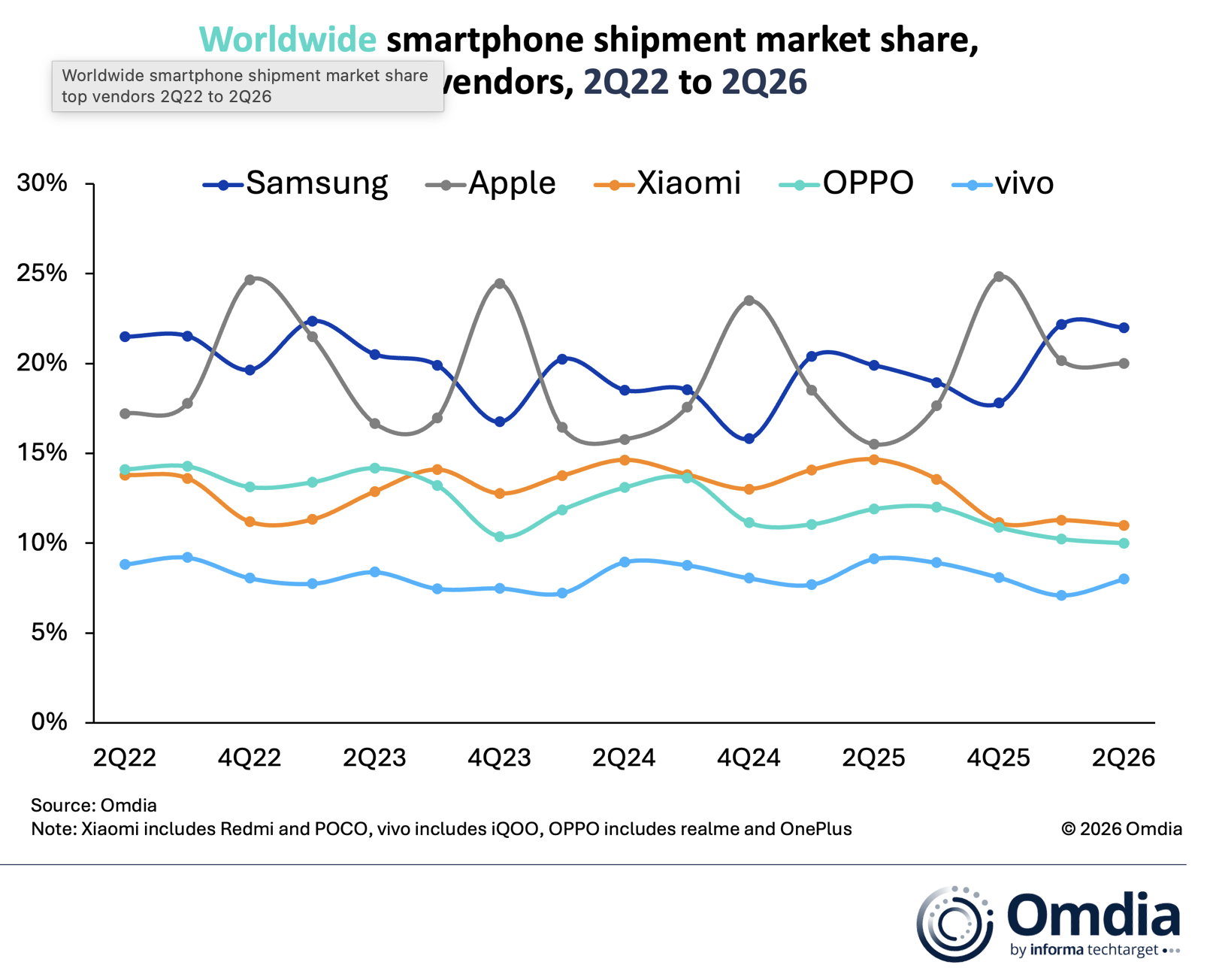
    Apple delivered its best second-quarter performance ever, capturing a record-high 20% market share during what traditionally is its slowest quarter of the year. The iPhone 17 series delivered one of the strongest iPhone refresh and upgrade cycles in Apple’s history. Apple also benefited from stable pricing while most competitors were forced to raise their pricing. However, as Apple raised pricing across other products towards the end of 2Q, a key question remains to what extent iPhones might be impacted by similar hikes later this year.

    “The steepest volume drops hit the sub-$400 mass market segment, where supply constraints are tightest, profit margins are slimmest, and price sensitivity is highest,” said Runar Bjorhovde, Principal Analyst at Omdia. “To adapt, vendors are shifting their strategies from volume to value by reoptimizing portfolios and adjusting retail pricing. Managing the surging component costs is incredibly complex and unpredictable, with some vendors facing memory costing more than four to five times what they did a year ago. Memory and storage alone now account for more than 60% of the bill-of-material for budget devices and more than 30% for high-end models. Although memory and storage costs are the biggest challenges for vendors, they are far from the only challenge. New semiconductor bottlenecks, such as within foundries, are adding further cost pressures.”

    “We anticipate the sharpest volume declines to hit in the upcoming two quarters, where normal seasonal demand peaks – driven by new launches, holidays and shopping festivals — collide with constrained memory chip supply,” added Bjorhovde. “Consequently, vendors are expected to lean further into the higher price segments to capitalize on customers seeking device upgrades in 2026’s sales season. However, while moving upmarket protects margins and revenue, vendors offer fewer options to budget-constrained consumers. Many mass-market buyers will be forced to delay purchases, downgrade expectations, utilize financing, or opt for refurbished devices.”

    Source: Omdia

    NB: Counterpoint came out with a report the same day estimating that the smartphone market in the second quarter overall sales fell 11% year-over-year while Apple saw a 3% year-over-year rise in shipments and ended the quarter with 20% of the market. I note that …

    … Chinese brands Xiaomi, OPPO, and vivo, all saw steep year-over-year declines, due largely to rising memory prices. Overall, during a highly stressful market condition, where the market is contracting and margins are contracting Apple seems to be moving in the opposite direction.

    I recall crises such as AI, Covid, supply chain shortages and China demand collapses in the last 6 years leading to sell-offs and loss of confidence in the company. In all cases, the business emerged stronger.


  5. Game Over. Remember Consoles?

    Nota Bene · 1 comment

    Many PlayStation users are considering a switch to PC after Sony announced the end of physical games on its platforms.

    A reader poll by Push Square, which specializes in PlayStation coverage, has shed light on how fans are feeling about Sony’s next generation console and it should raise alarm bells for the company. Nearly half of the 6,545 respondents shared that they’re seriously considering switching from PlayStation to PC. Meanwhile, only a mere 23% were intent on staying in the PlayStation ecosystem.

    Far and away the biggest reason this group of players was looking at the PC was Sony’s recent decision to not support physical games beyond 2028, with 41% of respondents pointing to this as the reason for a potential move away from PlayStation. This was followed by being more confident in long-term game ownership on PC, which likely stems from the company having recently removed purchased shows and movies from users’ libraries.

    It’s not just concerns about the future of game ownership on Sony’s platform that’s giving these users pause, though. Higher prices are a sticking point, too. When asked what they would do if the PS6 cost $1,000, only 14% of respondents affirmed that they would pick it up at launch. Most respondents say they will opt to either get a PC instead or just skip out on the next generation entirely.

    Source: HotHardware

    NB: There are big problems with reader polls. There is selection bias and the chance of dissatisfaction generating a response is higher than satisfaction. However, the bigger problem is that consoles are under persistent disruption pressure. Microsoft is laying off thousands in its XBox division. This problem was evident more than a decade ago.

    The phone was a "good enough" gaming system and created its own demand and hence its own market. New genres and new generations of users grew up with phone gaming. The PC on the other hand was getting powerful enough to challenge the type of immersive games for high-end gaming (online massive multiplayer especially).

    The upshot of it is that the App Store has overwhelmed the console business. The old platforms carry on but are increasingly appearing to be exhausted. User dissatisfaction and defection are inevitable.


  6. Citi hikes Apple price target by $50 to $365

    Nota Bene

    Cites market share gains and pricing power

    On Monday, Citi raised its price target on Apple to $365 from $315 while maintaining its Buy rating. The move reflects stronger margin expectations and rolled-forward financial estimates amid what the bank sees as Apple’s continued resilience in a tough environment for devices.

    Citi remains constructive on the stock, highlighting Apple’s ability to gain market share even as broader smartphone and PC markets face headwinds.

    Outperforming a Declining Market

    Citi notes that smartphone and PC markets are likely to decline by mid-to-high teens percent. Despite this, Apple is positioned to outperform. According to the note:“continues to outperform the broader smartphone market through share gains, design-driven demand, and strong positioning in the mid-range price segment via promotions and subsidies.”

    The firm also stated that Apple “should continue gaining market share despite a slowing devices market.”

    Pricing Power and Margin Protection

    A key driver behind the higher price target is Apple’s demonstrated ability to implement selective price increases. Citi observed that Apple raised prices on several products mid-quarter amid rising component costs and is evaluating additional memory suppliers to diversify its supply chain.

    While iPhone prices remain unchanged for now, Citi expects price increases in the upcoming September launch cycle: “with more focus likely on the higher end models where demand is more resilient.”

    The bank also flagged an expected foldable iPhone launch in the fourth calendar quarter. These factors support higher margin expectations following recent price increases.

    Source: MacDailyNews

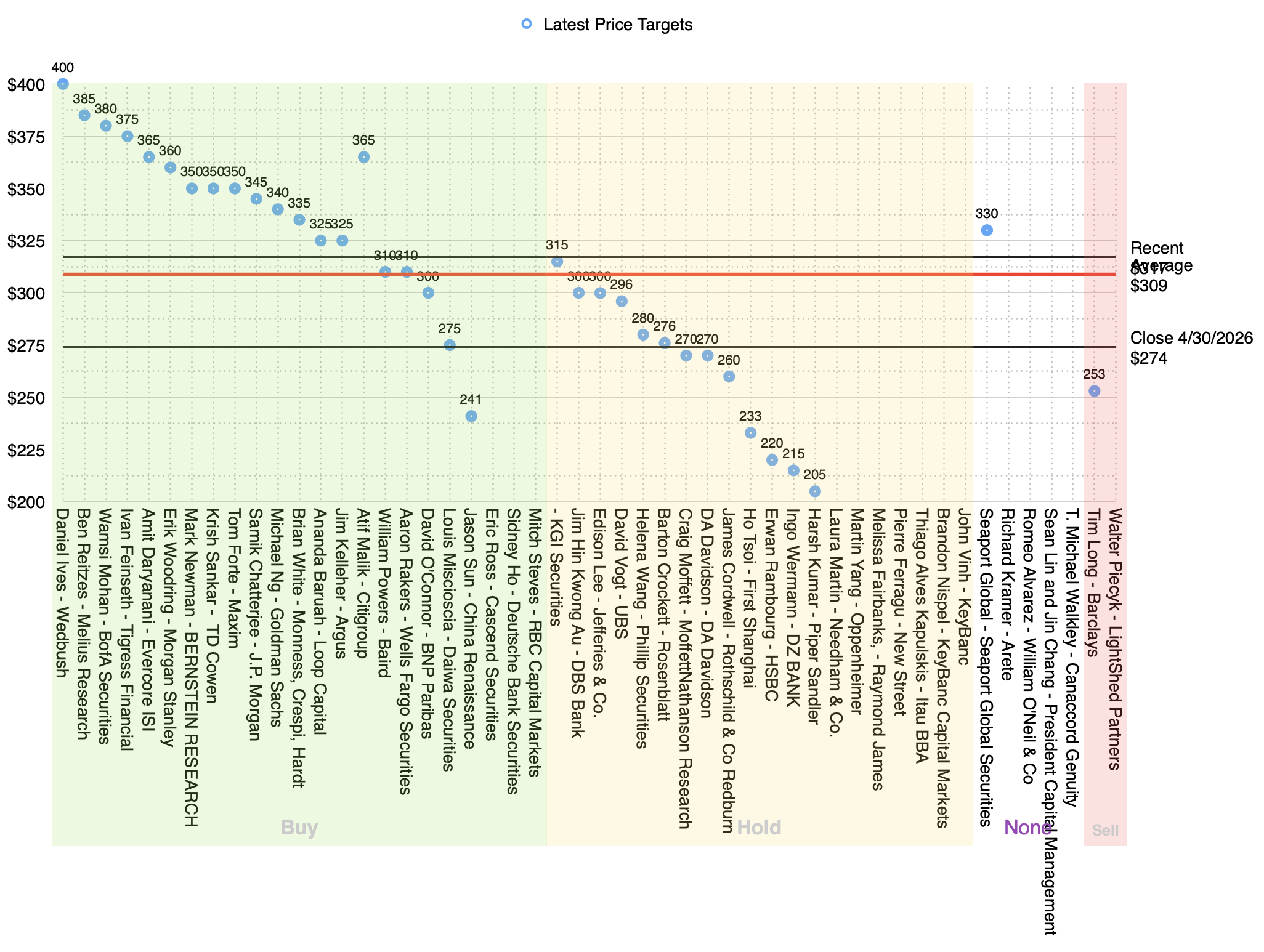
    NB: The new price target is shown in the updated analyst target graph. The average target has now risen to $309 while the shares are trading around $317 and set a new all-time intra-day high above $323.

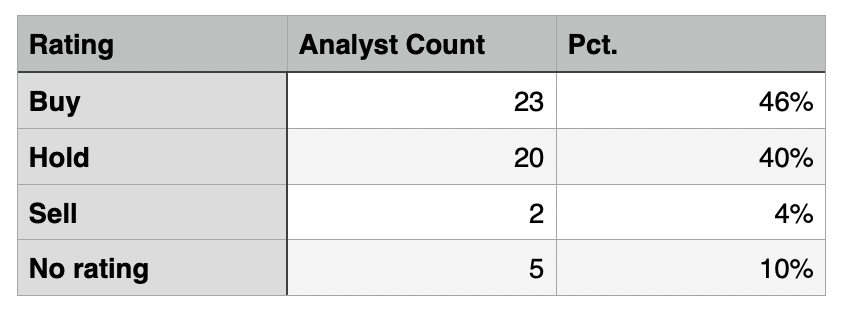
    Targets are increasing among the "Buy" rating analysts but the majority of analysts maintain a hold or sell or no rating on the company. There is a possibility that Apple may resume the position of highest market capitalization.

    The news of price increases caused a dramatic fall in the share price but a few weeks later the analysts are noting that the company might prosper regardless. This should not come as a surprise to readers of this web site.


  7. JP Morgan raises Apple stock price target by $20 to $345

    Nota Bene

    RAM-driven hardware cost increases won't impact long-term revenue gains.

    In a note to investors seen by AppleInsider on Tuesday, JP Morgan has increased its price target for Apple to $345. This is an increase of $20 from January, when it last raised the stock target price to $325.

    The firm acknowledges the hefty price increases are going to be a short-term issue, with investors trying to judge how badly consumers will take the news. But even so, the news isn't enough to dampen JP Morgan's spirits.

    In its reasoning, JP Morgan first says that the historical data for sales volumes covering iPhone, Mac, and iPad show a "limited relationship" to pricing across multiple years. Essentially, consumers are going to buy Apple products anyway, and pricing doesn't seem to matter too much.

    Mac sales are probably the most insulated in JP Morgan's view, with more price point options and AI-led demand working in its favor.

    The iPhone also benefits from limited elasticity on the premium end. Those with larger budgets are less affected by price changes, it seems.

    Source: AppleInsider

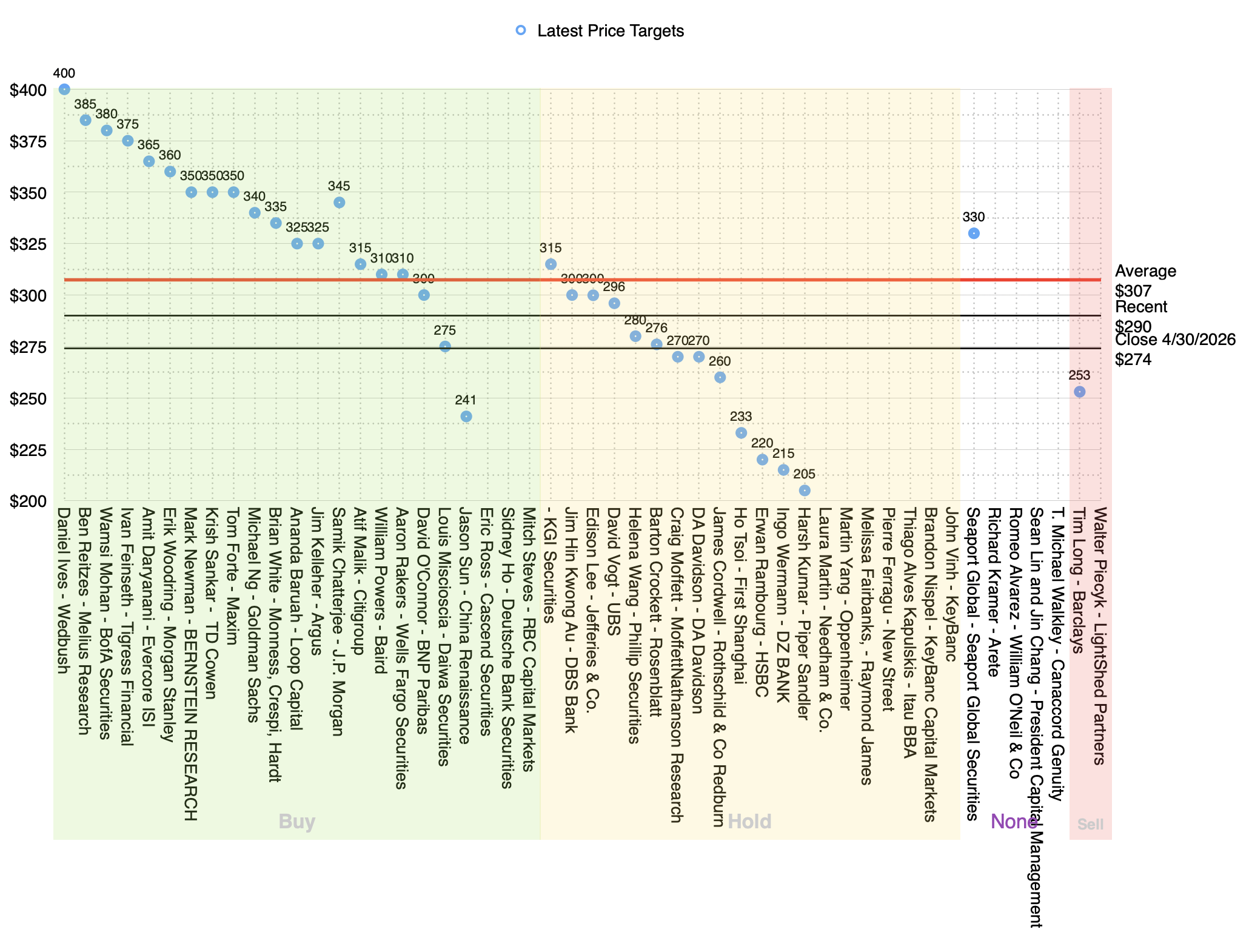
    NB: Average target is $307.4, below current price of $312. A majority of analysts maintain a negative or neutral outlook on the company.

    Among "Buy" ratings, the average price target is $336.8. Among "Hold" ratings, the average target is $264.6. Over the last year, the share price has risen 49%.


  8. Why doesn't anybody copy Apple?

    Nota Bene · 6 comments

    Apple accuses OpenAI, and former design star Jony Ive’s io Products firm, of stealing hardware trade secrets in blockbuster lawsuit

    Apple sued OpenAI on Friday for allegedly stealing its trade secrets, an extraordinary move that pits the $4.6 trillion iPhone maker against the fast-growing AI startup as it prepares to release a new class of hardware products that have been shaped in large part by Apple’s former design boss.

    In the lawsuit, filed in the Northern District of California court, Apple accused two former employees now working at OpenAI of systematically stealing confidential data, including information about unreleased hardware products, technical specifications, and details about vendors and contractors in Apple’s supply chain. The complaint also listed OpenAI as a defendant, as well as io Products, a hardware design firm acquired by OpenAI last year that was co-founded by Apple’s former design boss, Jony Ive.

    Source: FORTUNE

    NB: Jobs said that if you took anybody out of Apple they would be useless. He was right. In my 2013 post "Why Doesn't Anybody Copy Apple" I agued that even though everyone tries to copy Apple's products nobody tries to re-create Apple's operating model. OpenAI seems to be the first to try, though I'd argue they don't have a clue what they are doing.

    What Ive and Altman tried to do was brute force replicate Apple by taking as many people and processes from Apple to replicate the operating model. What they could not replicate was the priorities. Resources are easy to steal or replicate. Processes are much more difficult but with a lot of persistence it may be possible. But Priorities cannot be replicated because they include every aspect of the business logic. OpenAI has a miserable business. They cannot graft a device business any better than Google did and arguably have a much shorter runway to even try. It does appear to be a grab the money and run type venture.

    Ive's greed has destroyed his legacy. He will try to distance himself but he is forever tainted.


  9. Worldwide PC market update Q2 2026: Omdia: overall decline 4%, Apple up 16%. IDC: overall decline of 4.9%, Apple up 10%

    Nota Bene

    Can Apple overtake Dell?

    Omdia

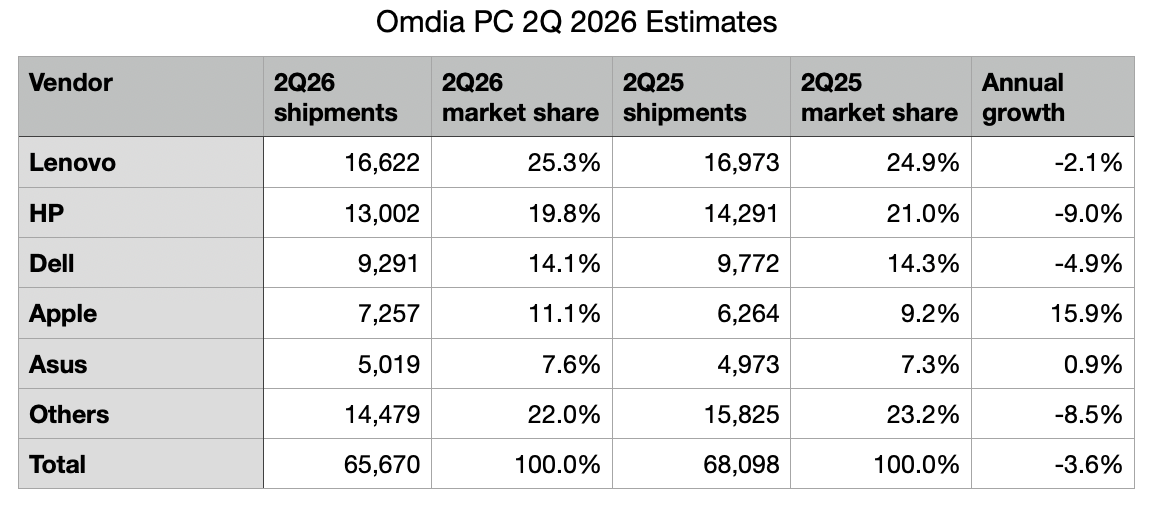
    Global shipments of desktops, notebooks, and workstations in 2Q26 declined 3.6% year-over-year to 65.7 million units according to the latest research from Omdia. Shipments of desktops (including desktop workstations) hit 13.9 million, falling 1.3% annually, while notebook (including mobile workstations) shipments landed at 51.7 million units, representing a 4.2% decline.

    "The sharp increase in memory and storage prices during the first quarter of the year had a significant impact on product pricing in the second quarter," said Ben Yeh, Principal Analyst at Omdia. "It also prompted consumers and IT decision makers to bring forward their PC purchases to mitigate the risk of further price increases. Although sales volumes were maintained at a stable level, the risk of a subsequent downturn remains."

    Apple's recent decision to raise prices across MacBooks has become one of the key focal points in the market. However, other PC vendors began increasing prices as early as the end of 4Q25 and have continued to adjust them quarter over quarter. Across comparable product lines, prices have risen by about 20% to 40% compared with the same period last year.

    Lenovo retained the top position, shipping 16.6 million units and maintaining a 25% market share despite a modest 2% decline in shipments. HP ranked second with 13.0 million units shipped, as volumes declined 9% year over year. Dell held third place, demonstrating resilience in a supply-constrained environment by shipping 9.3 million units and capturing a 14% market share. Apple recorded the strongest growth among the top vendors, shipping 7.3 million units, driven by the launch of the MacBook Neo and healthy underlying demand. The company gained 2 percentage points of market share compared with 2Q25. Asus rounded out the top five with 5.0 million units shipped, delivering a broadly flat performance year over year.

    IDC

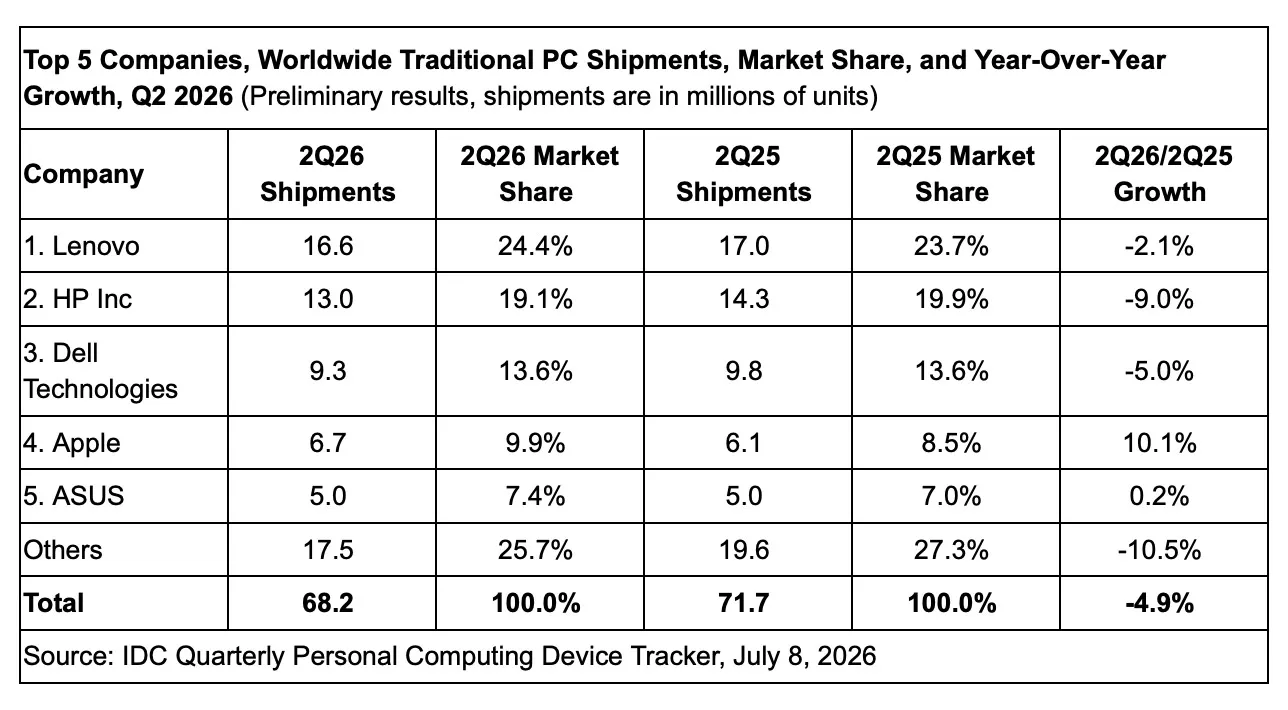
    New data from IDC shows that Apple was the only major PC vendor to post significant shipment growth in Q2 2026, with the broader market declining for the first time in more than two years.

    Mac shipments rise as PC demand cools
    In a report published today, IDC says global PC shipments fell 4.9% year over year in Q2 2026, dropping to 68.2 million units from 71.7 million units in Q2 2025. The data showed that the top-five vendor ranking was unchanged from Q2 2025, even as most major PC makers posted year-over-year declines.

    In practice, Lenovo held on to the top spot with 24.4% market share, despite a 2.1% year-over-year decline in shipments. HP followed with a 19.1% share and a 9% drop, while Dell remained in third place with a 13.6% share and a 5% decline.
    Apple, meanwhile, saw Mac shipments jump 10.1% year over year, giving the company 9.9% share, and ASUS rounded out the top five with 7.4% share and a slight 0.2% increase.
    From the report:

    “Apple’s share gain coincided with its latest product launch, the MacBook Neo, and while the company did raise prices in line with the broader market, it still remains well positioned against rivals facing the same cost pressures.”

    Here’s Jitesh Ubrani, research director for consumer devices at IDC:
    “The real story here is the disconnect between units and dollars: shipments are falling, but revenue is climbing because vendors are pushing through price increases faster than demand is dropping. […] Given worsening macro conditions and a memory shortage that isn’t expected to ease until early 2028, we don’t expect another round of inventory pull-forward, which points to a sharp slowdown in growth rates in the second half of 2026. Vendors are bracing for further price hikes into 2027, and channels are already flagging concern about elevated inventory at these higher price points.”

    IDC also warned that sustained price pressure could start weighing on PC upgrade cycles, “even as interest in on-device AI processing continues to grow.” The firm also pointed to another risk: the biggest PC makers gaining even more share as smaller rivals struggle with the memory crunch.

    Source: Yahoo Finance

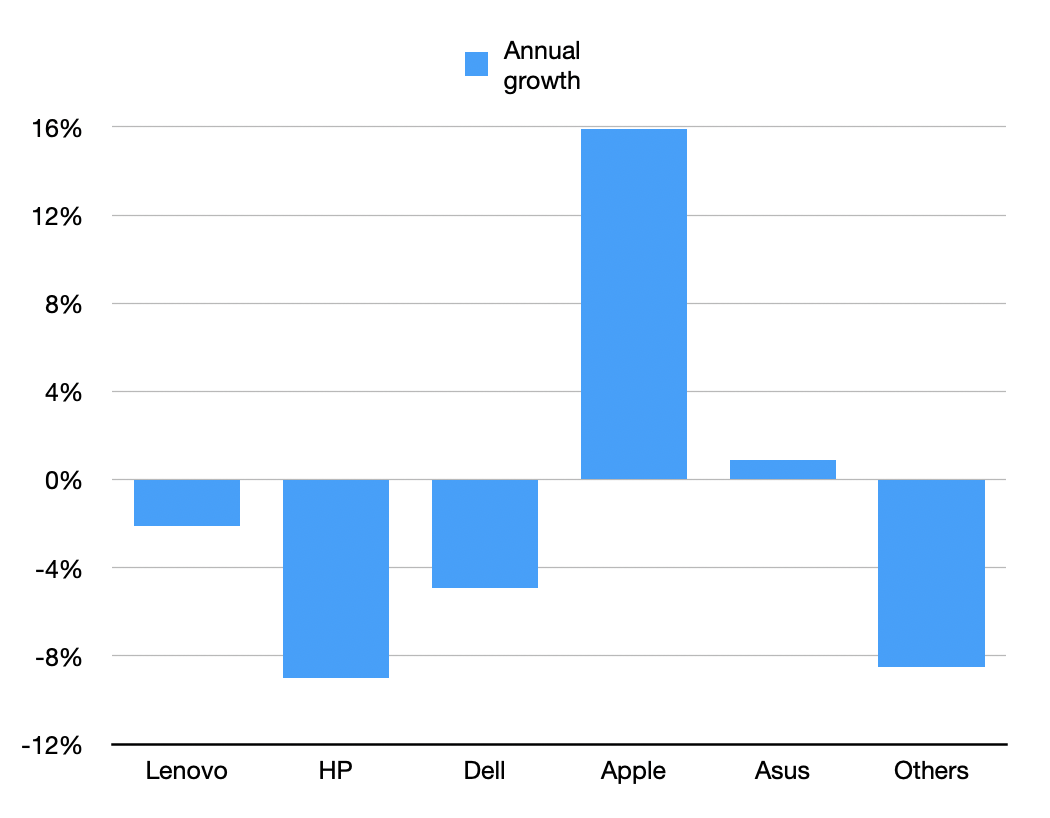
    NB: The two estimates are almost exactly the same for the top vendors, differing only on Apple's shipment and "Others". Overall…

    …Apple is growing the Mac line between 10% and 15% in units. My own estimate is of a 15% increase in revenues (to $9.25 billion) with a volume increase of 20% due to the MacBook Neo. The Neo launch was extremely successful and it hit the market at the launch price of $599, holding the level through the end of the June quarter.

    As a result, Apple's growth is very much an outlier.

    According to the Omdia data, Apple is still a few percentage points (2 million units) below Dell and a third place in the volume ranking. Overtaking Dell in units would be quite an achievement given the admonishment Michael Dell had when asked what he would do if he were CEO of Apple. “What would I do? I’d shut it down and give the money back to the shareholders.”


  10. No one admits they like or want to buy more AAPL

    Nota Bene

    How Apple Became the Most Defensive Stock in the Market

    The stock hit an all-time high Thursday as investors look for hedges against massive artificial-intelligence investments elsewhere in the market.

    Shoring up a portfolio with defensive stocks typically means buying stable names from seemingly boring categories: Consumer staples, utilities, medical devices. These days, you can just buy Apple stock instead.

    Whether by design or by luck, Apple’s relative inaction on artificial intelligence has made it the ultimate hedge in a market driven by AI investments. And as investors grow wary of ballooning capital outlays elsewhere in Big Tech, the iPhone maker’s stock has proven its worth.

    Apple hit an all-time high of $316.22 on Thursday after a quiet and steady long-term climb. Shares are up 15% this year and 48% in the last 12 months—first and second in the Magnificent Seven, respectively—outpacing both the Nasdaq Composite and the S&P 500.
    “No one admits they like or want to buy more AAPL,” Mizuho Securities analyst Jordan Klein wrote Friday. “But I get why more folks [are] looking at AAPL as a hedge or long idea.”

    The story of the tech market over the last two years goes something like this: AI labs like Anthropic and OpenAI need data centers; hyperscalers like Oracle and Amazon.com are investing historic sums to provide them; and that money is going to chip and server makers, memory and storage suppliers, and a host of other companies.

    Apple doesn’t fit neatly into any of those categories. It doesn’t have a frontier AI model, a sprawling cloud business, or much in-demand hardware. Instead, it is carving out a lower-cost niche as a leader in “edge AI,” which involves embedding AI applications directly on its devices, with the help of Broadcom chips.

    Analysts estimate Meta Platforms, Oracle, and Amazon will have negative free cash flow in 2026 because of their AI investments. Meanwhile, Apple is expected to produce $143 billion in free cash flow, up from $109 billion last year, per FactSet. Its capital expenditures will likely decline in 2026.

    “[Apple] has definitely been out of favor, but carries a lot less direct near-term execution risk,” Klein wrote.

    Source: Barron’s

    NB: The smart guys are not so smart.

    It's a common theme. It's normal to be cynical and being cynical is a way to signal that you are smart. But it's not at all wise to be cynical.


  11. Apple destroyed the mid-tier watch market. Now it's coming for the $200 billion eyewear industry

    Nota Bene

    Hence The Apple Vision Pro

    Apple plans to disrupt the $200B eyewear market the way it disrupted watches. Swatch fell 28%, Fossil 70%. Smart glasses are targeting late 2027.

    When Apple launched the Apple Watch in 2015, the mid-tier wristwatch market had a handful of dominant companies. Swatch Group sold watches under Tissot, Hamilton, and Longines. Fossil Group sold under Michael Kors, Armani, and Kate Spade. Movado sold under Coach, Hugo Boss, and Tommy Hilfiger.

    Ten years later, the damage is quantifiable. Swatch’s revenue is 28% lower in 2025 than it was in 2014. Fossil’s sales dropped roughly 70%. Apple became the world’s largest watchmaker by unit volume within a few years and last year overtook Rolex as the number one watch brand by revenue. The Apple Watch now generates an estimated $17 billion annually.1

    Source: TNW | Apps

    NB: The global smart glasses category surged 167% from…

    …a year earlier in the first quarter, shipping 2.25 million units worldwide, according to consultancy firm IDC. Meta led the pack with nearly 70% market share, followed by augmented reality-equipped glasses maker Shenzhen RayNeo Technology and Chinese consumer electronics maker Xiaomi, according to IDC.

    The smart glasses category is tiny compared with the eyewear market ($0.5 billion vs. $200+ billion). Apple's entry will change that.

    It's likely that the Apple product line will be called the Apple Vision line, with the Vision Pro holding the high end.


    1.  "By the end of the 16th cent. eyeglasses were as common in western and central Europe as desktop computers are in western developed countries today." Eyeglasses served an important technological function at both the intellectual and practical level, not only easing the textual studies of scholars but also easing the work of craftsmen/small bus. During the 15th cent. two crucial developments occurred: the ability to grind convex lenses for various levels of presbyopia and the ability to grind concave lenses for the correction of myopia. As a result, eyeglasses could be made almost to prescription by the early 17th cent. -Renaissance Vision from Spectacles to Telescopes, Vincent Ilardi, American Philosophical Society, 2007.

      See also: More than meets the eye.