Asymco

Asymmetric Intelligence

Nota Bene

News Commentary from Asymco's Horace Dediu.

  1. Citi reiterated a Buy rating and a $315 price target

    Nota Bene · 3 comments

    AI or bust

    Citi reiterated a Buy rating and a $315 price target on the stock in a research note. The nod of approval comes ahead of Apple’s week-long Worldwide Developers Conference, which begins June 8.

    Analysts believe the headline at next week’s conference will be Apple’s long-overdue revamp of its digital assistant, Siri. Citi expects a new Siri app to resemble something like OpenAI’s ChatGPT chatbot while also serving as an AI assistant across applications on Apple’s operating systems.

    “Siri will handle multi-step requests, understand personal data, analyze on-screen content, generate emails or messages using both web and device context, and surface rich card-based results for everything from news to calendar data, while also completing actions across apps and shortcuts,” predicted Citi analyst Atif Malik.

    Apple will pair that overhaul with deeper AI integration across its Mac, iPad, and iPhone operating systems, Citi said. Examples could include more AI features in writing, search, and photo editing.

    “Edge AI has not yet taken off, but its long-term potential is substantial as consumers and enterprises increasingly prioritize low-latency, privacy-preserving, and cost-efficient AI experiences over cloud dependence,” Malik wrote. “We believe a meaningfully upgraded Siri will be a key to unlock the potential.”

    Strong demand for the Mac Mini, which can run AI agents like OpenClaw, shows how edge AI is already spurring more hardware sales. Extend that demand across phones and tablets, and Apple could be an edge AI winner.

    Source: Yahoo Finance

    NB: In other news, Apple Plans iPhone Bill Splitting Shares up 2.95% reaching the $315 target…

    …Edge AI is inevitable but it was also inevitable 2 years ago. The target is already priced in thus making the AI story a non-starter.



  2. Morgan Stanley reiterates $330 price target with bull-case $440

    Nota Bene · 3 comments

    AI or bust

    Morgan Stanley analyst Erik Woodring believes Apple’s upcoming Worldwide Developers Conference could begin to change that perception. The 5-star analyst reiterated his Overweight rating and $330 price target, arguing that a successful AI strategy could unlock a higher valuation for Apple stock, with a bull-case scenario reaching as high as $440 per share.

    He noted that Apple’s recent strength has been driven by its products and services business rather than AI. However, companies viewed as “AI winners” have often earned higher valuations over the past two years, and Woodring believes Apple could soon be seen as one of them.

    Why WWDC Could Be a Turning Point for Apple

    Woodring believes Apple now has more of the tools needed to compete in AI. He pointed to Google’s Gemini models supporting Apple Foundation Models, Apple’s strong focus on privacy, and what appears to be a renewed push around Siri and Apple Intelligence.
    Unlike many of its rivals, Apple is not spending heavily on building AI infrastructure. Instead, the company can use its massive base of iPhone, iPad, and Mac users to bring new AI features to consumers. That approach could help Apple grow its AI offerings without the huge costs faced by some competitors.

    The analyst also sees an opportunity for Apple to help ease some of the industry’s AI capacity constraints. A more capable Siri and improved Apple Intelligence platform could bring AI tools to millions of users through Apple’s existing ecosystem.

    For investors, the bigger story may be valuation. Woodring believes that if WWDC shows a clear path for Apple’s AI plans, the stock could earn a higher multiple. In that scenario, he sees shares reaching $365 to $385, with a bull-case valuation of as much as $440.

    Source: TipRanks Financial

    NB: Not much new here but a $330 target is not much above the $315 high recently reached. Perhaps this is his foreshadowing of upgrades post WWDC…

    …The premise is that Apple could get a higher multiple on AI re-rating. I am always skeptical of re-ratings as Apple does not respond to market fads (unless they are negative.) Apple has always been valued very conservatively, sometimes derisively so. A multiple above 40 is almost never experienced. If it were to run on AI euphoria well above that I'd be very surprised.

    Disappointment after WWDC is almost guaranteed as it's always hyped by pundits expecting new strategy, new products and new directions whereas it's always been strictly a software and tools show.


  3. IDC Forecast: The smartphone market is on track for its worst year ever

    Nota Bene · 2 comments

    AI-driven memory shortage continues to hammer sales; Android sales to drop 20%

    According to analysis firm IDC, smartphone shipments are headed for a 13.9% decline in 2026, a downward revision from the 12.9% decline IDC had anticipated for the year in February. It would also mark the steepest drop in smartphone history, the company said.

    “these pressures are compelling vendors to reduce shipments, raise prices and concentrate on higher price tiers — elevating smartphone [average selling price] to a record $550, up $100 from last year,” IDC senior research director Nabila Popal said in a statement.

    “2026 will be a defining year for the industry as [a] new reality of structurally higher costs take hold,” she added. “For consumers, it means the era of ultra-cheap smartphones is over. For vendors, it means only those that can adapt their strategies to this new cost environment and sustain demand at elevated price points will survive.

    The broader Android smartphone market is set to take the biggest hit, with IDC projecting a 20% year-over-year drop in shipments. Despite that, Samsung is expected to increase its market share in the space at the expense of smaller smartphone companies thanks to its midrange and premium device lineups.

    Apple, the research firm said, is also expected to perform relatively well, with shipments forecast to fall 5.2% on the year, an improvement from a previously anticipated decline of 8.1%.

    In its most recent earnings report, Apple announced iPhone revenue growth of 20% for the second consecutive quarter, thanks to its strong iPhone 17 lineup and improved sales out of China.

    But CEO Tim Cook also warned of supply constraints due to both the memory shortage and the dearth of iPhone processors.

    See also: The Smartphone Market is Cracking.

    Source: Yahoo Finance

    NB: I would add that Apple also announced that revenues for June quarter would increase at the same rate as they did for March quarter, thus for at least half the year the company will achieve 20% growth in iPhone sales. This is in sharp contrast to both what IDC and Omdia have been reporting.

    I am reading the regional reports showing single digit growth for the iPhone in Europe, Latin America and China during the first quarter and months since. Apple is either reporting or forecasting 20% growth during the same period globally. Either Apple is selling in far-flung markets that are not being tracked or the methodologies of the analysts are not working for Apple.

    We have to appreciate that the job of the market analysts is not easy. They do not obtain direct sales information but rely on secondary sources such as retail transactions or supply chain or some sampling of distribution. The accuracy is often falsely precise. Especially with respect to Apple which uses much of its own distribution: Apple stores both physical and online.

    IDC forecast of 5% drop for the iPhone is actually a concession to increasingly positive data from Apple. They adjusted from a decline of 8%. Simultaneously they are adjusting Android sales down sharply. Samsung may manage through this period but it looks increasingly grim for other Android vendors.

    Then there is the ASP.

    “That’s elevating smartphone [average selling prices] to a record $550, up $100 from last year,” she said. According to IDC, Apple was better prepared than peers for the global chip shortage

    “Apple has done three things that few of its competitors have managed: it secured memory supply early, it built a portfolio strong enough to drive a remarkable turnaround in China, and it positioned the iPhone 17 to capture demand exactly when consumers in developed markets are extending replacement cycles and trading up,” Francisco Jeronimo, vice president for worldwide client devices at IDC, wrote.

    I don't think Apple anticipated or acted differently in this cycle. They started down the road for the 17 much more than a year ago, well before the memory crisis was anticipated. Scale alone ensured that they secure supply and position as they do. As always, Apple does not come to the market. The market comes to Apple.

    All analysis agree implicitly that Apple will gain significant share this year. Whether that turns into a permanent shift depends on many things. Almost all new iPhone users will stick with the platform but they may extend their buying cycle as the products last longer.

    As was the case with Covid, a crisis favors the strong. What is portrayed as an economic crisis, somehow leads to the priciest products gaining share. This is not a contradiction as it seems. In times of uncertainty a flight to value make a lot of sense.


  4. Melius’ Ben Reitzes raises price target on Apple to $385

    Nota Bene · 6 comments

    The company “may be on the brink of some real AI sizzle.”

    Reitzes said people are becoming more comfortable using voice commands, and Apple could benefit from this shift as technology becomes more voice-driven.

    Reitzes also said the upgraded Siri could become a standalone tool that many Apple users rely on, even instead of apps like OpenAI’s ChatGPT. He described it as an “agent-style interface” that could make the Apple ecosystem more unique and spark fresh excitement among developers.

    Additionally, he highlighted that no other consumer tech company has both parts of that system under one trusted setup. He added that this advantage will become even clearer—and more valuable—as AI systems get more complex and start acting more independently.

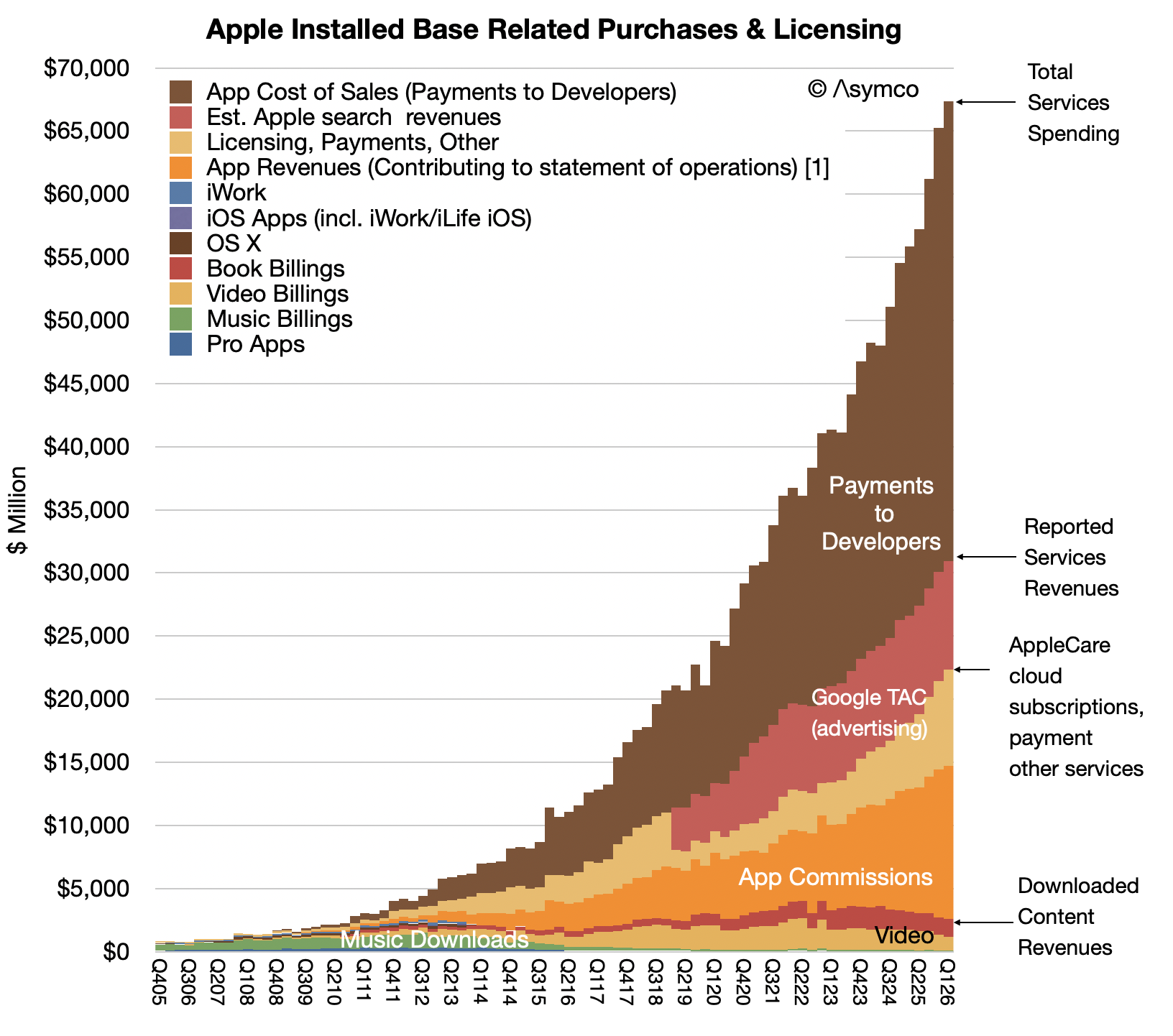
    Overall, he expects Apple to post about $613 billion in revenue by fiscal 2028.

    Source: TipRanks Financial

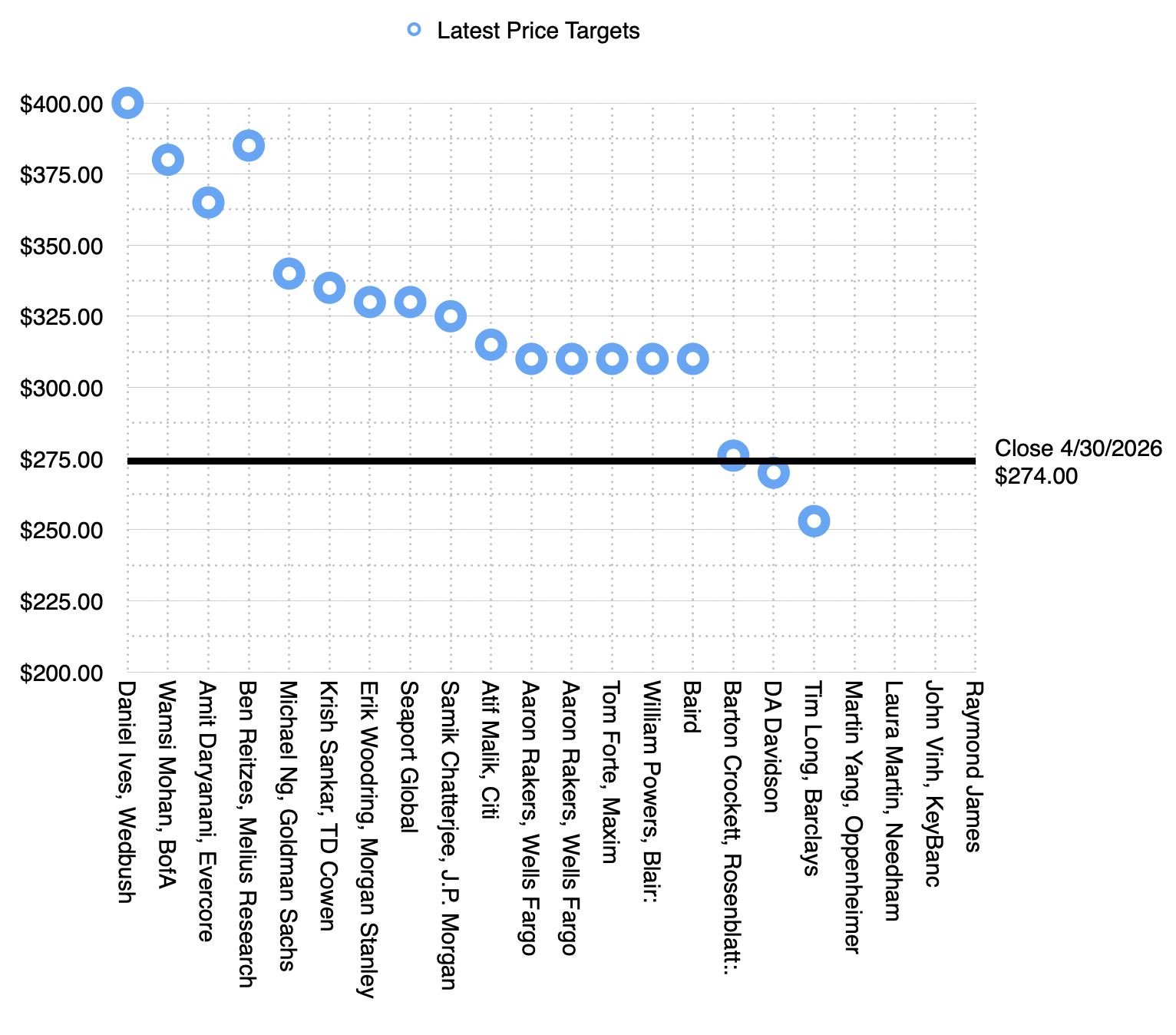
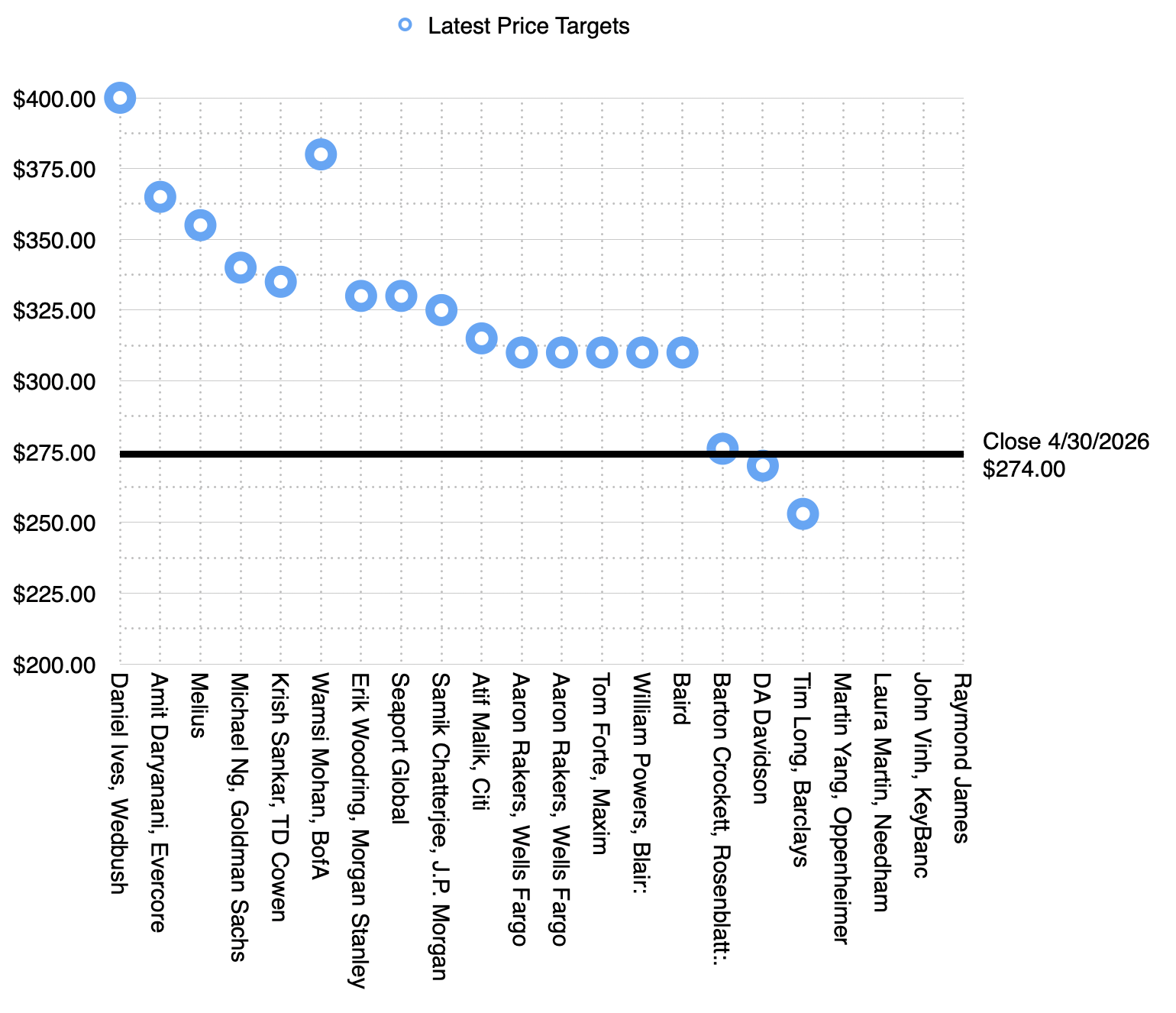
    NB: Latest analyst targets are shown with Melius' stepping up. Analysts are coming round.

    This upgrade follows Bank of America boosting its price target to $380 a share.

    “In an agentic world, value accrues to the platform that controls user intent, personal context, app access, permissions, identity, authentication, payments, and trust,” said BofA’s senior equity research analyst Wamsi Mohan. 

    “Smartphone is the scaled consumer device where these factors already converge,” he added. “If AI assistants become the new front door…we think Apple should have meaningful leverage over model providers, app developers, merchants, advertisers, and payment networks.”

    An agentic version of Siri could boost 2030 revenue by as much as $65 billion, Wamsi and his team estimated, adding up to $2 billion in incremental earnings over the next four years.

    Reitzes sees the new Apple Siri as a stand-alone app that has the potential to replace ChatGPT for Apple's 2.5 billion installed devices, while proving to be “an agentic interface that can further differentiate the Apple ecosystem and ignite a level of excitement with developers not seen since the early days of the App store.”

    But it’s also likely to establish Apple as the leader in consumer-use AI.

    “If agentic AI shifts the market from answering questions to taking actions, the critical control point becomes centered around owning the endpoint,” Wamsi said. “Apple does not need to own the best frontier model if it owns the trusted interface that routes intent across local models, Apple-controlled cloud models, external models, and app actions.”

    Reitzes at Melius sees that shift, which he describes as a “shot in the arm” for Apple’s app store, driving “a massive new product cycle that keeps iPhone growth going.”

    He’s also observing that Apple’s architecture, with on-device models handling lighter workloads and its private cloud taking on the larger ones, makes it unique.

    “No other consumer technology company has both legs of that architecture under a single trust model, and we think that gap becomes more visible, and more valuable, as agentic complexity scales,” he said. 

    “Agentic AI is a structural tailwind that will force consumers to get the latest and greatest Apple device because it will work better than other brands.”

    I still struggle to understand why none of this was evident three years ago to anyone following Apple and the business of technology.

    There is always the allure of a new technology somehow "changing everything" including human nature, economics, management behaviors, business theory, innovation theory and centuries of patters thereof.

    See also Tesla and SpaceX for more magical thinking.


  5. Bank of America increases AAPL price target considering agentic and on-device AI

    Nota Bene · 4 comments

    Upgrades keep coming but are they justified?

    Bank of America upped its price target on the tech giant, citing a potential boost from agentic artificial intelligence.

    Shares rose 0.5% in premarket trading.

    “In an agentic world, value accrues to the platform that controls user intent, personal context, app access, permissions, identity, authentication, payments, and trust,” analyst Wamsi Mohan wrote in a note to clients. “Smartphone is the scaled consumer device where these factors already converge. If AI assistants become the new front door to search, apps, commerce, scheduling, payments, and workflow completion, we think Apple should have meaningful leverage over model providers, app developers, merchants, advertisers, and payment networks.”

    Mohan raised his price target to $380 from $330 and reiterated his Buy rating on Apple.
    Delving deeper, Mohan said that the company's benefit in agentic AI comes from its semiconductors and iOS, as Apple's silicon can dictate what happens on a devices (which is important for latency, reliability, privacy and costs) and iOS will determine how the AI is used by the user. “Our analysis around token usage suggests Apple will need to rely on distributed compute (on device), Private Cloud Compute and third-party compute to deliver a robust AI experience,” Mohan added. “Removing the net cash neutral target, in our opinion, is a reflection of a new period of AI-driven investments to enable this agentic era.”

    As such, Mohan believes that the coming Siri redesign needs to be integrated into the iPhone and make it an agent that is capable of understanding intent, retrieving context, bringing up apps, and completing workflows. If this were to happen, an agentic version of Siri could boost fiscal 2030 revenue between $15B and $30B, or as much as $40B to $65B if users really became acclimated to it.

    Source: Seeking Alpha

    NB: Updated price targets with BofA change highlighted.

    Share price at 310 is approaching the median of the current distribution. Upgrades are likely.

    The basis of these has been a realization that distribution still matters in an age of AI and the profits might at least be parceled out to distributors.

    Moreover, AI functionality may be agentic and require integration into the OS for cross-platform leverage. Not to mention privacy protection and safety guide rails. The more we learn about the application of AI the more it reveals itself to be sustaining to incumbents.

    I am personally most impressed by how sustaining it is to Google, a company that seemed very vulnerable due to its dependence on link-based search. If Google can prosper with AI, certainly Apple can as well.


  6. iPhones sales in China grew 3% year-over-year over the May Day holiday

    Nota Bene · 2 comments

    3% growth in a 16% declining market

    China’s smartphone sales declined 16% year-over-year (YoY) around the May Day holiday, mainly due to higher memory-driven prices dampening upgrade demand, according to new data from Counterpoint Research.

    However, Apple grew 3% YoY during the May Day period, although it experienced a typical sequential slowdown as the iPhone 17 lineup entered a more normalized demand phase amid intensified competition, notes the research group.

    Counterpoint says Apple is going through seasonality with competitors offering launches in April. The iPhone 17 lineup entering a more normalized demand phase following a robust six-month run.

    Source: MacTech.com

    NB: May Day holiday is a substantial 5 day sales event. The iPhone was up against a set of new product launches but still managed to grow while the market declined. It's a remarkable story. Apple guided to similar growth for the June quarter as for the March quarter. Signals are coming in that this is not a fluke.

  7. The App Store Annual Fraud Prevention Analysis

    Nota Bene · 3 comments

    Just in time for WWDC, hello industrious eurocrats!

    In 2025, Apple prevented over $2.2 billion in potentially fraudulent transactions, adding to a total of more than $11.2 billion in the past six years.

    Here are the highlights:

    • 1.1 billion+ fraudulent customer account creations rejected
    • 138,000+ fraudulent developer enrollments rejected
    • 28,000 illegitimate apps on pirate storefronts detected and blocked
    • 9.1 million+ App Store submissions reviewed
    • 2 million+ app submissions rejected for failing to meet Apple's standards
    • 371,000+ app submissions identified as spam, copycats, or misleading
    • 443,000+ app submissions cited for privacy violations
    • 1.3 billion+ ratings and reviews processed
    • Nearly 195 million fraudulent ratings and reviews blocked
    • Nearly 7,800 deceptive apps prevented from appearing in App Store search results
    • Nearly 11,500 potentially fraudulent apps stopped from inclusion in App Store charts
    • $2.2 billion+ in fraudulent transactions prevented
    • 5.4 million+ stolen credit cards prevented from being used
    • Nearly 2 million user accounts banned from future transactions

    Source: Apple Newsroom

    NB: Do alternative app stores provide similar fraud prevention Analysis? Does the European Union review these analyses to determine how their citizens are protected. In the alternative, is the EU benefit analysis of users end at arbitrary market access metrics? I don't hear much about alternative App Stores and their popularity. Quelle surprise!

  8. Indonesia Smartphone Shipments Fall 9% YoY in Q1 2026; Premium Segment Surges

    Nota Bene · 1 comment

    30% growth for the Premium segment; entry level (<$150) declining 19%. In a declining market. Apple seems to be booming.

    Indonesia smartphone shipments declined 9% YoY in Q1 2026 as consumers delayed upgrades.

    OPPO maintained its top spot during the quarter, despite a 24% YoY drop in shipments, helped by an expanded mid‑range portfolio that cushioned the impact of rising component costs.

    Xiaomi led the market with a 21% share by leveraging entry-level upgrades and a stronger retail presence.

    Samsung drove 8% YoY growth through stable supply management and premium S26 momentum.

    Premium (>$600) smartphone shipments hit a record high with 8.3% share of the total market, while the entry-level tier (<$150) plummeted.

    Source: Counterpoint Research

    NB: The "Others" captured a 16% share in Q1 2026, up f…

    …rom 8% in Q1 2025, primarily driven by Apple due to a low base in Q1 2026 when the brand faced a ban in Indonesia. Apple has been growing consistently since the ban was lifted in April 2025. 

    Apple’s rise also boosted the premium (>$600) segment. By price band, the premium segment stood out in Q1 2026, reaching its highest contribution on record at 8.3% of shipments and posting 30% YoY growth. This mix shift is already pushing ASPs upward, highlighting the continued momentum of premiumization, as brands prioritized higher tiers to offset weak consumer sentiment in the entry‑level segment. In contrast, the entry-level segment (<$150) saw a sharp 19% YoY decline.

    Similar situation in Latin America and China (and probably India). This even before the memory crunch hits and crushes the low end.


  9. Apple Vision Pro gains wheelchair control, on-device speech recognition and vehicle motion cues

    Nota Bene · 1 comment

    Vision Pro now life-enhancing technology

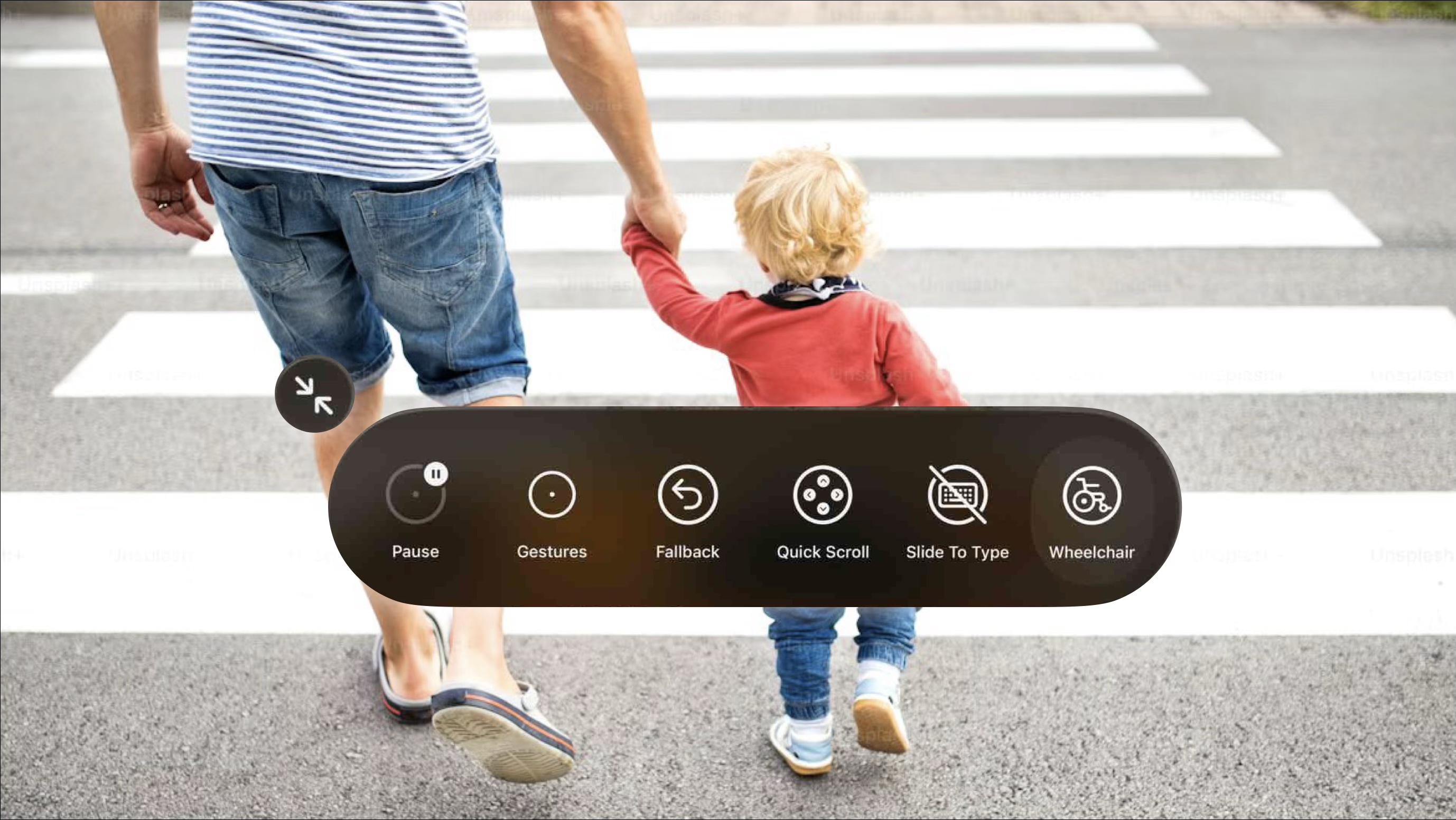
    Apple announced new features for users to control power wheelchairs with Apple Vision Pro using their eyes. A new power wheelchair control feature leverages the precision eye-tracking system on Apple Vision Pro to offer a responsive input method for compatible alternative drive systems.

    Also announced is on-device speech recognition whereby subtitles are generated privately and appear automatically for uncaptioned videos on iPhone, iPad, Mac, Apple TV, and Apple Vision Pro.

    Moreover, Vehicle Motion Cues come to visionOS, which can help reduce motion sickness for people who use Apple Vision Pro as a passenger in a moving vehicle. Vision Pro will also support face gestures for performing taps and system actions, plus a new way to select elements with one’s eyes while using Dwell Control.

    “The option to control my power wheelchair on my own is gold to me,” said Pat Dolan, founder of GeoALS and a member of Team Gleason’s patient advisory board, who has lived with ALS for 10 years. “With this new feature, Apple is developing life-enhancing technology for the people who need it most.”

    Source: Apple Newsroom

    NB: We have not yet arrived at WWDC yet Apple unveils huge new accessibility features powered by Apple Intelligence and reveals Vision Pro functions that will change lives. The Vision Pro remains the most remarkable machine I've ever seen or heard of. It is S tier.

    Be sure to read the full release in the linked page from the Apple Newsroom. I chose to focus on the Apple Vision Pro portions but much more is being announced.

    I chose the AVP because I had read some false claims made about it being deprecated. The latest announcement highlights Apple moving the product in yet another unforeseen direction: helping people with disabilities. To commit to this level of development speaks volumes.

    Noteworthy is also in-vehicle use--something that until now has not seen much attention. I have tried motion cues with the iPhone. It's pure magic.

    Medical professionals are paying attention even if the cynics aren't.


  10. iPhone Share of US Big 3 Carriers reaches 75%, 77% with Verizon

    Nota Bene · 2 comments

    Android down 14.4%. Small players getting crushed.

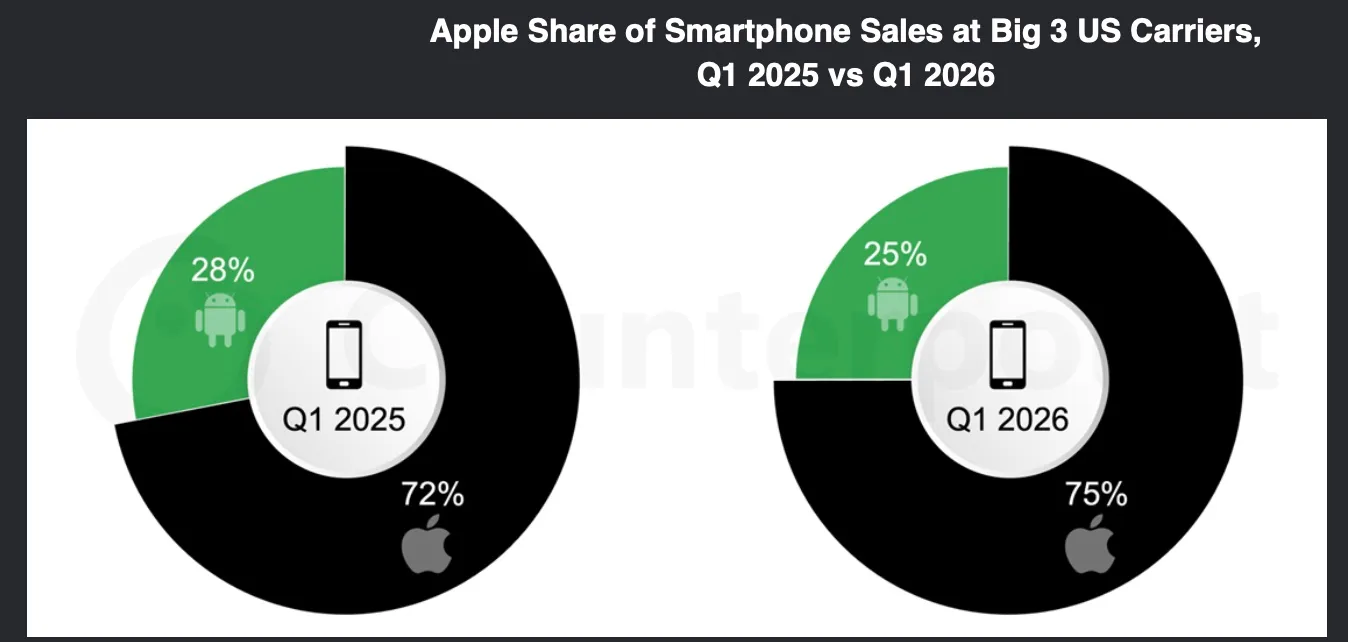
    Apple’s quarter one (Q1) 2026 iPhone sales volume in the US was up 1.3% year-over-year (YoY), outperforming the country’s overall smartphone market.

    That market declined 5.7% YoY, according to Counterpoint’s US Monthly Smartphone Channel Share Tracker. Apple’s share of volume grew by 4% YoY, as Android device sales declined 14.4% YoY.

    On the impact of the delayed launch,Graham said, “The premium smartphone space in the US is highly consolidated compared to some other markets, with Apple, Google, Samsung and, to some extent, Motorola comprising the vast majority of sales here. When one brand delays a flagship launch, it opens a window of opportunity to fill that vacuum. Apple did just that.”

    Apple grew its market share in each of the Big 3 US carriers. Its share grew the most at Verizon to 77% in Q1 2026.

    “If Apple can avoid significant price increases and continue to outpace its peers in promotional dollars, it will be tough for Android manufacturers to keep up in the year ahead, said Klaehne.

    Source: Counterpoint Research

    NB: What are the dynamics of the US market? The split between Apple and the rest of the market seems to be starker than ever. It's ask if there is a K shaped market emerging…

    Low-end weakness was mainly due to macroeconomic challenges. Lower-income households saw tax return increases year-over-year, but not as much as high-income households. These increases were offset by rising gas prices, and many consumers used the extra money to pay credit card bills. Consequently, more money transfers to lower-income households didn’t lead to the expected increase in smartphone sales in the prepaid segment, according to Counterpoint.

    Amid lower overall sales, especially in the sub-$100 price range, prepaid channel marketing spend is concentrated on Motorola and Samsung. Other players like TCL and HMD have delayed model refreshes, exited the market, or struggle to compete with Motorola and Samsung’s marketing power. As a result, Motorola and Samsung increased their market share in most prepaid and national retail channels in Q1. Cricket (Samsung +6% points; Motorola +6% points) and Metro (Samsung +2% points; Motorola +7% points) saw significant YoY shifts.

    Rising memory costs are expected to continue consolidating the low-end market in the US, impacting smaller players like Maxwest, Orbic, Blu, and white-label devices. This may lead to reduced portfolio diversity in lower price bands and further push lower-income consumers towards Samsung and Motorola options.

    Meanwhile, Apple has maintained its pricing strategy, keeping the iPhone 17e pricing consistent YoY while increasing the entry-level storage to 256GB, even as competitors introduce price hikes. With this strategy, Apple draws more users into its iOS ecosystem, while placing service revenue growth over hardware profitability.

    Counterpoint thinks this will lead to faster revenue growth through 2027. For manufacturers with smaller hardware margins, it will be tough. Perhaps impossible.


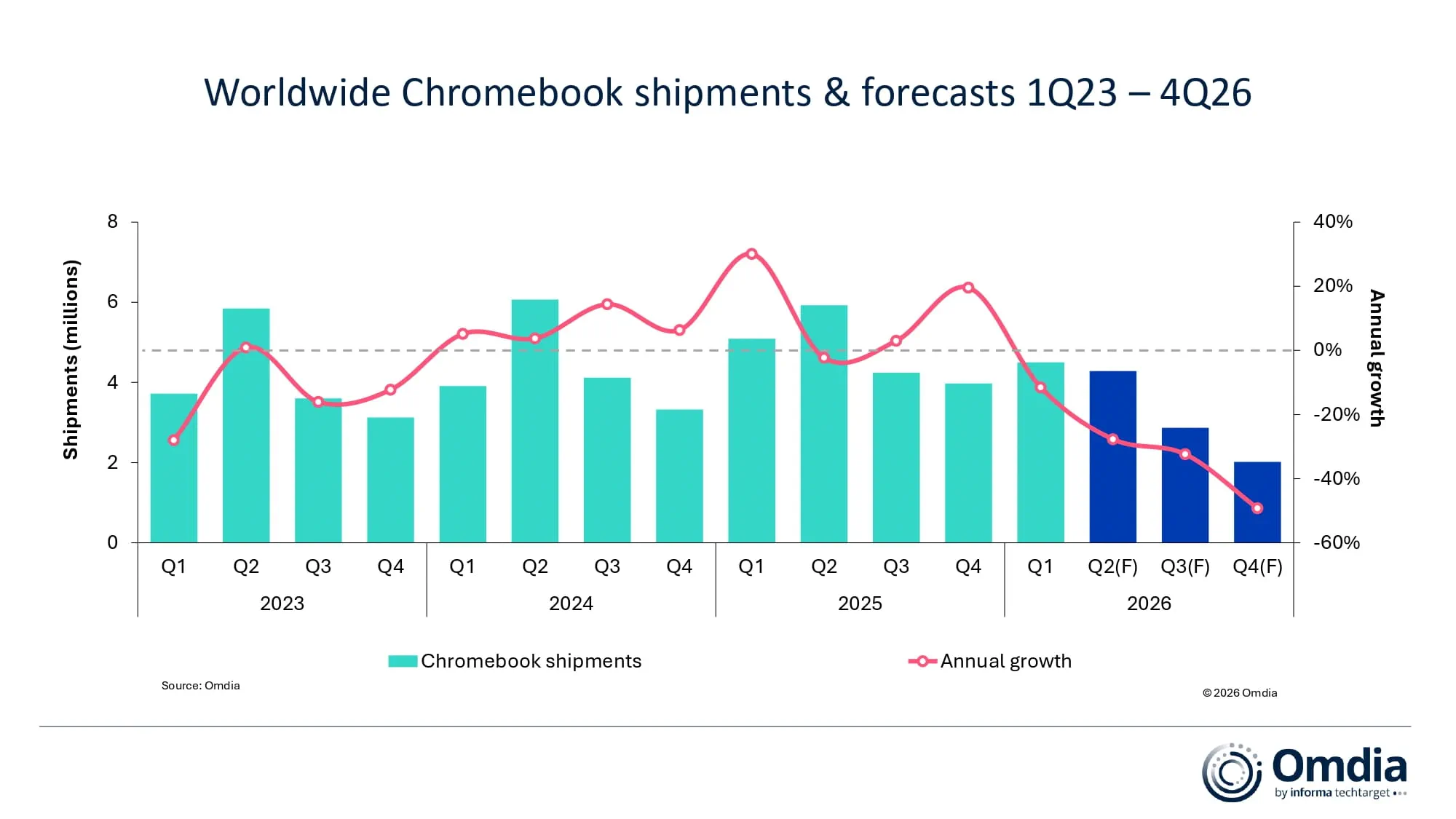
  11. What's wrong with Chromebooks? Market down 11% in Q1, outlook even worse for the year as Neo steps in.

    Nota Bene · 2 comments

    Q4 expectation: down 50% y/y

    “Within the PC segment, Chromebooks are currently the most impacted category, with volumes declining significantly,” said Kieren Jessop, Principal Analyst at Omdia. “Production indicators point to a weak near-term outlook, and education-related deployments are increasingly being deferred until market conditions stabilize. Ongoing supply constraints are also expected to delay the second phase of Japan’s GIGA School Program 2.0. While the first phase - extended from end-2024 through end-2025 - was completed without major disruption, the current supply environment is likely to introduce delays in the next phase.”

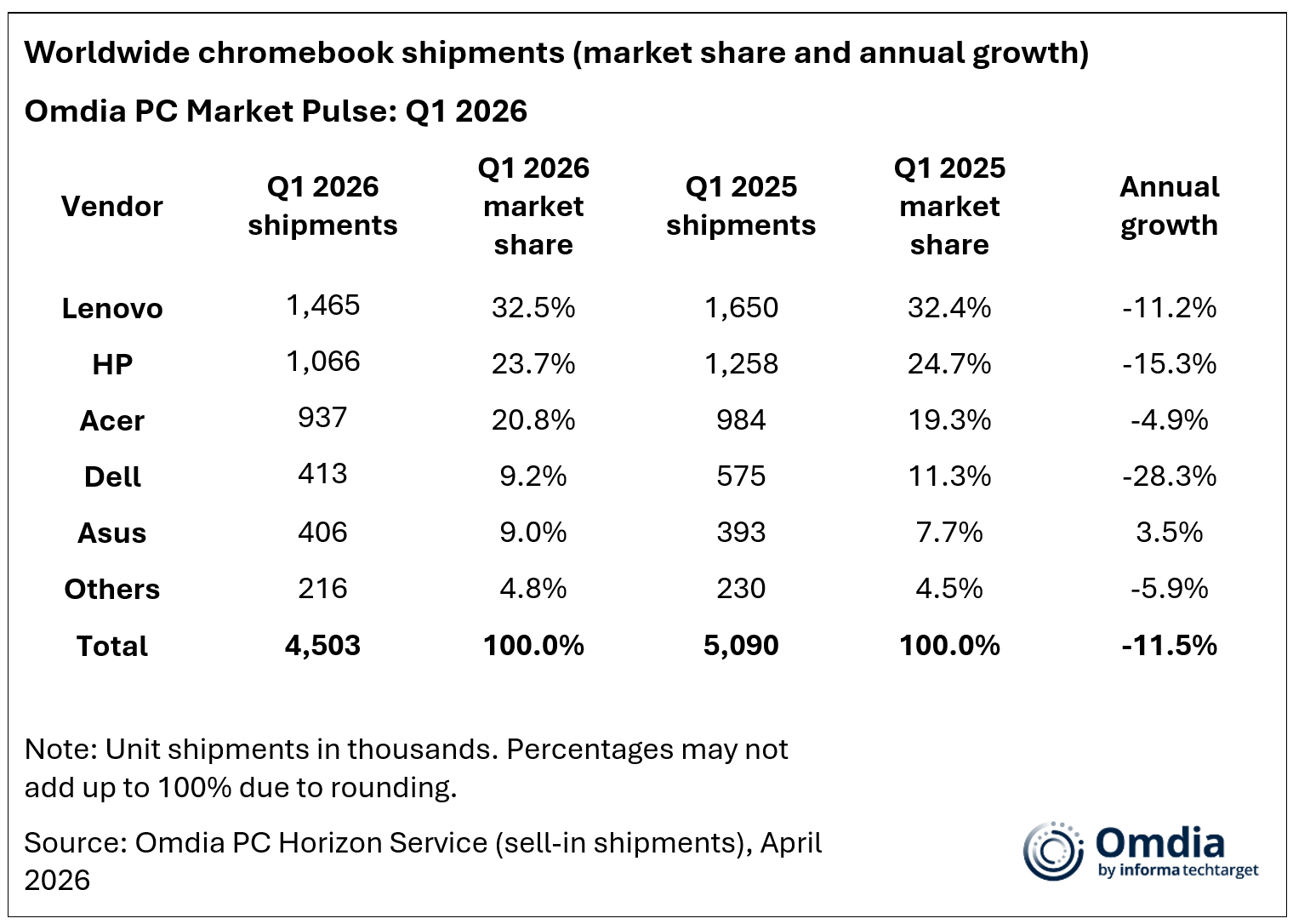
    All major Chromebook vendors faced challenges in Q1. Lenovo, which ranked first and was a key participant in Japan’s GIGA School Program alongside its subsidiary NEC, saw shipments decline 11.2% year on year to 1.5 million units as the first phase of deployments concluded. HP ranked second, shipping 1.0 million units, down 15.3% year on year. Acer placed third with 937K units, managing a relatively smaller decline supported by stable shipments in North America and increased shipments into APAC. Dell experienced the steepest decline among the top five vendors, with shipments falling 28.3% year-on-year to 413K units. ASUS, another key participant in Japan’s GIGA School Program 2.0, was the only vendor to record growth in Q1, with shipments rising 3.5% year on year to 406K units, accounting for a 9% market share.

    Source: Omdia

    NB: When the only type of buyer is a government agency and there's only a handful of them, things can turn scary bad very quickly.

    The Chromebook market is undergoing a significant transition in 2026, transitioning from a budget-focused, education-dominant sector to a premium, AI-integrated landscape. While ChromeOS remains dominant in education, Google is introducing "Googlebooks" to compete in the premium, AI-powered laptop market, aiming to unify ChromeOS and Android experiences.

    While traditional, affordable Chromebooks for schools continue, the new Chromebook Plus and incoming "Googlebooks" are shifting the market toward higher-end, Gemini AI-powered devices with premium processors.

    ChromeOS holds over 60% of the education market, with 93% of US school districts planning to buy Chromebooks in 2025. The Omdia report cites prevalence in the Japanese market as well. However Omdia project dramatic slowing in the next three quarters.

    Traditional Chromebooks will continue to exist for the budget sector, while "Googlebooks" are the pivot that Google is hoping to engage. The question is why is this necessary? It seems that the low-end market is contracting dramatically this year.

    In this context the MacBook Neo steps in providing a no compromise personal computer vis-a-vis a network "cloud-connected" device. The Neo alone might ship 11 million this year. Projections are that in the same time frame about 10 million Chromebooks might ship.

    Googlebooks are an unknown at this time but it seems they are necessary to try to shift a negative momentum for Google branded hardware.