Asymco

Asymmetric Intelligence

search engine

  1. Asymco: the existential theory

    Research · 44 comments

    Much of what I write is structured around theories of strategy and management. The word theory gets a bad reputation among managers because it's associated with the word "theoretical" which connotes impractical. But a theory is a very practical thing because it's a statement of causality. Causality means you don't have to collect experimental evidence on whether when you jump out of a window you fall or not. There is a theory about gravity which you can use to your advantage.

    So even though they scorn talk of theory, managers use theory all the time. Whenever a rational manager takes any action, it's predicated on a theory already in their head. Whenever they put forward a business plan they are employing a theory that if they do these things they will be successful.

    The problem is that much of what passes for business debate is the stacking of theories on either side of an argument. Unfortunately most of these theories are not much more than anecdotes. To say that "open always wins" is a theory but it's usually backed only by one or two examples without a list of counter-examples. That's not to pick on "open" as there are many more deeply flawed theories (e.g. the stupid manager theory of business failure) which have no evidence whatsoever to support them and all the evidence in the world to disprove them and yet they retain the highest popularity.

    So the problem with management "science" is that most managers are not aware of what theories they are employing, treating them more like intuition or some God-given insight. They also don't know whether or to what extent their theories are good or bad. They also don't have access to a body of data that supports or challenges their theories. Business data is often locked away even from employees of the company producing such data. It's buried so effectively that it's often forgotten and has to be re-generated every time a new management team takes over. Corporations effectively kill self-knowledge and lack any institutional memory.

    To illustrate the effect I can offer personal testimony. When working at my last job I spent a great deal of salaried time collecting data and presenting it. Much like what is presented in this unsalaried blog. The difference is that when a "work product" was done (almost always in the form of Powerpoint slideware), it would be released to the audience which requested it. This audience could be as small as one person or as large at a few dozen. But once consumed by the audience, the product had a half-life of about a week. It would be literally forgotten in a month. Now this could be used to one's advantage as every few months a smart analyst could dust off some old product and re-release it to the amazement of another audience or even to the same audience who had forgotten. Taken to extremes, you can envision a Dilbert-like scenario where the analyst is like Wally who has a perpetual salary for repeating ancient knowledge.

    The reason this model for analysis fails is because information is rationed in corporations. The transmission, dissemination, storage and consumption of information is intentionally constrained. This makes the work of an analyst nearly useless. I finally became disillusioned with the process when, at one point in time, having worked on one piece of analysis for two weeks on the premise that it would be presented at a high-level meeting, my time slot got bumped off the agenda due to scheduling issues. My work was never presented to anyone.

    It was at that time that I realized that my "work product" was non-essential to the meeting anyway. It was, for the lack of a better word, executive entertainment. So, naturally, realizing that I was really an entertainer I resolved to become better at it. That led me to target not those who request the work, but the largest audience possible because they would give me better feedback. I began to blog internally.

    Calling analysis entertainment may sound flippant, but at a more core level, it's actually an enlightened way to see the process. Steve Jobs is an executive but his skill at entertaining an audience is what makes him an effective communicator with huge consequences to his firm. In olden days CEOs were lauded for their problem solving skills, then for their sales skills, but now they need to be "charismatic" and therefore entertaining.

    This blog is an experiment in the opening of business theory and the open exchange of insights. In doing so I take a look at keeping the work relevant by making it approachable, illuminating and, yes, entertaining. So I went from a salaried producer of analysis for a small and forgetful audience to an unsalaried producer of analysis for a large audience in a format that encourages memory. A company was paying a lot of money for something that it ignored. I now receive no income for work that is (hopefully) ravenously consumed. I rather like this more.

    When I started this blog I chose a word "asymco" which did not exist and had exactly zero hits on Google search. Now I'm glad to see that "asymco" has 77,300 results on Google search. I am grateful to all who have helped in making this possible and I'm looking forward to further collaboration.

  2. Android is open unless you want to change your search engine to Google, or use tethering or Google maps or non-market apps

    Research · 10 comments

    That means no seamless integration with Gmail. No Google Latitude. No multitouch in the map app, either. And in place of the free and fantastic turn-by-turn Google Navigator app, Verizon installed its VZ Navigator service -- a feature which costs $10 a month to use.

    It would be one thing for Verizon to set the default search and map app to Bing with the option to switch back to Google. But it's utterly inexcusable for Verizon to destroy the possibility of a switch without the user having to root the device and, under Verizon's company policies, void their warranty. And on top of that, repeatedly charge you for a sub-par service instead of keeping the gold standard of navigation apps for free.

    And as bad as that is, there's now a rumor that Verizon will be doing this again. On every single one of its Android devices.

    After speaking with a Verizon representative about the Bing debacle on the Fascinate -- who also lied about the existence of a search alternative -- The Droid Guy contacted two Verizon tipsters who told him that the carrier "is dropping the Google Search from all future Android Devices and offering Bing in it's [sic] place."

    via Verizon Rumored To Replace Google With Bing On All Android Devices | Markets | Minyanville.com.

    Lots more in the linked article.

    This story just keeps getting better and better.

    Regardless of motivations, the restriction if broadly applied would have Verizon reneging on its pledge to support the openness of Android and reflects a wider trend of the OS being artificially restricted by carriers. Most US providers are disabling Android 2.2's tethering support in favor of their own, and AT&T has banned non-Market Android apps under the pretext of security. The moves paradoxically leave Apple's iPhone more open in some areas, as its users can choose Google, Bing or Yahoo for search and don't have first-party apps deliberately hidden or broken.

    Read more: Electronista

  3. Google vs. Android Part IV

    Research · 35 comments

    Verizon, unfortunately, is also what ruins the phone. Or, rather, what it’s forced Samsung to do to the phone, which you could sum up in a word: Bing. Bing is the default—and only—search engine on the Fascinate. A Google Android phone. In the search widget, in the browser, when you press the search button. Bing. No, you can’t change it. There’s no setting for it, and the Google Search widget that you can snag from the Market is blocked (or at least very carefully hidden). Being unwittingly forced into Verizon and Bing’s conjugal relationship is infuriating on its own, but the implementation also feels like the sloppy hack that it is.

    via Daring Fireball Linked List: Matt Buchanan on Verizon's Samsung Fascinate Lightning.

    John Gruber astutely adds:

    Android is “open”, but who it’s open for, primarily, are the carriers. (Somehow I doubt we’ll see any Windows Phone 7 devices where Google is the one and only search option.)

    The primary defense of Google's Android strategy is that it's beneficial in driving traffic to Google's services/properties. This is by no means a certainty. To the contrary, it seems likely that the Android experience will be defined by operator back-room deals.

    See also: asymco | Android vs. Google Part II

    Coupling a lack of control over the platform, the revenue streams, the user experience, the potential banishment of AdMob from iOS and an attack on Google's brand, Android is currently winning the war with Google.

    However, my money long term remains with Google. They can and will eventually beat Android. Perhaps with Chrome.

    [Footnote: if anyone wonders why Verizon, Google's best friend in mobile, is gutting Android, you need to remember an exclusive five-year deal Microsoft struck with the carrier to provide search and advertising services on the phone. Microsoft was rumored to pay $500 million for the opportunity.]

  4. People are using apps way more than they are using search

    Research

    Steve Jobs On iAds:

    [It's to] make developers more money.... People are using apps way more than they are using search. So if you want to make developers more money, you’ve got to get the ads into apps. But the mobile ads we’ve got today rip you out of the app..." Apple has figured out a better way.

    This is pretty much the same as his statement on the iPhone 4.0 launch: asymco | On a mobile device Search hasn't happened.

  5. Can Google buy consumer competitiveness? Can Apple be an ad giant?

    Research

    Daniel Eran Dilger in fine form after Apple became the world's largest technology company by market capitalization.

    These days, Apple’s primary competitors have all fallen down on their knees while clutching their gutted bellies...

    Who is left? Google, the paid search giant that backers hope will beat Apple in hardware and software platforms… despite Google being neither a hardware vendor (nor marketer nor retailer nor support provider) nor having any real experience in managing a software platform for consumers. Fans of Google suggest that the company will take on Apple by acquiring a competing version of everything Apple has built over the last decade: iTunes, a mobile platform, hardware expertise, user interface design savvy, development tools, and a user base.

    The problem is, they don’t also foresee that Apple could compete against Google in its own home territory of ads.

    via How Apple could slay Google at WWDC 2010 — RoughlyDrafted Magazine.

    The key assumption in the "Google can buy anything Apple already has" is that of the three things that make up a company (resources, processes and priorities) the only thing cash can buy is resources, and, in the tech world, even those are fragile things with legs that can walk out the front door.

    Google's "copy-paste" competitive approach vis-a-vis Apple falls down when you realize that Apple has been successful mostly because of its processes and priorities. It's well known that all of its vanquished competitors could (and did) recruit legions of Apple employees, elevating them to positions of responsibility, with naught to show for it. Grafting engineers and IP onto Google (or Nokia or Microsoft) cannot make it into an Apple.

    Conversely, through a risky, long and arduous path, Apple could become a Google. Success with ad-based search requires resources (mostly CapEx), algorithms and distribution. With the $42 billion (soon to be $100 billion) in the bank and eye-watering free cash flow, there are few no resources that Apple cannot buy.

    With iAd the world will witness an Apple that can make loads of money in Google's home turf, while Google burns cash and bridges with Android trying to defend its soft platform underbelly.  The irony is that Apple can knee-cap Google without even trying to do search. After all, Jobs said plainly enough: On a mobile device Search hasn't happened.

    Judging by the stock prices of the two companies, I suspect investors know this already.

  6. On a mobile device Search hasn't happened

    Research · 7 comments

    This is one of the most thought provoking things I've ever heard.  Some of the implications are unfathomable.  Before we dive into the implications of iAd, here is the exact quote from the Apple Special Event, April 2010 (iPhone 4.0 launch) around 45 minutes in.

    When you look at a mobile phone, it's not like the desktop.

    On the desktop, Search is where it's at.  That's where the money is.

    But on a mobile device Search hasn't happened. Search is not where it's at. People aren't searching on a mobile device like they are on a desktop.

    What's happening is that they're spending all their time in apps.

    When people are looking for a place they want to go out to dinner they're not searching. They're going into Yelp. They're using apps to get the data on the internet rather than a generalized search.

    And this is where the opportunity to deliver advertising is.

    Not as part of search but as part of apps.

    Jobs is making a set of huge claims:

    1. There is no search on devices.
    2. There is no money in search on devices.
    3. Apps create an inventory of billions of ad impressions every day
    4. Apps are better at delivering the data from the internet than a browser
    5. Apps are therefore the new browsers and eyeball aggregators

    This is heavy stuff.  I believe what gives Apple the confidence to make these claims is the vast amount of data on user behavior that the app store collects. It's possible they're wrong, but it's more likely they're right.

    If they're right, what are the implications?  First, obviously, iAd adds up to a lot of cash « Asymco.  Second, this has dire consequences for Google.  Jobs could not be more blunt: search is not where the money is at.

    I can chip in some personal experiences that confirm this preference for apps over browser interfaces, but I leave it as an exercise to the reader.

  7. Apple: When Will They Build Their Own Mobile Search Engine?

    Research

    Apple: When Will They Build Their Own Mobile Search Engine? - Tech Trader Daily - Barrons.com.

    The opportunity here is not to do web search better than Google, but to find a way to index the information that lives on the iPhone ecosystem.  With potential for millions of apps and hundreds of millions of iPhones generating usage patterns a separate mountain of information is emerging independent of the current cloud.  The mobile cloud has different hooks and different relevance measures.

    Mobile search will be as much about new algorithms as about getting a new way to spider the data.

    It seems Apple is better positioned to leverage this emerging space than Google.

  8. Android vs. Google Part II

    Research · 3 comments

    AppleInsider | First AT&T phone with Google Android will feature Yahoo search

    As the Backflip will mark the first time U.S. customers under contract with AT&T will have the option to choose between Android and the iPhone, every Motorola Backflip that AT&T sells might potentially be at the expense of an iPhone.

    That Backflip sold will not generate Google any ad revenue since it will offer Yahoo/Microsoft search exclusively. Nor will the Backflip generate any license revenue for Google, because Android is licensed without a fee.

    If that buyer would instead have bought an iPhone, the search from mobile Safari would have some non-zero value.

    It is therefore pretty obvious that, at least in this instance, Android is destroying value for Google.

    See also:

    Android vs. Google (part I)

  9. Android vs. Google

    Research · 2 comments

    When I heard about Android being positioned against the iPhone, I thought about how that decision must have been justified internally at Google. I wondered how Andy Rubin added up the benefits of his product vs. the risks of losing whatever value Google derived from the iPhone.

    On the benefits side, Android’s original business plan called for zero direct revenues with indirect revenues from search. The actual value would be somewhat dubious during the half decade it will take to get a significant installed base. Of course, with the Google-as-retailer model, Android can also be justified as earning some margin from devices, but as we’ve seen, these numbers don’t add up to much.

    On the risk side there is the potential loss of the screen real estate on the iPhone (see photo above). Being the default search engine in mobile Safari might be worth hundreds of millions to Google.

    Silicon Alley Insider reports a rumor that Apple's current deal with Google to provide default search functionality for the iPhone is currently worth over $100 million per year to Apple in revenue sharing.

    So the iPhone may be a bigger money maker for Google than Android will, at least for a long time.

    Which begs the question of whether by picking a fight with Apple, Android is biting the hand that feeds it.

    If there is any logic to this Android adventure it might be that Google really feels it needs to have an option on the future mobile computing platform and that Android is worth the risk of losing placement on the iPhone.

    I, for one, don’t think this is a risk worth taking.

  10. Dick Brass Vents

    Research

    I knew of Dick Brass at the time when he was promoting ClearType inside Microsoft. We met his team to consider licensing our table recognition algorithms for the production of ebooks for Microsoft Reader, an early ebook reading solution for the PocketPC. It was then I learned about plans for “reading solutions” from Microsoft, almost 10 years ago.

    Now he writes about the tragedy of Microsoft’s complete absence from the future of mobile computing.

    "...why Microsoft, America’s most famous and prosperous technology company, no longer brings us the future, whether it’s tablet computers like the iPad, e-books like Amazon’s Kindle, smartphones like the BlackBerry and iPhone, search engines like Google, digital music systems like iPod and iTunes or popular Web services like Facebook and Twitter."

    Part of the answer, Brass writes, is that Microsoft put too much faith in aggressive managers (like himself) who nurtured a culture of conflict. But mostly, he says, it's because of inter-departmental bullying by Microsoft's established divisions and a "dysfunctional" corporate culture that thwarts innovation.

    To support his contention, he offers a couple of telling anecdotes in which he does everything but name names:

    Microsoft's ClearType display technology languished in the lab for years, he says, because engineers in the Windows group "falsely claimed" it made the display go haywire, the head of Office products said it was fuzzy and gave him headaches, and the vice president for pocket devices was said he’d support ClearType only if Brass transferred the programmers to his control.

    In 2001, the vice president in charge of Microsoft Office refused to modify Word, Excel and Outlook to work properly with Brass' tablet. Result: "if you wanted to enter a number into a spreadsheet or correct a word in an e-mail message, you had to write it in a special pop-up box, which then transferred the information to Office. Annoying, clumsy and slow... To this day, you still can’t use Office directly on a Tablet PC. And despite the certainty that an Apple tablet was coming this year, the tablet group at Microsoft was eliminated."

    Brass believes that the intense, sometimes cut-throat, internal competition that Bill Gates fostered among his managers has devolved into something uncontrolled and destructive: "The big established groups are allowed to prey upon emerging teams, belittle their efforts, compete unfairly against them for resources, and over time hector them out of existence."

    He also gives a nod to the modular/integrated dichotomy to which we are always pointing accusing fingers:

    “Part of the problem is a historic preference to develop (highly profitable) software without undertaking (highly risky) hardware. This made economic sense when the company was founded in 1975, but now makes it far more difficult to create tightly integrated, beautifully designed products like an iPhone or TiVo. “

    "It’s not an accident," he writes, "that almost all the executives in charge of Microsoft’s music, e-books, phone, online, search and tablet efforts over the past decade have left."

    Read More (New York Times)...

  11. The Pocket PC Paradox

    Research

    Recent data from admob shows that Android OS share is highly dependent on a single vendor (HTC). (http://metrics.admob.com/wp-content/uploads/2009/11/AdMob-Mobile-Metrics-Oct-09.pdf page 7)

    There is an implied message in Android advocacy that once more licensees join in, volumes will be distributed among a broad set of companies benefiting from a healthy rivalry. This broad licensing will be a boon for volumes and for user choice and the platform itself will prosper.

    I'm going to argue here that there will be no healthy distribution of volumes or profits in the Android platform.

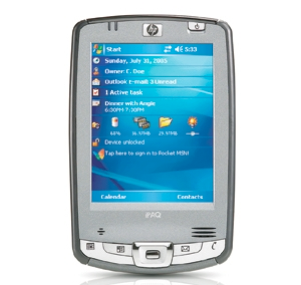
    History shows that volumes for an openly licensed mobile platform concentrate in the hands of a single vendor. To illustrate, I attached a list of all the devices which shipped (to date) with a flavor of Windows Mobile. The list includes 911 different phone models (search on your own on pdadb.net under the pdamaster tab--search criteria are on the last page of the PDF).

    The Windows Mobile platform "took off" and had hundreds of concurrent licensees in the middle of this decade. In spite of this wide adoption, one vendor captured 80% of the volumes for all instances of the platforms: HTC. Having started with the iPaq as a PDA and followed by being the first to market with a WinMo device, HTC dominated Windows Mobile volumes even when faced with literally hundreds of competitors. These competitors included all the big names: from PC vendors like HP, Dell and Toshiba, to cellular incumbents like Motorola, Sony Ericsson, Samsung, LG and every ODM and OEM in between. The reason HTC won is mundane: they have the experience and the distribution to make an impact and they iterate rapidly and are intimate with the details of making a tough-to-integrate product work. They basically worked their way up the value chain from a contract design shop to a branded top tier vendor.

    But if you exclude HTC, dividing the number of units of WinMo shipping at any given time by the number of licensed products in the market at that time, one gets about 50,000 units/licensee. Think about that: except for HTC, an average licensee could hope to ship 50k units for any phone they engineer and market. And they also need to prepay Microsoft the minimum license fee of $10/unit (approx) for a minimum order of 50k units or half a million dollars.

    This is actually a paradox. Put yourself in the shoes of a business manager at one of the potential licensees. Consider the situation where there are 200 competitors in a market all shipping undifferentiated products, and one competitor has 80% share. Would you want to be the 201st? Saying yes implies hoping to split the remaining 20% 200 ways or obtaining, on average, 0.1% share? But this is not a share of all phones, it's a share of that platform, which itself is, at best 10% of all smartphones which make up maybe 20% of all phones. So you are committing a few million dollars to pursue (.2*.1*.001=) .00002 of a market. That target is 3 orders of magnitude less than what Apple obtained in 2 years (without the margins). It never adds up unless you expect your entry to blow out of the 20% ghetto and take on the incumbents.

    As it turned out there were dozens upon dozens of business managers who opted to be the 201st (or 301st). Unsurprisingly, the result was that every Windows Mobile business plan failed (except that of HTC). Every decision to join this ecosystem on the device side was a value destroying decision, repeated 900 times.

    Why?

    I don't have an answer as to why so many are taken in by this. I have a hypothesis that it has to do with excess R&D capacity (e.g. idle engineers) that compels small companies to build product with no hope of market penetration, but I cannot prove it. They may also couple the low barrier to entry to the premise from the platform vendor that a no-name licensee could be the next Dell/Acer/HTC if the platform "takes off".

    Regardless of the cause, the proliferation of WinMo SKUs did nothing for the success of the platform overall. For consumer products, it does not matter what jockeying for position happens within the value chain if the end user/developer experience is painful and uncompetitive.

    Android will win or lose on the user/developer experience. It will not win or lose on the proliferation of licensees.