Asymco

Asymmetric Intelligence

WWDC

  1. WWDC Special: Asymco Office Hours - June 2026 - Live Q&A with Horace Dediu: Recording & Transcript

    Office Hours

    Recording and transcript of the June 9, 2026 Asymco One Office Hours, recorded the day after Apple's WWDC 2026 keynote. Horace Dediu shares his impressions of the event and takes questions from Asymco One subscribers.

    Recording

    Subscribe to Asymco One to listen to the recording and read the transcript.

    Transcript

    Sign up and latest updates at asymco.com/live.

  2. How to Measure WWDC

    Research · 2 comments

    How to measure helping others

    René Descartes, who published the phrase I think, therefore I am" in Discourse on the Method, in 1637

    Apple isn't measured by revenue or profit, at least not primarily. The measure is always satisfied customers. The application of services, software and computing hardware to improve lives has always been the modus vivendi and the resulting customer creation has always been the metric of success. Revenues and profits follow customer creation in a 1:1 relationship.

    WWDC seems to attract attention as a catharsis for product and strategy announcements but it was never intended to be this. It's about developers (the D in WWDC) and what matters to them: APIs, operating system updates, languages, SDK, and other tooling. It's also a chance to reveal the economic value proposition for those developers who are following their part of the $2 trillion ecosystem.

    And so the measure of WWDC should be how developers are created and satisfied. The products, which come later, are important but what matters more is developer opportunity, productivity and satisfaction.

    So here is what I'm looking forward to:

    • New developer opportunity with AI. This is via easier integrations, more choices perhaps in terms of back ends and possible hooks into different parts of the ecosystem. To wit: Swift extensions, *Kit extensions with hooks to smart home, exercise/fitness, accessibility.
    • New developer productivity tools: How is AI going to improve the toolchain for developers.
    • New developer business models: how agents can be built and integrated into privacy and safety that only Apple can guarantee.

    As Apple has shown with accessibility improvements (foreshadowing!), AI can be used to make people's lives better especially those who cannot perform due to disability. AI can lift those "below the median" in terms of many forms of ability: below median communications, below median health and below median mobility. Those with more limited ability can be "enhanced" into at least median ability. By definition, half of humans are below the median so helping them is as useful as helping those above the median.

    This is in contrast to the narrative that AI makes supermen. The opportunity is not mainly about taking over high ability tasks and forcing human effort to be displaced. it's much more about making the less able become more abled. (Characteristic of GenAI output is the "averageness" of it. For those of exceptional ability it feels worse/erroneous and irritates. For those of less ability it's empowering. AI pushes toward the median, both from below and above.)

    Below the median here does not necessarily mean below the median income or wealth. Ability is not always correlated with income. There are many Apple customers and potential Apple customers who can use help. I surely can use help in many areas of life.

    WWDC is about the scaffolding upon which these grand problems can be solved. Scaffolding is not pretty to look at and most look away in disappointment if that's all that is revealed. But no matter how well regarded, no great building has ever been built without scaffolding.

  3. Asymco Bulletin 016 - June 7, 2026

    Bulletin

    Asymco Bulletin is a digest of all the work we have published for the week ending June 7, 2026.

    Coming Up: Post-WWDC Office Hours

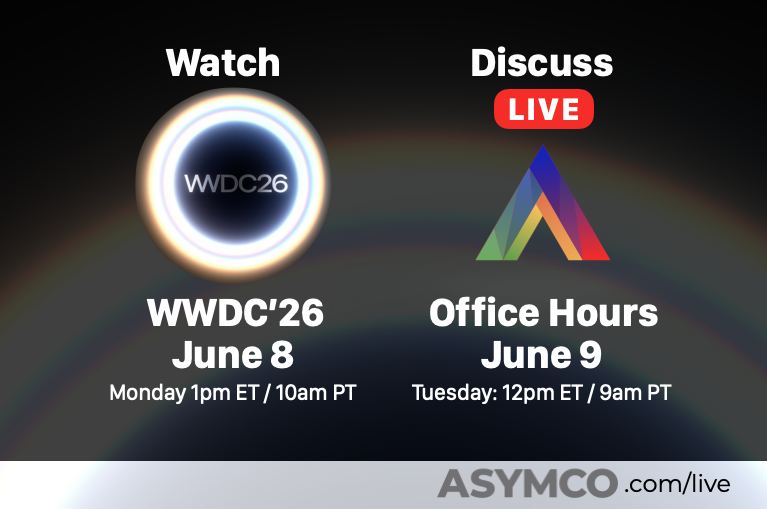
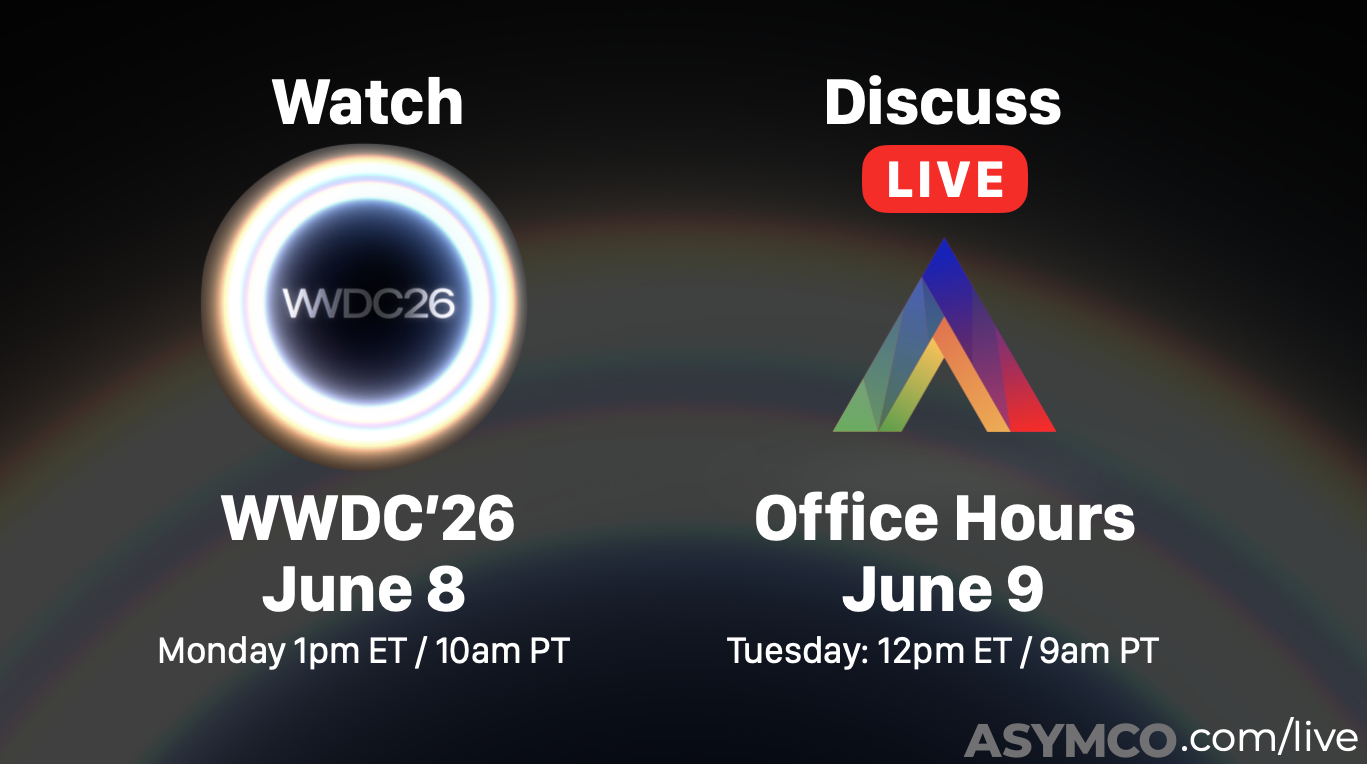
    Office Hours Live Q&A, Tuesday June 9, 2026
    Day after Apple WWDC'26 Keynote

    Join us for our June 2026 Office Hours the day after WWDC'26 for a look into Apple's announcements, implications, and insights, and our live Q&A.

    To sign up, and for the latest live event information, visit: asymco.com/live. →


    Research

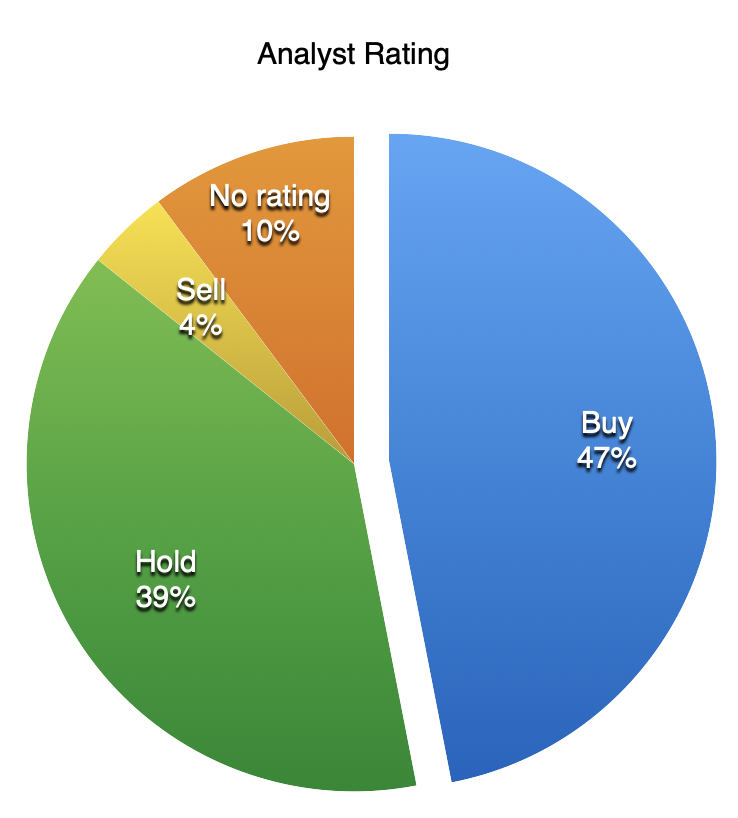
    42% of Apple Analysts rate it a Hold or Sell

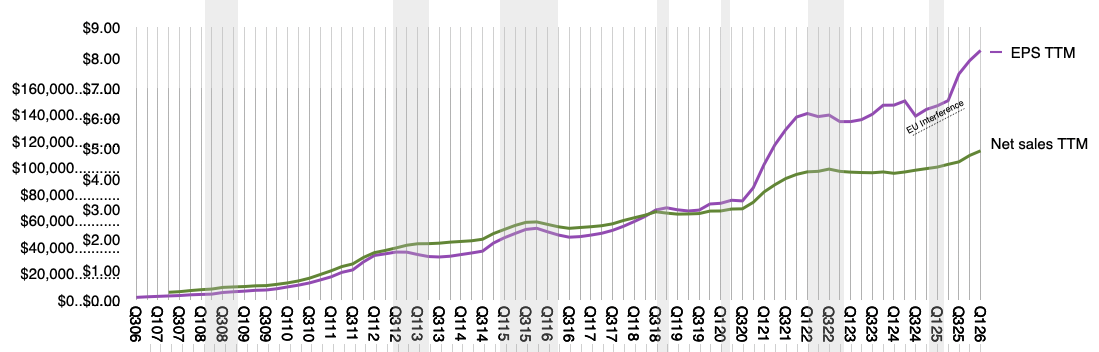
    Apple has compounded net income at 26.6%, revenue at 21.5%, and share price at 27.7% for two decades, thus doubling every three years. Yet despite this, 21 of 49 analysts rate it Hold or Sell, with another 5 having no opinion. Extraordinary claims require extraordinary evidence yet assuming the Apple flywheel is about to grind to a halt is still a majority opinion. →

    The Apple Ecosystem Approaches $2 Trillion

    The App Store ecosystem facilitated $1.4 trillion in 2025. Add Apple's direct sales and the Apple Ecosystem comes to $1.8 trillion; add browsing, social, and messaging activity and the Apple Economy reaches roughly $3 trillion. Seen another way, at a $4.57 trillion market cap, Apple is valued at only 2.5 times its ecosystem and 1.5 times its economic footprint. These third-party dependencies are a measure of platform resilience and a carefully worded caution to regulators about the downside of interfering with it. →

    How not to over serve; The machinery of vanity

    Part 4 of the Asahi Shimbun interview turns to the spec trap. Apple maintains improvement but is selective: it ignores refresh rates beyond what the eye can see, and invests instead in features nobody asked for, like Face ID and AirPods. The phone became a machinery of vanity because the supply of cameras created demand for image editing, not the other way around. Christensen thought Apple would be disrupted by the low end. The honest answer for why it isn't is: culture, held together by extreme diligence. →


    Nota Bene

    Morgan Stanley reiterates $330 price target with bull-case $440 → Morgan Stanley reiterated $330 with a $440 bull case if WWDC unlocks an AI re-rating. Apple does not respond to market fads, and a multiple above 40 is almost never experienced. Disappointment after WWDC is nearly guaranteed because it has always been a software and tools show. →

    Citi reiterated a Buy rating and a $315 price target → Citi reiterated its Buy and $315 target ahead of WWDC, expecting a revamped Siri to make Apple an edge AI winner. Edge AI is inevitable, but it was also inevitable two years ago. The target is already priced in, making the AI story a non-starter. →

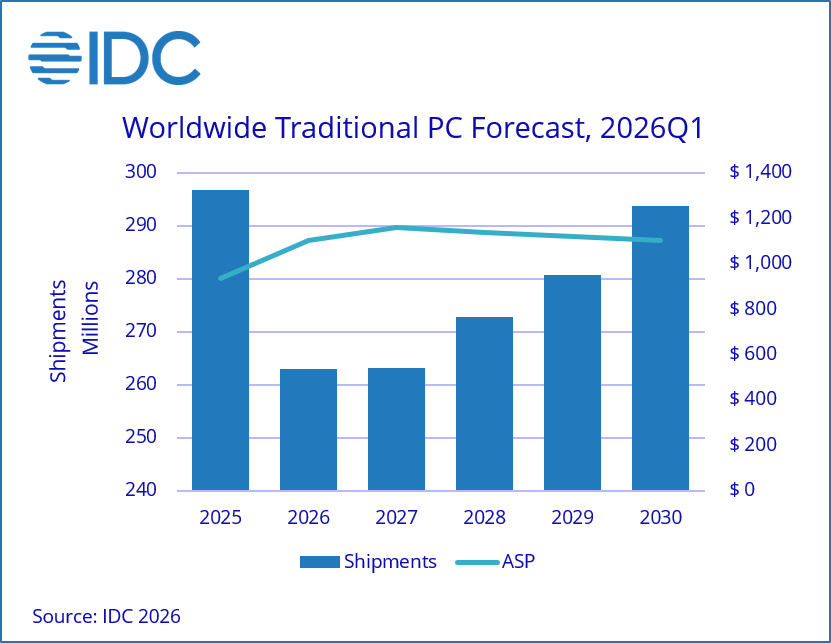
    Q4 PC shipments are expected to fall 20% year-over-year, 11.3% for the full year → IDC now sees PC shipments falling 11.3% for 2026 and 20% in Q4, with no recovery in volumes until after 2030. The MacBook Neo is the only thing keeping the broader notebook forecast from being worse. This is a multi-year opportunity for Apple that may reset PC market share dynamics permanently. →


    Asymco One gives you full access to our research, analysis, and commentary. Subscribe with code BULLETIN for a discount.

    Feedback: Have questions or comments? Reach out to us at contact@asymco.com. We'd love to hear from you.

  4. Morgan Stanley reiterates $330 price target with bull-case $440

    Nota Bene · 3 comments

    AI or bust

    Morgan Stanley analyst Erik Woodring believes Apple’s upcoming Worldwide Developers Conference could begin to change that perception. The 5-star analyst reiterated his Overweight rating and $330 price target, arguing that a successful AI strategy could unlock a higher valuation for Apple stock, with a bull-case scenario reaching as high as $440 per share.

    He noted that Apple’s recent strength has been driven by its products and services business rather than AI. However, companies viewed as “AI winners” have often earned higher valuations over the past two years, and Woodring believes Apple could soon be seen as one of them.

    Why WWDC Could Be a Turning Point for Apple

    Woodring believes Apple now has more of the tools needed to compete in AI. He pointed to Google’s Gemini models supporting Apple Foundation Models, Apple’s strong focus on privacy, and what appears to be a renewed push around Siri and Apple Intelligence.
    Unlike many of its rivals, Apple is not spending heavily on building AI infrastructure. Instead, the company can use its massive base of iPhone, iPad, and Mac users to bring new AI features to consumers. That approach could help Apple grow its AI offerings without the huge costs faced by some competitors.

    The analyst also sees an opportunity for Apple to help ease some of the industry’s AI capacity constraints. A more capable Siri and improved Apple Intelligence platform could bring AI tools to millions of users through Apple’s existing ecosystem.

    For investors, the bigger story may be valuation. Woodring believes that if WWDC shows a clear path for Apple’s AI plans, the stock could earn a higher multiple. In that scenario, he sees shares reaching $365 to $385, with a bull-case valuation of as much as $440.

    Source: TipRanks Financial

    NB: Not much new here but a $330 target is not much above the $315 high recently reached. Perhaps this is his foreshadowing of upgrades post WWDC…

  5. Goldman forecasts fiscal second-quarter EPS of $2.00

    Nota Bene · 2 comments

    Second call for EPS $2.00

    Goldman Sachs is pushing back on negative sentiment surrounding Apple ahead of its second-quarter earnings, arguing that the stock's recent underperformance reflects fears that do not match the company's underlying position.

    But analyst Michael Ng said, "concerns for Apple are overly pessimistic given its much stronger relative position."

    Goldman Sachs forecasts fiscal second-quarter EPS of $2.00, above the Street consensus of $1.93, with outperformance expected across iPhone revenue, Mac revenue and gross margins.

    Favorable foreign exchange and strong Services revenue growth are also expected to flatter results.

    On Services, Goldman Sachs projects 14% year-on-year growth despite another slow App Store quarter, with iCloud+, AppleCare+, prior price increases on Apple TV+ and solid advertising performance cited as supporting drivers.

    Looking ahead, the bank sees advertising inventory expansion in the App Store and Maps as further tailwinds.

    Recent data points cited by Goldman Sachs include high-end smartphone outperformance flagged by TSMC on its latest earnings call, iPhone share gains in China, and reports that Apple is actively securing mobile DRAM supply while keeping pricing competitive.

    The bank sees further catalysts ahead, including WWDC, where new AI Siri features are expected, and the fall iPhone lineup, which Goldman Sachs described as likely "the most innovative ever with the introduction of the iPhone Fold."

    Source: Yahoo Finance

    NB: My target of $1.98 seems amiss.…

  6. Apple Repeats Release Date for New Version of Siri

    Nota Bene

    Release date was first set in WWDC 2025.

    In a WWDC interview with Tom's Guide editor-in-chief Mark Spoonauer, and TechRadar editor-at-large Lance Ulanoff, Apple's software engineering chief Craig Federighi said the new version [of Siri] is scheduled for the coming year.

    Apple's marketing chief Greg Joswiak confirmed that the "coming year" refers to 2026.

    Yesterday Apple told CNBC it is on track to launch in 2026.

    Source: MacRumors

    NB: I'm told repetition is necessary in order for others to understand. Sometimes you're supposed to say the same thing twice. Sometimes even three times. But still, some fail to grasp the idea.

  7. App Story

    Research · 21 comments

    The App Store is almost 9 years old. In that time it has generated about $100 billion in revenues, of which about $70 billion has been passed on to developers and $30 billion was kept by Apple. It's very likely that running the App Store for 9 years did not cost $30 billion so, if it were an independent "business unit" it would probably have been and still be quite profitable.

    But Apple does not run "business units" with separate Profit and Loss statements. The App Store is a part of Services which is an amalgamation of non-hardware sources of revenues but that does not mean it's a business. The purpose of Services isn't to turn a profit or define its value through some metric of financial performance.

    The purpose of Services is to make the experience for the Apple user better. The combination of good experiences allows Apple to be perceived as a valuable brand and that allows it to obtain consistently above-average profitability through pricing power. I like to emphasize that the iPhone at over $600 in average price is more than twice the average price of all the other smartphones and captures over 90% of all available profits.

    This is something that remains after a decade and indeed the price is rising in the face of overall price erosion, all without a decrease in volumes. The sustainability of this exceptionalism is due to no one single thing. It's due to the persistence across all the things Apple does: product, stores, software and services and many other details too numerous to count.

    The result is a large and expanding base of satisfied customers and a large and expanding base of partners both in hardware and software and services. The WWDC event this year showed how the ecosystem of Apple is booming with over 3 million new developers and Keynote screenfuls of partnerships. All this makes for a complex picture but it's a real picture.

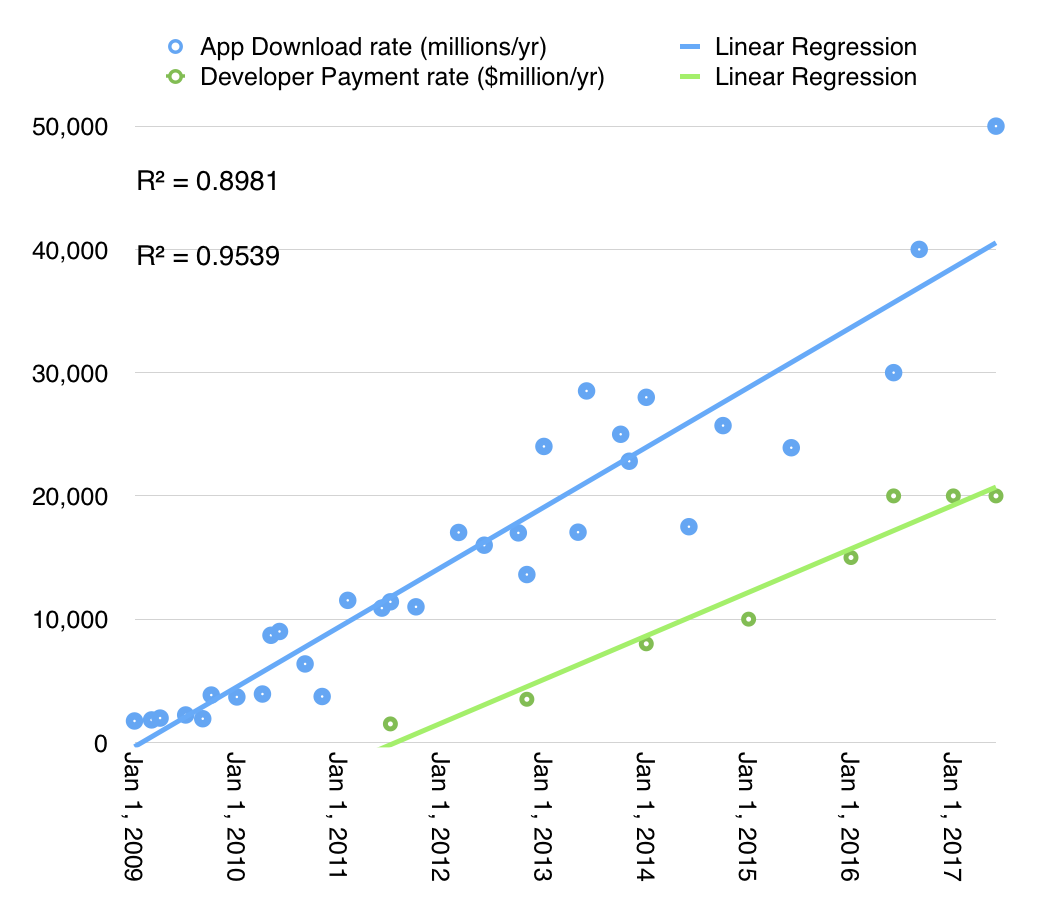
    The latest numbers on Services try to tell this story: 180 billion App downloads from 500 million App store weekly visitors. The download rate is accelerating as shown in the following graph:

    The revenue or payment rates can also be shown as accelerating though at a different rate. In both cases, the story of apps is not yet over, regardless of commentary to the contrary. Much of this growth comes from new markets like China and as India joins the iOS world, there is yet more opportunity emerging.

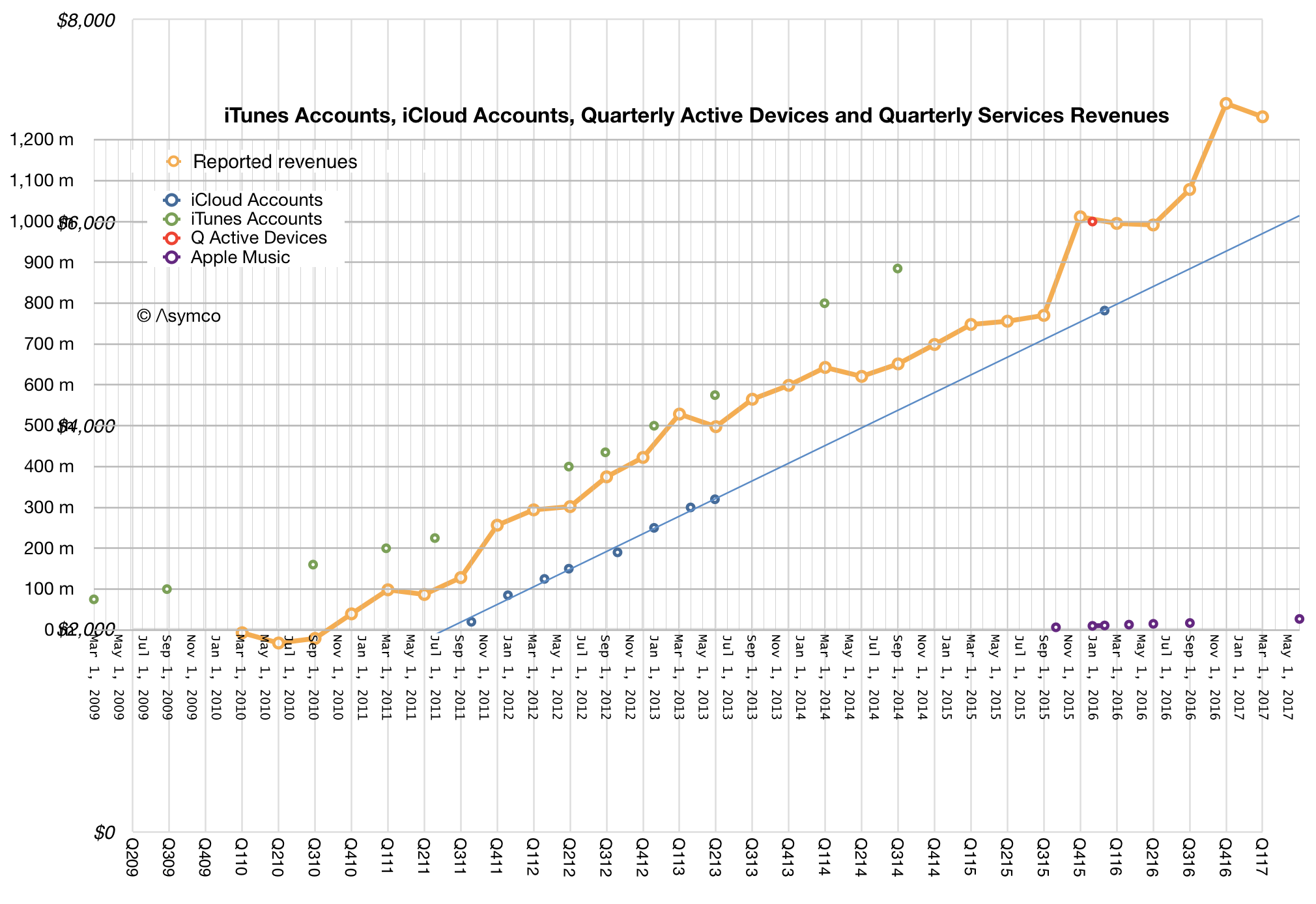
    This enables part of the story of Services which can be tracked with several other metrics: reported revenues, iCloud accounts, active devices, and iTunes accounts are highly correlated.

    The patterns after a decade are remarkably consistent. One would have thought that with mobile saturation in advanced markets, the content story would be told through horizontal lines. What we still see is the same slopes we've seen since the earliest days.

    But the biggest story at WWDC was the re-design of the App Store as a curated content market. The changes are profound: discovery, curation and the surfacing of content have been revamped. It's hard to predict the implications of this but one of the indications of direction was the separation of "Games" from "Apps". This is a jarring idea since if all Apps are content, what makes Games different from other Apps? Is this a genre elevated to a new medium?

    I can't yet get a sense of where this is heading, if anywhere, but the remarkable story of Apps is that it's still an ongoing story. We may be on chapter 2 and we can't predict how many chapters remain.

    Keep an eye on Apps and Services and developers. They are not lagging indicators of success for Apple. They are very much leading.

  8. The greatest show on earth

    Research · 105 comments

    Dan Niles, a former analyst who is now a portfolio manager, said on a CNBC appearance that the WWDC event actually had nothing of any real meat for investors

    From Worldwide Developer's Conference Prompts Analysts to Raise Apple Price Targets - 24/7 Wall St.

    The "investors" that Dan Niles refers to are undoubtedly those who invest (or, more accurately, speculate with) money. But the audience for the event was an entirely different set of investors. These investors ((All nine million of them)) invest their passion, intellect and a substantial fraction of their lives with Apple.

    For them WWDC had a great deal of meat. Indeed, for them, it was probably the most significant event Apple ever staged.

    The path to realizing this is to imagine the world as the "D" in WWDC see it. Developers don't just build. Using an analogy of building or construction, they are architects and designers as well as contractors and craftsmen and artists as well as builders. And not of just of houses but of cities and communities. They see and think through tools and techniques for building and innovations in building materials. Innovations which allow them to imagine first and, later, to build new cities in ways that were never before possible.

    We were therefore witnesses to an event which was, in essence, a cement conference. A new building material was introduced along with the methods for using it and the tools for shaping it. Perhaps some observers expected to see skyscrapers and interstate highways presented, and thus were disappointed. But they should not have had such expectations. A cement conference is esoteric. It's about the rudiments which, when combined with imagination, ingenuity and a lot of work, generate livable spaces.

    A few spaces go beyond comfort and delight us. Fewer still enlighten and cause the sprit to soar.

    And yet it was still a cement conference.

    Perhaps the way to understand the show better would be to "play it backwards." Rather than the way it was presented, let us begin with the end:

    We were shown a new concrete formulation which when coupled with a new way of mixing, forming and curing can lead to increases in productivity of construction. This is especially true when producing shapes that are complex, intricate and built into modules.

    We were then introduced to some pre-formed kits that allow the materials to be combined for new uses such as flexibly shaped hospitals and gyms. And we would have to stretch only slightly to imagine how this might lead to better health and wellbeing.

    Then we were shown examples of new ways that this cement was used to create new work environments. We had a preview of "show homes" beautifully architected and designed. And these homes were seamlessly connected through new transportation networks and allowed for easier commutes.  Again, it did not take much to imagine how these workspaces and homes would lead to greater productivity and how other spaces could be built around them that made such a collection of communities a wonderful place to be.

    Some saw banks, and some saw art galleries and some saw warehouses, but all who were there were seeing a new world, populated by many loyal citizens.

    Perhaps not populated by all. Indeed, such a country is not for everybody, perhaps only a billion people could be resident and it would not be cheap to live there. But still, imagine.

    So this was the way I saw WWDC 2014. A cement conference cheered by cement enthusiasts but leaving Architectural Digest writers asking what the fuss was all about.

     

  9. The Post PC era as explained by developer events

    Research · 38 comments

    The World-Wide Developer Conference is an event for developers. It is not a trade show and it is not a consumer show or an enterprise show for salespeople. Except for the keynote, all events are subject to Non-disclosure Agreements so it's not even an event whose proceedings can be discussed openly.

    It's also expensive. Registration is at least $1,500. Attendants are there to learn and ask detailed questions about development. It's not for deal making. People not familiar with development would not be well served by the event. Registrations are therefore somewhat limited to about 5000.

    After the iPhone SDK was launched, the WWDC took on a new dimension. It became a mobile development event. As a result, 2008 was the first year when WWDC sold out. Attendance tripled over the Mac-only event the previous year.

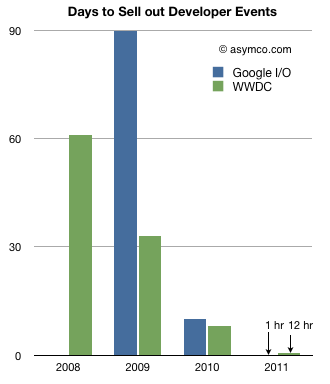
    Every year since, not only has WWDC sold out but it has sold out quicker every time. The following chart shows the days it took to sell out WWDC. I also added Google I/O data for comparison.

    In the era of the iPhone, the limited resource of attendant seats has always been exhausted at accelerated rates: from 60 days in 2008 to 0.5 days in 2011. A similar pattern emerged for the Android event.

    What should be noted is that these events are focused on post-PC development[1][2]. Clearly the increased interest among developers is for the mobile side of the business.

    Developers certainly seem to sense the way the wind is blowing. They are, as humans, prone to over-confidence but they are also often accused of being hard to please. The most common lament among new platform builders is "How do we attract developers?"  The platforms showcased here had no trouble attracting developers in the tens of thousands three years after being launched.

    The Post-PC era is evident in all kinds of data. This set (developer attendance to mobile development) is particularly stark. It's a proxy for investment and IT interest. There is a non-linear nature to this growth and history shows that non-linearity leads to unpredictable or unforeseeable change.

    ---

    Notes:

    1. WWDC still has Mac OS X tracks but that track was there pre-2008 and did not sell out the event.
    2. Microsoft hosts several developer events (PDC, MIX, and Tech·Ed) some of which also sell out, but they have a far wider focus.
  10. WWDC Context: A quarter million apps approved

    Research

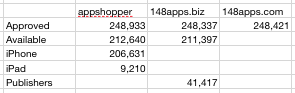
    Six months ago IDC predicted 300k apps before end of 2010.

    Here is a quick mid-year check: As of today there are around 215k available, with 250k likely approved by the end of WWDC.

    These are the stats from three app store tracking spiders:

    Apple's WWDC banners proclaim 200k apps which was the last public count stated at the April iPhone OS 4.0 launch event.

    Looks like IDC's forecast will not be a stretch especially as the new iPhone will create a new wave of apps.

    Also noteworthy is the nearly 10k iPad apps available in less than 3 months.  The original iPhone reached 10k apps in about six months.